10% Off
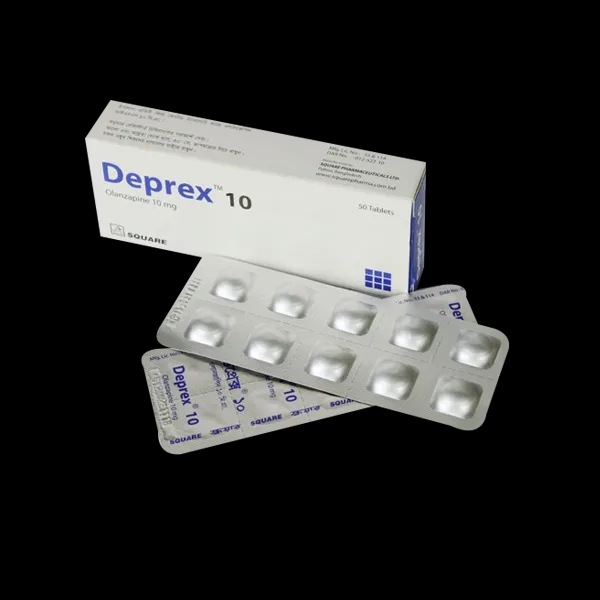
Deprex10 mg
Square Pharmaceuticals PLC.
৳40.50
Add to cart
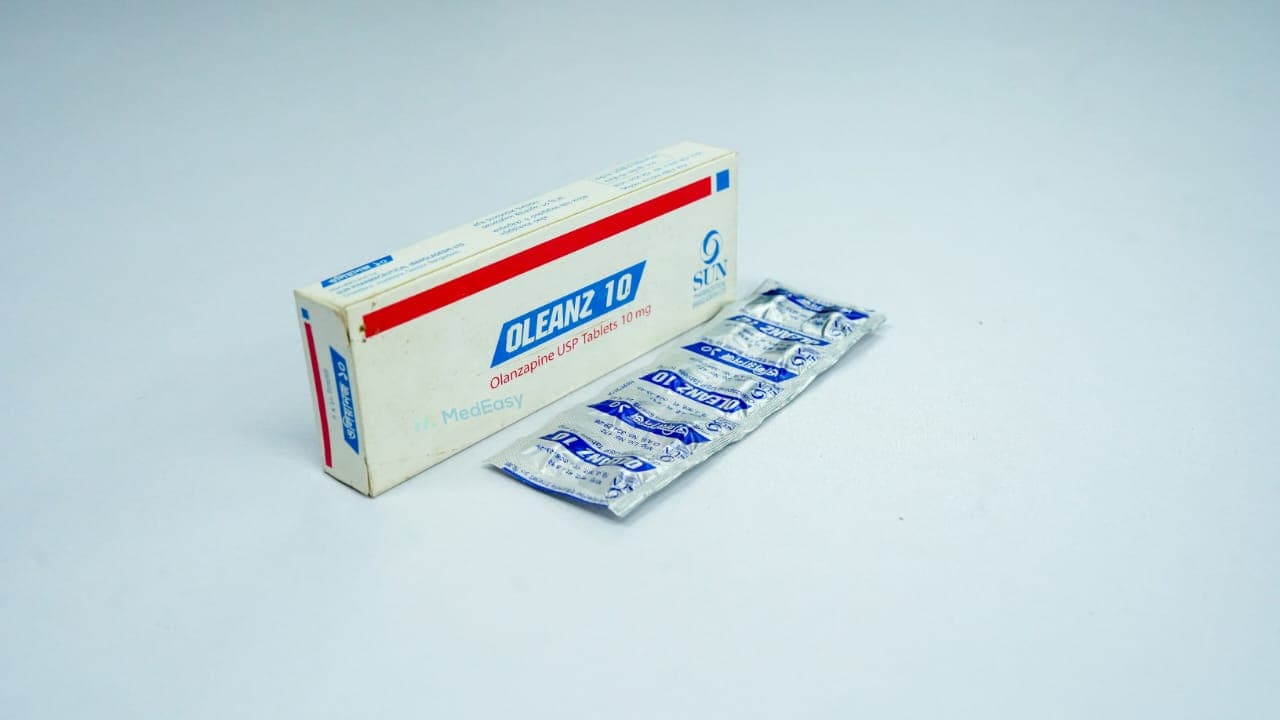

Oleanz is an atypical (second-generation) antipsychotic used for the following indications:
Oleanz is not approved for treatment of dementia-related psychosis in elderly patients (see Precautions and Warnings).
Each tablet of Olanzapine contains Olanzapine as the active ingredient. In Bangladesh, Olanzapine is available as conventional film-coated tablets and orally disintegrating (dispersible) tablets, commonly in strengths of 5 mg, 10 mg and 20 mg, along with standard pharmaceutical excipients.
Oleanz is an atypical (second-generation) antipsychotic medicine belonging to the thienobenzodiazepine class. It is used to treat serious mental health conditions such as schizophrenia and bipolar disorder by helping correct imbalances in certain brain chemicals (neurotransmitters), particularly dopamine and serotonin. Oleanz helps reduce symptoms such as hallucinations, delusions, disorganized thinking, and mood instability, and is used both for acute episodes and for longer-term maintenance treatment.
Oleanz belongs to the therapeutic class of Atypical (Second-Generation) Antipsychotics, specifically the thienobenzodiazepine derivatives.
Olanzapine is thought to exert its therapeutic effect through antagonism at multiple central nervous system receptors. It has high binding affinity for serotonin 5-HT2A/2C, 5-HT3 and 5-HT6 receptors; dopamine D1, D2, D3, D4 and D5 receptors; muscarinic M1-M5 receptors; histamine H1 receptors; and alpha-1 adrenergic receptors. Antagonism of dopamine D2 and serotonin 5-HT2A receptors is believed to underlie the antipsychotic and mood-stabilizing effects of Olanzapine, while binding to histaminergic, cholinergic and adrenergic receptors accounts for effects such as sedation, weight gain, dry mouth and orthostatic hypotension.
Olanzapine is well absorbed after oral administration, undergoes extensive hepatic metabolism (mainly via direct glucuronidation and CYP1A2, with a minor CYP2D6 contribution), and has an elimination half-life of approximately 21-54 hours, allowing once-daily dosing.
The dose of Oleanz should be individualized according to indication, patient response and tolerability. See the Dosage and Administration sections below for indication-specific doses. Oleanz is usually started at a low dose and titrated gradually, and should not be stopped abruptly except under medical advice (see Precautions and Warnings).
Oleanz tablets may be taken with or without food, generally once daily, preferably at the same time each day. Orally disintegrating (dispersible) tablets of Oleanz should be placed on the tongue, allowed to disintegrate, and swallowed with or without water; they should not be split. Standard tablets should be swallowed whole. Oleanz should not be stopped suddenly; the dose should be reduced gradually under medical supervision.
This is not an exhaustive list; inform your physician of all medicines, supplements and herbal products being used before starting Oleanz.
Olanzapine is contraindicated in patients with known hypersensitivity to Olanzapine or to any component of the formulation.
Patients should seek prompt medical attention for fever with muscle stiffness, uncontrolled movements, signs of high blood sugar (excessive thirst/urination), or unusual bleeding/bruising.
Pregnancy: Oleanz should be used during pregnancy only if the potential benefit justifies the potential risk to the fetus. Neonates exposed to antipsychotics, including Oleanz, during the third trimester are at risk of extrapyramidal and/or withdrawal symptoms after delivery. Current U.S. labeling does not assign a formal letter pregnancy category; use should be individualized in consultation with a physician, and Oleanz should not be stopped abruptly without medical advice.
Lactation: Oleanz is excreted into human breast milk. Breastfeeding is generally not recommended during treatment with Oleanz unless a physician determines the benefits outweigh the potential risk to the infant; if breastfeeding is undertaken, the infant should be monitored for sedation, feeding difficulty and irritability.
Elderly patients with dementia-related psychosis treated with antipsychotic drugs, including Oleanz, are at increased risk of death, mainly from cardiovascular events (e.g., heart failure, sudden death) or infections (e.g., pneumonia). Oleanz is not approved for the treatment of dementia-related psychosis.
Oleanz is associated with clinically significant weight gain, hyperglycemia (including new-onset diabetes and rare reports of diabetic ketoacidosis or hyperosmolar coma), and dyslipidemia (elevated triglycerides and cholesterol). These metabolic effects tend to be more pronounced with Oleanz than with several other atypical antipsychotics. Baseline and periodic monitoring of weight, blood glucose and lipid profile is recommended throughout treatment.
Oleanz can cause orthostatic hypotension with dizziness, tachycardia or fainting, particularly during initial dose titration; caution is advised in patients with cardiovascular disease, dehydration, or those on antihypertensive therapy. Sedation is common, especially early in treatment; caution is advised when driving or operating machinery.
NMS is a rare but potentially fatal reaction that can occur with Oleanz, presenting with high fever, muscle rigidity, altered mental status and autonomic instability. If suspected, Oleanz should be discontinued immediately and the patient managed with intensive supportive care.
Long-term use of Oleanz may cause tardive dyskinesia, a syndrome of potentially irreversible, involuntary movements. Risk increases with treatment duration and cumulative dose; discontinuation should be considered if signs occur.
Patients with a history of low white blood cell count or drug-induced leukopenia/neutropenia should have complete blood counts monitored frequently, especially during the first months of Oleanz treatment.
Oleanz should be used cautiously in patients with a history of seizures or conditions that lower seizure threshold.
When Oleanz is used together with fluoxetine for depressive indications, the antidepressant-class boxed warning regarding increased risk of suicidal thinking and behavior in children, adolescents and young adults up to age 24 applies (attributable to the fluoxetine component); close monitoring is required, particularly early in treatment.
Use with caution in patients with narrow-angle glaucoma, prostatic hypertrophy, paralytic ileus, or significant hepatic impairment. Do not stop Oleanz abruptly; discontinue gradually under medical supervision to avoid withdrawal/rebound symptoms.
Symptoms of Oleanz overdose may include drowsiness, slurred speech, tachycardia, low blood pressure, agitation or delirium, and, in severe cases, coma, seizures or cardiac conduction abnormalities. There is no specific antidote for Oleanz overdose. If overdose is suspected, seek immediate medical attention or contact emergency services/poison control; management is supportive, with monitoring of vital signs and cardiac rhythm, and may include activated charcoal if given soon after ingestion, under medical supervision. Do not attempt to manage an overdose at home.
Store at room temperature (below 30°C), away from light and moisture. Keep out of reach of children.
Safety and efficacy of Oleanz in schizophrenia and Bipolar I disorder have been established in adolescents aged 13-17 years, generally at lower starting doses than in adults. Safety and efficacy have not been established in children under 13 years of age. Adolescents may be more prone to weight gain and dyslipidemia with Oleanz; other treatment options may be considered first.
Oleanz is not approved for dementia-related psychosis in elderly patients because of increased mortality risk (see Precautions and Warnings). In elderly patients treated for approved indications, a lower starting dose (5 mg/day) is recommended because of increased sensitivity to sedation and orthostatic hypotension.
A lower starting dose is recommended; liver function should be monitored periodically.
No dose adjustment is generally required, as Oleanz is minimally renally excreted.
Cigarette smoking induces the metabolism of Oleanz and may reduce plasma levels; dose adjustment may be needed.
The duration of treatment with Oleanz is individualized based on the indication and clinical response. Acute episodes of schizophrenia or mania typically require several weeks of treatment before full benefit is seen, while maintenance therapy for schizophrenia and Bipolar I disorder is often continued long-term to prevent relapse, under regular medical review. Oleanz should not be discontinued abruptly; if treatment is to be stopped, the dose should be tapered gradually under medical supervision.
Atypical (second-generation) antipsychotic; thienobenzodiazepine derivative.
Olanzapine acts primarily as an antagonist at dopamine D2 and serotonin 5-HT2A receptors in the central nervous system, which is believed to underlie its antipsychotic and mood-stabilizing activity. It also has significant antagonist activity at muscarinic, histaminergic (H1) and alpha-1 adrenergic receptors, contributing to sedation, weight gain and orthostatic hypotension.
C (legacy FDA classification; current U.S. labeling uses a narrative risk summary rather than a letter category)
Oleanz is approved for use in adolescents aged 13-17 years for schizophrenia and for acute manic or mixed episodes of Bipolar I disorder, generally at lower starting doses (2.5-5 mg/day) than adults, with a target dose of 10 mg/day. When used together with fluoxetine for depressive episodes associated with Bipolar I disorder, the combination is approved down to age 10. Safety and efficacy of Oleanz have not been established in children below these age thresholds. Adolescents receiving Oleanz should be monitored closely for weight gain, dyslipidemia and hyperglycemia, as they may be more susceptible to these metabolic effects than adults.
Q: What is Oleanz 10 mg Tablet used for?
A: Oleanz 10 mg Tablet is an atypical antipsychotic used to treat schizophrenia and Bipolar I disorder (manic/mixed episodes and long-term maintenance) in adults and adolescents aged 13-17. It is also used together with fluoxetine for depressive episodes of Bipolar I disorder and for treatment-resistant depression.
Q: What are the most important side effects of Oleanz 10 mg Tablet?
A: The most important effects of Oleanz 10 mg Tablet are metabolic: significant weight gain, high blood sugar (including new-onset diabetes), and raised cholesterol/triglycerides, which tend to be more pronounced with Oleanz 10 mg Tablet than with several other antipsychotics. Sedation and orthostatic hypotension (dizziness on standing) are also common, especially when starting treatment. Regular monitoring of weight, blood sugar and lipids is recommended.
Q: Can Oleanz 10 mg Tablet be taken during pregnancy or while breastfeeding?
A: Oleanz 10 mg Tablet should be used in pregnancy only if the potential benefit clearly justifies the potential risk to the fetus, since babies exposed in the third trimester can develop movement or withdrawal symptoms after birth; this should always be discussed with a physician. Oleanz 10 mg Tablet passes into breast milk, so breastfeeding is generally discouraged during treatment unless a doctor decides the benefits outweigh the risks, with the infant monitored for sedation and feeding problems.
Q: Is it safe to stop Oleanz 10 mg Tablet suddenly?
A: No. Oleanz 10 mg Tablet should not be stopped abruptly, as this can cause withdrawal or rebound symptoms and relapse of the underlying condition. If treatment needs to be stopped, the dose should be tapered gradually under a physician's supervision.
Q: Who should not take Oleanz 10 mg Tablet?
A: Oleanz 10 mg Tablet should not be used by anyone with a known hypersensitivity (allergy) to Oleanz 10 mg Tablet or any ingredient in the formulation. It should also be used with caution, and only under close medical supervision, in people with certain heart, liver, blood cell, seizure or glaucoma conditions.
Q: Can Oleanz 10 mg Tablet be used in elderly patients with dementia?
A: No. Oleanz 10 mg Tablet carries a boxed warning that elderly patients with dementia-related psychosis treated with antipsychotic drugs, including Oleanz 10 mg Tablet, have an increased risk of death, mainly from heart-related problems or infections such as pneumonia. Oleanz 10 mg Tablet is not approved for this use.
Disclaimer
The information provided is accurate to the best of our knowledge, but it does not replace professional medical advice. We cannot guarantee its completeness or accuracy, and the absence of specific information about a drug should not be taken as an endorsement. We are not responsible for any consequences arising from this information, so please consult a healthcare professional for any concerns or questions.