10% Off
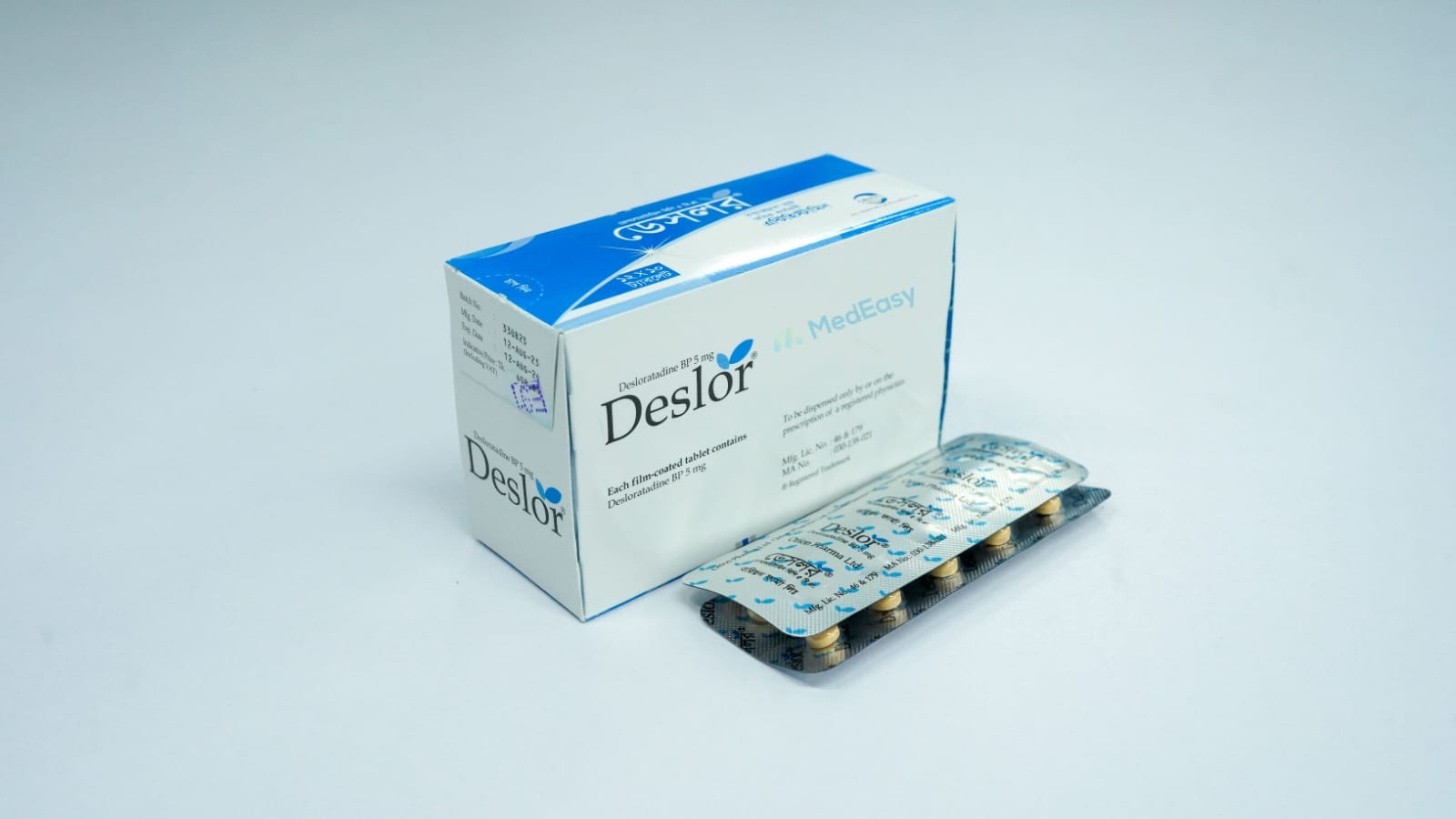
Deslor5 mg
Orion Pharma Ltd.
৳45.00
Add to cart

Orinex 5 mg Tablet is available on MedEasy for ৳22.68 per 10's Strip, with home delivery anywhere in Bangladesh. It is manufactured by ACME Laboratories Ltd. Its generic name is Desloratadine.

Orinex is an established, FDA-approved second-generation antihistamine indicated for the relief of symptoms associated with the following conditions:
Orinex is not indicated for the treatment of anaphylaxis or acute severe allergic/anaphylactic reactions, and is not an antibiotic or antimicrobial agent.
Desloratadine is available in several dosage forms, each containing Desloratadine as the sole active ingredient:
Orinex is a long-acting, tricyclic, second-generation (non-sedating) antihistamine. It is the major active metabolite of the first-generation-derived antihistamine loratadine. Orinex acts as a selective and peripherally-restricted antagonist of the histamine H1-receptor, which underlies its efficacy in relieving allergic symptoms with a low propensity for sedation or anticholinergic side effects at recommended doses.
Orinex belongs to the class of second-generation (non-sedating) antihistamines, specifically selective peripheral histamine H1-receptor antagonists.
Desloratadine selectively and competitively antagonizes peripheral histamine H1-receptors. By blocking histamine's action at these receptors, Desloratadine reduces the vasodilation, increased vascular permeability, and sensory nerve stimulation (itching, sneezing) that histamine release produces during allergic reactions.
| Age group | Recommended dose of Orinex |
|---|---|
| Adults and adolescents ≥12 years | 5 mg (one tablet or 10 mL syrup) once daily |
| Children 6–11 years | 2.5 mg (one 2.5 mg tablet/ODT or 5 mL syrup) once daily |
| Children 1–5 years | 1.25 mg (2.5 mL syrup) once daily, for perennial allergic rhinitis or chronic idiopathic urticaria only |
| Infants 6–11 months | 1 mg (2 mL syrup) once daily, for perennial allergic rhinitis or chronic idiopathic urticaria only |
Orinex is not recommended for seasonal allergic rhinitis in children under 2 years, and safety/efficacy have not been established for infants under 6 months for any indication.
In adults with significant renal or hepatic impairment, a starting dose of Orinex 5 mg every other day is recommended, based on reduced clearance in these populations (see Use in Special Populations).
Orinex tablets may be taken with or without food. Orally disintegrating tablets should be placed on the tongue, allowed to disintegrate, and swallowed with or without water, with or without food. Syrup should be measured using an accurate dosing device, not a household spoon.
Orinex is taken orally, once daily, at approximately the same time each day, with or without food.
If a dose is missed, it should be taken as soon as remembered unless it is close to the time of the next dose, in which case the missed dose should be skipped. Do not double the dose.
Orinex has a low potential for clinically significant drug interactions. Documented interactions include:
Desloratadine is contraindicated in patients with known hypersensitivity to Desloratadine, any of its formulation excipients, or to loratadine (of which Desloratadine is the active metabolite).
Orinex is generally well tolerated. Reported adverse effects include:
Patients should seek medical attention promptly if signs of a serious allergic reaction (facial/throat swelling, severe rash, difficulty breathing) occur.
Data on the use of Orinex in human pregnancy are limited. Animal reproduction studies have not shown teratogenic effects at exposures well above the recommended human dose, but this does not guarantee safety in humans. Orinex should be used during pregnancy only if clearly needed and if the potential benefit justifies the potential risk to the fetus; a physician should always be consulted before use. When treatment with an antihistamine is required during pregnancy, second-generation agents such as Orinex are generally preferred over first-generation antihistamines due to their more favorable safety profile.
Orinex and its active metabolite pass into human breast milk. A decision should be made, in consultation with a physician, whether to discontinue breastfeeding or discontinue/avoid Orinex, taking into account the benefit of breastfeeding and the mother's clinical need for the medication.
Reported effects of Orinex overdose have included somnolence in adults and, in children, initial CNS excitation followed by somnolence. There is no specific antidote for Orinex overdose. Orinex and its major metabolite are not removed by hemodialysis, and it is not known whether they are removed by peritoneal dialysis.
If an overdose is suspected, seek immediate medical attention or contact a poison control center/emergency services right away. Treatment consists of general symptomatic and supportive measures, which should be initiated promptly and maintained as needed under medical supervision. Do not attempt to manage a suspected overdose with home remedies.
Store at room temperature (below 30°C), away from light and moisture. Keep out of reach of children.
Duration of Orinex therapy depends on the indication being treated:
Treatment duration should always follow the prescribing physician's advice rather than a fixed rule.
Desloratadine belongs to the antihistamine drug class, specifically the second-generation (non-sedating), selective peripheral H1-receptor antagonist subclass, and is the major active metabolite of loratadine.
Desloratadine works by selectively binding to and blocking peripheral histamine H1-receptors, preventing histamine (released from mast cells and basophils during allergic reactions) from producing its characteristic effects — vasodilation, increased capillary permeability, mucus secretion, and stimulation of sensory nerve endings that cause itching and sneezing. Because Desloratadine penetrates the central nervous system minimally at therapeutic doses, it produces these anti-allergic effects with a substantially lower risk of sedation compared with first-generation antihistamines.
C
Orinex has established pediatric indications, with dosing and approved age ranges as follows:
Safety and efficacy of Orinex have not been established in infants younger than 6 months of age for any indication; Orinex should not be used in this age group outside specific medical direction.
Q: What is Orinex 5 mg Tablet used for?
A: Orinex 5 mg Tablet is used to relieve symptoms of seasonal and perennial allergic rhinitis (such as sneezing, runny nose, and itchy/watery eyes) and to reduce itching and hives in chronic idiopathic urticaria.
Q: Does Orinex 5 mg Tablet cause drowsiness?
A: Orinex 5 mg Tablet is a non-sedating, second-generation antihistamine and causes little to no drowsiness in most people at the recommended dose, unlike older first-generation antihistamines. A small number of people may still experience mild sleepiness.
Q: Can Orinex 5 mg Tablet be used during pregnancy?
A: Orinex 5 mg Tablet should be used during pregnancy only if clearly needed and if the potential benefit justifies the potential risk to the fetus. Human data are limited, so a physician should always be consulted before use in pregnancy.
Q: Is Orinex 5 mg Tablet safe for children?
A: Orinex 5 mg Tablet is approved for children as young as 6 months (for perennial allergic rhinitis and chronic urticaria, using the syrup form) and from 2 years for seasonal allergic rhinitis, using age-specific doses. It has not been established as safe or effective in infants under 6 months.
Q: What should I do if I take too much Orinex 5 mg Tablet?
A: If an overdose of Orinex 5 mg Tablet is suspected, seek immediate medical attention or contact a poison control center/emergency services right away rather than attempting home treatment.
Q: Can I take Orinex 5 mg Tablet with other medicines or alcohol?
A: Orinex 5 mg Tablet has a low potential for interactions, but caution is advised when combining it with alcohol or other CNS depressants, and certain medicines (such as ketoconazole or erythromycin) can raise its blood levels, though this has not been linked to significant safety problems at recommended doses. Always tell your doctor or pharmacist about all medicines you take.
Disclaimer
The information provided is accurate to the best of our knowledge, but it does not replace professional medical advice. We cannot guarantee its completeness or accuracy, and the absence of specific information about a drug should not be taken as an endorsement. We are not responsible for any consequences arising from this information, so please consult a healthcare professional for any concerns or questions.