
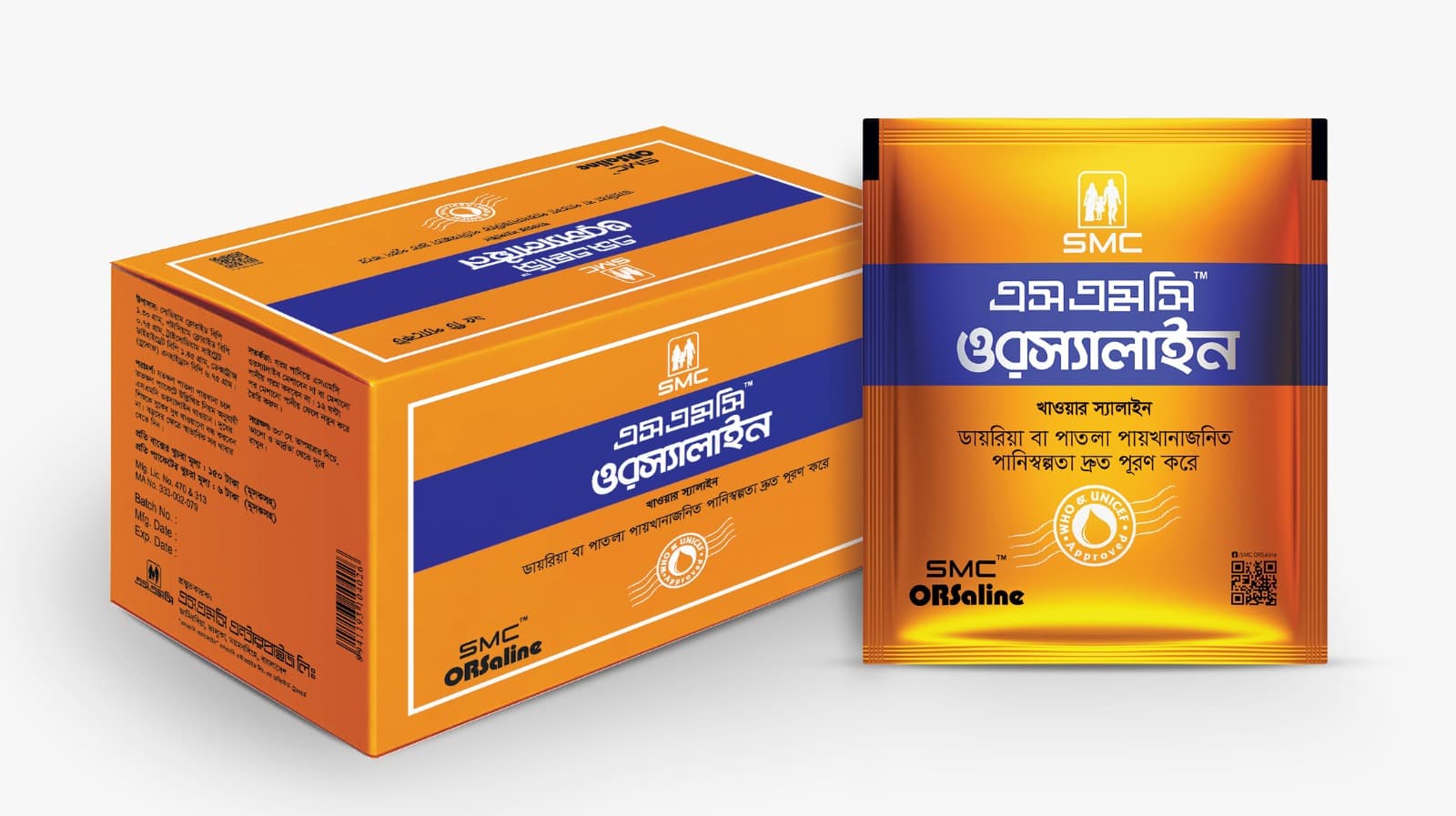

Medicine overview
Indications of ORSaline
ORSaline is indicated for the prevention and treatment of dehydration caused by fluid and electrolyte loss, most commonly from acute diarrhea (including diarrhea due to cholera and other gastrointestinal infections) and vomiting, in patients of all ages.
- Established use: Replacement of fluid and electrolytes lost in mild to moderate dehydration due to diarrhea and/or vomiting.
- Established use: Maintenance of hydration during ongoing fluid losses (e.g., continuing diarrhea) once initial rehydration is complete.
- Guideline-supported (WHO/UNICEF, AAP): First-line home and clinic management of acute watery diarrhea in children and adults, alongside continued feeding/breastfeeding.
- Adjunct use: Supportive fluid replacement for fluid loss from causes such as excessive sweating or reduced fluid intake, when the person can drink and is not severely dehydrated.
ORSaline is not a treatment for the underlying cause of diarrhea (e.g., it is not an antibiotic or antidiarrheal); it treats dehydration only. Severe dehydration, persistent vomiting preventing oral intake, or shock requires urgent medical evaluation and intravenous fluids rather than reliance on ORSaline alone.
Composition
Each sachet of Oral Rehydration Salt [Powder] typically contains the World Health Organization (WHO) reduced-osmolarity oral rehydration salts formula. A common presentation (10.25 g/500 mL sachet) contains:
- Glucose (anhydrous) - 6.75 g (13.5 g/L)
- Sodium Chloride BP - 1.30 g (2.6 g/L)
- Potassium Chloride BP - 0.75 g (1.5 g/L)
- Trisodium Citrate Dihydrate BP - 1.45 g (2.9 g/L)
When reconstituted as directed, this provides approximately: Sodium 75 mmol/L, Potassium 20 mmol/L, Chloride 65 mmol/L, Citrate 10 mmol/L, and Glucose 75 mmol/L, giving a total osmolarity of approximately 245 mOsm/L (WHO low-osmolarity formula). Exact strengths may vary slightly by manufacturer and sachet size (e.g., 20.5 g/L sachets); always check the label of the specific pack.
Description
ORSaline is an oral rehydration therapy product consisting of a balanced mixture of glucose and electrolytes (sodium, potassium, chloride, citrate) supplied as a dry powder for reconstitution with clean drinking water. It works on the principle of sodium-glucose co-transport in the small intestine, which promotes absorption of both water and electrolytes even during active diarrhea.
ORSaline is recommended by the World Health Organization (WHO) and UNICEF as a low-osmolarity formulation, which has been shown to reduce stool output, vomiting, and the need for supplemental intravenous fluids compared with older, higher-osmolarity formulas. It is intended for oral use only after reconstitution and is used across all age groups, from infants to elderly adults.
Therapeutic Class
ORSaline belongs to the therapeutic class of oral rehydration therapy (fluid and electrolyte replacement) agents, also referred to as oral rehydration salts (ORS)/oral electrolyte solutions.
Pharmacology
Oral Rehydration Salt [Powder] works through the sodium-glucose co-transport mechanism in the brush border of the small intestinal enterocytes. Glucose and sodium are absorbed together via the SGLT-1 transporter, and this active co-transport continues to function even when the normal absorptive processes of the gut are disrupted by infective diarrhea (e.g., cholera or rotavirus). The absorption of sodium and glucose creates an osmotic gradient that drives passive absorption of water and other electrolytes (potassium, chloride) across the intestinal mucosa, correcting dehydration and electrolyte deficits.
The citrate component helps correct the metabolic acidosis that commonly accompanies dehydration from diarrhea. The WHO low-osmolarity formulation of Oral Rehydration Salt [Powder] (approximately 245 mOsm/L) is formulated to closely match plasma osmolarity, which improves water and electrolyte absorption and reduces stool volume compared to earlier, higher-osmolarity ORS formulas.
Dosage & Administration of ORSaline
ORSaline must always be reconstituted with the correct volume of clean, safe drinking water before use (see Reconstitution). It should be given in small, frequent sips, especially in children and after each episode of vomiting.
| Age Group | Amount after each loose stool/vomiting episode |
|---|---|
| Infants and children under 2 years | 50-100 mL (approximately 10-20 teaspoons) |
| Children 2-10 years | 100-200 mL (approximately half to one glass) |
| Children over 10 years and adults | 200-400 mL (approximately one to two glasses) |
For mild to moderate dehydration, an initial replacement volume of approximately 75 mL/kg body weight over the first 4 hours is generally recommended by WHO guidance, in addition to ongoing maintenance replacement for continuing losses, followed by reassessment. A physician or health worker should individualize therapy, particularly in infants, the elderly, and those with underlying illness.
Continue breastfeeding, normal feeding, and other fluids during ORSaline therapy; do not withhold food. If vomiting occurs, wait 10 minutes and then resume giving ORSaline more slowly. Severe dehydration (sunken eyes, lethargy, inability to drink, very little or no urine output) is a medical emergency requiring immediate care and possible intravenous fluids.
Administration of ORSaline
ORSaline is for oral use only, after being fully dissolved in the correct volume of water as stated on the label. Do not administer the dry powder directly. Give the reconstituted solution by cup and spoon (preferred over a feeding bottle) in small, frequent sips, particularly in young children and infants who are vomiting. Use a clean cup and spoon for preparation and administration. Freshly prepared solution should be used; do not reheat or add anything (sugar, salt, other beverages) to the reconstituted solution.
Interaction of ORSaline
No clinically significant drug-drug interactions with ORSaline are well documented, as it consists of physiological electrolytes and glucose. However, the following points are clinically relevant:
- Potassium-altering drugs: Caution is advised when ORSaline is used concurrently with potassium-sparing diuretics (e.g., spironolactone, amiloride), ACE inhibitors, angiotensin receptor blockers, or other drugs that increase serum potassium, since ORSaline itself supplies additional potassium and could theoretically add to hyperkalemia risk in patients with renal impairment.
- Oral medications: ORSaline solution may be used to take other oral medicines as directed by a physician; no specific drug binding or absorption interference has been established, but medicines should generally not be mixed directly into the same dose of solution unless advised.
Contraindications
Oral Rehydration Salt [Powder] is contraindicated in patients with known hypersensitivity to any component of the formulation. It is also contraindicated in the following situations where oral rehydration is inappropriate or unsafe:
- Severe dehydration with signs of shock, or when the patient is unable to drink (e.g., unconsciousness, severe lethargy) - these require immediate intravenous fluid therapy instead.
- Intestinal obstruction, paralytic ileus, or perforated bowel.
- Uncontrolled or intractable vomiting that prevents retention of oral fluids.
- Severe/anuric renal failure, where the ability to excrete a potassium and sodium load is compromised, unless under direct medical supervision.
Side Effects of ORSaline
ORSaline is generally very well tolerated when reconstituted and administered correctly. Reported adverse effects are uncommon and usually related to incorrect preparation or excessive/rapid intake:
- Vomiting (usually related to rate of administration; give more slowly if this occurs).
- Abdominal distension or bloating.
- Hypernatremia or hyperkalemia (rare, generally due to using less water than directed, using the solution in patients with impaired renal function, or excessive intake).
- Puffiness/mild swelling of the eyelids or extremities has been reported rarely with correct use, particularly if larger than needed volumes are given.
Pregnancy & Lactation
ORSaline is considered safe for use during pregnancy and breastfeeding when prepared and dosed correctly, as it replaces normal body fluids and electrolytes and is not systemically absorbed as a drug in the conventional sense. As with any medicine or health product, pregnant and breastfeeding women experiencing dehydration from diarrhea or vomiting should use ORSaline only as directed and consult a physician, especially in cases of severe dehydration or if symptoms do not improve, so that the underlying cause and fluid status can be properly assessed. Breastfeeding should be continued and even increased during illness in a nursing mother or infant using ORSaline.
Precautions & Warnings
Correct preparation of ORSaline is essential for safety and effectiveness:
- Correct dilution is critical: Always use the exact volume of clean, safe drinking water stated on the label. Using less water than specified concentrates the solution and can cause dangerous hypernatremia (high blood sodium); using more water reduces effectiveness. Never add extra sugar or salt to the solution.
- Discard after the stated time: Once reconstituted, ORSaline solution should be used within the period stated on the label (commonly 12-24 hours) and any unused portion discarded thereafter, due to risk of bacterial contamination; prepare a fresh batch for continued use.
- Seek urgent medical care if there is persistent vomiting, inability to drink, signs of severe dehydration (sunken eyes, very dry mouth, lethargy or unconsciousness, minimal urine output), blood in the stool, high fever, or if diarrhea persists beyond 48-72 hours - oral rehydration alone may not be sufficient and intravenous fluids or further medical assessment may be needed.
- Use caution in patients with renal impairment, diabetes mellitus (monitor blood glucose, as ORSaline contains glucose), or other conditions affecting fluid/electrolyte balance; medical supervision is advised.
- Use clean, boiled (then cooled) or otherwise safe drinking water for reconstitution to avoid introducing additional pathogens.
Overdose Effects of ORSaline
True overdose with correctly reconstituted ORSaline is unlikely, but excessive intake of over-concentrated solution (prepared with too little water) can lead to hypernatremia, presenting with irritability, lethargy, muscle twitching, or seizures, particularly in infants and young children. If overdose or incorrect preparation leading to symptoms such as marked lethargy, seizures, severe vomiting, or altered consciousness is suspected, stop administration immediately and seek emergency medical attention or contact a poison control center without delay. Do not attempt specific home treatment beyond stopping the product and seeking urgent care.
Storage Conditions
Store at room temperature (below 30°C), in a dry place away from light and moisture. Keep the sachet sealed until use. Keep out of reach of children.
Use In Special Populations
Pediatric use: ORSaline is widely used and considered a first-line therapy for dehydration due to diarrhea in infants and children, per WHO/UNICEF and AAP guidance. Dosing should follow the age-based table (see Dosage and Administration); infants should be given the solution by spoon or cup in small frequent sips, and breastfeeding should be continued. Close supervision is needed in infants under 2 months and those with severe malnutrition.
Elderly: ORSaline can be used in elderly patients but caution is advised regarding underlying renal or cardiac impairment, which may alter fluid and electrolyte handling; medical supervision is recommended, particularly for those on diuretics or with chronic kidney disease.
Renal impairment: Use with caution and under medical supervision, as impaired excretion of sodium and potassium may increase the risk of hyperkalemia or fluid overload.
Diabetes mellitus: ORSaline contains glucose; blood glucose should be monitored during use, and administration should be supervised by a physician if the patient is diabetic.
Duration Of Treatment
ORSaline should be continued for as long as diarrhea, vomiting, or other fluid losses persist, and for a short period afterward to complete rehydration and maintain fluid balance, typically guided by the resolution of dehydration signs and normalization of stool consistency. If diarrhea or vomiting continues beyond 48-72 hours, or if dehydration is not improving despite adequate oral intake of ORSaline, medical review is required, as further treatment (e.g., intravenous fluids or evaluation for an underlying cause) may be needed.
Reconstitution
ORSaline must be reconstituted immediately before use with the exact volume of clean, safe drinking water stated on the sachet label (commonly 200 mL, 500 mL, or 1 liter, depending on sachet size - always check the specific product label).
- Empty the entire contents of one sachet into a clean container.
- Add the exact stated volume of cool, previously boiled (and cooled) or otherwise safe drinking water - do not use less or more water than directed, and do not use hot water.
- Stir or shake well until the powder is completely dissolved.
- Do not add sugar, salt, or any other substance to the solution.
- Use the freshly prepared solution promptly; discard any unused solution after the time stated on the label (commonly 12-24 hours) and prepare a fresh batch if further doses are needed.
Drug Classes
Oral Rehydration Salt [Powder] falls under the drug class: Oral Rehydration Salts / Electrolyte and glucose replacement solutions (Fluid and Electrolyte Replenishers).
Mode Of Action
Oral Rehydration Salt [Powder] acts via sodium-glucose co-transport (SGLT-1) in the intestinal brush border, which remains functional during infective diarrhea and drives coupled absorption of sodium and glucose. This creates an osmotic gradient that pulls water and accompanying electrolytes (potassium, chloride) into the bloodstream, correcting dehydration, while the citrate content helps correct associated metabolic acidosis.
Pediatric Uses
ORSaline is approved and widely recommended for use in infants and children of all ages, including neonates, as first-line management of dehydration from diarrhea, under appropriate dosing (see Dosage and Administration) and, in young infants or malnourished children, under closer medical supervision. It should be given by spoon or cup in small, frequent amounts rather than a bottle, and breastfeeding/normal feeding should continue throughout treatment. Safety and effectiveness in premature or severely malnourished infants should be managed by a qualified healthcare provider due to the higher risk of electrolyte disturbances in these groups.
Frequently Asked Questions
Q: What is ORSaline 10.25 gm Powder used for?
A: ORSaline 10.25 gm Powder is used to prevent and treat dehydration caused by fluid loss from diarrhea, vomiting, or other causes of fluid loss, in people of all ages. It replaces water, sodium, potassium, and other electrolytes lost from the body.
Q: How do I prepare ORSaline 10.25 gm Powder correctly?
A: Dissolve the entire contents of one sachet in the exact amount of clean, safe drinking water stated on the label (commonly 200 mL, 500 mL, or 1 liter). Do not use less water than directed, as this can concentrate the solution and cause dangerous hypernatremia (high blood sodium); do not add extra sugar or salt. Stir until fully dissolved before drinking.
Q: How much ORSaline 10.25 gm Powder should I give my child?
A: As a general guide: children under 2 years should be given 50-100 mL, children 2-10 years 100-200 mL, and those over 10 years/adults 200-400 mL of ORSaline 10.25 gm Powder solution after each loose stool or episode of vomiting, in addition to normal fluid intake. A doctor may individualize this based on the degree of dehydration.
Q: How long can I keep prepared ORSaline 10.25 gm Powder solution?
A: Once mixed with water, ORSaline 10.25 gm Powder solution should be used within the time stated on the label, usually 12-24 hours, and any unused solution should then be discarded due to the risk of bacterial contamination. Always prepare a fresh batch for further doses.
Q: Is ORSaline 10.25 gm Powder safe during pregnancy and breastfeeding?
A: ORSaline 10.25 gm Powder is generally considered safe during pregnancy and breastfeeding when prepared and dosed correctly, as it simply replaces normal body fluids and electrolytes. However, pregnant or breastfeeding women with dehydration, especially if severe or not improving, should consult a physician rather than relying on ORSaline 10.25 gm Powder alone.
Q: When should I seek medical help instead of relying on ORSaline 10.25 gm Powder alone?
A: Seek immediate medical attention if there is persistent vomiting preventing you from keeping fluids down, signs of severe dehydration (sunken eyes, very dry mouth, lethargy or confusion, little or no urination), blood in the stool, high fever, or if diarrhea continues beyond 48-72 hours despite using ORSaline 10.25 gm Powder - these situations may require intravenous fluids or further medical evaluation rather than oral rehydration alone.
Disclaimer
The information provided is accurate to the best of our knowledge, but it does not replace professional medical advice. We cannot guarantee its completeness or accuracy, and the absence of specific information about a drug should not be taken as an endorsement. We are not responsible for any consequences arising from this information, so please consult a healthcare professional for any concerns or questions.
