
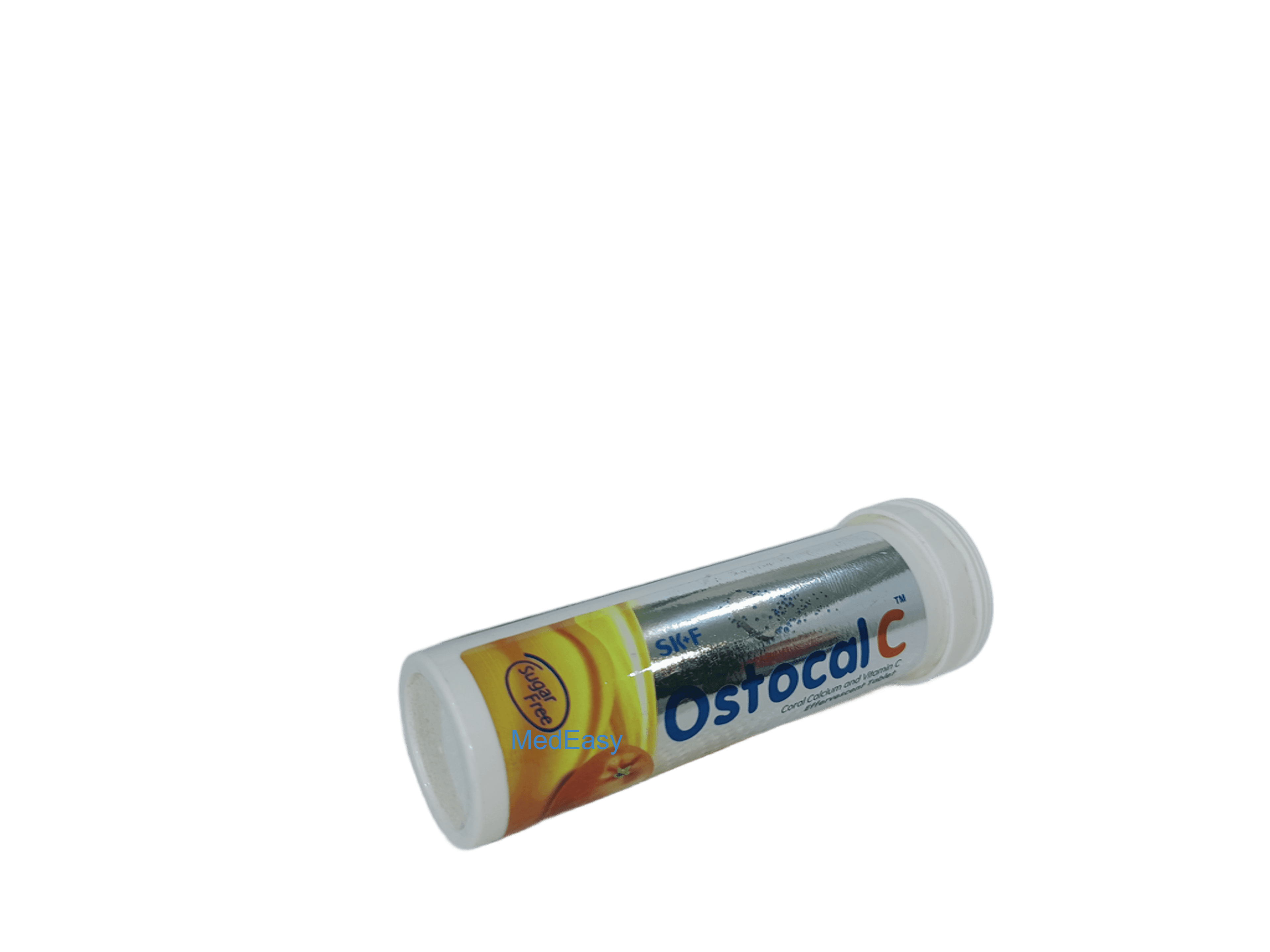
Ostocal C1000 mg+327 mg+500 mg

Medicine overview
Indications of Ostocal C
Ostocal C is a combination mineral and vitamin supplement that supplies two complementary sources of elemental calcium (calcium lactate gluconate and calcium carbonate) together with vitamin C (ascorbic acid). It is used for the following indications:
Established/Widely Used Indications
- Prevention and treatment of calcium deficiency in individuals with inadequate dietary calcium intake or increased calcium requirements.
- Adjunct therapy in osteoporosis, alongside other prescribed osteoporosis treatment and lifestyle measures, to help meet daily calcium requirements.
- Adjunct in the management of rickets and osteomalacia, typically alongside vitamin D therapy prescribed by a physician.
- Increased calcium requirements during pregnancy and lactation, growth spurts in children and adolescents, and in the elderly, when dietary intake alone is insufficient.
- Adjunct in the management of hypocalcemia and tetany, under medical supervision and typically together with other definitive treatment (e.g., vitamin D or calcitriol) for the underlying cause.
Notes on Evidence
Ostocal C is a supportive/adjunct calcium and vitamin C source rather than a treatment for the underlying cause of most calcium disorders; its role in osteoporosis, rickets, and tetany is adjunctive to definitive medical therapy prescribed by a physician.
Composition
Each formulation of Calcium Lactate Gluconate + Calcium Carbonate + Vitamin C typically provides calcium from two sources — calcium lactate gluconate and calcium carbonate — together with vitamin C (ascorbic acid). A common effervescent tablet formulation supplies calcium lactate gluconate (around 940 mg) and calcium carbonate (around 300 mg), together providing approximately 500 mg of elemental calcium, plus ascorbic acid (around 500 mg) per tablet; exact strengths vary by brand and dosage form (effervescent tablet, chewable tablet, or syrup/suspension for pediatric use). Refer to the specific product label for exact elemental calcium and vitamin C content.
Description
Ostocal C is an oral combination supplement designed to provide readily available elemental calcium from two complementary calcium salts, along with vitamin C. Calcium lactate gluconate is highly water-soluble and does not require gastric acid for dissolution, making it well suited to effervescent formulations, while calcium carbonate provides a concentrated source of elemental calcium that is best absorbed when taken with food (in the presence of gastric acid). Vitamin C is included as an antioxidant that also supports collagen synthesis relevant to bone matrix and connective tissue health.
Ostocal C is available as effervescent tablets, chewable tablets, or oral syrup/suspension, and is commonly marketed in Bangladesh as an over-the-counter calcium and vitamin C supplement.
Therapeutic Class
Ostocal C belongs to the therapeutic class of mineral (calcium) supplements combined with vitamin C, used for maintenance of calcium balance and bone health.
Pharmacology
Mechanism of Action
Calcium Lactate Gluconate + Calcium Carbonate + Vitamin C supplies elemental calcium, an essential mineral required for bone mineralization, neuromuscular function, blood coagulation, and cell signaling. Calcium is absorbed mainly in the proximal small intestine by active, vitamin D-dependent transport at low intake and by passive diffusion at higher intake. Calcium lactate gluconate is highly soluble and absorbed independent of gastric acid, whereas calcium carbonate requires an acidic gastric environment for optimal dissolution and absorption, so it is best taken with meals. Vitamin C (ascorbic acid) acts as a water-soluble antioxidant and an essential cofactor for collagen synthesis, which supports the organic matrix of bone and connective tissue; it does not itself materially increase calcium absorption.
Pharmacokinetics
Oral calcium is incompletely absorbed (typically 25–35% of the ingested elemental calcium, dose- and food-dependent), distributed mainly to bone (over 99% of total body calcium) with the remainder in extracellular fluid and soft tissue, and excreted chiefly via the kidneys and, to a lesser extent, the stool. Vitamin C is absorbed by intestinal transport, widely distributed in body tissues, metabolized to a limited extent, and excreted renally; intake above tissue saturation is excreted largely unchanged in urine.
Dosage & Administration of Ostocal C
General Principles
The dose of Ostocal C is expressed in terms of elemental calcium and should be individualized according to age, dietary calcium intake, and the indication, following a physician's or pharmacist's advice and the specific product label.
| Population/Indication | Typical Dose (as elemental calcium) |
|---|---|
| Adults – calcium deficiency / adjunct in osteoporosis | Approximately 500 mg to 1000 mg elemental calcium daily, in one or two divided doses, dissolved in water (effervescent) or chewed, generally taken with or after meals. |
| Pregnant/lactating women | Approximately 500 mg to 1000 mg elemental calcium daily, or as advised by the treating physician based on dietary intake and trimester-specific requirements. |
| Children and adolescents (growth periods) | Dose adjusted by age and body weight; a pediatric syrup/suspension or a lower-strength chewable formulation is generally preferred, as advised by a physician. |
| Elderly | Approximately 500 mg to 1000 mg elemental calcium daily, individualized to dietary intake and renal function. |
Doses should be spaced apart from certain other medications (see Interactions) and should not exceed the recommended daily elemental calcium intake from all combined dietary and supplement sources without medical advice.
Administration of Ostocal C
Effervescent tablets of Ostocal C should be fully dissolved in a glass of water and the resulting solution drunk immediately; chewable tablets should be chewed thoroughly; oral syrup/suspension should be measured with the provided measuring device and shaken well before use if it is a suspension. To maximize absorption of the calcium carbonate component, doses are generally taken with or shortly after meals. If also taking other oral medications known to interact with calcium (see Interactions), separate dosing by at least 2 hours.
Interaction of Ostocal C
Ostocal C has several clinically relevant interactions related to its calcium content:
- Tetracycline and fluoroquinolone antibiotics: Calcium forms insoluble chelates with these antibiotics, substantially reducing their absorption and efficacy; separate administration by at least 2–3 hours.
- Bisphosphonates: Calcium markedly reduces oral bisphosphonate absorption; bisphosphonates should be taken well before (per the specific bisphosphonate's label) any calcium-containing product.
- Levothyroxine (thyroid hormone): Calcium can reduce levothyroxine absorption; separate dosing by at least 4 hours.
- Oral iron supplements: Calcium can reduce iron absorption; separate dosing where possible.
- Thiazide diuretics: Concurrent use can increase the risk of hypercalcemia due to reduced renal calcium excretion; calcium levels should be monitored.
- Digoxin: Hypercalcemia from excessive calcium intake can increase the risk of digoxin-related cardiac arrhythmia; avoid excessive calcium intake in patients on digoxin.
- Corticosteroids: Can reduce intestinal calcium absorption and increase calcium requirements with long-term use.
Contraindications
Calcium Lactate Gluconate + Calcium Carbonate + Vitamin C is contraindicated in:
- Known hypersensitivity to calcium lactate gluconate, calcium carbonate, vitamin C, or any excipient of the specific formulation.
- Hypercalcemia (from any cause).
- Hypercalciuria.
- Conditions associated with hypervitaminosis D.
- Calcium-containing renal calculi (nephrolithiasis) or a well-documented history of recurrent calcium-containing kidney stones.
- Prolonged immobilization associated with hypercalcemia and/or hypercalciuria.
Side Effects of Ostocal C
Side effects of Ostocal C are generally mild and dose-related:
- Common: Constipation, bloating, flatulence, mild gastrointestinal discomfort.
- Less common: Nausea, diarrhea (more often associated with the vitamin C component at higher doses).
- With excessive or prolonged high-dose use: Hypercalcemia and hypercalciuria (which can present as nausea, vomiting, constipation, abdominal pain, polyuria, thirst, weakness, or confusion), and increased risk of kidney stone formation, particularly in susceptible individuals (see Precautions).
- Rare: Hypersensitivity reactions (rash, itching).
Pregnancy & Lactation
Ostocal C is commonly used during pregnancy and lactation to help meet increased calcium requirements when dietary intake is insufficient, and is generally considered acceptable when used within the recommended daily elemental calcium and vitamin C intake. However, it should be used only if clearly needed and the potential benefit justifies any potential risk; total calcium intake from all dietary and supplement sources should not exceed recommended limits, and a physician should be consulted to determine the appropriate dose during pregnancy and breastfeeding.
Precautions & Warnings
- Renal impairment: Calcium handling is altered in renal impairment; use Ostocal C only under medical guidance, with monitoring of serum calcium as appropriate.
- Total calcium and vitamin C intake: Avoid exceeding the recommended daily elemental calcium and vitamin C intake from all combined dietary and supplement sources.
- Timing with other medications: Calcium can reduce the absorption of certain antibiotics, bisphosphonates, thyroid hormone, and iron; separate dosing as advised (see Interactions).
- History of oxalate kidney stones: High-dose vitamin C can increase urinary oxalate excretion and may theoretically contribute to kidney stone risk in susceptible individuals; use with caution and medical guidance in patients with a history of oxalate-containing kidney stones.
- Gastrointestinal effects: Calcium supplementation can cause constipation or GI upset; high-dose vitamin C can cause GI upset or diarrhea.
- Sarcoidosis or other conditions with abnormal vitamin D sensitivity: Increased risk of hypercalcemia; use only under medical supervision.
Overdose Effects of Ostocal C
Overdose of Ostocal C can cause hypercalcemia and/or hypercalciuria, with symptoms such as nausea, vomiting, constipation, abdominal pain, excessive thirst, increased urination, muscle weakness, confusion, or, in severe cases, cardiac arrhythmia. Very high doses of the vitamin C component may cause gastrointestinal upset or diarrhea. In case of suspected overdose, seek immediate medical attention or contact emergency services/a poison control center; do not attempt specific home treatment beyond stopping the product and seeking medical advice.
Storage Conditions
Store at room temperature (below 30°C), away from light and moisture. Keep out of reach of children. Keep effervescent tablets in their original container with the desiccant/cap tightly closed to protect from moisture.
Use In Special Populations
Renal Impairment
Ostocal C should be used with caution and under medical guidance in patients with renal impairment, as calcium handling and excretion are altered; serum calcium monitoring may be advisable.
Hepatic Impairment
No specific dose adjustment is established for hepatic impairment, as calcium and vitamin C are not primarily hepatically metabolized; use per general precautions.
Elderly
Commonly used in the elderly to support bone health; renal function and total calcium intake should be considered.
Pediatric Patients
Used in children and adolescents for calcium deficiency and growth-related increased calcium needs, using an age/weight-appropriate formulation and dose; see Pediatric Uses.
Duration Of Treatment
Duration of use of Ostocal C depends on the indication and is determined by the treating physician; it may be used short-term to correct a deficiency or longer-term as an adjunct for ongoing increased calcium requirements (e.g., pregnancy, lactation, osteoporosis management), with periodic reassessment of the need for continued supplementation.
Drug Classes
Calcium Lactate Gluconate + Calcium Carbonate + Vitamin C is classified as a mineral (calcium) supplement in combination with vitamin C (ascorbic acid).
Mode Of Action
Calcium Lactate Gluconate + Calcium Carbonate + Vitamin C provides elemental calcium from two calcium salts (calcium lactate gluconate and calcium carbonate) for intestinal absorption and use in bone mineralization, neuromuscular function, and coagulation, together with vitamin C, an antioxidant and cofactor for collagen synthesis relevant to bone and connective tissue.
Pediatric Uses
Ostocal C may be used in children and adolescents for prevention or treatment of calcium deficiency and to support increased calcium needs during growth periods, typically using a pediatric syrup/suspension or an age-appropriate chewable formulation. Dosing should be individualized by a physician based on the child's age, weight, and dietary calcium intake. Safety and efficacy of specific high-strength effervescent formulations have not been established in young children, and such formulations are generally intended for older children, adolescents, and adults; a pediatrician's guidance should be followed for the appropriate formulation and dose.
Frequently Asked Questions
Q: What is Ostocal C 1000 mg+327 mg+500 mg Tablet used for?
A: Ostocal C 1000 mg+327 mg+500 mg Tablet is a combination calcium and vitamin C supplement used to prevent and treat calcium deficiency and to support bone health, including as an adjunct during pregnancy, lactation, growth periods, and osteoporosis management.
Q: How should I take Ostocal C 1000 mg+327 mg+500 mg Tablet?
A: Effervescent tablets should be fully dissolved in a glass of water and drunk immediately, generally with or after meals to improve absorption of the calcium carbonate component; chewable tablets should be chewed thoroughly. Follow your physician's or the product label's dosing instructions.
Q: Can I take Ostocal C 1000 mg+327 mg+500 mg Tablet with antibiotics?
A: Calcium in Ostocal C 1000 mg+327 mg+500 mg Tablet can bind to certain antibiotics (such as tetracyclines and fluoroquinolones) and reduce their absorption. Separate the doses by at least 2–3 hours, and ask your pharmacist or doctor for specific timing advice.
Q: Is Ostocal C 1000 mg+327 mg+500 mg Tablet safe during pregnancy?
A: Ostocal C 1000 mg+327 mg+500 mg Tablet is commonly used during pregnancy to help meet increased calcium needs, but it should be used only if clearly needed, within recommended daily calcium and vitamin C limits, and after consulting your physician, who can advise on the right dose for your stage of pregnancy.
Q: Who should not take Ostocal C 1000 mg+327 mg+500 mg Tablet?
A: Ostocal C 1000 mg+327 mg+500 mg Tablet should not be used by people with hypercalcemia, hypercalciuria, hypervitaminosis D, calcium-containing kidney stones, prolonged immobilization with elevated calcium, or known hypersensitivity to any of its ingredients.
Q: What happens if I take too much Ostocal C 1000 mg+327 mg+500 mg Tablet?
A: Taking more than the recommended dose of Ostocal C 1000 mg+327 mg+500 mg Tablet can cause hypercalcemia, with symptoms like nausea, vomiting, constipation, excessive thirst, and confusion, and high-dose vitamin C can cause stomach upset or diarrhea. If you suspect an overdose, seek immediate medical attention or contact emergency services.
Disclaimer
The information provided is accurate to the best of our knowledge, but it does not replace professional medical advice. We cannot guarantee its completeness or accuracy, and the absence of specific information about a drug should not be taken as an endorsement. We are not responsible for any consequences arising from this information, so please consult a healthcare professional for any concerns or questions.
