
10% Off
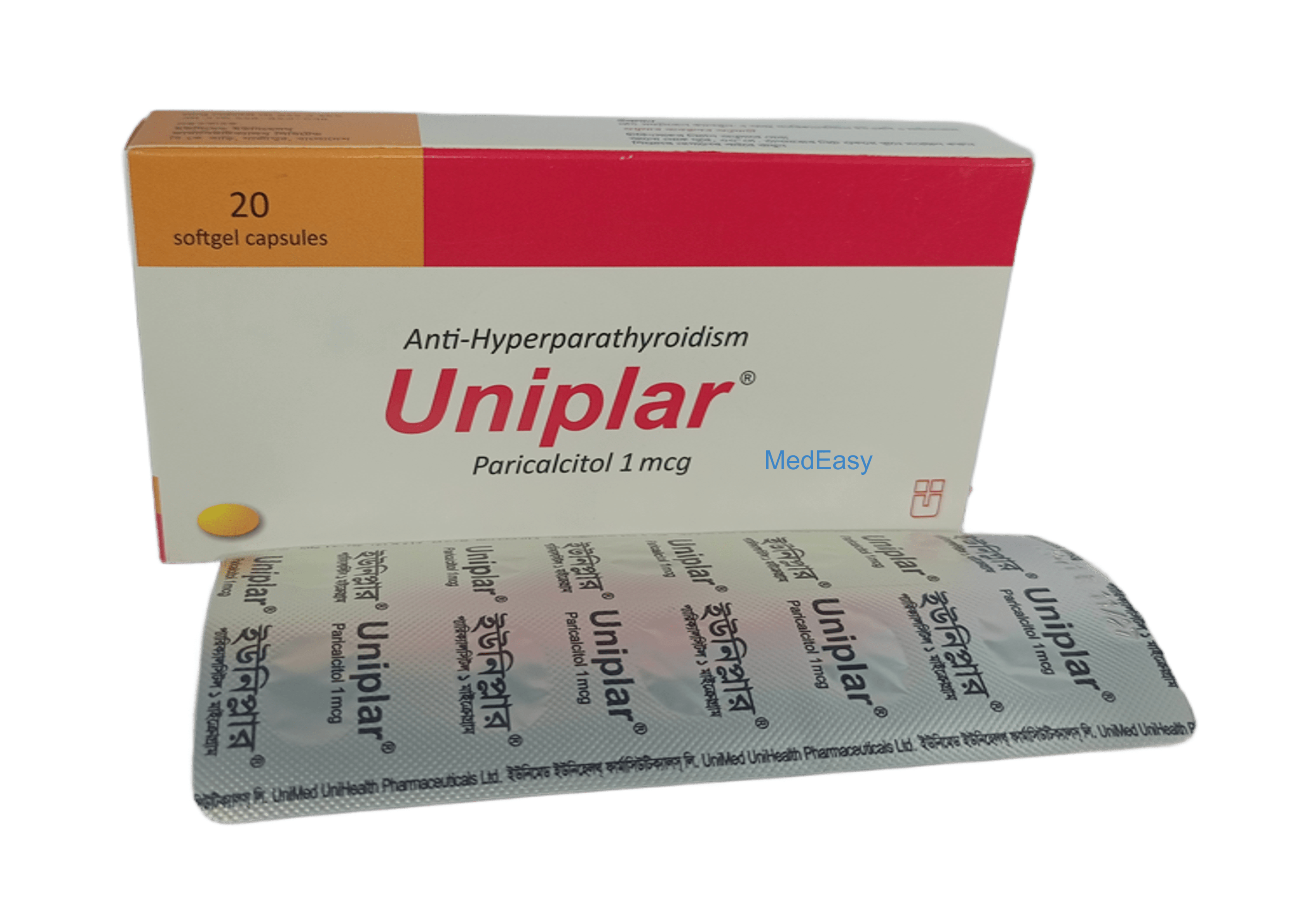
Uniplar1 mcg
Unimed Unihealth MFG. Ltd.
৳225.00
Add to cart


Pericon is a synthetic vitamin D analog (a selective vitamin D receptor activator) used for the prevention and treatment of secondary hyperparathyroidism (SHPT) associated with chronic kidney disease (CKD).
Pericon works by activating vitamin D receptors, primarily in the parathyroid gland, to suppress excess parathyroid hormone (PTH) production, with a comparatively lower tendency to raise intestinal calcium and phosphorus absorption than older, non-selective vitamin D compounds. It does not treat the underlying kidney disease itself and is not indicated for general vitamin D deficiency or for hyperparathyroidism unrelated to chronic kidney disease.
Each Paricalcitol soft gelatin capsule commonly contains 1 mcg, 2 mcg, or 4 mcg of paricalcitol as the active ingredient, together with excipients such as fractionated triglyceride oil. An intravenous injection formulation is also available, typically as a 2 mcg/mL or 5 mcg/mL sterile solution in single-dose vials, containing paricalcitol with excipients such as propylene glycol and alcohol. Exact strengths, dosage forms, and excipients may vary by manufacturer.
Pericon is a synthetic, biologically active analog of vitamin D2 (a selective vitamin D receptor activator) used to manage secondary hyperparathyroidism in patients with chronic kidney disease. By selectively activating vitamin D receptors, mainly in the parathyroid gland, it suppresses the excess parathyroid hormone secretion that develops as kidney function declines, while having a comparatively smaller effect on intestinal calcium and phosphorus absorption than older, non-selective vitamin D compounds.
Pericon is available as oral capsules for outpatient use and as an intravenous injection administered during hemodialysis sessions, and it is used only under medical supervision with regular laboratory monitoring.
Pericon belongs to the class of vitamin D analogs (selective vitamin D receptor activators), used specifically for the management of secondary hyperparathyroidism related to chronic kidney disease.
Paricalcitol is a selective vitamin D receptor activator. It binds to vitamin D receptors in the parathyroid glands and other target tissues, reducing the synthesis and secretion of parathyroid hormone (PTH) with a comparatively smaller increase in intestinal calcium and phosphate absorption than seen with calcitriol and other non-selective vitamin D compounds. This helps control secondary hyperparathyroidism while aiming to reduce (though not eliminate) the risk of hypercalcemia and hyperphosphatemia.
The initial dose is based on baseline intact PTH (iPTH):
| Baseline iPTH | Initial IV Dose |
|---|---|
| ≤500 pg/mL | 0.04–0.1 mcg/kg (approximately 2.8–7 mcg) as a bolus, no more often than every other day during dialysis |
| >500 pg/mL | 0.1–0.24 mcg/kg (approximately 7–17 mcg) as a bolus, no more often than every other day during dialysis |
The dose is subsequently titrated by the treating physician based on iPTH, corrected serum calcium, and phosphorus, typically re-assessed every 2–4 weeks.
The initial oral dose is calculated from baseline iPTH (in pg/mL) divided by 80, given once daily, or iPTH divided by 60, given three times weekly (no more often than every other day). The physician individualizes and titrates the dose based on repeat iPTH, calcium, and phosphorus levels.
| Baseline iPTH | Initial Oral Dose |
|---|---|
| ≤500 pg/mL | 1 mcg once daily, or 2 mcg three times weekly (no more often than every other day) |
| >500 pg/mL | 2 mcg once daily, or 4 mcg three times weekly (no more often than every other day) |
The dose is adjusted by the physician based on periodic monitoring of iPTH, serum calcium, and phosphorus; if hypercalcemia, an elevated calcium-phosphorus product, or over-suppression of iPTH occurs, the dose is reduced or therapy is temporarily interrupted.
If a dose is missed, resume the regular schedule at the next scheduled time; do not take a double dose. Only the prescribing physician should change the dose or dosing frequency.
Concurrent use of Pericon with calcium-containing phosphate binders, calcium supplements, or other vitamin D-related compounds increases the risk of hypercalcemia and hyperphosphatemia. Excessive concurrent vitamin D or calcium supplementation should be avoided, and calcium and phosphorus levels should be monitored closely.
Hypercalcemia, whether caused by Pericon or another source, increases the risk of digitalis toxicity (including cardiac arrhythmias) in patients taking digoxin or related digitalis glycosides. Use Pericon with caution in patients on digoxin, with closer monitoring of serum calcium.
Drugs such as ketoconazole can reduce the metabolism of Pericon, raising its blood levels and the risk of hypercalcemia or PTH over-suppression. Concurrent use requires caution and closer laboratory monitoring; dose adjustment may be needed.
Paricalcitol is contraindicated in patients with evidence of vitamin D toxicity, hypercalcemia, or known hypersensitivity to paricalcitol or any component of the formulation. There are no other well-established absolute contraindications; situations requiring caution, such as concurrent use with other calcium- or vitamin D-containing products or use with digoxin, are addressed under Precautions and Interactions rather than as absolute contraindications.
Report symptoms suggestive of hypercalcemia, persistent gastrointestinal symptoms, or any unusual heart rhythm to your physician promptly while taking Pericon.
Data on the use of Pericon in pregnant women are limited. Pericon should be used during pregnancy only if clearly needed and if the potential benefit to the mother justifies the potential risk to the fetus, and only under close physician supervision with monitoring of maternal calcium levels; consult a physician before use in pregnancy.
It is not known whether Pericon passes into human breast milk. Because many drugs are excreted in breast milk and effects on a nursing infant are unknown, the treating physician should decide whether to discontinue breastfeeding or discontinue Pericon, weighing the importance of the drug to the mother.
Overdose or excessive dosing of Pericon can lead to hypercalcemia, hypercalciuria, and hyperphosphatemia, with symptoms such as weakness, fatigue, drowsiness, headache, nausea, vomiting, constipation, muscle or bone pain, metallic taste, and, in severe cases, cardiac arrhythmia.
If an overdose is suspected, seek immediate medical attention or contact a poison control center/emergency services right away. Management is supportive, including discontinuation of Pericon and any calcium or vitamin D supplements, with close monitoring of serum calcium; in severe hypercalcemia, hemodialysis against a calcium-free dialysate may be used under hospital supervision.
Store at room temperature (below 30°C), away from light and moisture. Keep out of reach of children. Do not freeze the injectable form.
Pericon is specifically indicated for patients with chronic kidney disease (Stage 3–4 not on dialysis, and Stage 5 on dialysis); dosing is determined by CKD stage, dialysis status, and baseline iPTH as described in Dosage and Administration.
Clearance of Pericon may be altered in patients with significant hepatic impairment; use with caution and increased monitoring.
No overall differences in safety or effectiveness have been established between elderly and younger adult patients, though age-related declines in renal and hepatic function should be considered when dosing.
Safety and efficacy of Pericon have not been well established in pediatric patients, particularly for the injectable formulation; any pediatric use should occur only under specialist nephrology supervision. See Pediatric Uses.
Treatment with Pericon is generally continued long-term, for as long as the patient has chronic kidney disease-related secondary hyperparathyroidism requiring control, with the dose adjusted periodically based on laboratory monitoring. Treatment should not be stopped, restarted, or changed in frequency without the treating physician's guidance, as abrupt changes can affect PTH, calcium, and phosphorus balance.
Paricalcitol is classified as a vitamin D analog / selective vitamin D receptor activator, used in the management of secondary hyperparathyroidism associated with chronic kidney disease.
Paricalcitol selectively activates vitamin D receptors, particularly in the parathyroid glands, suppressing the synthesis and secretion of parathyroid hormone (PTH) that becomes elevated in chronic kidney disease. Compared with non-selective vitamin D compounds, Paricalcitol has a reduced tendency to increase intestinal absorption of calcium and phosphorus at doses that effectively suppress PTH, which helps control secondary hyperparathyroidism while aiming to limit the risk of hypercalcemia and hyperphosphatemia.
C
The safety and efficacy of Pericon have not been well established in pediatric patients, particularly for the intravenous formulation. Where oral use is considered by a specialist for CKD-related secondary hyperparathyroidism in a pediatric patient, it should occur only under close nephrology supervision with careful monitoring of growth, calcium, phosphorus, and PTH. Pericon is not indicated for general pediatric vitamin D deficiency.
Q: What is Pericon 1 mcg Capsule used for?
A: Pericon 1 mcg Capsule is used to prevent and treat secondary hyperparathyroidism (elevated parathyroid hormone) that develops in chronic kidney disease, in both patients not yet on dialysis (CKD Stage 3–4) and patients on dialysis (CKD Stage 5). It is prescribed and monitored by a physician, usually a nephrologist.
Q: Why do I need regular blood tests while taking Pericon 1 mcg Capsule?
A: Pericon 1 mcg Capsule can raise blood calcium and phosphorus levels (hypercalcemia and hyperphosphatemia), and the dose must be adjusted based on your intact PTH, calcium, and phosphorus results. Regular laboratory monitoring allows your physician to increase, decrease, or pause the dose safely.
Q: Can I take calcium or other vitamin D supplements while on Pericon 1 mcg Capsule?
A: Only if your physician specifically directs you to. Taking extra calcium-containing phosphate binders, calcium supplements, or other vitamin D products together with Pericon 1 mcg Capsule increases the risk of hypercalcemia. Always check with your physician before starting any new supplement.
Q: Is Pericon 1 mcg Capsule safe during pregnancy or breastfeeding?
A: Data on Pericon 1 mcg Capsule in pregnancy are limited, so it should be used only if clearly needed and if the potential benefit outweighs the potential risk to the fetus, under close physician supervision. It is not known whether Pericon 1 mcg Capsule passes into breast milk, so your physician will decide whether breastfeeding or Pericon 1 mcg Capsule should be continued based on your individual situation.
Q: What are the signs of too much calcium (hypercalcemia) while taking Pericon 1 mcg Capsule?
A: Symptoms of hypercalcemia while on Pericon 1 mcg Capsule can include weakness, fatigue, drowsiness, headache, nausea, vomiting, constipation, muscle or bone pain, and a metallic taste in the mouth. Severe hypercalcemia can affect heart rhythm. Contact your physician promptly if you notice these symptoms.
Q: What should I do if I miss a dose of Pericon 1 mcg Capsule?
A: If you miss a dose of Pericon 1 mcg Capsule, simply resume your regular dosing schedule at the next scheduled time; do not take a double dose to make up for the one you missed. Contact your physician if you are unsure about your schedule.
Disclaimer
The information provided is accurate to the best of our knowledge, but it does not replace professional medical advice. We cannot guarantee its completeness or accuracy, and the absence of specific information about a drug should not be taken as an endorsement. We are not responsible for any consequences arising from this information, so please consult a healthcare professional for any concerns or questions.

