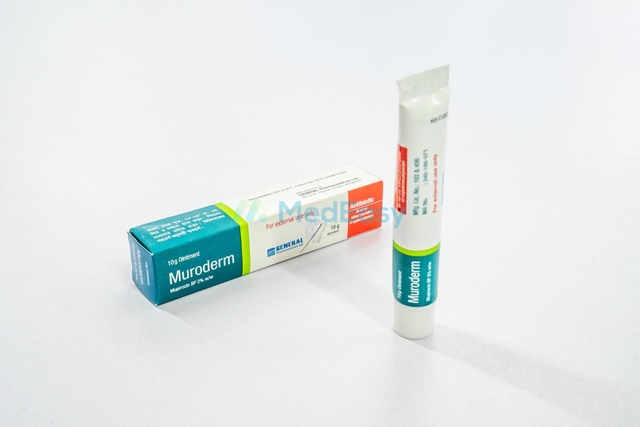
Indications of Pirocin 2% w/w
Pirocin 2% w/w ointment is indicated for the topical treatment of impetigo (skin diseases) due to Staphylococcus aureus and Streptococcus pyogenes. It is also indicated in folliculitis, furunculosis.
Theropeutic Class
Topical Antibiotic preparations
Pharmacology
Pirocin 2% w/w is a naturally occurring antibiotic. This antibacterial agent is produced by fermentation using the organism Pseudomonas fluorescens. It is active against a wide range of bacteria (e.g. Staphylococcus aureus including methicillin-resistant strains and Streptococcus pyogenes) those responsible for the majority of skin infections. It is also active against gram-negative pathogens, such as Escherichia coli and Haemophilus influenzae. Pirocin 2% w/w inhibits bacterial protein synthesis by reversibly and specifically binding to bacterial isoleucyl transfer-RNA synthetase.
Dosage & Administration of Pirocin 2% w/w
A small amount of Bactropen ointment should be applied to the affected area 3 times daily for up to 10 days. The safety and effectiveness of Pirocin 2% w/w ointment have been established in the age range of 2 months to 16 years.
Dosage of Pirocin 2% w/w
A small amount of Bactropen ointment should be applied to the affected area 3 times daily for up to 10 days. The safety and effectiveness of Pirocin 2% w/w ointment have been established in the age range of 2 months to 16 years.
Interaction of Pirocin 2% w/w
No drug interaction has been identified with Pirocin 2% w/w ointment.
Contraindications
The drug is contraindicated in individuals with a history of hypersensitivity reactions to Pirocin 2% w/w or any of the components of the preparation.
Side Effects of Pirocin 2% w/w
Reported side effects are burning, stinging or pain, itching and some patient may be suffered rash, nausea, erythema, dry skin, tenderness, swelling, contact dermatitis and increased exudate.
Pregnancy & Lactation
Reproduction studies on Pirocin 2% w/w ointment in animals have revealed no evidence of harm to the foetus. As there is no clinical experience on it’s use during pregnancy, Pirocin 2% w/w ointment should only be used in pregnancy when the potential benefits outweigh the possible risks of treatment.It is unknown whether this drug is excreted in human milk. Because many drugs are excreted in human milk, caution should be exercised when Pirocin 2% w/w ointment is administered to a nursing woman.
Precautions & Warnings
Pirocin 2% w/w ointment is not for ophthalmic or intra-nasal use. As with other antibacterial products, prolonged use may result in overgrowth of non-susceptible organisms, including fungi. When Pirocin 2% w/w is used on the face care should be taken to avoid the eyes. This is not suitable in conjunction with cannulae and at the site of central venous cannulation. In the event of a sensitization or severe local irritation from Pirocin 2% w/w ointment, usage should be discontinued and appropriate alternative therapy for the infection instituted. Mixing of Pirocin 2% w/w ointment with other preparations causes risk of dilution, resulting in a reduction of the antibacterial activity and potential loss of stability of the Pirocin 2% w/w in the ointment.
Overdose Effects of Pirocin 2% w/w
There is currently limited data with overdose of Pirocin 2% w/w ointment. In the event of overdose, the patient should be treated supportively with appropriate monitoring as necessary.
Storage Conditions
Keep below 25° C temperature, protected from light and moisture. Do not keep in freeze. Keep out of the reach of children.
Drug Classes
Topical Antibiotic preparations
Mode Of Action
Pirocin 2% w/w is a naturally occurring antibiotic. This antibacterial agent is produced by fermentation using the organism Pseudomonas fluorescens. It is active against a wide range of bacteria (e.g. Staphylococcus aureus including methicillin-resistant strains and Streptococcus pyogenes) those responsible for the majority of skin infections. It is also active against gram-negative pathogens, such as Escherichia coli and Haemophilus influenzae. Pirocin 2% w/w inhibits bacterial protein synthesis by reversibly and specifically binding to bacterial isoleucyl transfer-RNA synthetase.
Pregnancy
Reproduction studies on Pirocin 2% w/w ointment in animals have revealed no evidence of harm to the foetus. As there is no clinical experience on it’s use during pregnancy, Pirocin 2% w/w ointment should only be used in pregnancy when the potential benefits outweigh the possible risks of treatment.It is unknown whether this drug is excreted in human milk. Because many drugs are excreted in human milk, caution should be exercised when Pirocin 2% w/w ointment is administered to a nursing woman.