8% Off
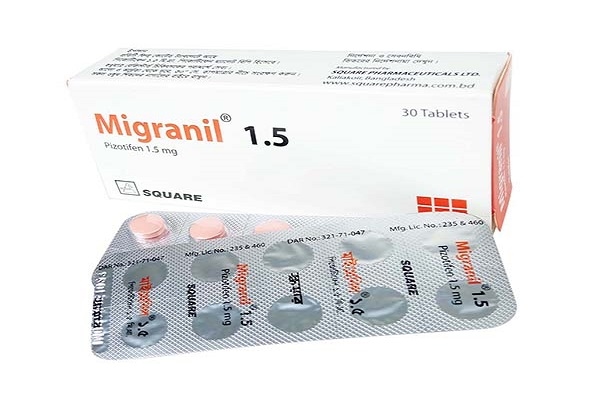
Migranil1.5 mg
Square Pharmaceuticals PLC.
৳64.77
Add to cart

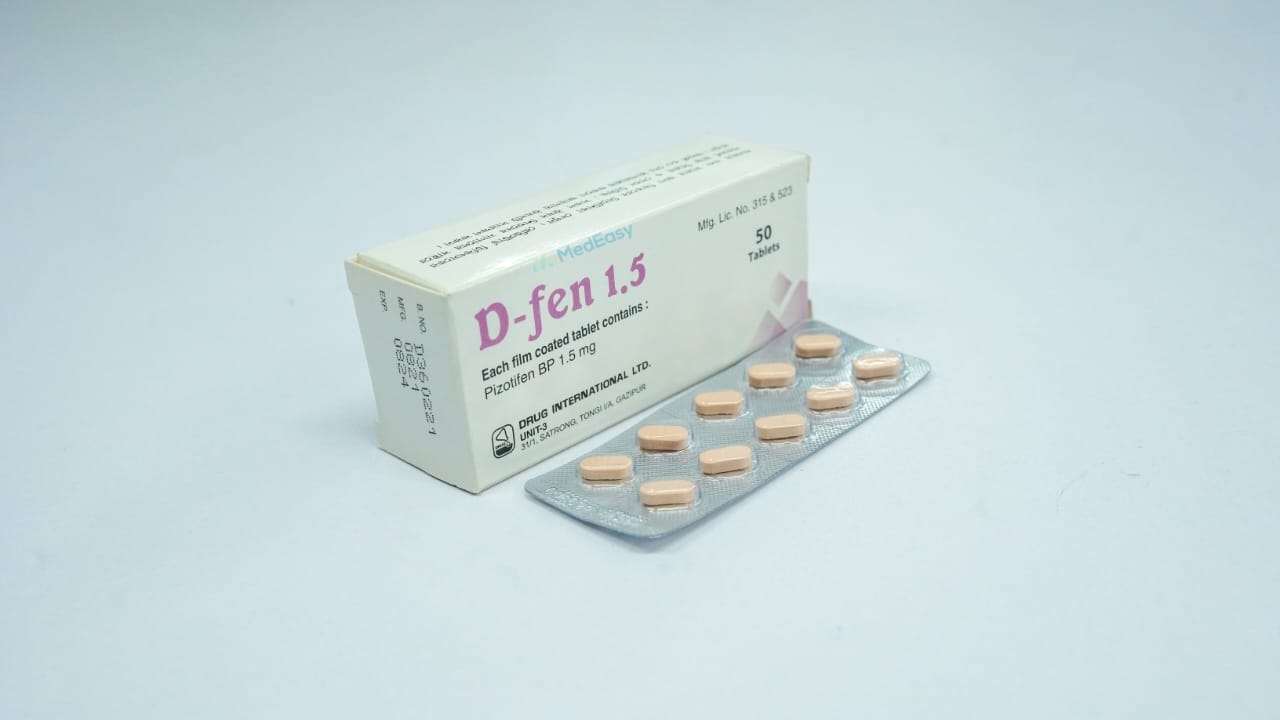
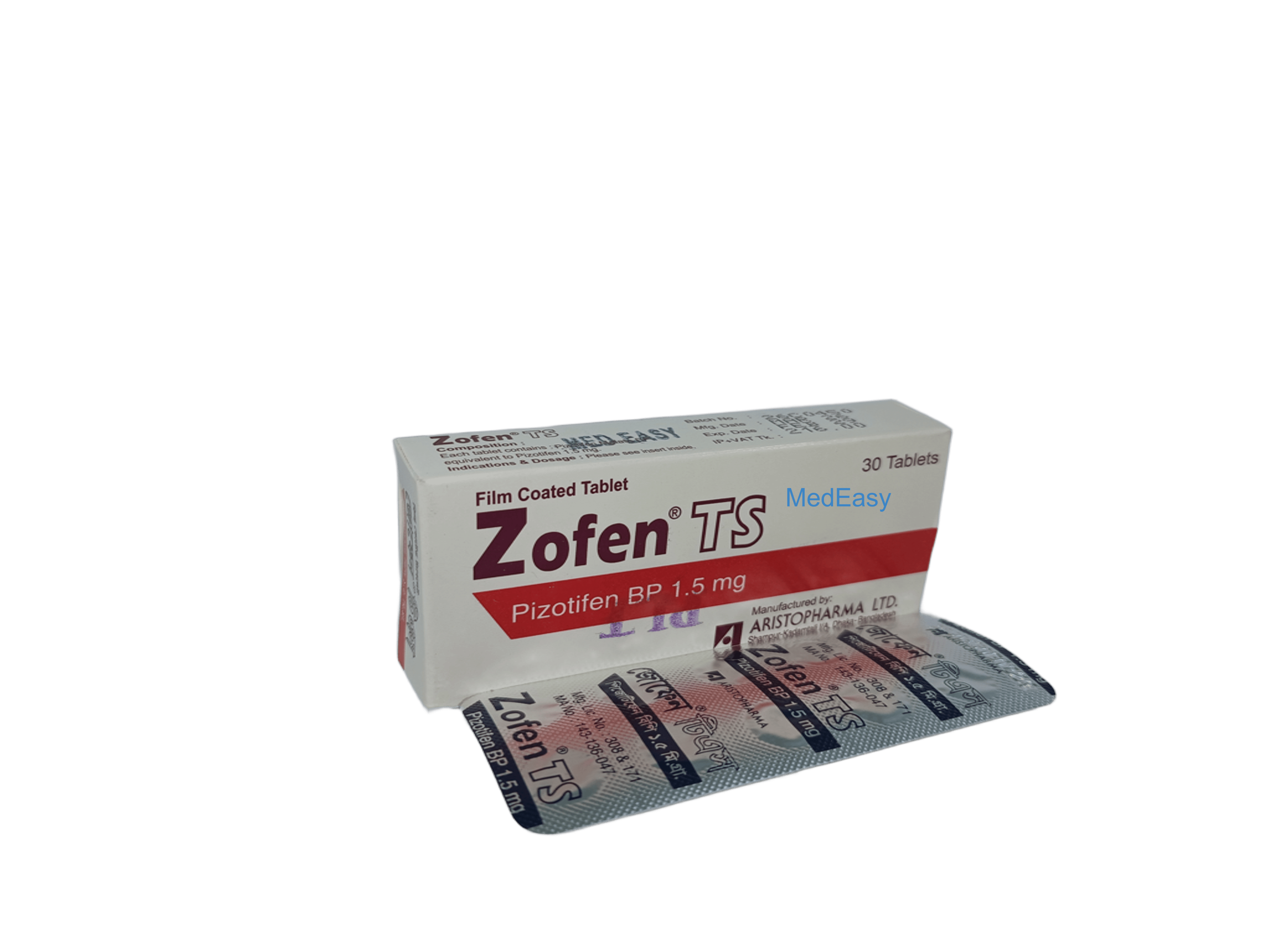
Pizofen TS 1.5 mg Tablet is available on MedEasy for ৳6.46 per piece, with home delivery anywhere in Bangladesh. It is manufactured by Navana Pharmaceuticals Ltd. Its generic name is Pizotifen.

Pizofen TS is indicated for the prophylaxis (prevention) of recurrent vascular headache of the migraine type, including classical migraine, common migraine, and cluster headache.
Pizofen TS is not effective for treating an acute migraine attack that has already started, and it is not an analgesic. It is intended only to reduce the frequency and severity of future attacks, and its full preventive benefit typically takes several weeks to become apparent.
Each tablet contains Pizotifen (as pizotifen malate/hydrogen maleate) as the active ingredient. In Bangladesh, Pizotifen is commonly available as oral tablets in strengths of 0.5 mg and 1.5 mg, along with the usual pharmaceutical excipients (including lactose in many formulations).
Pizofen TS is a tricyclic benzocycloheptathiophene compound with combined serotonin (5-HT2) receptor antagonist and antihistamine (H1 receptor antagonist) activity, along with mild anticholinergic and anti-bradykinin (anti-kinin) properties. It is used chiefly as a prophylactic (preventive) treatment for migraine and cluster headache, taken on a regular daily basis rather than during an attack.
Because of its antihistaminic and central sedative effects, Pizofen TS is also associated with drowsiness and increased appetite, which are expected pharmacological effects rather than idiosyncratic reactions.
Pizofen TS belongs to the therapeutic class of antihistamine preparations / antimigraine agents, specifically a serotonin (5-HT2) and histamine (H1) receptor antagonist used for migraine prophylaxis.
Pizotifen is a tricyclic compound that acts primarily as a competitive antagonist at serotonin (5-HT2) receptors and histamine (H1) receptors. It also has weak anticholinergic and anti-bradykinin (anti-kinin) activity.
In migraine prophylaxis, Pizotifen is thought to work by inhibiting the actions of serotonin and histamine on cranial blood vessel permeability and tone, reducing neurogenic inflammation, and raising the threshold for migraine attacks. It has no established analgesic or vasoconstrictor action and therefore does not relieve an attack once it has begun.
Pizotifen is well absorbed after oral administration, undergoes hepatic metabolism, and is eliminated mainly via the kidneys as metabolites, with a long elimination half-life that supports once-daily or divided dosing.
| Regimen | Dose |
|---|---|
| Starting dose | 0.5 mg once daily at bedtime, increased gradually according to response |
| Usual maintenance dose | 1.5 mg daily, taken as a single bedtime dose or in divided doses (e.g. three times daily) |
| Maximum dose | 4.5 mg daily (up to 3 mg may be given as a single dose) |
| Age | Dose |
|---|---|
| 2 years and older | Usually up to 1 mg at night, or up to 1.5 mg daily in divided doses, under medical supervision |
Safety and efficacy of Pizofen TS in children under 2 years of age have not been established.
Dosage adjustment or caution may be necessary in patients with significant hepatic or renal impairment (see Use in Special Populations).
Note: Pizofen TS is a preventive treatment and must be taken regularly every day, even when headache-free, to be effective. It is not for use during an acute migraine attack. Treatment should not be stopped abruptly after prolonged use (see Precautions and Warnings).
Pizofen TS tablets should be taken by mouth, with or without food. Because drowsiness is a common effect, the once-daily dose is usually best taken at bedtime; when divided doses are used, the largest portion is generally given in the evening. Tablets should be swallowed whole with water; do not crush or chew unless advised otherwise by a physician or pharmacist. Take Pizofen TS at the same time(s) each day for consistent preventive effect, and do not skip doses.
Pizofen TS has the following clinically significant drug interactions:
Always inform your physician or pharmacist about all medicines, supplements, and alcohol use before starting Pizofen TS.
Pizotifen is contraindicated in the following situations:
Pizotifen should be used with caution rather than being absolutely contraindicated in conditions such as angle-closure glaucoma, urinary retention, epilepsy, and hepatic/renal impairment — see Precautions and Warnings for details.
Side effects of Pizofen TS are largely related to its antihistaminic and anticholinergic activity.
Patients should seek medical advice if side effects are severe, persistent, or if signs of liver problems (yellowing of skin/eyes, dark urine) or allergic reaction occur.
Pregnancy: Clinical data on the use of Pizofen TS in pregnant women are very limited. Pizofen TS should be used during pregnancy only if clearly needed and if the potential benefit to the mother justifies the potential risk to the fetus. Consult a physician before use if pregnant or planning pregnancy.
Lactation: Pizofen TS passes into breast milk in small amounts; because safety in nursing infants has not been established, use during breastfeeding is generally not recommended. A physician should be consulted to weigh the benefits of therapy against potential risk to the breastfeeding infant.
Overdose with Pizofen TS may cause marked drowsiness, disorientation, agitation, rapid heartbeat, and, in severe cases, seizures or low blood pressure, particularly in children.
If an overdose of Pizofen TS is suspected, seek immediate medical attention or contact emergency services/a poison control center right away — do not wait for symptoms to appear. Take the medicine container/packaging to the hospital. Treatment is supportive and should be carried out under medical supervision; do not attempt specific home treatment beyond general first-aid measures and prompt medical care.
Store at room temperature (below 30°C), away from light and moisture. Keep out of reach of children.
Pizofen TS may be used for migraine prophylaxis in children aged 2 years and above, at lower doses than adults and under medical supervision. Safety and efficacy in children under 2 years of age have not been established.
No specific dose adjustment is generally required in the elderly, but they may be more sensitive to sedative and anticholinergic effects, so caution is advised.
Use with caution; dosage adjustment may be necessary, and liver function should be monitored (see Precautions and Warnings).
Use with caution; dosage adjustment may be necessary.
See Pregnancy and Lactation section — use only if clearly needed, under medical advice.
An initial trial of Pizofen TS for approximately 6–8 weeks at an adequate dose is usually recommended to assess whether it is effective in reducing migraine frequency/severity. If there is no meaningful benefit after this period, a physician may consider discontinuing or switching therapy. If effective, treatment is often continued for several months, with periodic medical review (e.g. every 3–6 months) to reassess the ongoing need for prophylaxis; when stopping, the dose should be tapered gradually rather than stopped abruptly.
Antihistamine (H1 receptor antagonist); Serotonin (5-HT2) receptor antagonist; Antimigraine prophylactic agent
Pizotifen acts as a competitive antagonist at serotonin (5-HT2) and histamine (H1) receptors, with additional weak anticholinergic and anti-bradykinin (anti-kinin) activity. By blocking these mediators' effects on cranial vessel permeability and neurogenic inflammation, Pizotifen raises the threshold for migraine attacks, reducing their frequency and severity when taken regularly as a preventive treatment.
Pizofen TS may be used in children aged 2 years and above for the prophylaxis of migraine, typically at doses up to about 1–1.5 mg daily in divided doses, under close medical supervision. Sedation and increased appetite/weight gain should be monitored, as children may be particularly sensitive to these effects.
Safety and efficacy of Pizofen TS in children under 2 years of age have not been established, and it should not be used in this age group.
Q: What is Pizofen TS 1.5 mg Tablet used for?
A: Pizofen TS 1.5 mg Tablet is used to prevent (not treat) recurrent migraine headaches and cluster headaches. It is taken regularly to reduce how often and how severely attacks occur, not to relieve an attack that has already started.
Q: Will Pizofen TS 1.5 mg Tablet stop a migraine attack that has already started?
A: No. Pizofen TS 1.5 mg Tablet is a preventive medicine only. It does not relieve an ongoing migraine attack; a separate acute treatment (such as an analgesic or triptan, as advised by your physician) is needed for that purpose.
Q: How long does Pizofen TS 1.5 mg Tablet take to work?
A: It may take several weeks (commonly 6–8 weeks) of regular daily use before the full preventive benefit of Pizofen TS 1.5 mg Tablet becomes apparent. Do not stop early just because attacks have not immediately reduced — discuss with your physician first.
Q: Why do I feel sleepy and hungrier after starting Pizofen TS 1.5 mg Tablet?
A: Drowsiness and increased appetite with weight gain are very common, expected effects of Pizofen TS 1.5 mg Tablet because of its antihistamine activity. Taking the dose at bedtime can help with sleepiness; discuss persistent or bothersome weight gain with your physician.
Q: Can I stop taking Pizofen TS 1.5 mg Tablet suddenly?
A: No. If you have been taking Pizofen TS 1.5 mg Tablet for a while, stopping suddenly can cause withdrawal symptoms such as depression, tremor, nausea, anxiety, malaise, dizziness, sleep disturbance, and weight loss. Your physician will usually advise reducing the dose gradually when it is time to stop.
Q: Is Pizofen TS 1.5 mg Tablet safe during pregnancy or breastfeeding?
A: Data on Pizofen TS 1.5 mg Tablet in pregnancy are limited, so it should be used in pregnancy only if clearly needed and if the benefit outweighs the potential risk to the baby, on your physician's advice. Use during breastfeeding is generally not recommended because safety in nursing infants has not been established. Always consult your physician if you are pregnant, planning pregnancy, or breastfeeding.
Disclaimer
The information provided is accurate to the best of our knowledge, but it does not replace professional medical advice. We cannot guarantee its completeness or accuracy, and the absence of specific information about a drug should not be taken as an endorsement. We are not responsible for any consequences arising from this information, so please consult a healthcare professional for any concerns or questions.