
8% Off
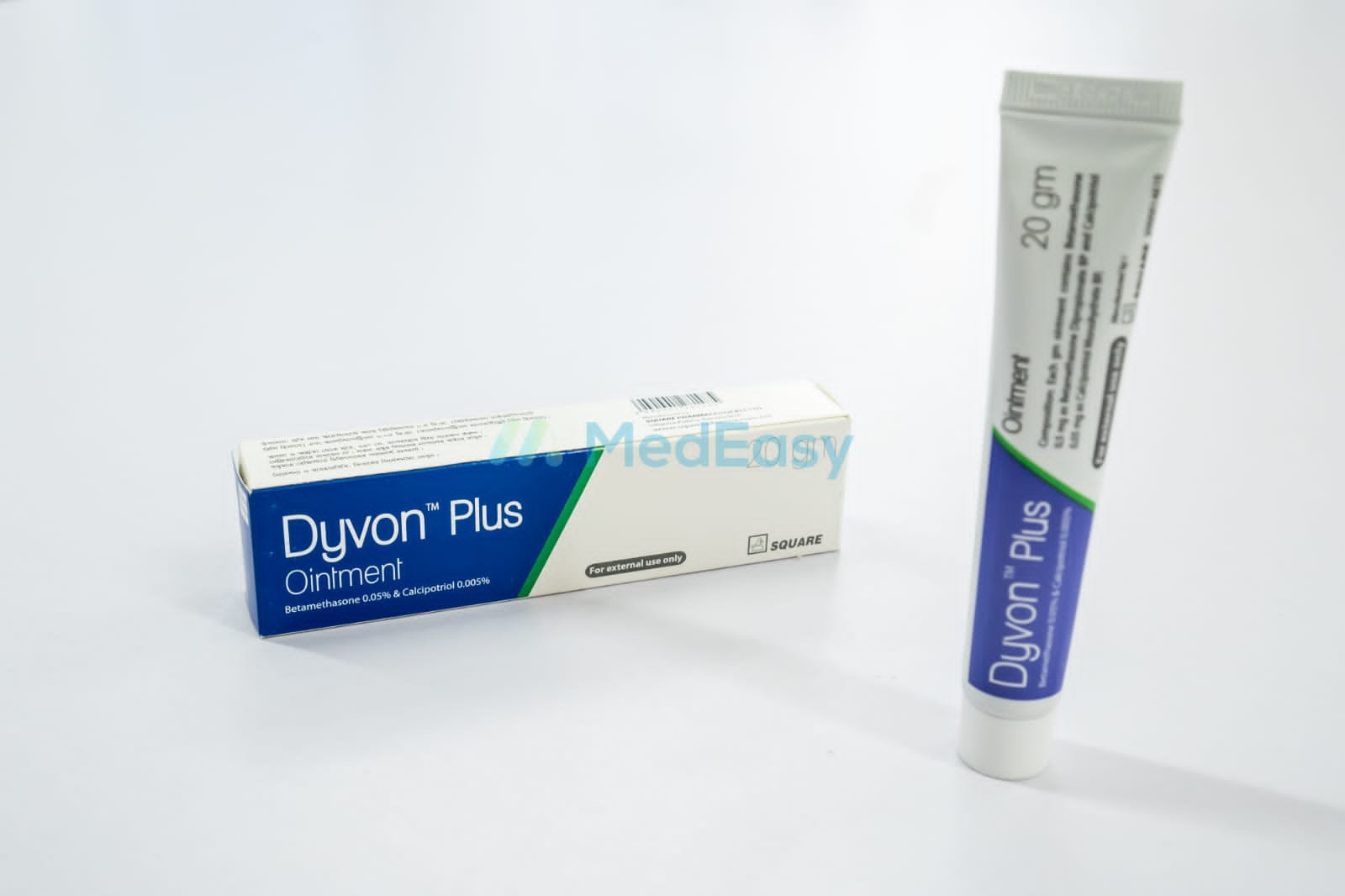
Dyvon Plus20 gm
Square Pharmaceuticals PLC.
৳350.65
Add to cart

Planex Plus 20 gm Ointment is available on MedEasy for ৳342.00 per 20 gm tube, with home delivery anywhere in Bangladesh. It is manufactured by Incepta Pharmaceuticals Ltd. Its generic name is Betamethasone + Calcipotriol.

Planex Plus is a fixed-dose topical combination indicated for the treatment of plaque psoriasis (psoriasis vulgaris) of the skin and scalp in patients whose disease is suitable for topical therapy.
Planex Plus is not indicated for erythrodermic, exfoliative, or guttate psoriasis, and is not intended for use on the face, groin, axillae, or other skin-fold areas.
Betamethasone + Calcipotriol combines two active ingredients that act on different pathways of psoriatic disease:
It is formulated as an ointment, topical suspension/gel, or cutaneous foam, depending on the brand and intended site of application (body, scalp).
Planex Plus is a topical, fixed-dose combination product used in dermatology for plaque psoriasis. It brings together a corticosteroid and a vitamin D3 analogue in a single application, which improves patient adherence compared with using two separate products.
The corticosteroid component provides rapid anti-inflammatory, antipruritic, and vasoconstrictive effects, while the vitamin D3 analogue component normalizes the excessive skin cell growth (keratinocyte proliferation) and abnormal differentiation seen in psoriatic plaques. Combining the two also allows calcipotriol to counteract some skin-thinning effects of the corticosteroid, and the corticosteroid reduces skin irritation that calcipotriol can cause when used alone.
Planex Plus is available in Bangladesh as an ointment and as a topical suspension under various brand names.
Planex Plus belongs to the therapeutic class of topical antipsoriatic combination agents, combining a Group I-II (potent) topical corticosteroid with a topical vitamin D3 analogue. It is classified under dermatological preparations used for the local treatment of psoriasis.
Betamethasone + Calcipotriol exerts its therapeutic effect through two complementary mechanisms:
Systemic absorption of both components through intact skin is generally low but can increase with application to large body surface areas, use of occlusive dressings, or use on damaged/inflamed skin, increasing the risk of systemic corticosteroid and vitamin D effects.
Planex Plus is for external (topical) use only and should be applied exactly as directed by the physician.
| Indication/Form | Adult Dose | Notes |
|---|---|---|
| Plaque psoriasis (body) - Ointment | Apply a thin layer to affected skin once daily | Treatment courses of up to 4 weeks at a time are typical; intermittent longer-term use (up to 52 weeks) may be directed by a physician with periodic review |
| Plaque psoriasis (scalp) - Gel/Foam | Apply once daily to the scalp lesions | Massage gently into affected scalp areas only |
| Maximum weekly quantity (all forms) | Not to exceed 100 g (or 15 g/day) per week | Applies to adults; do not treat more than 30% of total body surface area at one time |
Pediatric (12-17 years): Some formulations are approved for adolescents at a reduced maximum of 60 g per week, once-daily application, for up to 4 weeks, under direct physician supervision.
Application instructions: Wash and dry hands before and after application (unless hands are being treated). Apply a thin film and rub in gently. Avoid application to the face, groin, axillae, and other skin folds. Do not use occlusive dressings unless specifically instructed by a physician.
Planex Plus is for topical (external) use only - it must never be taken by mouth, applied to the eyes, mucous membranes, or open wounds. Apply a thin layer to clean, dry skin over the psoriatic plaques once daily, gently rubbing it in until absorbed. Wash hands after application unless the hands are part of the treated area. Do not bandage or cover the treated area (occlude) unless a physician has specifically advised it, as this increases drug absorption and side-effect risk.
Clinically significant interactions with Planex Plus are limited because systemic absorption from topical use is generally low, but the following should be noted:
Always inform the physician or pharmacist about all other topical and systemic medicines, including over-the-counter products, being used.
Betamethasone + Calcipotriol is contraindicated in patients with:
It should not be applied to skin affected by viral infections (e.g., herpes simplex, varicella), fungal or bacterial skin infections, or parasitic skin infections, and should not be used on the face.
Most adverse effects of Planex Plus are local and mild-to-moderate:
Patients should report any unusual or persistent skin reaction, or symptoms suggestive of hypercalcemia (e.g., nausea, weakness, excessive thirst), to their physician.
Pregnancy: Data on the use of Planex Plus in pregnant women are limited. Animal studies with the individual components have shown potential for fetal effects at high systemic exposure. Planex Plus should be used during pregnancy only if clearly needed, at the lowest effective dose and for the shortest duration, and only after consulting a physician who has weighed the potential benefit against the potential risk to the fetus.
Lactation: It is not known whether topically applied betamethasone or calcipotriol are excreted in breast milk in clinically significant amounts. As a precaution, Planex Plus should not be applied directly to the breast/nipple area before breastfeeding, and use elsewhere on the body should be limited to the smallest area and shortest duration necessary, under medical advice.
The following precautions apply when using Planex Plus:
Topical overuse or ingestion of Planex Plus is unlikely to cause acute life-threatening toxicity, but excessive or prolonged application over large body areas can lead to systemic corticosteroid effects (e.g., Cushingoid features, HPA-axis suppression) and hypercalcemia (nausea, vomiting, constipation, weakness, confusion). If accidental ingestion occurs, or if signs of hypercalcemia or systemic corticosteroid excess develop, seek immediate medical attention or contact a poison control center. Do not attempt to manage overdose at home without professional guidance.
Store at room temperature (below 30°C), away from light and moisture. Do not freeze. Keep the container tightly closed and out of reach of children.
Pediatric use: Certain formulations of Planex Plus are approved for adolescents 12 years and older at a reduced maximum weekly quantity; safety and efficacy in children under 12 years have not been established, and use in this age group is generally not recommended.
Elderly: No specific dose adjustment is generally required in elderly patients, but skin in older adults may be thinner and more prone to corticosteroid-related atrophy, so monitoring is advised.
Renal/hepatic impairment: No formal dose adjustment guidelines are established for topical use, but caution is advised in patients with severe renal or hepatic impairment, as they may be more susceptible to systemic effects if significant absorption occurs; use the smallest effective area and duration.
Standard treatment courses of Planex Plus are limited to 4 weeks of continuous once-daily use for an acute psoriatic flare. For long-term disease control, intermittent use (e.g., only as needed for flares, or on selected days per week) for up to 52 weeks may be prescribed under physician supervision, with regular reassessment of skin condition and calcium status. Treatment should not be continued beyond the period advised by the physician without follow-up review.
Topical corticosteroid + vitamin D3 analogue combination (antipsoriatic agent)
Betamethasone + Calcipotriol works through two complementary actions: betamethasone (a potent corticosteroid) suppresses local inflammation, reduces immune cell activity, and constricts blood vessels in the skin, relieving redness and itching; calcipotriol (a vitamin D3 analogue) binds vitamin D receptors in skin cells to normalize their abnormally rapid growth and division, reducing plaque thickness and scaling. Together, these actions produce faster and more complete clearing of psoriatic plaques than either ingredient alone.
Planex Plus may be used in adolescents aged 12 years and older for plaque psoriasis, with certain formulations specifically approved for this age group at a reduced maximum weekly quantity (typically 60 g/week) and treatment duration of up to 4 weeks, under close physician supervision. Safety and efficacy in children under 12 years have not been established, and Planex Plus is generally not recommended for this younger population due to a higher risk of systemic corticosteroid absorption relative to body surface area.
Q: What is Planex Plus 20 gm Ointment used for?
A: Planex Plus 20 gm Ointment is a topical combination medicine used to treat plaque psoriasis of the skin and scalp. It combines a corticosteroid and a vitamin D3 analogue to reduce inflammation, itching, and the thick scaly patches typical of psoriasis.
Q: How should I apply Planex Plus 20 gm Ointment?
A: Apply a thin layer of Planex Plus 20 gm Ointment to the affected skin once daily, as directed by your physician, and rub it in gently. Avoid applying it to the face, groin, armpits, or skin folds, and do not exceed the maximum weekly amount your doctor has recommended, since overuse increases the risk of side effects such as skin thinning and elevated calcium levels.
Q: Can I use Planex Plus 20 gm Ointment for a long time?
A: Continuous use is generally limited to 4 weeks at a time. For longer-term disease control, your physician may prescribe intermittent use for up to a year, with regular check-ups to monitor your skin and calcium levels. Do not use it longer than prescribed without medical review.
Q: Is Planex Plus 20 gm Ointment safe during pregnancy or breastfeeding?
A: Data are limited. Planex Plus 20 gm Ointment should be used during pregnancy or breastfeeding only if clearly needed and the potential benefit justifies the potential risk, and only under a physician's advice. If breastfeeding, avoid applying it to the breast or nipple area.
Q: Who should not use Planex Plus 20 gm Ointment?
A: Planex Plus 20 gm Ointment should not be used by people with a known allergy to betamethasone, calcipotriol, or any ingredient in the product, or by people with disorders of calcium metabolism. It should also not be applied to skin with viral, fungal, or bacterial infections, or to the face.
Q: What side effects should I watch for with Planex Plus 20 gm Ointment?
A: Common side effects include itching, burning, redness, and irritation at the application site. Rarely, prolonged or excessive use can cause skin thinning, stretch marks, or elevated blood calcium (hypercalcemia), which can cause nausea, weakness, or excessive thirst - contact your doctor if these occur.
Disclaimer
The information provided is accurate to the best of our knowledge, but it does not replace professional medical advice. We cannot guarantee its completeness or accuracy, and the absence of specific information about a drug should not be taken as an endorsement. We are not responsible for any consequences arising from this information, so please consult a healthcare professional for any concerns or questions.