
10% Off
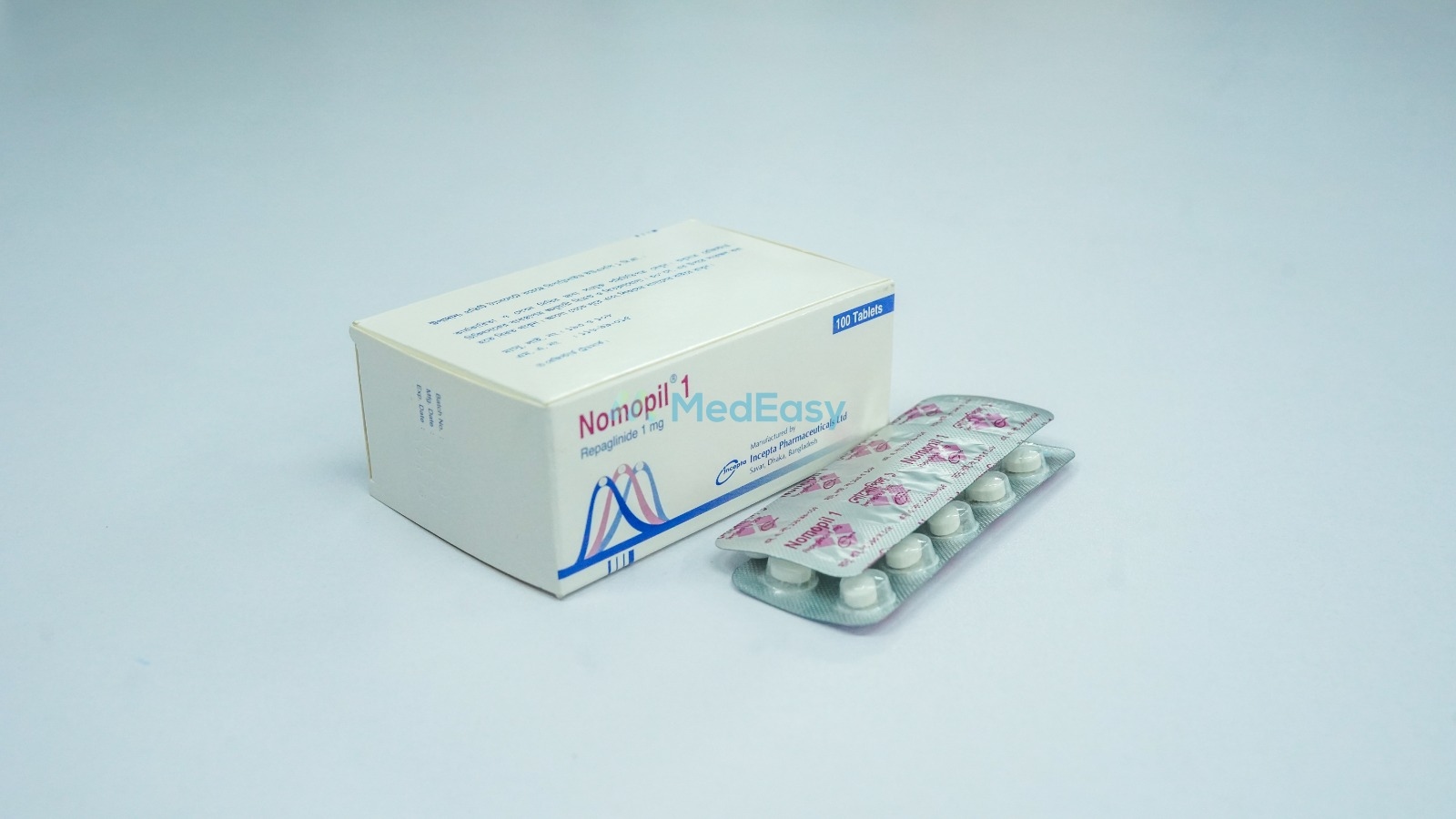
Nomopil1 mg
Incepta Pharmaceuticals Ltd.
৳27.00
Add to cart


Prandil is indicated as an adjunct to diet and exercise to improve glycemic control in adults with type 2 diabetes mellitus.
Prandil is not indicated for type 1 diabetes mellitus or for the treatment of diabetic ketoacidosis.
Each film-coated tablet contains Repaglinide as the active ingredient, commonly available in strengths of 0.5 mg, 1 mg, and 2 mg. Tablets also contain standard inactive excipients such as microcrystalline cellulose, calcium hydrogen phosphate, maize starch, polacrilin potassium, povidone, glycerol, magnesium stearate, and coloring agents that vary by strength.
Prandil is a short-acting, rapid-onset oral antidiabetic agent belonging to the meglitinide (carbamoylmethyl benzoic acid derivative) class. Unlike sulfonylureas, Prandil has a rapid onset and short duration of action, which allows it to be dosed flexibly with meals to control post-prandial glucose excursions.
Prandil is chemically distinct from sulfonylureas and is used specifically to lower blood glucose that rises after eating, mimicking the body's natural early-phase insulin response to meals.
Prandil belongs to the meglitinide class of oral antidiabetic agents (non-sulfonylurea insulin secretagogues), used in the management of type 2 diabetes mellitus.
Repaglinide lowers blood glucose by stimulating insulin release from the beta cells of the pancreas. It closes ATP-dependent potassium channels in the beta-cell membrane by binding at a site distinct from the sulfonylurea binding site. This channel closure depolarizes the cell, opening calcium channels; the resulting calcium influx induces insulin secretion.
Prandil should be taken shortly before meals (typically within 15–30 minutes of eating), 2, 3, or 4 times daily depending on the number of meals eaten.
| Indication | Dosing |
|---|---|
| Initial dose (patients not previously treated, or HbA1c < 8%) | 0.5 mg with each meal |
| Initial dose (patients previously treated with another glucose-lowering agent, or HbA1c ≥ 8%) | 1 mg or 2 mg with each meal |
| Dose titration | Double the pre-meal dose (up to 4 mg per meal) at intervals of at least one week, based on blood glucose response |
| Maximum dose | 4 mg per meal; total daily dose should not exceed 16 mg |
| Combination with metformin or a thiazolidinedione | Use the same dosing/titration schedule as monotherapy, added to the existing agent |
Prandil must be taken shortly before a meal. If a meal is skipped, the corresponding dose of Prandil should also be skipped to reduce the risk of hypoglycemia; if an extra meal is eaten, an extra dose should be taken before that meal. This "one meal, one dose; no meal, no dose" rule is a defining feature of Prandil dosing, distinguishing it from once-daily oral antidiabetics.
Use with caution and extend dosing intervals during dose titration in patients with hepatic impairment, as clearance of Prandil is reduced. Prandil is contraindicated in severe hepatic impairment (see Contraindications).
No initial dose adjustment is required for mild-to-moderate renal impairment, but titration should proceed cautiously. In patients with renal impairment or on dialysis, an initial dose of 0.5 mg with meals is recommended, with careful titration and monitoring due to increased hypoglycemia risk.
Use the same dosing principles with cautious, conservative titration, given increased sensitivity to hypoglycemia in older adults.
Concomitant use of Prandil with gemfibrozil is contraindicated. Gemfibrozil markedly inhibits the CYP2C8-mediated metabolism of Prandil, causing a large increase in Prandil plasma concentrations and a substantially increased risk of severe and prolonged hypoglycemia. This combination should be avoided entirely.
Drugs that inhibit CYP2C8 (e.g. trimethoprim, deferasirox) or CYP3A4 (e.g. ketoconazole, itraconazole, clarithromycin, certain protease inhibitors) can increase Prandil plasma levels and hypoglycemia risk; use with caution and monitor blood glucose closely. Drugs that induce CYP3A4/CYP2C8 (e.g. rifampin, phenytoin, carbamazepine) may reduce Prandil effectiveness.
Combining Prandil with insulin, sulfonylureas, or other agents that lower blood glucose increases the risk of hypoglycemia; dose adjustment and closer monitoring are needed.
NSAIDs, salicylates, MAO inhibitors, non-selective beta-blockers, ACE inhibitors, and alcohol may potentiate the glucose-lowering effect of Prandil.
Corticosteroids, thiazide diuretics, thyroid hormones, sympathomimetics, and estrogens/oral contraceptives may reduce the glucose-lowering effect of Prandil, requiring dose review.
Cyclosporine can increase Prandil exposure; if co-administered, initiate Prandil cautiously and monitor glucose closely.
Pregnancy: Data on the use of Prandil in pregnant women are limited. Poorly controlled diabetes during pregnancy is itself associated with increased maternal and fetal risk, and insulin is generally the preferred agent for glycemic control during pregnancy. Prandil should be used during pregnancy only if clearly needed and if the potential benefit justifies the potential risk to the fetus; consult a physician before use.
Lactation: It is not known whether Prandil is excreted in human breast milk; animal studies suggest excretion into milk. Because of the potential for hypoglycemia in a nursing infant, Prandil is generally not recommended during breastfeeding unless a physician determines the benefit outweighs the risk; alternative glucose-lowering therapy is usually preferred while breastfeeding.
Like other insulin secretagogues, Prandil can cause hypoglycemia. Risk is increased by skipping or delaying meals, strenuous exercise, alcohol intake, hepatic or renal impairment, malnutrition, and use with other glucose-lowering drugs. Patients must be counseled on the "no meal, no dose" rule and taught to recognize and manage hypoglycemia symptoms.
Use with caution and extended dose intervals in hepatic impairment; contraindicated in severe hepatic impairment (see Contraindications).
As with other antidiabetic agents, individualized glycemic targets and monitoring are recommended, particularly in patients with cardiovascular disease.
Effectiveness may diminish over time (secondary failure) or be reduced temporarily during periods of stress (fever, trauma, infection, surgery); temporary insulin therapy may be required in such situations.
Prandil is not a substitute for diet and exercise in the management of type 2 diabetes; these measures should continue during treatment. Blood glucose and periodic HbA1c monitoring are recommended.
Overdose of Prandil can cause an exaggerated glucose-lowering effect, leading to hypoglycemia, which may present with sweating, tremor, palpitations, confusion, and, in severe cases, seizures or loss of consciousness.
Mild hypoglycemia can usually be managed with oral glucose or sugar-containing food. Severe or symptomatic overdose requires immediate medical attention — contact a physician, emergency services, or a poison control center right away. Do not attempt to manage a severe overdose at home; because Prandil has a short duration of action, close monitoring of blood glucose is required, and glucose administration or supportive care may need to be continued for an extended period.
Store at room temperature (below 30°C), away from light and moisture. Keep out of reach of children.
Safety and efficacy of Prandil in patients under 18 years of age have not been established; use in children is not recommended.
Elderly patients may be more sensitive to the glucose-lowering effect of Prandil; initiate therapy conservatively and titrate cautiously due to increased hypoglycemia risk.
Use a conservative starting dose (0.5 mg with meals) with cautious titration in patients with renal impairment, including those on dialysis, due to increased hypoglycemia risk (see Dosage and Administration).
Use with caution and extended titration intervals in hepatic impairment; contraindicated in severe hepatic impairment.
See Pregnancy and Lactation section.
Prandil is generally used long-term as part of ongoing management of type 2 diabetes, for as long as it continues to provide adequate glycemic control alongside diet and exercise. Duration is determined by the prescribing physician based on periodic blood glucose and HbA1c monitoring; therapy may be adjusted, combined with other agents, or discontinued based on response and tolerability.
Repaglinide is classified as a meglitinide (carbamoylmethyl benzoic acid derivative), a non-sulfonylurea insulin secretagogue used in oral antidiabetic therapy.
Repaglinide stimulates rapid, meal-time insulin release from pancreatic beta cells by binding to a specific site on the ATP-sensitive potassium (K-ATP) channel, distinct from the sulfonylurea binding site. Channel closure depolarizes the beta cell, triggering calcium influx through voltage-gated calcium channels, which in turn stimulates insulin secretion. Because this binding and the resulting insulin release are rapid and short-lived, Repaglinide closely mimics the body's normal early-phase insulin response to a meal, lowering post-prandial glucose with a low risk of prolonged inter-meal hypoglycemia when dosed correctly.
C
The safety and efficacy of Prandil in pediatric patients (under 18 years) have not been established. Prandil is not recommended for use in children or adolescents.
Q: When should I take Prandil 1 mg Tablet?
A: Take Prandil 1 mg Tablet shortly before each meal, usually within 15–30 minutes of eating. If you skip a meal, skip that dose of Prandil 1 mg Tablet; if you eat an extra meal, take an extra dose before it. This meal-matched dosing helps control blood sugar rise from food while minimizing the risk of low blood sugar between meals.
Q: What happens if I take Prandil 1 mg Tablet but then don't eat?
A: Taking Prandil 1 mg Tablet without eating a meal significantly increases your risk of hypoglycemia (low blood sugar), which can cause sweating, shakiness, confusion, and in severe cases, seizures or loss of consciousness. Always eat shortly after taking Prandil 1 mg Tablet, and skip the dose entirely if you are going to skip the meal.
Q: Can I take Prandil 1 mg Tablet together with gemfibrozil?
A: No. Prandil 1 mg Tablet should never be taken together with gemfibrozil (a cholesterol-lowering fibrate medicine). Gemfibrozil markedly raises Prandil 1 mg Tablet levels in the blood and greatly increases the risk of severe, prolonged low blood sugar. Tell your doctor about all medicines you take, including gemfibrozil, before starting Prandil 1 mg Tablet.
Q: Is Prandil 1 mg Tablet safe during pregnancy or breastfeeding?
A: Data on Prandil 1 mg Tablet in pregnancy are limited, and insulin is generally preferred for blood sugar control during pregnancy. Prandil 1 mg Tablet should be used in pregnancy only if clearly needed and your doctor decides the benefit outweighs the potential risk to the baby. It is also generally not recommended while breastfeeding because it may pass into breast milk and cause low blood sugar in the infant; discuss safer alternatives with your physician.
Q: Can Prandil 1 mg Tablet be used in type 1 diabetes?
A: No. Prandil 1 mg Tablet is contraindicated in type 1 diabetes mellitus and in diabetic ketoacidosis. It works by stimulating the pancreas to release insulin, so it is only effective in type 2 diabetes, where the pancreas can still produce insulin.
Q: What should I do if I think I've taken too much Prandil 1 mg Tablet?
A: An overdose of Prandil 1 mg Tablet can cause severe low blood sugar (hypoglycemia), with symptoms such as sweating, tremor, confusion, or fainting. If you suspect an overdose, seek immediate medical attention or contact emergency services/poison control right away. Do not try to manage a serious overdose at home.
Disclaimer
The information provided is accurate to the best of our knowledge, but it does not replace professional medical advice. We cannot guarantee its completeness or accuracy, and the absence of specific information about a drug should not be taken as an endorsement. We are not responsible for any consequences arising from this information, so please consult a healthcare professional for any concerns or questions.

