
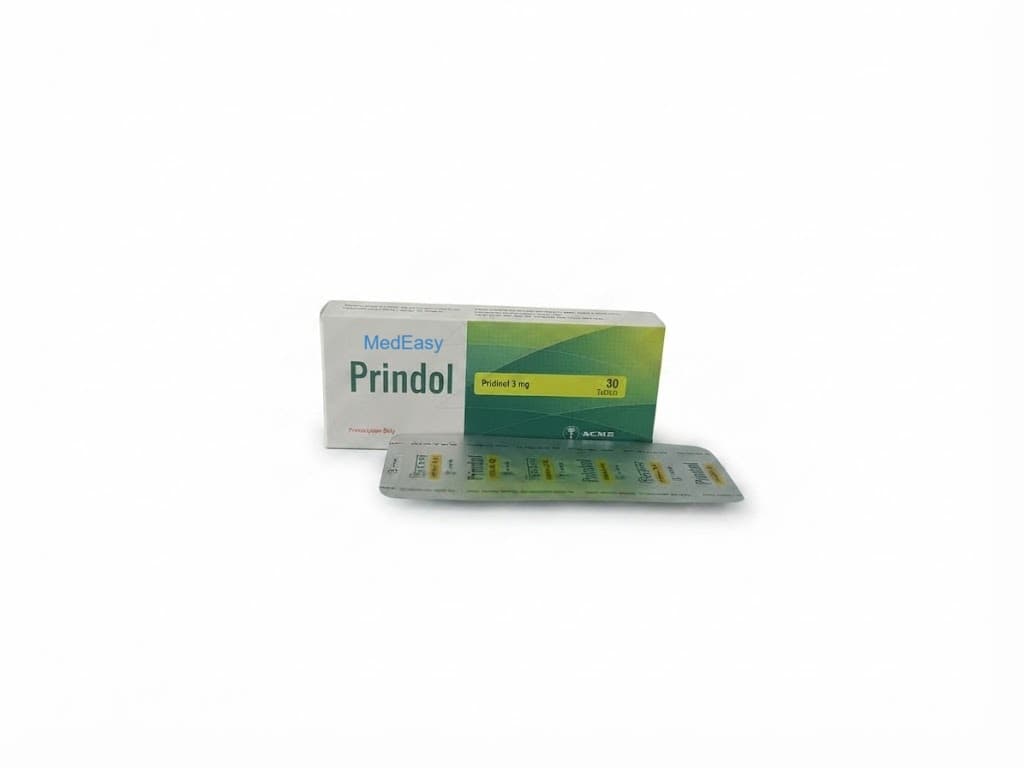

Medicine overview
Indications of Prindol
Prindol is indicated for the symptomatic relief of painful muscle spasm associated with musculoskeletal conditions.
- Established use: Relief of acute and chronic muscle spasm and associated pain in conditions such as low back pain, cervical pain/torticollis, and other painful musculoskeletal disorders.
- Adjunct use: Used as an adjunct to rest, physical therapy, and other supportive measures for acute musculoskeletal pain and spasm; Prindol is not a substitute for these measures.
- Less-established/off-label use: Sometimes used for myofascial pain syndrome, although high-quality trial evidence for this use is limited.
Prindol relieves the spasm and associated discomfort but does not treat the underlying cause of the musculoskeletal condition.
Composition
Each tablet contains Pridinol Mesilate (INN) as the active pharmaceutical ingredient. Strength and available dosage forms may vary by manufacturer; refer to the specific product label for exact composition.
Description
Prindol is a centrally acting skeletal muscle relaxant with anticholinergic (antimuscarinic) properties. It is used to relieve painful muscle spasm arising from musculoskeletal disorders. Acting on the central nervous system rather than directly on muscle tissue, Prindol reduces excessive muscle tone and the pain associated with spasm, helping to restore mobility and comfort.
Therapeutic Class
Prindol belongs to the therapeutic class of centrally acting skeletal muscle relaxants with anticholinergic activity.
Pharmacology
Pridinol Mesilate acts primarily as a centrally acting muscle relaxant with antimuscarinic (anticholinergic) activity. It is believed to reduce muscle spasm through action on central nervous system pathways involved in the regulation of muscle tone, rather than by a direct peripheral action on skeletal muscle fibers or the neuromuscular junction.
The anticholinergic activity of Pridinol Mesilate also contributes to relaxation of smooth muscle and accounts for typical side effects such as dry mouth, blurred vision, constipation, and urinary hesitancy. The muscle-relaxant effect generally begins within about an hour of oral administration and lasts several hours.
Dosage & Administration of Prindol
The dose of Prindol should be individualized by the prescribing physician based on the severity of symptoms and patient response.
| Indication | Population | Typical Dose* |
|---|---|---|
| Painful musculoskeletal muscle spasm | Adults | One tablet, 2–3 times daily, or as prescribed by the physician |
| Painful musculoskeletal muscle spasm | Elderly | Lower end of the adult dose range, titrated cautiously (see Use in Special Populations) |
| Painful musculoskeletal muscle spasm | Children | Safety and efficacy not established; use generally not recommended (see Pediatric Uses) |
*Exact strength, frequency, and maximum daily dose depend on the specific product/brand of Prindol; always follow the physician's prescription and the approved product label.
No well-established dose-adjustment guidelines exist for renal or hepatic impairment; use Prindol with caution and under close physician supervision in these patients.
Administration of Prindol
Prindol tablets are taken orally, generally with or after food to reduce the chance of gastrointestinal upset. Tablets should be swallowed whole with water and taken at evenly spaced intervals as directed by the physician. Do not exceed the prescribed dose or duration of treatment.
Interaction of Prindol
Prindol has anticholinergic activity and central nervous system effects, giving rise to the following clinically significant interactions:
- Other anticholinergic/antimuscarinic drugs (e.g., certain antihistamines, tricyclic antidepressants, some antipsychotics, other antispasmodics): concurrent use with Prindol may produce additive anticholinergic effects such as dry mouth, blurred vision, constipation, urinary retention, and confusion.
- CNS depressants (alcohol, benzodiazepines, opioids, sedating antihistamines, other muscle relaxants): concurrent use with Prindol may cause additive sedation, drowsiness, and impaired psychomotor performance.
- Drugs that slow gastrointestinal motility (e.g., opioids): anticholinergic effects of Prindol may add to constipating effects of these agents.
Inform your physician of all medicines, herbal supplements, and alcohol use before starting Prindol.
Contraindications
Pridinol Mesilate is contraindicated in patients with:
- Known hypersensitivity to Pridinol Mesilate or any component of the formulation.
- Narrow-angle (angle-closure) glaucoma.
- Urinary retention or clinically significant bladder outflow obstruction.
- Myasthenia gravis.
Side Effects of Prindol
Side effects of Prindol are mostly related to its anticholinergic activity and central nervous system effects:
- Common: Dry mouth, blurred vision, constipation, urinary hesitancy, drowsiness, dizziness.
- Less common: Tachycardia (fast heart rate), nausea, mild confusion (particularly in elderly patients), skin rash or other hypersensitivity reactions.
- Rare: Significant urinary retention, worsening of angle-closure glaucoma, marked sedation.
Contact your physician if side effects of Prindol are severe, persistent, or bothersome.
Pregnancy & Lactation
Pregnancy: There is limited well-controlled human data on the use of Prindol during pregnancy. Prindol should be used during pregnancy only if clearly needed and if the potential benefit justifies the potential risk to the fetus. Consult a physician before use.
Lactation: It is not established whether Prindol passes into human breast milk. Because of its anticholinergic activity, caution is advised, and a physician should be consulted to weigh the benefits of treatment against potential risk to the breastfed infant.
Precautions & Warnings
Prindol should be used with caution in the following situations:
- Anticholinergic burden: May cause dry mouth, blurred vision, constipation, and urinary hesitancy; use with caution in patients with conditions that may be worsened by anticholinergic effects (e.g., benign prostatic hyperplasia, chronic constipation).
- CNS effects: May cause sedation and dizziness; patients should avoid driving or operating heavy machinery until they know how Prindol affects them.
- Elderly patients: Increased sensitivity to anticholinergic and sedative effects of Prindol; use lower doses with close monitoring (see Use in Special Populations).
- Alcohol: Avoid alcohol during treatment with Prindol due to additive sedative effects.
- Cardiac conditions: Use with caution in patients prone to tachyarrhythmia, given the potential for anticholinergic-related tachycardia.
For contraindicated conditions, see Contraindications.
Overdose Effects of Prindol
Overdose with Prindol may present with exaggerated anticholinergic effects such as severe dry mouth, blurred vision, urinary retention, tachycardia, agitation, confusion, hallucinations, and marked drowsiness or, rarely, respiratory depression. If overdose with Prindol is suspected, seek immediate medical attention or contact a poison control center/emergency services right away. Do not attempt to treat an overdose at home. Management is supportive and symptomatic and should be carried out under medical supervision.
Storage Conditions
Store at room temperature (below 30°C), away from light and moisture. Keep out of reach of children.
Use In Special Populations
Elderly: Elderly patients are more sensitive to the anticholinergic and central nervous system effects of Prindol (e.g., confusion, urinary retention, constipation, sedation). Use the lowest effective dose with close monitoring.
Pediatric patients: Safety and efficacy of Prindol in children have not been established; use is generally not recommended in this population.
Renal/hepatic impairment: No well-established dose-adjustment guidelines exist for Prindol in these patients; use with caution and under close physician supervision.
Pregnancy and lactation: See Pregnancy and Lactation.
Duration Of Treatment
Treatment with Prindol should generally be limited to the shortest duration needed to relieve acute muscle spasm, typically a few days to a few weeks, as directed by the physician. Long-term use should be reassessed periodically, and the continued need for Prindol should be re-evaluated by the prescribing physician.
Drug Classes
Pridinol Mesilate is classified as a centrally acting skeletal muscle relaxant with anticholinergic (antimuscarinic) properties.
Mode Of Action
Pridinol Mesilate exerts its muscle-relaxant effect primarily through central nervous system pathways rather than by direct action on skeletal muscle or the neuromuscular junction. Its antimuscarinic (anticholinergic) activity is believed to contribute to relief of muscle spasm and also underlies characteristic side effects such as dry mouth and blurred vision.
Pediatric Uses
The safety and efficacy of Prindol in pediatric patients have not been established. Use of Prindol in children is generally not recommended unless specifically directed by a physician who has weighed the potential risks and benefits.
Frequently Asked Questions
Q: What is Prindol 3 mg Tablet used for?
A: Prindol 3 mg Tablet is a centrally acting muscle relaxant used for the symptomatic relief of painful muscle spasm associated with musculoskeletal conditions such as back pain and myofascial pain, usually alongside rest and physical therapy.
Q: Can I drink alcohol while taking Prindol 3 mg Tablet?
A: No. Alcohol can add to the sedative and drowsiness-causing effects of Prindol 3 mg Tablet and should be avoided during treatment.
Q: Is Prindol 3 mg Tablet safe to use during pregnancy?
A: There is limited data on the use of Prindol 3 mg Tablet in pregnancy. It should be used only if clearly needed and if the potential benefit justifies the potential risk to the fetus, and only after consulting a physician.
Q: What are the common side effects of Prindol 3 mg Tablet?
A: The most common side effects of Prindol 3 mg Tablet are dry mouth, blurred vision, constipation, urinary hesitancy, drowsiness, and dizziness, related to its anticholinergic activity.
Q: Who should not take Prindol 3 mg Tablet?
A: Prindol 3 mg Tablet should not be used by people with known hypersensitivity to it, narrow-angle glaucoma, urinary retention or bladder outflow obstruction, or myasthenia gravis.
Q: What should I do if I think I have taken too much Prindol 3 mg Tablet?
A: Seek immediate medical attention or contact a poison control center/emergency services right away if an overdose of Prindol 3 mg Tablet is suspected; do not attempt home treatment.
Disclaimer
The information provided is accurate to the best of our knowledge, but it does not replace professional medical advice. We cannot guarantee its completeness or accuracy, and the absence of specific information about a drug should not be taken as an endorsement. We are not responsible for any consequences arising from this information, so please consult a healthcare professional for any concerns or questions.
