
10% Off
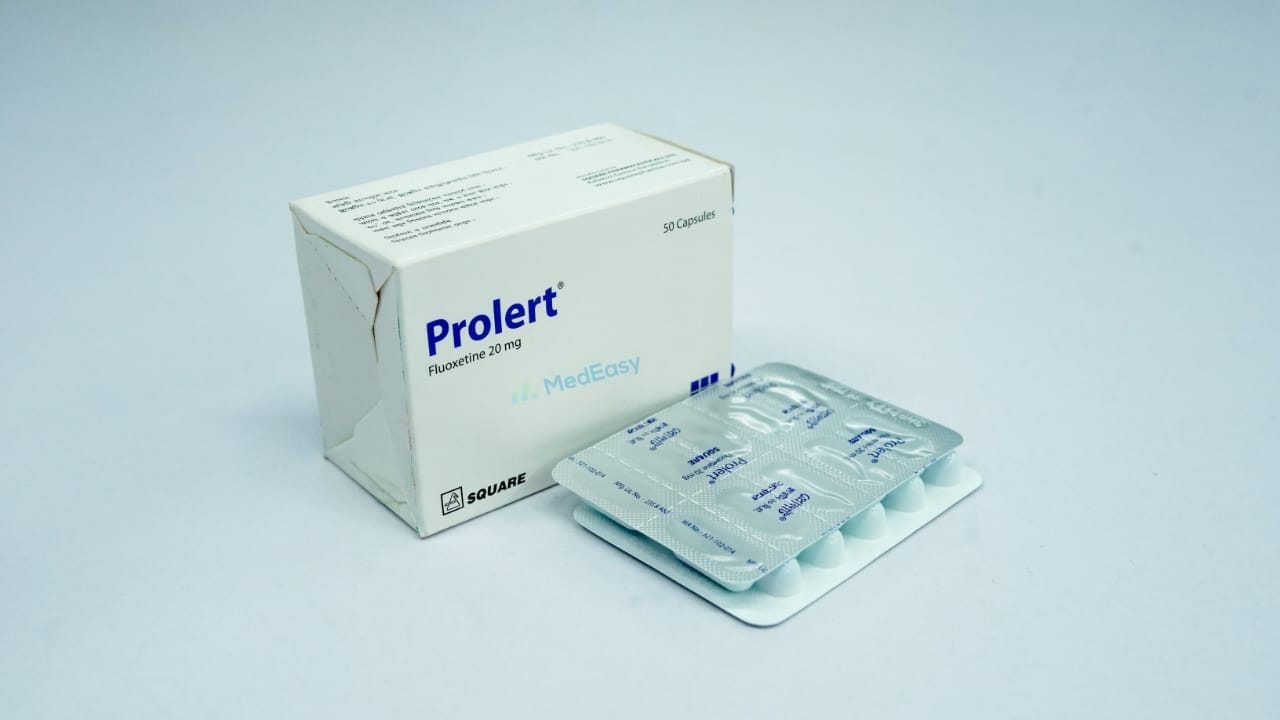
Prolert20 mg
Square Pharmaceuticals PLC.
৳27.09
Add to cart
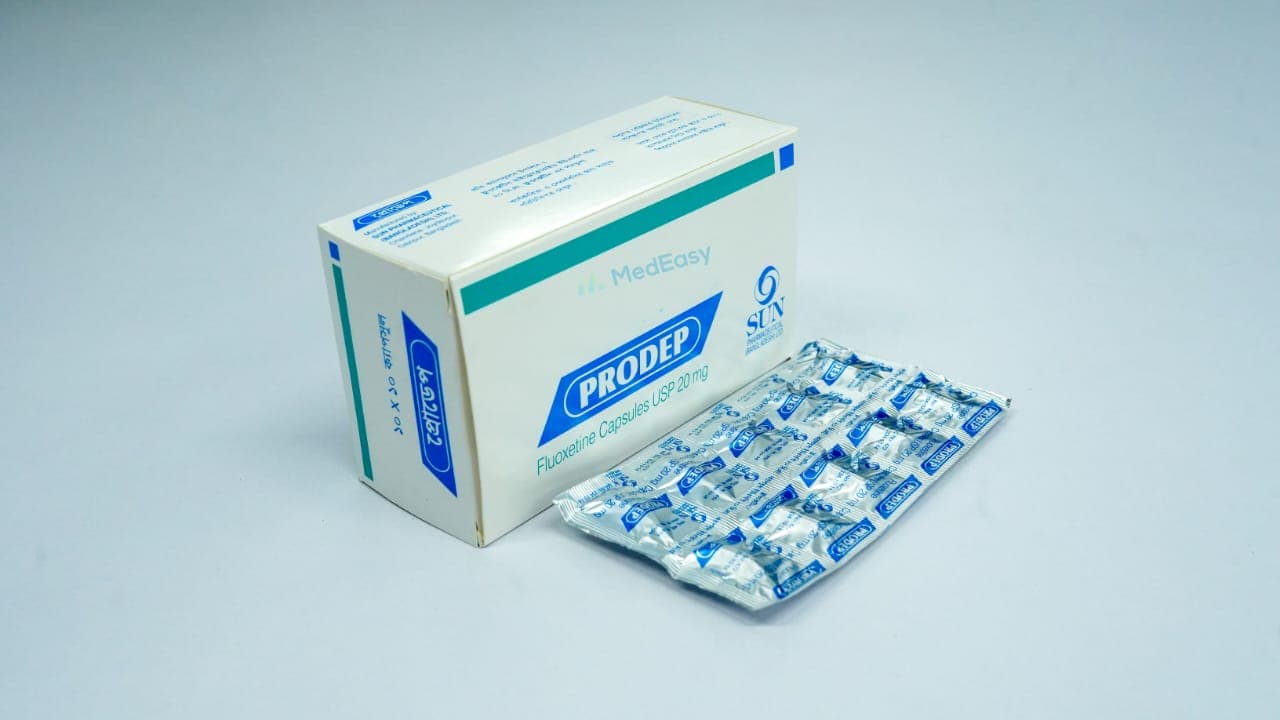

Prodep is a selective serotonin reuptake inhibitor (SSRI) indicated for the treatment of the following conditions, with evidence strength varying by indication:
Prodep should only be used for these indications under the supervision of a qualified physician, who will confirm the diagnosis and select the appropriate regimen.
Each capsule/tablet or oral solution unit contains Fluoxetine Hydrochloride equivalent to a specified strength of fluoxetine base (commonly available as 10 mg, 20 mg, or 40 mg fluoxetine, and as an oral solution). Strength and formulation should be confirmed on the product label.
Prodep is a selective serotonin reuptake inhibitor (SSRI), a class of antidepressant medicines that work by increasing the availability of serotonin, a neurotransmitter involved in mood regulation, in the brain. It is chemically unrelated to tricyclic, tetracyclic, or other available antidepressant agents.
Prodep is used to treat several psychiatric conditions including major depressive disorder, obsessive-compulsive disorder, bulimia nervosa, panic disorder, and premenstrual dysphoric disorder. It is distinguished among SSRIs by its notably long elimination half-life and that of its active metabolite, norfluoxetine, which has clinical implications for dosing, drug interactions, and discontinuation.
Prodep belongs to the therapeutic class of Selective Serotonin Reuptake Inhibitors (SSRIs), a subclass of antidepressant medications.
Fluoxetine Hydrochloride selectively inhibits the reuptake of serotonin (5-hydroxytryptamine) at the presynaptic neuron, increasing the concentration of serotonin available in the synaptic cleft and enhancing serotonergic neurotransmission. It has minimal effect on the reuptake of norepinephrine or dopamine and has weak affinity for muscarinic, histaminergic, and alpha-adrenergic receptors, which accounts for its relatively favorable side-effect profile compared with older antidepressants.
Pharmacokinetics: Fluoxetine Hydrochloride is well absorbed orally, undergoes hepatic metabolism (primarily via CYP2D6) to its active metabolite norfluoxetine, and is a potent inhibitor of the CYP2D6 enzyme itself. It has a long elimination half-life of approximately 4 to 6 days (fluoxetine) and 4 to 16 days (norfluoxetine) with chronic dosing, which is substantially longer than most other SSRIs. This means steady-state is reached slowly, and drug effects and interactions can persist for several weeks after the last dose is taken.
Dosage of Prodep must be individualized by a physician based on the indication, patient response, and tolerability. Representative adult dosing by indication is summarized below.
| Indication | Usual Adult Starting Dose | Usual Adult Dose Range |
|---|---|---|
| Major Depressive Disorder | 20 mg once daily (morning) | 20-80 mg/day |
| Obsessive-Compulsive Disorder | 20 mg once daily | 20-80 mg/day |
| Bulimia Nervosa | 60 mg once daily (may need gradual titration from a lower dose) | Typically 60 mg/day |
| Panic Disorder | 10 mg once daily | 10-60 mg/day |
| Premenstrual Dysphoric Disorder | 20 mg once daily, continuously or during the luteal phase only | 20 mg/day |
For MDD (age 8 and above) and OCD (age 7 and above), treatment is usually initiated at a low dose (e.g., 10 mg/day) with gradual titration by the physician based on weight, response, and tolerability. Pediatric use for other indications is not established.
A lower dose or less frequent dosing schedule should be used in patients with hepatic impairment, as clearance of Prodep and its active metabolite is reduced.
Prodep may be taken with or without food. Doses above 20 mg/day may be divided (morning and noon) to reduce nausea and insomnia. Capsules/tablets should be swallowed whole; the oral solution should be measured with an accurate measuring device.
Do not stop, increase, decrease, or share this medicine with others without consulting your physician. Abrupt discontinuation after prolonged use should be avoided; if discontinuation is necessary, the dose should be tapered gradually under medical supervision.
Prodep is administered orally, once daily (typically in the morning) or divided into two doses (morning and midday) if higher doses cause nausea or insomnia. It can be taken with or without food. The oral solution should be diluted or measured as directed on the product label. Consistency in the timing of daily doses helps maintain stable drug levels.
Prodep has several clinically significant drug interactions:
Always inform your physician or pharmacist of all medicines, supplements, and herbal products being used before starting Prodep.
Fluoxetine Hydrochloride is contraindicated in the following situations:
Common and clinically important side effects of Prodep include:
Because Prodep and its active metabolite have a long half-life, side effects and interactions may take longer to appear or resolve compared with other SSRIs.
Pregnancy: Prodep should be used during pregnancy only if the potential benefit to the mother clearly justifies the potential risk to the fetus. Use of SSRIs, including Prodep, in the third trimester has been associated with a poor neonatal adaptation syndrome (respiratory distress, feeding difficulty, jitteriness, or irritability in the newborn) in some infants; some studies have also suggested a possible small increased risk of persistent pulmonary hypertension of the newborn with late-pregnancy SSRI exposure. Discontinuation of an established antidepressant should not be undertaken without consulting a physician, as untreated depression itself carries risks in pregnancy.
Lactation: Prodep and its active metabolite are excreted in human breast milk. Because of the potential for adverse effects on the nursing infant, a decision should be made by the physician whether to discontinue breastfeeding or discontinue the drug, taking into account the importance of the medicine to the mother. Use only under close medical supervision if breastfeeding.
Boxed Warning - Suicidality Risk: Antidepressants, including Prodep, increase the risk of suicidal thinking and behavior in children, adolescents, and young adults compared with placebo. Close monitoring for clinical worsening and emergence of suicidal thoughts is essential, especially during the first few months of therapy and after dose changes.
Other precautions with Prodep:
Overdose of Prodep may cause nausea, vomiting, seizures, agitation, restlessness, tachycardia, and, rarely, serotonin syndrome, particularly if taken with other serotonergic agents. Suspected overdose is a medical emergency.
In case of suspected overdose, seek immediate medical attention or contact a poison control center/emergency services right away. Do not attempt to induce vomiting or manage the situation at home. Treatment in a hospital setting is generally supportive, based on the patient's clinical presentation; there is no specific antidote.
Store at room temperature (below 30°C), protected from light and moisture. Keep out of reach of children.
Pediatric Use: Prodep is approved for MDD in patients 8 years and older and for OCD in patients 7 years and older. Safety and efficacy for other indications (bulimia nervosa, panic disorder, PMDD, bipolar depression/treatment-resistant depression in combination with olanzapine) have not been established in pediatric patients. Growth and weight should be monitored during long-term pediatric treatment. See Precautions and Warnings for the suicidality risk in this age group.
Geriatric Use: No specific dosage adjustment is generally required based on age alone, but elderly patients may be more susceptible to hyponatremia and should be monitored accordingly; a lower or less frequent dose may be considered in frail elderly patients.
Renal Impairment: No dosage adjustment is typically required in mild-to-moderate renal impairment; caution is advised in severe renal impairment.
Hepatic Impairment: A lower dose or less frequent dosing schedule of Prodep should be used, as clearance is reduced (see Dosage and Administration).
Duration of treatment with Prodep is individualized by the treating physician based on indication and response. Acute depressive or OCD episodes are typically treated for at least 6-8 weeks to assess response, with continued maintenance therapy for several months to years to prevent relapse, as determined by the prescriber. Treatment should not be stopped abruptly without medical advice.
Selective Serotonin Reuptake Inhibitor (SSRI); Antidepressant
Fluoxetine Hydrochloride works by selectively inhibiting the reuptake of serotonin at the presynaptic neuronal membrane, increasing serotonin availability in the synaptic cleft and enhancing serotonergic neurotransmission, which is believed to underlie its antidepressant, anti-obsessional, and anti-panic effects.
C
Prodep is approved for use in pediatric patients for two specific indications: Major Depressive Disorder (age 8 years and older) and Obsessive-Compulsive Disorder (age 7 years and older). Dosing in children and adolescents is generally initiated at a lower dose than in adults and titrated gradually by the physician based on body weight, clinical response, and tolerability.
Safety and efficacy of Prodep have not been established in pediatric patients for bulimia nervosa, panic disorder, premenstrual dysphoric disorder, or bipolar depression/treatment-resistant depression (combination with olanzapine). All pediatric and adolescent patients started on Prodep should be closely monitored for worsening depression and emergence of suicidal thoughts, particularly during the initial weeks of therapy.
Q: What is Prodep 20 mg Capsule used for?
A: Prodep 20 mg Capsule is an SSRI antidepressant used to treat major depressive disorder, obsessive-compulsive disorder (OCD), bulimia nervosa, panic disorder, and premenstrual dysphoric disorder (PMDD). In combination with olanzapine, it is also used for depressive episodes associated with bipolar I disorder and for treatment-resistant depression.
Q: How long does it take for Prodep 20 mg Capsule to work?
A: Some improvement in sleep, energy, or appetite may occur within 1-2 weeks, but the full antidepressant effect of Prodep 20 mg Capsule usually takes 4-6 weeks or longer. It is important to continue taking the medicine as prescribed even if you do not feel better immediately.
Q: Can I stop taking Prodep 20 mg Capsule suddenly?
A: No. Prodep 20 mg Capsule should not be stopped abruptly after prolonged use. Although its long half-life makes discontinuation symptoms less pronounced than with some other antidepressants, your physician should gradually taper the dose to reduce the risk of discontinuation symptoms and relapse.
Q: Who should not take Prodep 20 mg Capsule?
A: Prodep 20 mg Capsule must not be used by anyone with a known hypersensitivity to it, by anyone currently taking or who has taken a monoamine oxidase inhibitor (MAOI) within the past 14 days (risk of serotonin syndrome), or in combination with pimozide or thioridazine (risk of dangerous heart rhythm problems).
Q: Is Prodep 20 mg Capsule safe during pregnancy or breastfeeding?
A: Prodep 20 mg Capsule should be used in pregnancy only if clearly needed, as SSRI use late in pregnancy has been linked to neonatal adaptation problems in some newborns. Prodep 20 mg Capsule also passes into breast milk, so a physician should weigh the benefits against potential risks to a nursing infant before it is used during breastfeeding.
Q: What should I do if I miss a dose or take too much Prodep 20 mg Capsule?
A: If you miss a dose, take it as soon as you remember unless it is close to the time of your next dose; do not double the dose. If you suspect an overdose of Prodep 20 mg Capsule, seek immediate medical attention or contact emergency services/poison control right away, as overdose can cause serious effects including seizures and serotonin syndrome.
Disclaimer
The information provided is accurate to the best of our knowledge, but it does not replace professional medical advice. We cannot guarantee its completeness or accuracy, and the absence of specific information about a drug should not be taken as an endorsement. We are not responsible for any consequences arising from this information, so please consult a healthcare professional for any concerns or questions.

