
10% Off
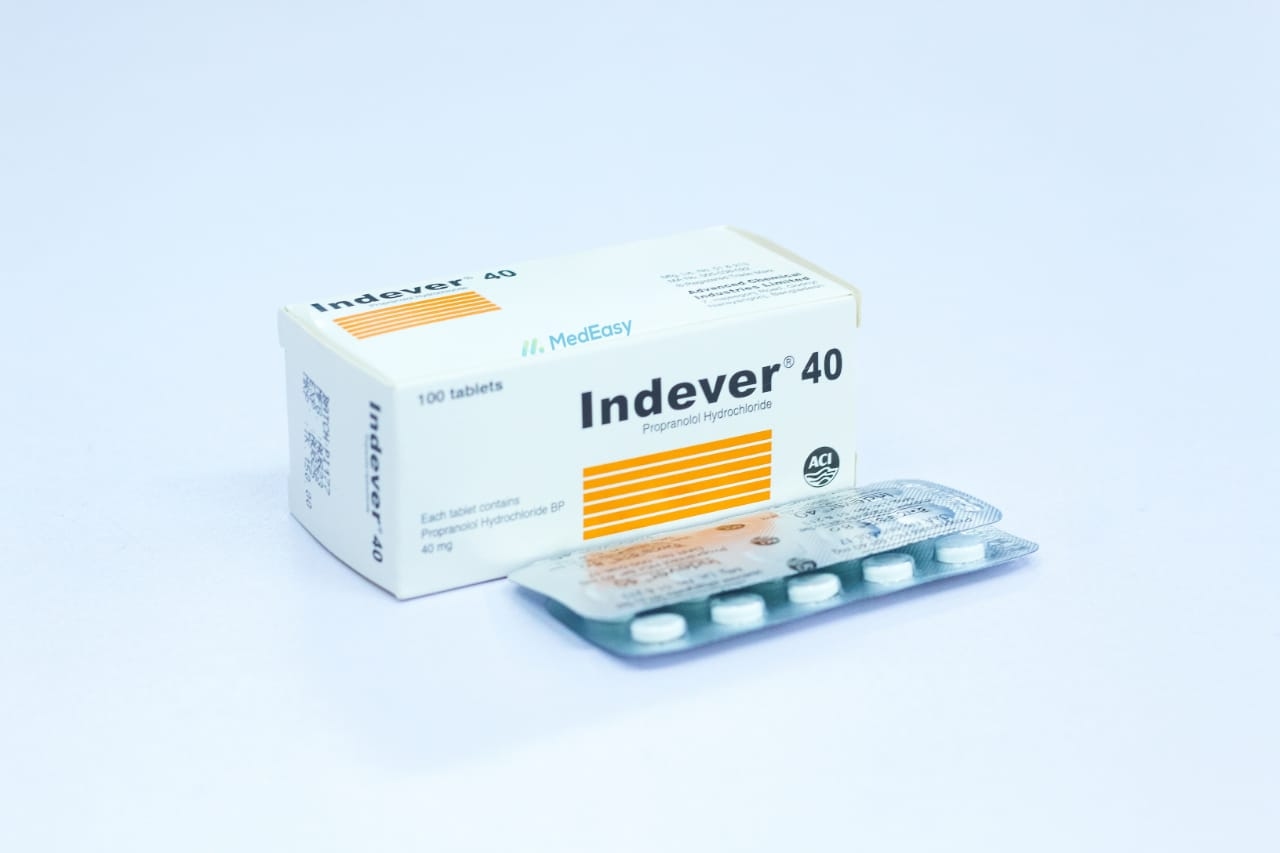
Indever40 mg
ACI Limited
৳13.50
Add to cart
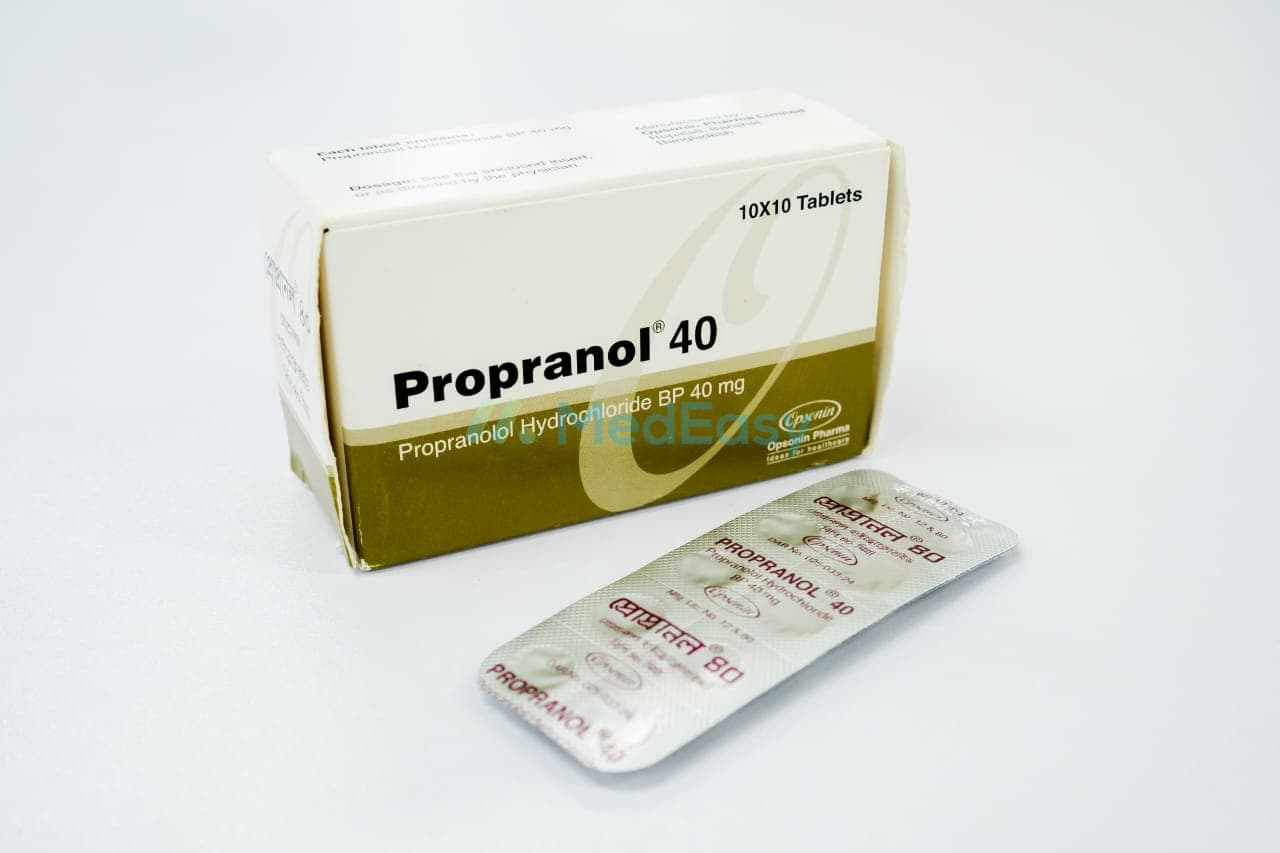

Propranol 40 mg is a non-selective beta-adrenergic blocking agent used for a range of cardiovascular and other conditions. Its evidence-based uses include:
The specific indication and dose must be individualized by a physician; Propranol 40 mg is not indicated for hypertensive emergencies.
Each tablet/capsule contains Propranol 40 mg as the active pharmaceutical ingredient, available in various strengths (e.g., 10 mg, 20 mg, 40 mg, 80 mg) as immediate-release tablets, extended-release capsules, and oral solution, along with standard pharmaceutical excipients.
Propranol 40 mg is a non-cardioselective beta-adrenergic receptor blocking agent that has been used for decades in the management of hypertension, angina, arrhythmias, and several non-cardiac conditions such as migraine prevention and essential tremor. It blocks both beta-1 and beta-2 adrenergic receptors, distinguishing it from cardioselective beta-blockers.
Propranol 40 mg is available in immediate-release and extended-release oral formulations, allowing flexible dosing depending on the indication being treated.
Propranol 40 mg belongs to the therapeutic class of non-selective beta-adrenergic receptor blocking agents (beta-blockers).
Propranol 40 mg competitively blocks beta-1 and beta-2 adrenergic receptors, without significant intrinsic sympathomimetic activity. Blockade of beta-1 receptors in the heart decreases heart rate, myocardial contractility, and cardiac output, and reduces reflex orthostatic tachycardia. Blockade of beta-2 receptors in bronchial and vascular smooth muscle can produce bronchoconstriction and peripheral vasoconstriction, which explains its caution in reactive airway disease.
The antihypertensive mechanism of Propranol 40 mg is not fully established but is thought to involve decreased cardiac output, inhibition of renin release from the kidney, and reduction of central sympathetic outflow. In angina, it reduces myocardial oxygen demand by lowering heart rate, contractility, and blood pressure. In migraine prophylaxis and tremor, the exact mechanism is unclear but may relate to central beta-adrenergic blockade.
Dosage of Propranol 40 mg must be individualized by indication and titrated based on response and tolerability.
| Indication | Typical Adult Dosage |
|---|---|
| Hypertension | Initial 40 mg twice daily, increased gradually; usual maintenance 120-240 mg/day; maximum 640 mg/day |
| Angina pectoris | 80-320 mg/day in 2-4 divided doses |
| Arrhythmias/Atrial fibrillation (rate control adjunct) | 10-30 mg 3-4 times daily before meals and at bedtime |
| Post-myocardial infarction | Initial 40 mg 3 times daily, titrated to 60-80 mg 3 times daily as tolerated |
| Migraine prophylaxis | Initial 80 mg/day in divided doses; effective range 160-240 mg/day |
| Essential tremor | Initial 40 mg twice daily; usual effective dose around 120 mg/day |
Extended-release capsules are usually taken once daily. Propranol 40 mg should not be stopped abruptly; discontinuation must be tapered gradually over 1-2 weeks under medical supervision to avoid rebound angina, arrhythmia, or hypertension.
See Dosage and Administration for indication-specific adult dosing of Propranol 40 mg. Pediatric dosing (where used, e.g., infantile hemangioma under specialist supervision) is weight-based and must be determined by a physician.
Propranol 40 mg immediate-release tablets/solution are usually taken before meals and at bedtime as directed; extended-release capsules are taken once daily, generally in the morning, and should be swallowed whole without crushing or chewing. Take at the same time(s) each day and do not stop taking Propranol 40 mg suddenly without consulting a physician.
Propranol 40 mg has several clinically significant drug interactions:
Propranol 40 mg is contraindicated in:
Common and important adverse effects of Propranol 40 mg include:
Propranol 40 mg should be used during pregnancy only if the potential benefit justifies the potential risk to the fetus, under close physician supervision. Use near delivery has been associated with neonatal bradycardia, hypoglycemia, and respiratory depression, so newborns should be monitored if exposure occurred close to term. Propranol 40 mg is excreted in breast milk; a physician should be consulted to weigh the benefits of breastfeeding against potential infant exposure, and the infant should be observed for signs of beta-blockade if breastfeeding is continued.
Propranol 40 mg should not be discontinued abruptly, as sudden withdrawal can precipitate rebound angina, myocardial infarction, or severe hypertension in susceptible patients; discontinuation should always be gradual and physician-supervised.
Overdose of Propranol 40 mg can cause severe bradycardia, hypotension, bronchospasm, heart failure, seizures, and loss of consciousness, and can be life-threatening. If overdose is suspected, seek immediate emergency medical attention or contact a poison control center right away; do not attempt to manage an overdose at home. Treatment is supportive and must be provided in a hospital setting under medical supervision.
Store Propranol 40 mg at room temperature (below 30°C), protected from light and moisture. Keep out of reach of children.
Elderly: Dose selection should start at the lower end of the dosing range due to reduced clearance of Propranol 40 mg in older adults; monitor closely for bradycardia and hypotension.
Renal impairment: No specific dose adjustment is generally required, but caution and monitoring are advised.
Hepatic impairment: Since Propranol 40 mg undergoes extensive hepatic metabolism, dose reduction and careful monitoring are recommended in patients with significant liver disease.
Pediatric patients: See Pediatric Uses.
Duration of treatment with Propranol 40 mg depends on the indication; chronic conditions such as hypertension, angina, and tremor typically require long-term, ongoing therapy as directed by a physician, with periodic reassessment. Treatment should never be stopped abruptly (see Precautions and Warnings).
Propranol 40 mg belongs to the non-selective beta-adrenergic receptor blocking agent (beta-blocker) drug class.
Propranol 40 mg works by competitively blocking beta-1 and beta-2 adrenergic receptors, reducing heart rate, myocardial contractility, cardiac output, and renin release, thereby lowering blood pressure and myocardial oxygen demand.
Category C
Safety and effectiveness of Propranol 40 mg for general cardiovascular indications in pediatric patients have not been fully established for all age groups, and use should be under specialist supervision. A specific oral solution formulation of Propranol 40 mg is approved for treatment of proliferating infantile hemangioma requiring systemic therapy, with weight-based dosing initiated and monitored by a physician experienced in this use. Bronchospasm, hypoglycemia, and bradycardia have been reported in pediatric use, requiring close monitoring.
Q: What is Propranol 40 mg used for?
A: Propranol 40 mg is used to treat high blood pressure, angina (chest pain), certain irregular heart rhythms, to prevent migraine headaches, to reduce essential tremor, and in some cases to manage physical symptoms of situational anxiety, among other uses directed by a physician.
Q: Can I stop taking Propranol 40 mg suddenly if I feel better?
A: No. Stopping Propranol 40 mg abruptly can cause rebound chest pain, dangerously high blood pressure, or heart rhythm problems. Always taper the dose gradually under a physician's guidance.
Q: Is Propranol 40 mg safe during pregnancy?
A: Propranol 40 mg should be used in pregnancy only if clearly needed and if the benefit outweighs potential risk to the baby, since use near delivery has been linked to low blood sugar and slow heart rate in newborns. Always consult your physician before use in pregnancy.
Q: Can people with asthma take Propranol 40 mg?
A: No. Propranol 40 mg is contraindicated in people with bronchial asthma or severe bronchospastic disease because it can trigger dangerous bronchospasm.
Q: Does Propranol 40 mg affect diabetes management?
A: Yes. Propranol 40 mg can mask warning signs of low blood sugar, such as a fast heartbeat and tremor, so people with diabetes should monitor blood sugar closely and discuss use with their physician.
Q: What should I do if I miss a dose or take too much Propranol 40 mg?
A: If you miss a dose, take it as soon as you remember unless it is close to the next dose. If you suspect an overdose of Propranol 40 mg, seek emergency medical attention or contact a poison control center immediately, as overdose can be life-threatening.
Disclaimer
The information provided is accurate to the best of our knowledge, but it does not replace professional medical advice. We cannot guarantee its completeness or accuracy, and the absence of specific information about a drug should not be taken as an endorsement. We are not responsible for any consequences arising from this information, so please consult a healthcare professional for any concerns or questions.
