
10% Off
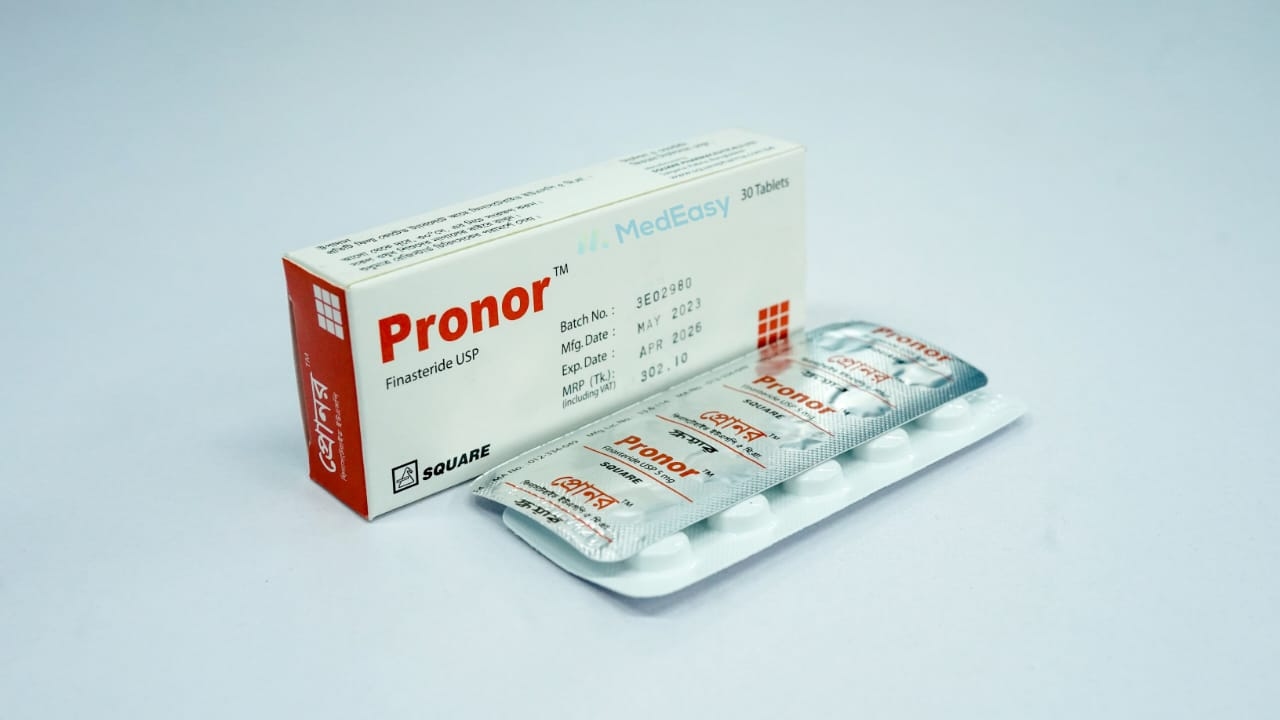
Pronor5 mg
Square Pharmaceuticals PLC.
৳90.63
Add to cart


Prosfin is a 5-alpha reductase inhibitor approved for men with symptomatic benign prostatic hyperplasia (BPH) associated with an enlarged prostate. Established, FDA-approved uses include:
Guideline-supported combination use: Prosfin may be used together with an alpha-blocker (e.g., doxazosin) in men with larger prostates, as combination therapy has been shown to reduce the long-term risk of BPH clinical progression compared with either agent alone.
Prosfin is not indicated and should not be used for the prevention of prostate cancer, or for use in women or children.
Each film-coated tablet of Finasteride [For B.P.H.] contains Finasteride USP 5 mg, along with standard pharmaceutical excipients.
Prosfin is an oral, synthetic 5-alpha reductase inhibitor used specifically for the medical management of benign prostatic hyperplasia (BPH) in men with an enlarged prostate. By blocking the conversion of testosterone to dihydrotestosterone (DHT), it reduces prostate volume over time, helping to relieve urinary symptoms and lower the risk of BPH-related complications such as acute urinary retention and the need for surgery.
Prosfin is formulated at a strength intended for BPH and is distinct from lower-dose finasteride products marketed for androgenetic alopecia (male pattern hair loss); the two should not be interchanged.
5-alpha reductase inhibitor (Type II-selective); urological agent used in the medical management of benign prostatic hyperplasia.
Finasteride [For B.P.H.] is a synthetic, competitive and specific inhibitor of Type II 5-alpha reductase, the intracellular enzyme that converts testosterone into dihydrotestosterone (DHT), the androgen primarily responsible for prostatic growth. By inhibiting this enzyme, Finasteride [For B.P.H.] lowers serum and intraprostatic DHT concentrations, leading to regression of the hyperplastic prostate gland, reduced pressure on the urethra, and improvement in urinary flow and symptoms.
Clinical improvement in symptoms typically becomes apparent after 3 to 6 months of continuous therapy, while maximal benefit for reducing the risk of urinary retention and surgery may take 6-12 months or longer.
The recommended dose of Prosfin is 5 mg taken orally once daily, with or without food.
| Indication/Population | Recommended Dose |
|---|---|
| Symptomatic BPH (monotherapy) | 5 mg once daily, long-term |
| Combination with an alpha-blocker (e.g., doxazosin) for reducing BPH progression risk | 5 mg once daily together with the alpha-blocker, per physician guidance |
| Hepatic impairment | Use with caution; no formal dose adjustment established due to limited data |
| Renal impairment | No dosage adjustment required |
| Elderly | No dosage adjustment required based on age alone |
| Women and children | Not indicated - see Contraindications |
Treatment response should be reassessed after 6-12 months of continuous use. Prosfin should be taken consistently at the same time each day and continued only as directed by a physician, since symptom relief may reverse if it is stopped.
No clinically significant drug-drug interactions have been definitively established for Prosfin in well-controlled studies. Because it is metabolized via the hepatic CYP3A4 pathway, a theoretical interaction with strong CYP3A4 inhibitors (e.g., ketoconazole, ritonavir) or inducers could alter finasteride blood levels, although no dose adjustment is currently recommended based on available data.
Prosfin is commonly and safely co-administered with alpha-blockers such as doxazosin as part of guideline-supported combination therapy for BPH; this is an intended therapeutic combination, not a harmful interaction.
Inform your physician of all other medicines you are taking before starting Prosfin.
The most commonly reported side effects of Prosfin relate to sexual function and occur in a small percentage of patients:
These sexual side effects usually resolve with continued use or after stopping treatment, although persistence after discontinuation has been reported in some patients (see Precautions and Warnings).
Other reported side effects include:
Tell your physician if any side effect is severe, persistent, or bothersome.
Prosfin is intended for use in men only and is contraindicated in women, especially women who are or may become pregnant. Exposure to finasteride during pregnancy - through ingestion or skin absorption of crushed/broken tablets, or through semen - may cause abnormal development of the external genitalia of a male fetus. Women who are pregnant or who may become pregnant should not handle crushed or broken tablets of Prosfin, and male patients should use a condom during sexual activity with a pregnant partner, since finasteride has been detected in semen.
Prosfin has no approved use during lactation, as it is not indicated for use in women. If accidental exposure occurs during pregnancy, consult a physician promptly.
Prostate cancer screening: Prosfin reduces serum prostate-specific antigen (PSA) levels by approximately 50% after 6-12 months of treatment, even in the absence of prostate cancer. Any confirmed increase in PSA from the lowest (nadir) value while on Prosfin should be evaluated. A digital rectal examination and other evaluation for prostate cancer should be performed before starting and periodically during treatment; inform your physician that you are taking Prosfin when interpreting PSA results.
Sexual side effects: Decreased libido, erectile dysfunction, and ejaculation disorders have been reported with Prosfin and may, in some patients, persist after the medicine is stopped - a pattern discussed in the medical literature as post-finasteride syndrome. Patients experiencing persistent symptoms after discontinuation should consult their physician.
Mood changes: Depression and mood alteration have been reported in patients taking Prosfin. Report any new or worsening mood symptoms to your physician promptly.
Handling by women: Women who are or may become pregnant should not handle crushed or broken Prosfin tablets (see Pregnancy and Lactation).
Blood donation: Men being treated with Prosfin should not donate blood until at least one month after their last dose, to prevent possible exposure of a pregnant transfusion recipient.
Hepatic impairment: Use with caution, as finasteride is extensively metabolized by the liver; higher plasma levels may occur.
Take Prosfin exactly as prescribed and do not stop or adjust the dose without consulting your physician, since symptom benefit depends on continued treatment.
There is limited clinical experience with overdose of Prosfin; single doses up to 400 mg and multiple daily doses up to 80 mg have been studied without significant adverse effects reported. In the event of a suspected overdose, seek immediate medical attention or contact a poison control center/emergency services. There is no specific antidote; treatment is supportive and symptomatic.
Store at room temperature (below 30°C), away from light and moisture. Keep out of reach of children.
Women: Prosfin is contraindicated for use in women (see Contraindications and Pregnancy and Lactation).
Children: Prosfin is contraindicated in children; safety and efficacy have not been established.
Elderly: No dosage adjustment is required based on age alone.
Hepatic impairment: Use with caution; not specifically studied, monitor for increased effects/side effects.
Renal impairment: No dosage adjustment necessary based on available data.
Prosfin is intended for long-term, continuous use. Improvement in urinary symptoms typically appears after about 3-6 months, while reduction in the risk of acute urinary retention and need for surgery may take 6-12 months or longer to become apparent. Treatment should be continued as directed by a physician; stopping Prosfin can lead to reversal of the benefits within months.
5-alpha reductase inhibitors
Finasteride [For B.P.H.] selectively and competitively inhibits Type II 5-alpha reductase, preventing the conversion of testosterone to dihydrotestosterone (DHT) within the prostate. Lower DHT levels lead to a reduction in prostate gland size, thereby relieving obstruction and improving urinary flow in men with BPH.
X
Prosfin is contraindicated in children. Safety and efficacy in pediatric patients have not been established, and this medicine has no approved indication in this population.
Q: What is Prosfin 5 mg Tablet used for?
A: Prosfin 5 mg Tablet is used to treat symptomatic benign prostatic hyperplasia (BPH) in men with an enlarged prostate, to improve urinary symptoms and reduce the risk of acute urinary retention and the need for BPH-related surgery.
Q: How long does it take for Prosfin 5 mg Tablet to work?
A: Improvement in symptoms is usually noticeable after 3 to 6 months of continuous use, while the full benefit in reducing urinary retention and surgery risk may take 6 to 12 months or longer. Prosfin 5 mg Tablet must be taken regularly as directed to see results.
Q: Can women or children take Prosfin 5 mg Tablet?
A: No. Prosfin 5 mg Tablet is contraindicated in women, especially those who are or may become pregnant, because it can cause abnormal genital development in a male fetus, and it is also contraindicated in children as safety and efficacy have not been established.
Q: Does Prosfin 5 mg Tablet affect PSA test results?
A: Yes. Prosfin 5 mg Tablet lowers serum PSA levels by about half after 6-12 months of use, even without prostate cancer. Tell your physician you are taking this medicine so PSA results can be interpreted correctly, and continue routine prostate cancer screening as advised.
Q: What are the main side effects of Prosfin 5 mg Tablet?
A: The most common side effects involve sexual function, including decreased libido, erectile dysfunction, and ejaculation disorders. Breast tenderness/enlargement, rash, and mood changes such as depression have also been reported. In some patients, sexual side effects may persist after stopping the medicine.
Q: Can my pregnant partner be exposed to Prosfin 5 mg Tablet?
A: Finasteride has been detected in semen. Men taking Prosfin 5 mg Tablet should use a condom during sexual activity with a partner who is or may become pregnant, and pregnant women should avoid handling crushed or broken tablets, due to the risk of harm to a male fetus.
Disclaimer
The information provided is accurate to the best of our knowledge, but it does not replace professional medical advice. We cannot guarantee its completeness or accuracy, and the absence of specific information about a drug should not be taken as an endorsement. We are not responsible for any consequences arising from this information, so please consult a healthcare professional for any concerns or questions.
