10% Off
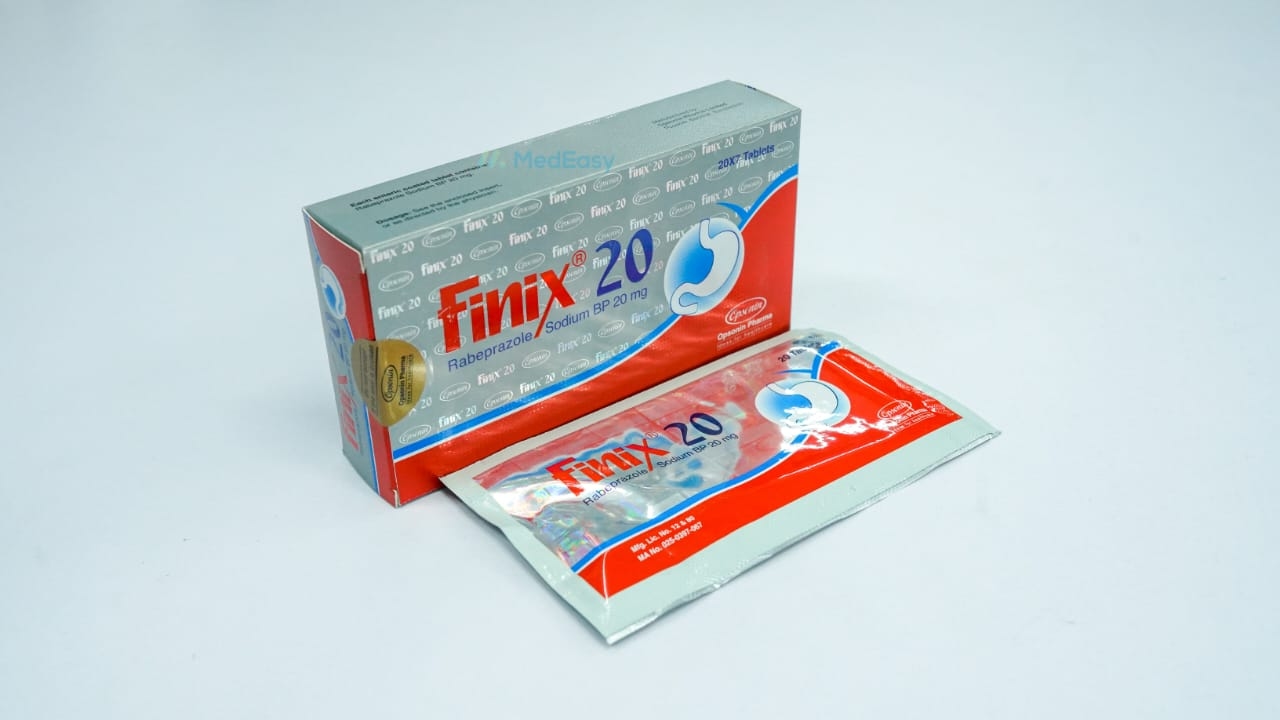
Finix20 mg
Opsonin Pharma Ltd.
৳126.00
Add to cart
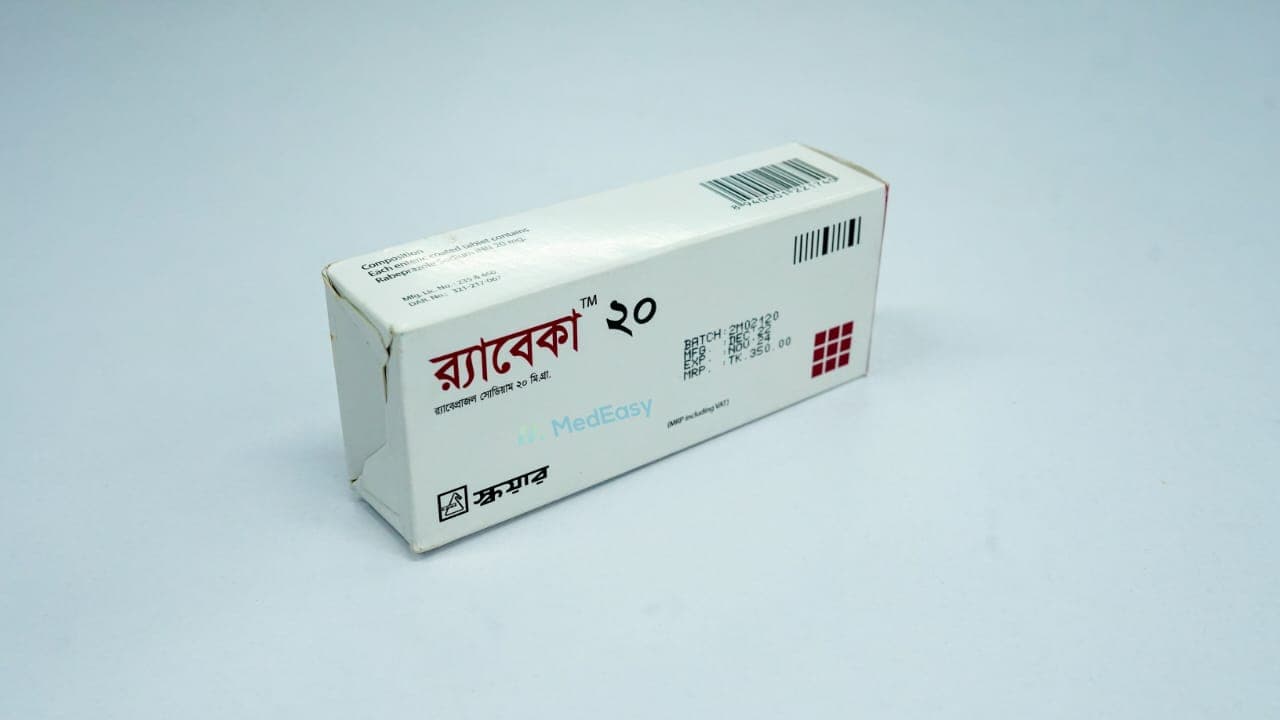
Rabeca 20 mg Tablet is available on MedEasy for ৳63.00 per 10's Strip, with home delivery anywhere in Bangladesh. It is manufactured by Square Pharmaceuticals PLC. Its generic name is Rabeprazole Sodium.

Rabeca is a proton pump inhibitor used for the following indications:
The decision to use Rabeca for any indication should be made by a qualified physician after clinical evaluation.
Each enteric-coated, delayed-release tablet of Rabeprazole Sodium contains 10 mg or 20 mg of rabeprazole sodium as the active ingredient. The delayed-release (enteric) coating protects the acid-labile active substance from degradation by gastric acid, allowing it to be released and absorbed in the small intestine. Tablets also contain standard pharmaceutical excipients (fillers, binders, and coating agents) that vary by manufacturer.
Rabeca is a substituted benzimidazole belonging to the proton pump inhibitor (PPI) class of gastric acid-suppressing medicines. It is used to treat conditions caused or worsened by excess stomach acid, such as GERD, peptic ulcer disease, and hypersecretory disorders. Rabeca is available as enteric-coated delayed-release tablets (commonly 10 mg and 20 mg) and, in some markets, as delayed-release sprinkle capsules for patients who have difficulty swallowing tablets. It works by irreversibly blocking the final common pathway of gastric acid secretion, providing potent and long-lasting acid suppression.
Proton Pump Inhibitor (PPI) / Gastric acid-reducing agent
Rabeprazole Sodium is a proton pump inhibitor that suppresses gastric acid secretion by specific inhibition of the H+/K+-ATPase enzyme system (the "proton pump") at the secretory surface of the gastric parietal cell. Because this enzyme is regarded as the acid (proton) pump within the gastric mucosa, Rabeprazole Sodium is classified as a gastric acid-pump inhibitor that blocks the final step of acid production. The effect is dose-related and leads to inhibition of both basal and stimulated gastric acid secretion, irrespective of the stimulus.
Pharmacokinetics: After oral administration of the delayed-release formulation, Rabeprazole Sodium is absorbed in the small intestine, with peak plasma concentrations reached in about 2–5 hours; bioavailability is approximately 52%. It is extensively metabolized in the liver, partly via the cytochrome P450 (CYP) enzyme system, particularly CYP3A4 and, to a lesser degree, CYP2C19, into inactive metabolites. Because metabolism relies less heavily on CYP2C19 than some other PPIs, plasma levels of Rabeprazole Sodium are relatively less affected by CYP2C19 genetic polymorphism, though poor metabolizers can still show higher exposure. The elimination half-life is approximately 1–2 hours, but the duration of acid suppression is much longer because the drug binds irreversibly to the proton pump; new pump synthesis is required to restore acid secretion. Excretion is mainly renal, with a smaller fraction eliminated in feces.
Dosing of Rabeca depends on the indication being treated. Tablets should be swallowed whole and must not be split, crushed, or chewed.
| Indication | Adult Dose | Duration |
|---|---|---|
| Healing of erosive/ulcerative GERD | 20 mg once daily | 4–8 weeks; may extend an additional 8 weeks if not healed |
| Maintenance of healed GERD | 20 mg once daily | Long-term, as directed by physician |
| Symptomatic (non-erosive) GERD | 20 mg once daily | Up to 4 weeks |
| Active duodenal ulcer | 20 mg once daily after the morning meal | Up to 4 weeks |
| Active benign gastric ulcer | 20 mg once daily | 4–8 weeks, per physician's assessment |
| H. pylori eradication (triple therapy) | 20 mg twice daily, with amoxicillin 1000 mg twice daily and clarithromycin 500 mg twice daily | 7 days |
| Zollinger-Ellison syndrome / hypersecretory conditions | Initial 60 mg once daily; titrated up to 100–120 mg/day (in divided doses if >100 mg/day) based on response | Individualized, may be long-term |
Pediatric dosing (GERD, ages 1–11 years, when clinically indicated): weight <15 kg — 5 mg once daily; weight ≥15 kg — 10 mg once daily, for up to 12 weeks. Adolescents 12 years and older may receive the adult symptomatic GERD dose of 20 mg once daily for up to 8 weeks. Pediatric dosing of Rabeca must only be initiated and supervised by a physician. See Use in Special Populations and Pediatric Uses for further detail.
No routine dose adjustment of Rabeca is required for mild-to-moderate renal impairment or mild hepatic impairment; caution and physician guidance are advised in significant hepatic impairment (see Use in Special Populations).
Rabeca delayed-release tablets should be swallowed whole with water; they must not be chewed, crushed, or split, as this destroys the enteric coating that protects the medicine from stomach acid. Tablets may be taken with or without food, though taking the dose after the morning meal at a consistent time each day is commonly recommended. Delayed-release sprinkle capsules of Rabeca (where available), should be opened and the contents sprinkled onto a small amount of soft food or mixed with a small amount of liquid, taken immediately and within 15 minutes, without chewing the granules, generally about 30 minutes before a meal. Doses should not be doubled to make up for a missed dose; the missed dose should simply be taken as soon as remembered unless it is close to the next scheduled dose.
Rabeca has the following well-established, clinically significant drug interactions:
Patients should inform their physician or pharmacist of all medicines, supplements, and herbal products they are taking before starting Rabeca.
Rabeprazole Sodium is contraindicated in:
Common side effects of Rabeca (generally mild and transient) include:
In combination therapy for H. pylori eradication, diarrhea and taste disturbance are reported more frequently.
Less common but serious effects associated with Rabeca and other PPIs — including bone fracture with long-term high-dose use, hypomagnesemia, vitamin B12 deficiency, Clostridioides difficile-associated diarrhea, acute interstitial nephritis, and severe skin reactions — are discussed in Precautions and Warnings. Patients should seek prompt medical attention for severe or persistent symptoms, signs of allergic reaction, or unexplained diarrhea while taking Rabeca.
Pregnancy: Data on the use of Rabeca in human pregnancy are limited. Animal reproduction studies have not shown clear evidence of fetal harm at clinically relevant exposures, but adequate, well-controlled studies in pregnant women are lacking. Rabeca should be used during pregnancy only if clearly needed and if the potential benefit to the mother justifies the potential risk to the fetus. A physician should always be consulted before use in pregnancy.
Lactation: It is not definitively known whether Rabeca is excreted in human breast milk, although related compounds have been detected in animal milk. Caution is advised, and a physician should be consulted to weigh the benefits of treatment against the possible risk to a breastfeeding infant before using Rabeca while breastfeeding.
The following precautions apply to the use of Rabeca:
See Interactions, Pregnancy and Lactation, and Use in Special Populations for related safety information.
Experience with overdosage of Rabeca is limited, and no specific antidote is known. In case of a suspected overdose, seek immediate medical attention or contact a poison control center right away. Treatment of overdose with Rabeca is supportive and symptomatic, based on clinical presentation; dialysis is not expected to be significantly useful given the drug's protein binding and metabolism. Do not attempt to manage a suspected overdose at home without professional medical guidance.
Store at room temperature (below 30°C), away from light and moisture. Keep out of reach of children.
Renal impairment: No dose adjustment of Rabeca is generally required in patients with renal impairment, including those on chronic hemodialysis, though clinical judgment should guide use in severe renal disease.
Hepatic impairment: No dose adjustment is generally needed for mild-to-moderate hepatic impairment. Rabeca has not been well studied in severe hepatic impairment, and caution with physician supervision is advised.
Elderly: No overall dose adjustment is required based on age alone, though elderly patients may be at higher risk for some PPI-associated adverse effects (e.g., fractures, hypomagnesemia); see Precautions and Warnings.
Pediatric patients: Use is more limited than in adults; see Pediatric Uses for approved age ranges and weight-based dosing.
Pregnancy and breastfeeding: See Pregnancy and Lactation for detailed guidance.
Duration of treatment with Rabeca depends on the indication: symptomatic GERD and duodenal ulcer healing are typically treated for up to 4 weeks; erosive/ulcerative GERD and gastric ulcer healing may require 4–8 weeks, occasionally extended; maintenance therapy for healed erosive GERD may continue long-term under physician supervision; H. pylori eradication combination therapy is given for 7 days; and Zollinger-Ellison syndrome or other hypersecretory conditions may require long-term, individualized treatment for as long as clinically indicated. Treatment duration should always be determined by the prescribing physician and not extended or shortened without medical advice.
Proton Pump Inhibitors (PPIs); Substituted benzimidazoles; Gastric acid suppressants / anti-secretory agents
Rabeprazole Sodium acts by irreversibly binding to and inhibiting the hydrogen-potassium ATPase (H+/K+-ATPase) enzyme — the "proton pump" — located on the secretory (luminal) surface of gastric parietal cell membranes. This enzyme catalyzes the final step in gastric acid secretion, exchanging hydrogen ions for potassium ions across the parietal cell membrane. By blocking this final common pathway, Rabeprazole Sodium suppresses both basal and stimulated gastric acid secretion regardless of the stimulating agent (histamine, gastrin, or acetylcholine), producing potent and sustained acid suppression until new proton pumps are synthesized by the cell.
C
The safety and effectiveness of Rabeca have been established for short-term treatment of symptomatic GERD in adolescents 12 years of age and older, using the same 20 mg once-daily adult dose for up to 8 weeks. For children 1 to 11 years of age, Rabeca may be used for short-term treatment of GERD at weight-based doses (5 mg daily if under 15 kg; 10 mg daily if 15 kg or more) for up to 12 weeks, under physician supervision. The safety and efficacy of Rabeca have not been established in children younger than 1 year of age, nor for indications other than GERD in the pediatric population (e.g., duodenal ulcer, H. pylori eradication, or hypersecretory conditions). Use in children should always be directed by a pediatrician, with attention to the lowest effective dose and shortest necessary duration.
Q: What is Rabeca 20 mg Tablet used for?
A: Rabeca 20 mg Tablet is a proton pump inhibitor used mainly to treat GERD (acid reflux), heal duodenal and gastric ulcers, treat conditions with excess stomach acid such as Zollinger-Ellison syndrome, and, in combination with antibiotics, to help eradicate H. pylori infection.
Q: How should I take Rabeca 20 mg Tablet?
A: Tablets of Rabeca 20 mg Tablet should be swallowed whole with water, without chewing, crushing, or splitting, usually once daily after the morning meal unless your physician instructs otherwise. Take it at the same time each day and complete the full course as prescribed.
Q: Can I take Rabeca 20 mg Tablet during pregnancy or while breastfeeding?
A: Rabeca 20 mg Tablet should be used in pregnancy only if clearly needed, since adequate human data are limited and it should be used only when potential benefit justifies potential risk to the fetus. It is also not definitively known whether it passes into breast milk, so caution is advised. Always consult your physician before using Rabeca 20 mg Tablet during pregnancy or breastfeeding.
Q: What are the possible side effects of Rabeca 20 mg Tablet?
A: Common side effects of Rabeca 20 mg Tablet include headache, diarrhea, abdominal pain, nausea, and flatulence. With long-term use, less common but more serious risks include bone fracture, low magnesium levels, vitamin B12 deficiency, and C. difficile-associated diarrhea. Seek medical attention for severe or persistent symptoms.
Q: Who should not take Rabeca 20 mg Tablet?
A: Rabeca 20 mg Tablet should not be used by anyone with a known hypersensitivity to rabeprazole or other substituted benzimidazole PPIs, or by patients taking rilpivirine-containing HIV medicines, since Rabeca 20 mg Tablet significantly reduces rilpivirine absorption and effectiveness.
Q: What should I do if I miss a dose or take too much Rabeca 20 mg Tablet?
A: If you miss a dose of Rabeca 20 mg Tablet, take it as soon as you remember unless it is nearly time for the next dose — do not double the dose. If an overdose is suspected, seek immediate medical attention or contact a poison control center, as there is no specific antidote and treatment is supportive.
Disclaimer
The information provided is accurate to the best of our knowledge, but it does not replace professional medical advice. We cannot guarantee its completeness or accuracy, and the absence of specific information about a drug should not be taken as an endorsement. We are not responsible for any consequences arising from this information, so please consult a healthcare professional for any concerns or questions.