8% Off
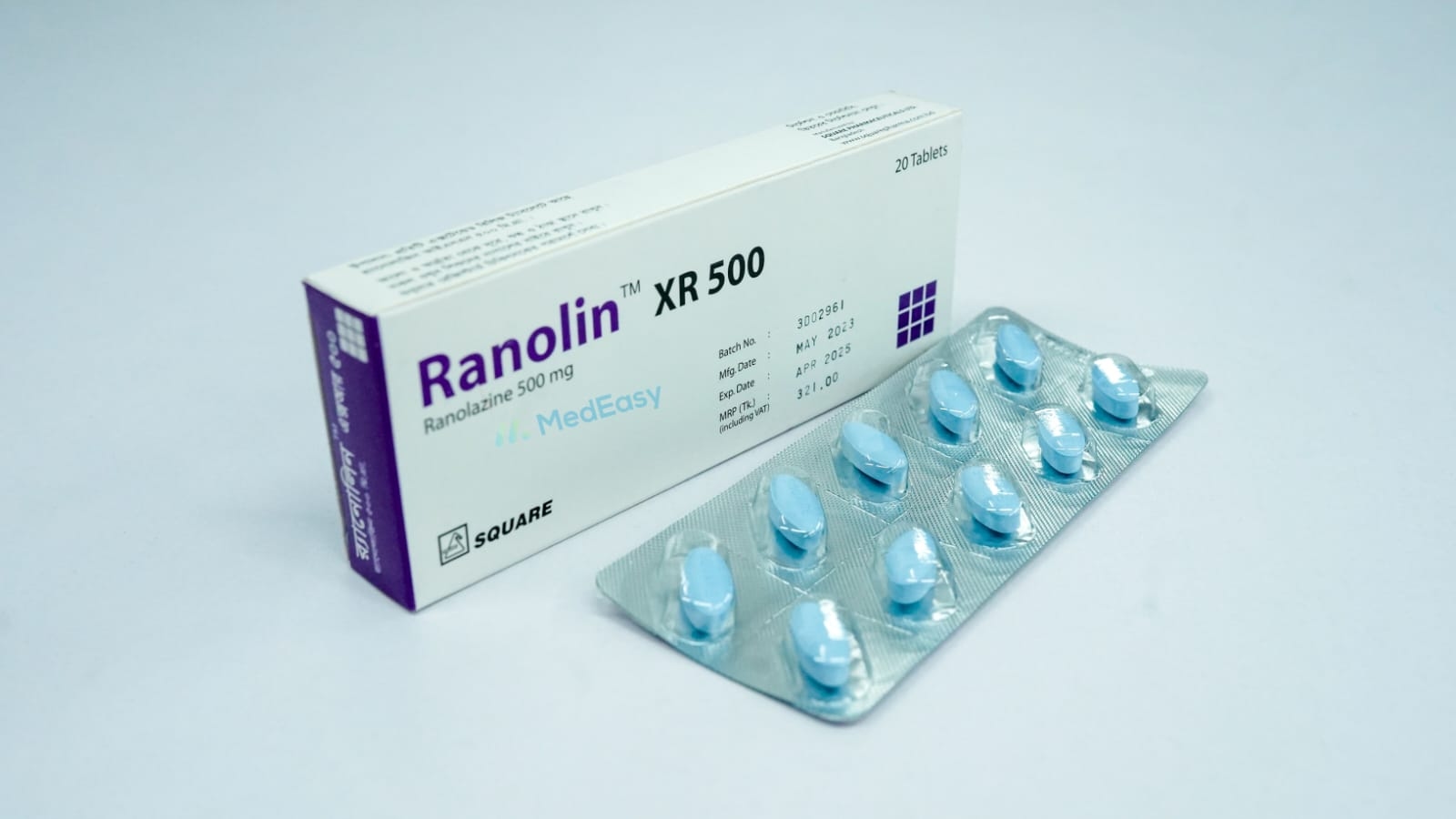
Ranolin XR500 mg
Square Pharmaceuticals PLC.
৳147.66
Add to cart
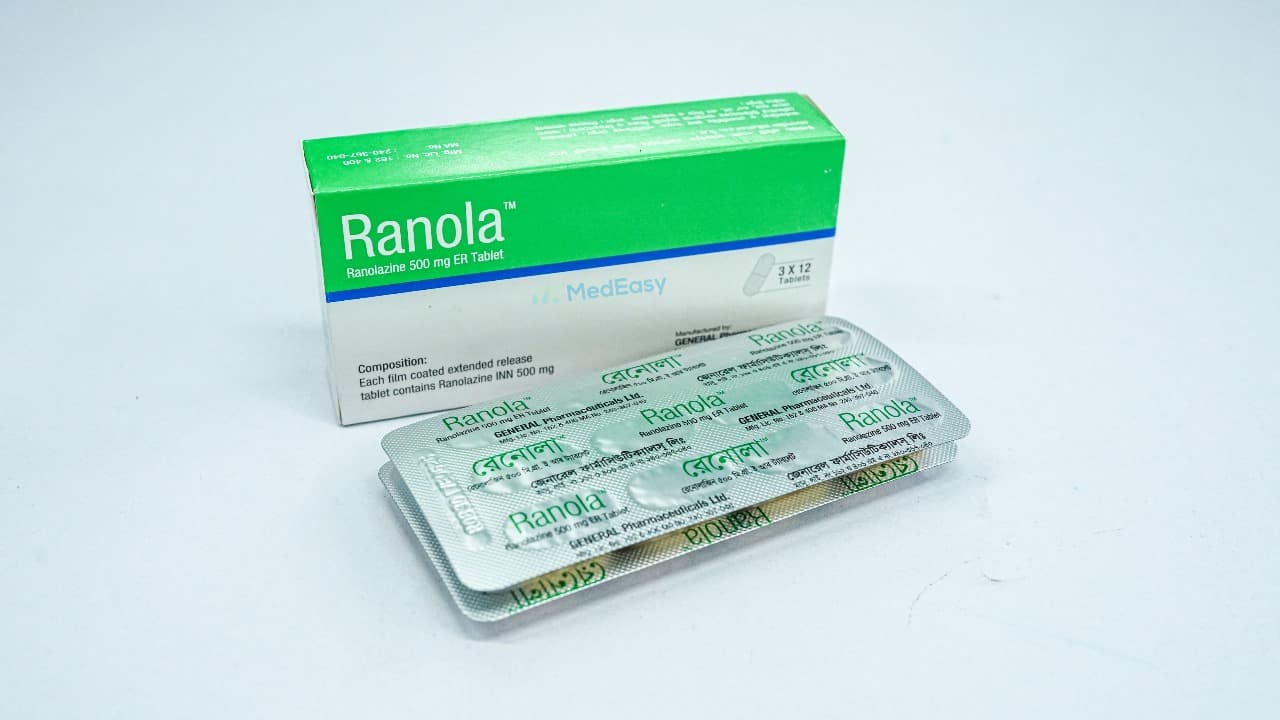

Ranola ER is an anti-anginal medicine indicated for the treatment of chronic angina (long-term management of stable angina pectoris), not for relief of an acute angina attack.
Each extended-release (ER) tablet contains Ranolazine as the active pharmaceutical ingredient, commonly available in strengths of 500 mg and 1000 mg, along with pharmaceutically approved excipients that allow controlled/extended drug release.
Ranola ER is a piperazine-derivative anti-anginal agent formulated as an oral extended-release tablet. Unlike traditional anti-anginals, Ranola ER exerts its therapeutic effect largely independent of heart rate and blood pressure, which makes it a useful add-on option in patients whose angina is not adequately controlled by first-line agents. It is intended for long-term, chronic management of angina symptoms rather than acute symptom relief.
Ranola ER belongs to the anti-anginal agents class, specifically a piperazine-derivative selective inhibitor of the late inward sodium current in cardiac muscle.
Mechanism of action: Ranolazine selectively inhibits the late inward sodium current (late INa) in cardiac myocytes. During myocardial ischemia, this late sodium current is abnormally increased, leading to intracellular sodium and, secondarily via the sodium-calcium exchanger, intracellular calcium overload. This calcium overload increases diastolic wall tension, impairs myocardial relaxation, and raises myocardial oxygen demand. By inhibiting late INa, Ranolazine reduces this calcium overload, improves diastolic myocardial relaxation and left ventricular compliance, and reduces the frequency of anginal episodes.
Pharmacodynamics: Ranolazine produces its anti-anginal effect without clinically significant reductions in heart rate or blood pressure, distinguishing it from beta-blockers, calcium channel blockers, and nitrates.
Pharmacokinetics: Absorption of Ranolazine from the extended-release tablet is variable; steady-state plasma concentrations are generally achieved within 3 days of twice-daily dosing. Ranolazine is extensively metabolized, primarily by the CYP3A4 enzyme (with a minor contribution from CYP2D6), and is eliminated mainly via the kidneys with a smaller fraction excreted in feces. The elimination half-life is approximately 7 hours.
| Step | Dose |
|---|---|
| Starting dose | 500 mg orally twice daily |
| Titration | May be increased to 1000 mg twice daily based on clinical symptoms and response |
| Maximum dose | 1000 mg twice daily |
Safety and efficacy of Ranola ER have not been established in pediatric patients; it is not recommended for use in this population.
Ranola ER should be used with caution in patients with mild-to-moderate renal impairment, as it has been associated with rare reports of acute kidney injury; it has not been well studied in severe renal impairment and close monitoring is advised (see Precautions and Warnings).
Ranola ER is contraindicated in patients with hepatic cirrhosis (see Contraindications).
Ranola ER extended-release tablets should be swallowed whole with water, not crushed, broken, or chewed, as this would disrupt the extended-release mechanism and could lead to a rapid release of the full dose. It may be taken with or without food, at approximately the same times each day (morning and evening) to maintain steady blood levels.
Ranola ER is primarily metabolized by CYP3A4, making it prone to clinically significant interactions with drugs that affect this enzyme:
Ranolazine is contraindicated in the following situations:
The most commonly reported side effects of Ranola ER include:
Less common but clinically important effects include asthenia (weakness), hypotension, dose-related QT interval prolongation, and, rarely, syncope. Patients experiencing fainting, palpitations, severe dizziness, or signs of an allergic reaction while taking Ranola ER should seek prompt medical attention.
Pregnancy: Data on the use of Ranola ER in pregnant women are limited, and animal reproduction studies have not shown a clear risk, but human data are insufficient to rule out risk. Ranola ER should be used during pregnancy only if the potential benefit to the mother clearly justifies the potential risk to the fetus, and only under close physician supervision.
Lactation: It is not known whether Ranola ER is excreted in human breast milk. Because many drugs are excreted in breast milk and the effects on a nursing infant are unknown, a decision should be made to discontinue nursing or discontinue Ranola ER, taking into account the importance of the drug to the mother, in consultation with a physician.
Reported symptoms of Ranola ER overdose include dizziness, nausea, vomiting, hypotension, double vision (diplopia), confusion, lethargy, tremor, paresthesia, and, rarely, syncope. There is no specific antidote for Ranola ER overdose. Because Ranola ER is highly protein-bound, hemodialysis is unlikely to be effective in removing the drug. In case of a suspected overdose, seek immediate medical attention or contact emergency services/a poison control center; treatment should be supportive, with monitoring of cardiac rhythm (ECG) given the risk of QT prolongation, and management of symptoms as clinically indicated in a medical facility.
Store at room temperature (below 30°C), away from light and moisture. Keep out of reach of children.
Safety and efficacy of Ranola ER have not been established in pediatric patients. Its use in children and adolescents is not recommended.
Elderly patients (particularly those over 75 years) may have a higher incidence of adverse reactions to Ranola ER, including dizziness, nausea, hypotension, and syncope, likely related to higher plasma concentrations. No specific dose reduction is mandated based on age alone, but close clinical monitoring is advised.
Ranola ER should be used with caution in mild-to-moderate renal impairment and has not been well studied in severe renal impairment; monitor renal function during treatment (see Precautions and Warnings).
Ranola ER is contraindicated in patients with hepatic cirrhosis; caution is advised even in milder hepatic impairment.
Patients with low body weight (≤60 kg) may have higher Ranola ER plasma concentrations and a somewhat higher rate of adverse reactions; monitor accordingly.
Ranola ER is used for long-term, chronic maintenance treatment of angina rather than a short, fixed course. Treatment is generally continued for as long as the prescribing physician determines it is providing symptomatic benefit and is well tolerated, with periodic clinical review (including assessment of QT interval, renal function, and concomitant medications) to confirm continued appropriateness of therapy.
Ranolazine is classified as: Anti-anginal agent; piperazine derivative; selective inhibitor of the late inward cardiac sodium current.
Ranolazine selectively inhibits the late inward sodium current (late INa) in cardiac myocytes, which is pathologically increased during myocardial ischemia. By reducing this abnormal sodium influx, Ranolazine lowers intracellular sodium-dependent calcium overload (via the sodium-calcium exchanger), decreases diastolic ventricular wall tension, improves myocardial relaxation and compliance, and reduces myocardial oxygen demand — thereby reducing the frequency of angina episodes without clinically significant effects on heart rate or blood pressure.
C
Ranola ER is not approved for use in pediatric patients. Safety and efficacy have not been established in individuals under 18 years of age, and its use in this population is not recommended outside of a controlled clinical trial setting.
Q: What is Ranola ER 500 mg Tablet used for?
A: Ranola ER 500 mg Tablet is used for the long-term (chronic) treatment of angina (chest pain due to reduced blood flow to the heart). It is often added to other angina medicines, such as beta-blockers, amlodipine, or nitrates, when symptoms are not fully controlled. It is not used to relieve a sudden angina attack.
Q: Can Ranola ER 500 mg Tablet be used to stop a sudden chest pain attack?
A: No. Ranola ER 500 mg Tablet is intended for regular, ongoing use to reduce how often angina occurs; it does not act quickly enough to relieve an acute angina attack. If you experience sudden or worsening chest pain, seek emergency medical care immediately.
Q: What are the common side effects of Ranola ER 500 mg Tablet?
A: The most common side effects of Ranola ER 500 mg Tablet are dizziness, headache, constipation, and nausea. Less commonly, it can cause low blood pressure, weakness, or changes in the heart's electrical activity (QT interval prolongation). Tell your doctor if you feel faint, have palpitations, or notice any unusual symptoms.
Q: Who should not take Ranola ER 500 mg Tablet?
A: Ranola ER 500 mg Tablet should not be used by people who are allergic to it, who have liver cirrhosis, or who are taking certain strong CYP3A4-inhibiting medicines (such as ketoconazole, itraconazole, clarithromycin, or certain HIV medicines) or strong CYP3A4-inducing medicines (such as rifampin, phenytoin, or carbamazepine), because these combinations are contraindicated and can be dangerous.
Q: Is Ranola ER 500 mg Tablet safe during pregnancy or breastfeeding?
A: Information on the use of Ranola ER 500 mg Tablet during pregnancy is limited, so it should be used in pregnancy only if the potential benefit clearly outweighs the potential risk, and only under a physician's guidance. It is not known whether Ranola ER 500 mg Tablet passes into breast milk, so a doctor should be consulted to decide between continuing breastfeeding or continuing Ranola ER 500 mg Tablet therapy.
Q: What should I do if I take too much Ranola ER 500 mg Tablet?
A: An overdose of Ranola ER 500 mg Tablet can cause dizziness, nausea, vomiting, low blood pressure, double vision, confusion, or fainting. If an overdose is suspected, seek immediate medical attention or contact emergency services or a poison control center right away; do not attempt to treat an overdose at home.
Disclaimer
The information provided is accurate to the best of our knowledge, but it does not replace professional medical advice. We cannot guarantee its completeness or accuracy, and the absence of specific information about a drug should not be taken as an endorsement. We are not responsible for any consequences arising from this information, so please consult a healthcare professional for any concerns or questions.