
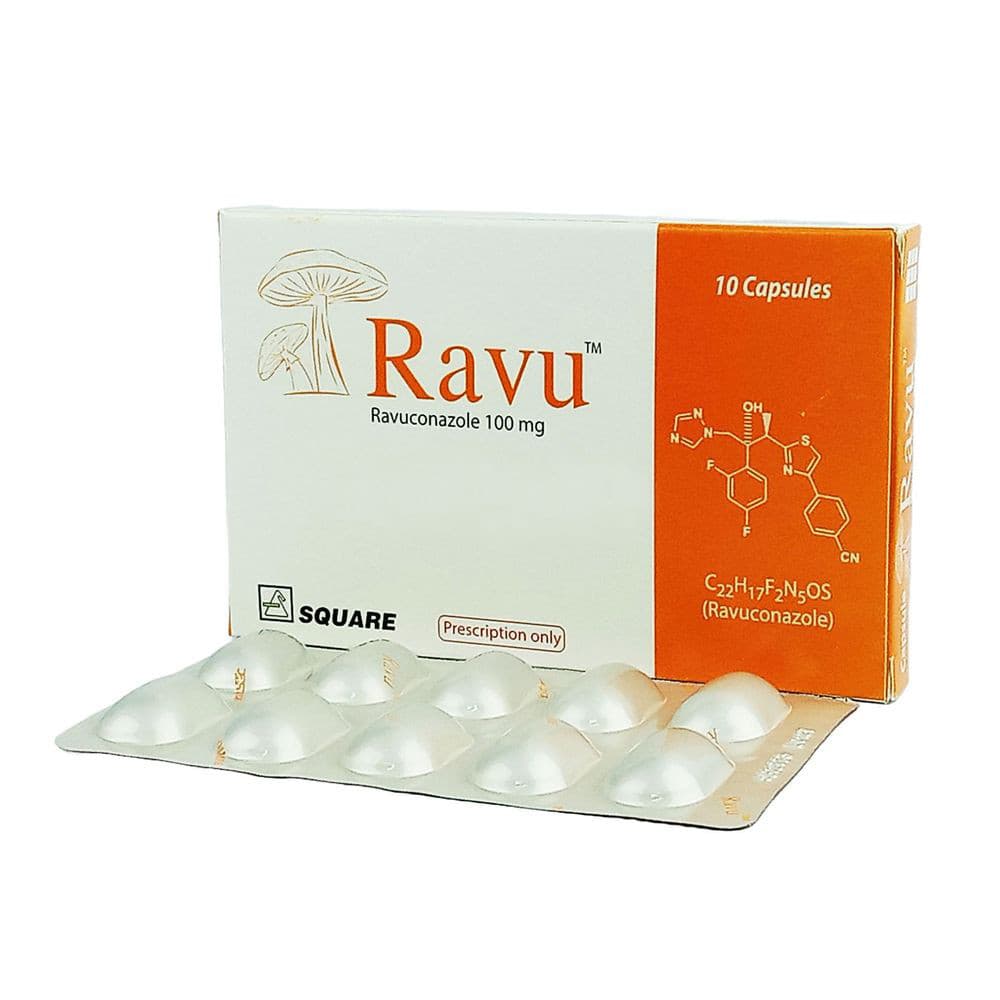

Medicine overview
Indications of Ravu
Ravu is a triazole antifungal agent that has been evaluated in clinical development for the treatment of fungal infections. Its use should be classified by the strength of available evidence:
Investigated / studied uses (clinical trial evidence)
- Onychomycosis (fungal infection of the finger or toe nails) caused by dermatophytes such as Trichophyton species — Ravu and its related prodrug form have been studied in extended, intermittent oral regimens for this indication.
- Esophageal and oropharyngeal candidiasis — studied in patients, including those with reduced immunity, as an alternative to other azole antifungals.
- Invasive candidiasis and invasive aspergillosis — evaluated in comparative clinical trials against standard antifungal therapy in seriously ill or immunocompromised patients.
Important regulatory note
Ravu has not received marketing approval from the US FDA, and its availability as a standalone marketed product should be confirmed with a physician or pharmacist before use. A closely related prodrug of Ravu has gained regulatory approval in some countries specifically for onychomycosis. Ravu should only be used under the direct supervision of a qualified physician, who will confirm whether it is an appropriate and available option for a given infection.
Composition
Each formulation of Ravuconazole contains Ravuconazole as the active pharmaceutical ingredient, belonging to the triazole class of antifungal compounds. Ravuconazole is typically formulated for oral administration. Exact strength, pack size, and available dosage forms can vary by manufacturer and market; patients should always check the product label or ask their pharmacist to confirm the exact composition and strength of the specific pack dispensed.
Description
Ravu is a broad-spectrum triazole (azole) antifungal medicine. It works by blocking a fungal enzyme needed to build the fungal cell membrane, which stops the fungus from growing and helps clear the infection. Ravu has a notably long elimination half-life compared with many older azole antifungals, which has allowed researchers to study extended dosing intervals (for example, once-weekly regimens) for certain infections such as nail fungal infections.
Ravu is active against a range of fungi, including many Candida species (including some strains that are resistant to older azoles), Aspergillus species, Cryptococcus neoformans, and dermatophytes responsible for nail and skin infections. It has reduced or no activity against certain less common but harder-to-treat fungi such as Fusarium, Scedosporium, and the Mucorales (zygomycetes) group.
Therapeutic Class
Triazole antifungal (systemic azole antifungal agent) — Ravu belongs to this class.
Pharmacology
Mechanism of action
Ravuconazole inhibits fungal cytochrome P450-dependent lanosterol 14-alpha-demethylase, an enzyme required to convert lanosterol into ergosterol, the main sterol of the fungal cell membrane. By blocking this step, Ravuconazole depletes ergosterol and causes abnormal sterols to accumulate in the fungal membrane, which increases membrane permeability, impairs fungal cell growth, and ultimately leads to fungal cell death or growth arrest, depending on the organism and concentration achieved.
Pharmacokinetics
- Absorption: Ravuconazole is absorbed after oral administration; absorption may be affected by food and gastric pH depending on the formulation used.
- Distribution: Ravuconazole is highly protein-bound in plasma.
- Half-life: Ravuconazole has an unusually long elimination half-life (reported in clinical studies to extend to several days), which is the pharmacologic basis for the extended or once-weekly dosing intervals studied for some indications.
- Metabolism: Ravuconazole is metabolized in the liver, mainly through cytochrome P450 pathways, which is also the basis for its significant potential for drug-drug interactions (see Interactions).
Dosage & Administration of Ravu
There is no single, universally standardized approved dosing regimen for Ravu in every market; the dose, frequency, and duration of Ravu therapy must always be individualized and confirmed by the prescribing physician based on the specific infection being treated, the patient's organ function, and local product labeling.
Illustrative dosing explored in clinical studies (for physician reference only)
| Indication | Adult dosing pattern studied | Typical duration |
|---|---|---|
| Esophageal/oropharyngeal candidiasis | Oral once-daily dosing, generally in the range of 100 mg to 200 mg per day, often with a higher loading dose on day one | Approximately 2–3 weeks, guided by clinical response |
| Invasive candidiasis / invasive aspergillosis | Higher once-daily oral doses (individualized), sometimes with an initial loading regimen | Individualized; typically several weeks under specialist supervision |
| Onychomycosis (nail fungal infection) | Extended intermittent (e.g., once-weekly) oral regimens have been studied, taking advantage of the long half-life of this drug class | Typically 12 weeks or longer, per treating physician |
Antimicrobial stewardship: Take Ravu exactly as prescribed by your physician. Do not stop, extend, skip doses, change the dose, or share Ravu with another person without medical advice, even if symptoms improve before the prescribed course is finished, as incomplete treatment can lead to relapse or drug-resistant fungal infection.
Administration of Ravu
- Take Ravu by mouth exactly as directed by your physician, at the same time(s) each day/week as prescribed.
- Ravu may be taken with or without food; however, follow the specific instruction given by your physician or the product label, since food can affect absorption of some azole antifungal formulations.
- Swallow tablets/capsules whole with a glass of water unless your physician specifically instructs otherwise.
- Complete the entire prescribed course of Ravu, even if your symptoms improve early; do not stop, extend, skip doses, or share Ravu with anyone else without your physician's advice.
- If a dose of Ravu is missed, take it as soon as remembered unless it is almost time for the next dose; do not double the dose.
Interaction of Ravu
Ravu is metabolized through hepatic cytochrome P450 pathways and can both inhibit and be affected by other drugs that use the same pathway, chiefly CYP3A4. This creates significant potential for clinically important drug interactions.
- Drugs highly dependent on CYP3A4 clearance with a narrow safety margin (for example, cisapride, pimozide, quinidine, and ergot alkaloids such as ergotamine/dihydroergotamine): coadministration with Ravu can raise plasma levels of these drugs to dangerous levels and is contraindicated (see Contraindications).
- QT-interval-prolonging drugs: using Ravu together with other medicines that prolong the QT interval (certain antiarrhythmics, some antipsychotics, some antibiotics) may increase the risk of serious heart rhythm disturbances; such combinations should be avoided or used only with careful cardiac monitoring.
- CYP3A4 inducers (e.g., rifampicin, certain anticonvulsants such as phenytoin or carbamazepine): may reduce blood levels and effectiveness of Ravu.
- Other CYP3A4 substrates (e.g., certain statins, calcium channel blockers, some immunosuppressants such as ciclosporin/tacrolimus, some benzodiazepines): Ravu may raise their blood levels and increase the risk of side effects; dose adjustment or closer monitoring may be needed.
Always tell your physician and pharmacist about every prescription medicine, over-the-counter medicine, and herbal supplement you are taking before starting Ravu.
Contraindications
- Known hypersensitivity to Ravuconazole or to any other azole antifungal agent (cross-sensitivity between azoles can occur).
- Concurrent use with drugs that are highly dependent on CYP3A4 metabolism and for which elevated plasma concentrations are associated with serious or life-threatening effects, such as cisapride, pimozide, quinidine, and ergot alkaloids (e.g., ergotamine, dihydroergotamine); coadministration of Ravuconazole with these agents must be avoided.
Side Effects of Ravu
Most people tolerate Ravu well, but as with other azole antifungals, side effects can occur.
Common
- Nausea, vomiting, diarrhea, or abdominal discomfort
- Headache
- Mild, transient elevation of liver enzymes
- Rash
Less common but clinically important
- Significant liver enzyme elevation or, rarely, clinically apparent liver injury (see Precautions)
- QT interval prolongation on ECG, which can rarely lead to serious heart rhythm disturbances, particularly if combined with other QT-prolonging drugs or in patients with existing heart rhythm risk factors
- Allergic reactions, including rash, itching, or, rarely, severe hypersensitivity reactions
Patients should seek prompt medical attention for yellowing of the skin/eyes, severe abdominal pain, unusual tiredness, irregular heartbeat, fainting, or signs of a severe allergic reaction while taking Ravu.
Pregnancy & Lactation
Pregnancy: Data on the use of Ravu in pregnant women are limited. As a class, some azole antifungals have been associated with signals of concern for the developing fetus in certain studies. Ravu should be used during pregnancy only if clearly needed and only if the potential benefit to the mother justifies the potential risk to the fetus, and only under the direct advice of a physician. Women who are pregnant, planning pregnancy, or who become pregnant while taking Ravu should consult their physician promptly.
Breastfeeding: It is not established whether Ravu passes into human breast milk. Because of the potential for adverse effects in a nursing infant, a decision should be made, in consultation with a physician, whether to discontinue breastfeeding or discontinue Ravu, taking into account the importance of the medicine to the mother.
Precautions & Warnings
- Liver function: Ravu has been associated with elevations in liver enzymes and, rarely, more serious liver injury. Physicians may recommend baseline and periodic liver function monitoring, especially with prolonged courses of Ravu. Use with caution, or avoid, in patients with pre-existing significant liver disease unless the physician judges the benefit outweighs the risk.
- QT prolongation: Use Ravu with caution in patients with a history of QT prolongation, uncorrected electrolyte disturbances (e.g., low potassium or magnesium), or concurrent use of other QT-prolonging medicines.
- Drug interactions: Because Ravu strongly affects and is affected by the CYP3A4 pathway, review all concurrent medicines before and during therapy (see Interactions).
- Gastrointestinal upset: Mild GI symptoms are common; take Ravu in the manner advised to minimize discomfort.
- Regulatory status: Ravu is not FDA-approved and may not be a routinely stocked product in every market; confirm authenticity, source, and appropriateness with your physician and pharmacist.
- Stewardship: Take Ravu exactly as prescribed; do not stop, extend, skip doses, or share Ravu with others without medical advice.
Overdose Effects of Ravu
Limited data exist on Ravu overdose in humans. If an overdose of Ravu is suspected, seek immediate medical attention or contact a poison control center right away. Do not attempt to treat a suspected overdose of Ravu at home. Bring the medicine packaging with you to the hospital/emergency department, if possible, so the treating physician knows exactly what was taken. Management would generally be supportive, focused on stabilizing the patient, monitoring liver function and cardiac rhythm (ECG), and treating symptoms, as directed by emergency medical personnel; there is no specific antidote for Ravu.
Storage Conditions
Store at room temperature (below 30°C), away from light and moisture. Keep out of reach of children.
Use In Special Populations
- Renal impairment: Specific dose-adjustment data for Ravu in kidney disease are limited; use with caution and under close physician supervision in patients with significant renal impairment.
- Hepatic impairment: Because Ravu is metabolized by the liver and can affect liver enzymes, it should be used with caution, and possibly at a reduced dose, in patients with liver impairment; see Precautions and Warnings for monitoring guidance.
- Elderly patients: No specific dose adjustment of Ravu is established for elderly patients based on age alone, but this population should be monitored closely for interactions and liver/heart effects given the higher likelihood of concurrent medicines and comorbidities.
- Pediatric patients: See Pediatric Uses — safety and efficacy of Ravu have not been established in children.
- Pregnancy and lactation: See Pregnancy and Lactation section for full guidance on the use of Ravu in these situations.
Duration Of Treatment
The duration of Ravu treatment depends on the type and severity of the fungal infection being treated and must be determined by the prescribing physician. Mucosal/systemic candidiasis has generally been studied over a period of about two to three weeks, while invasive fungal infections may require several weeks of therapy under specialist care. Nail fungal infections (onychomycosis) generally require the longest courses — extended, intermittent regimens over about 12 weeks or more have been studied for this indication — because nails grow slowly and the fungus must be cleared as the new, healthy nail grows out. Patients must complete the full course of Ravu as prescribed, even if the nail or skin appears to improve earlier, and should not stop treatment early without medical advice.
Drug Classes
Antifungals > Azole antifungals > Triazoles (Ravuconazole is classified in this drug class)
Mode Of Action
Ravuconazole inhibits the fungal enzyme lanosterol 14-alpha-demethylase (a cytochrome P450-dependent enzyme), blocking the conversion of lanosterol to ergosterol. This depletes ergosterol, an essential component of the fungal cell membrane, and leads to accumulation of abnormal sterols, disrupting membrane structure and function and inhibiting fungal growth.
Pediatric Uses
The safety and efficacy of Ravu in children have not been established. Because of limited pediatric data, Ravu is generally not recommended for use in children and adolescents unless a specialist physician determines that the potential benefit clearly justifies the potential risk for a specific patient, in which case it would be used only under close specialist supervision.
Frequently Asked Questions
Q: What is Ravu 100 mg Capsule used for?
A: Ravu 100 mg Capsule is a triazole antifungal medicine that has been studied for treating fungal infections such as nail fungal infections (onychomycosis), oral/esophageal fungal infections, and certain serious invasive fungal infections. Your physician will confirm whether Ravu 100 mg Capsule is the right choice for your specific infection.
Q: How should I take Ravu 100 mg Capsule?
A: Take Ravu 100 mg Capsule exactly as prescribed by your physician, at the dose, frequency, and for the full duration instructed, even if you feel better before finishing the course. Do not stop, skip doses, or share Ravu 100 mg Capsule with anyone else.
Q: What are the common side effects of Ravu 100 mg Capsule?
A: The most common side effects of Ravu 100 mg Capsule include nausea, diarrhea, abdominal discomfort, headache, and mild, temporary increases in liver enzymes. Contact your physician if side effects are severe or persistent.
Q: Can Ravu 100 mg Capsule be taken during pregnancy?
A: Ravu 100 mg Capsule should be used in pregnancy only if clearly needed and only if your physician decides the benefit outweighs the potential risk to the baby, since data are limited and some azole antifungals carry signals of concern in pregnancy. Always consult your physician before taking Ravu 100 mg Capsule if you are pregnant or planning pregnancy.
Q: Can Ravu 100 mg Capsule interact with other medicines?
A: Yes. Ravu 100 mg Capsule can interact significantly with other medicines processed by the liver enzyme CYP3A4, and with medicines that affect heart rhythm (QT interval). Always give your physician and pharmacist a complete list of everything you take before starting Ravu 100 mg Capsule.
Q: What should I do if I miss a dose of Ravu 100 mg Capsule or think I have taken too much?
A: If you miss a dose of Ravu 100 mg Capsule, take it as soon as you remember unless it is close to the time of your next dose — do not double up. If you suspect you or someone else has taken too much Ravu 100 mg Capsule, seek immediate medical attention or contact a poison control center; do not try to treat an overdose of Ravu 100 mg Capsule at home.
Disclaimer
The information provided is accurate to the best of our knowledge, but it does not replace professional medical advice. We cannot guarantee its completeness or accuracy, and the absence of specific information about a drug should not be taken as an endorsement. We are not responsible for any consequences arising from this information, so please consult a healthcare professional for any concerns or questions.
