10% Off
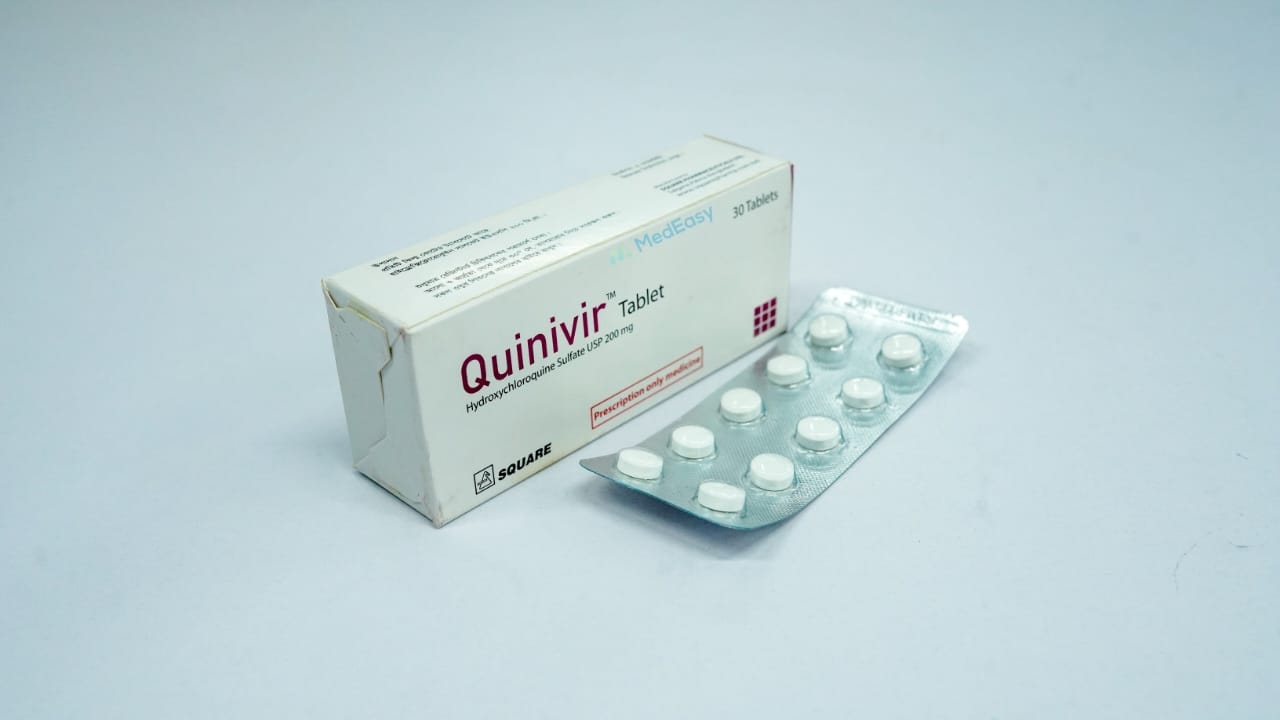
Quinivir200 mg
Square Pharmaceuticals PLC.
৳10.80
Add to cart
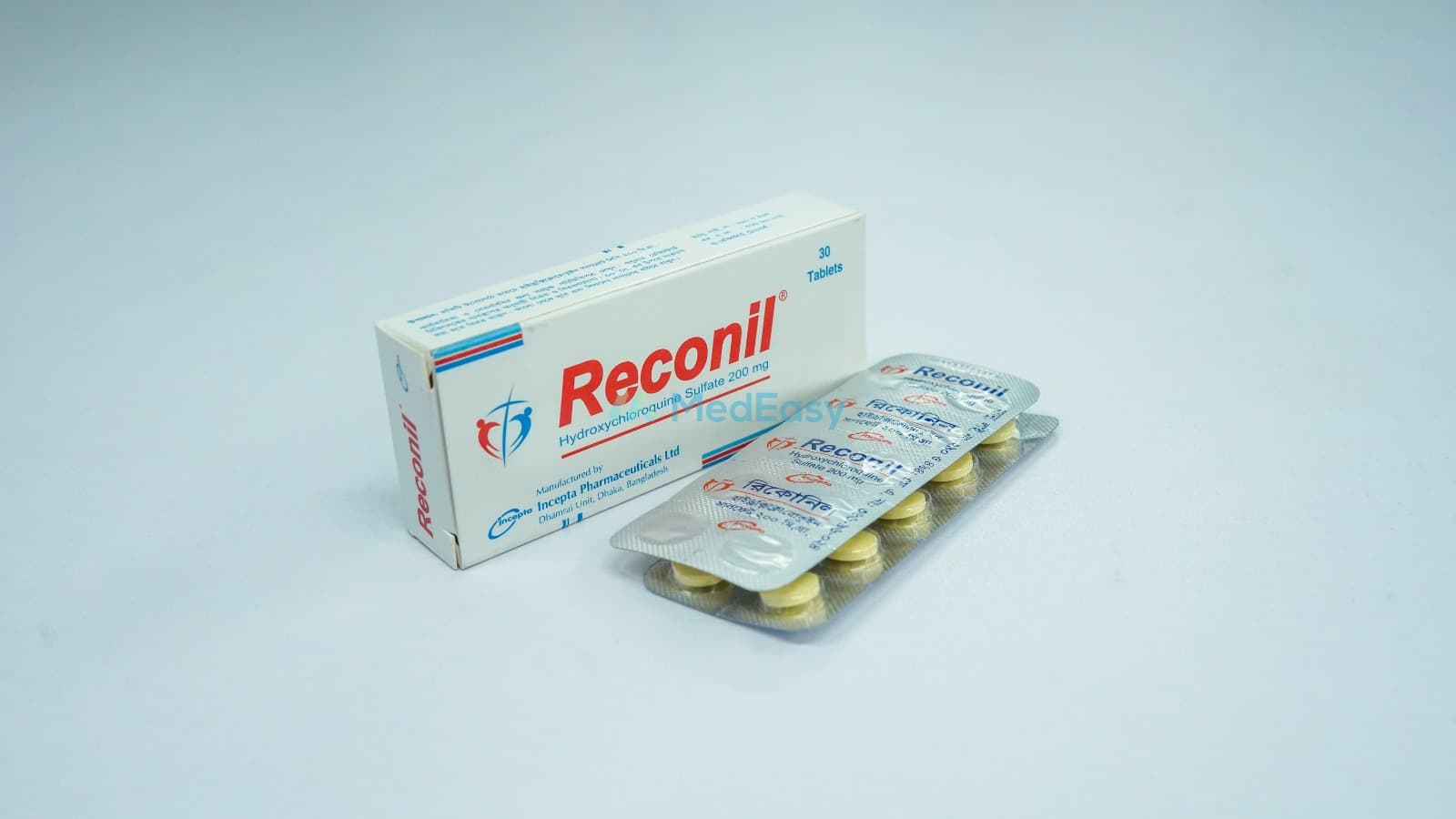

Reconil is a 4-aminoquinoline antimalarial and disease-modifying antirheumatic drug (DMARD) with the following indications:
Note: Reconil does not have proven efficacy for the treatment or prevention of COVID-19; use for this purpose is not supported by current evidence and is not recommended.
Each tablet of Hydroxychloroquine Sulphate commonly contains 200 mg of hydroxychloroquine sulfate (equivalent to approximately 155 mg of hydroxychloroquine base). Strengths and available formulations may vary by manufacturer; refer to the product label for the exact composition of the specific brand dispensed.
Reconil is a synthetic 4-aminoquinoline compound structurally related to chloroquine. It possesses antimalarial, anti-inflammatory, and immunomodulatory properties, and has been used for decades in the treatment of malaria and chronic autoimmune rheumatic diseases such as lupus and rheumatoid arthritis. Compared with chloroquine, Reconil is generally considered to have a somewhat more favorable long-term tolerability profile, though it carries similar classes of risk, including retinal toxicity with prolonged use.
Reconil belongs to the therapeutic class of antimalarials (4-aminoquinoline derivatives) and is also classified as a disease-modifying antirheumatic drug (DMARD) used in rheumatology and connective tissue disease management.
The precise mechanism by which Hydroxychloroquine Sulphate exerts its antirheumatic and antimalarial effects is not completely understood.
Hydroxychloroquine Sulphate concentrates within the acidic food vacuole of intraerythrocytic malaria parasites, raising the vacuolar pH and interfering with the parasite's ability to detoxify heme released during hemoglobin digestion, leading to accumulation of toxic heme and parasite death.
In autoimmune disease, Hydroxychloroquine Sulphate is thought to accumulate in lysosomes of antigen-presenting cells, raising intralysosomal pH, which interferes with antigen processing/presentation, toll-like receptor signaling (particularly TLR-9), and reduces the release of pro-inflammatory cytokines. It also has mild antiplatelet and lipid-lowering effects.
Dosage of Reconil is individualized by indication, body weight and clinical response. The following is a general guide; the treating physician's prescription should always be followed.
| Indication | Adult dose | Notes |
|---|---|---|
| Malaria treatment (adult) | 800 mg salt initially, then 400 mg at 6 hours, 400 mg at 24 hours, and 400 mg at 48 hours (total 2000 mg salt over 3 days) | Confirm local resistance patterns; combination therapy may be required in some regions |
| Malaria prophylaxis (adult) | 400 mg salt once weekly, starting 1-2 weeks before travel, continued weekly during exposure and for 4 weeks after leaving the endemic area | Only for areas without chloroquine resistance |
| Rheumatoid arthritis | Initially 400-600 mg/day in divided doses; maintenance 200-400 mg/day once optimal response achieved | Usually combined with other DMARDs; reassess after 3-6 months if no benefit |
| Lupus erythematosus (SLE/DLE) | 200-400 mg/day (up to 400-600 mg/day initially in some regimens), given once daily or in divided doses | Long-term maintenance often continued at the lowest effective dose |
For malaria in children, dosing is calculated on a mg/kg body-weight basis under direct physician supervision; hydroxychloroquine sulfate is not recommended for long-term therapy in children (see Use in Special Populations).
No well-established formal dose-adjustment schedule exists; however, Reconil should be used with caution and at the lowest effective dose in patients with significant renal or hepatic impairment, with closer clinical monitoring.
Take Reconil exactly as prescribed by your physician; do not stop, extend, skip doses, or share this medicine with others without medical advice.
Reconil tablets should be taken by mouth, swallowed whole with a full glass of water, and preferably taken with food or a meal (e.g., with milk) to reduce gastrointestinal upset. Doses should be taken at the same time(s) each day to maintain consistent blood levels, particularly for chronic rheumatic/lupus therapy where effect may take weeks to become apparent.
Reconil has the following clinically significant drug interactions:
Hydroxychloroquine Sulphate is contraindicated in:
Long-term use of Hydroxychloroquine Sulphate in children is not recommended (short-term use for malaria treatment/prophylaxis under medical supervision is not included in this restriction).
Common and serious side effects of Reconil include:
Seek prompt medical attention for visual changes, palpitations, unusual bruising/bleeding, or profound muscle weakness while taking Reconil.
Reconil is generally considered to have a relatively more favorable safety profile among antimalarial/DMARD agents used during pregnancy, and is commonly continued through pregnancy in women with lupus when the benefit of preventing disease flare outweighs potential risk, based on physician assessment. Nonetheless, it should be used in pregnancy only if clearly needed, and only after the treating physician has weighed the potential benefit against potential risk to the fetus for the individual patient. Reconil passes into breast milk in small amounts; breastfeeding decisions should be made in consultation with a physician, weighing the low reported infant exposure against the benefits of continued maternal therapy and breastfeeding.
Important precautions with Reconil:
Overdose of Reconil can be serious and potentially fatal, particularly in children, and toxic effects can develop rapidly (sometimes within 30 minutes to a few hours). Symptoms may include headache, visual disturbance, drowsiness, convulsions, cardiac arrhythmia, hypotension, and sudden respiratory and cardiac arrest. Overdose of Reconil is a medical emergency: seek immediate emergency medical attention or contact a poison control center. Keep Reconil out of reach of children, as even a small number of tablets can be fatal to a child.
Store Reconil at room temperature (below 30 degrees C), away from light and moisture. Keep out of reach of children.
Renal impairment: Use Reconil with caution in patients with significant renal impairment; consider using the lowest effective dose with clinical monitoring, as the drug is partly renally eliminated.
Hepatic impairment: Use Reconil with caution in patients with hepatic disease or in combination with other hepatotoxic drugs; monitor liver function periodically during prolonged therapy.
Elderly: No specific dose adjustment is established for elderly patients, but they should be monitored closely for cardiac, renal, hepatic, and ophthalmologic adverse effects given a higher likelihood of comorbidities and concomitant medications.
G6PD deficiency: Use with caution due to risk of hemolytic anemia (see Precautions & Warnings).
Duration of Reconil therapy depends on indication: malaria treatment is a short 3-day course, malaria prophylaxis continues throughout exposure and for 4 weeks after leaving the endemic area, while treatment of lupus or rheumatoid arthritis is typically long-term (months to years), with periodic reassessment of benefit versus cumulative retinal-toxicity risk. Do not stop, extend, or change the duration of Reconil therapy without consulting the prescribing physician.
Antimalarial (4-aminoquinoline derivative); Disease-Modifying Antirheumatic Drug (DMARD); Immunomodulatory agent.
Hydroxychloroquine Sulphate raises the pH within intracellular acidic vesicles (parasite food vacuoles and host-cell lysosomes), which interferes with heme detoxification in malaria parasites and with antigen processing/toll-like receptor signaling in immune cells, producing both antimalarial and immunomodulatory/anti-inflammatory effects.
C
Reconil is used in children for the treatment and prevention of malaria at weight-based doses under direct physician supervision. Long-term use of Reconil in children (e.g., for juvenile arthritis or lupus) is not recommended due to greater sensitivity to retinal toxicity and other cumulative adverse effects in this age group, and safety and efficacy of long-term pediatric use have not been well established. Accidental ingestion of even a few Reconil tablets by a young child can be fatal; the medicine must be stored safely out of children's reach.
Q: What is Reconil 200 mg Tablet used for?
A: Reconil 200 mg Tablet is used to treat and prevent malaria, and to treat chronic discoid and systemic lupus erythematosus and rheumatoid arthritis.
Q: How long does it take for Reconil 200 mg Tablet to work in lupus or arthritis?
A: Unlike its rapid antimalarial action, the anti-inflammatory benefit of Reconil 200 mg Tablet in lupus or rheumatoid arthritis usually takes several weeks to a few months of regular use to become apparent; it should not be stopped early without medical advice.
Q: Why do I need regular eye exams while taking Reconil 200 mg Tablet?
A: Long-term use of Reconil 200 mg Tablet carries a well-established risk of retinal (eye) toxicity that increases with cumulative dose and duration of therapy. A baseline eye examination and periodic ophthalmologic monitoring, generally annually after five years of use, are recommended to detect early changes before vision is permanently affected.
Q: Can Reconil 200 mg Tablet be taken during pregnancy?
A: Reconil 200 mg Tablet is often continued in pregnant women with lupus when the physician judges that the benefit of preventing a disease flare outweighs potential risk to the fetus; however, it should be used in pregnancy only if clearly needed and under close physician guidance.
Q: Can Reconil 200 mg Tablet lower my blood sugar?
A: Yes, Reconil 200 mg Tablet can enhance the effect of insulin or oral antidiabetic medicines and cause hypoglycemia; monitor blood glucose closely, especially if you have diabetes, and inform your doctor if you notice symptoms such as sweating, shakiness, or confusion.
Q: What should I do if I take too much Reconil 200 mg Tablet?
A: An overdose of Reconil 200 mg Tablet can be serious and even fatal, especially in children, and symptoms can develop quickly. Seek immediate emergency medical attention or contact a poison control center right away; do not wait for symptoms to appear.
Disclaimer
The information provided is accurate to the best of our knowledge, but it does not replace professional medical advice. We cannot guarantee its completeness or accuracy, and the absence of specific information about a drug should not be taken as an endorsement. We are not responsible for any consequences arising from this information, so please consult a healthcare professional for any concerns or questions.