
8% Off
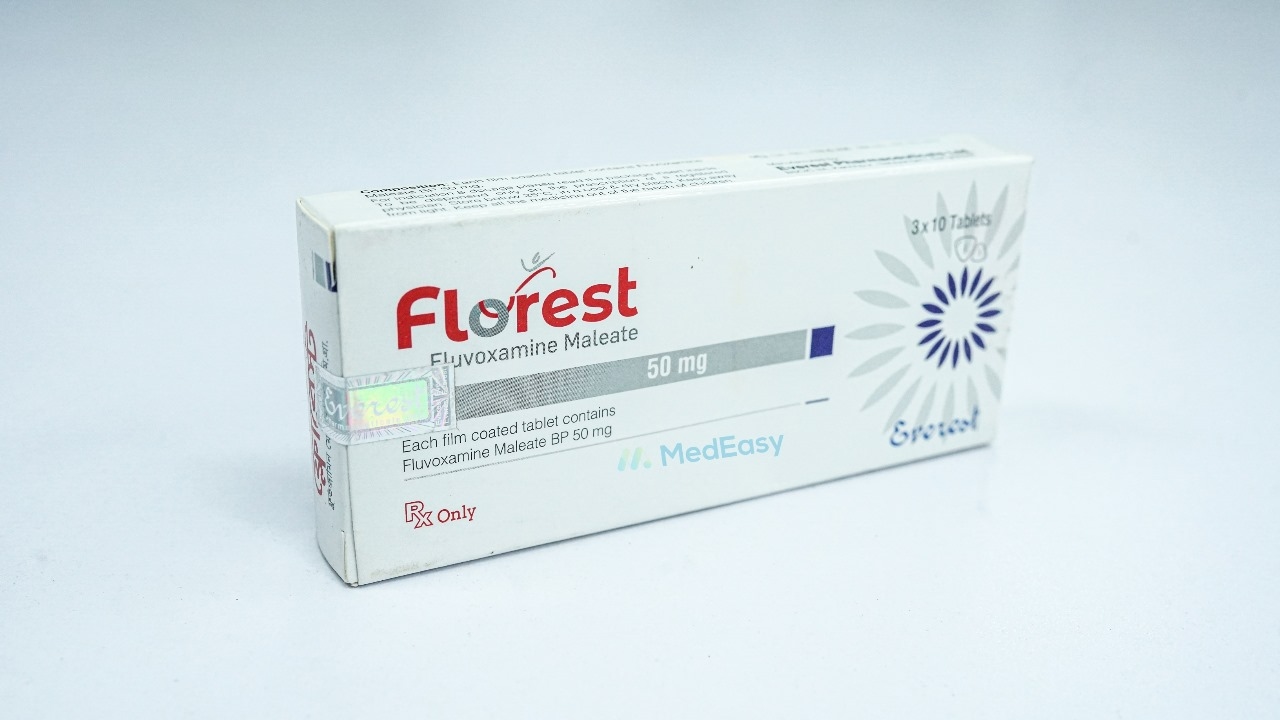
Florest50 mg
Everest Pharmaceuticals Ltd.
৳138.00
Add to cart
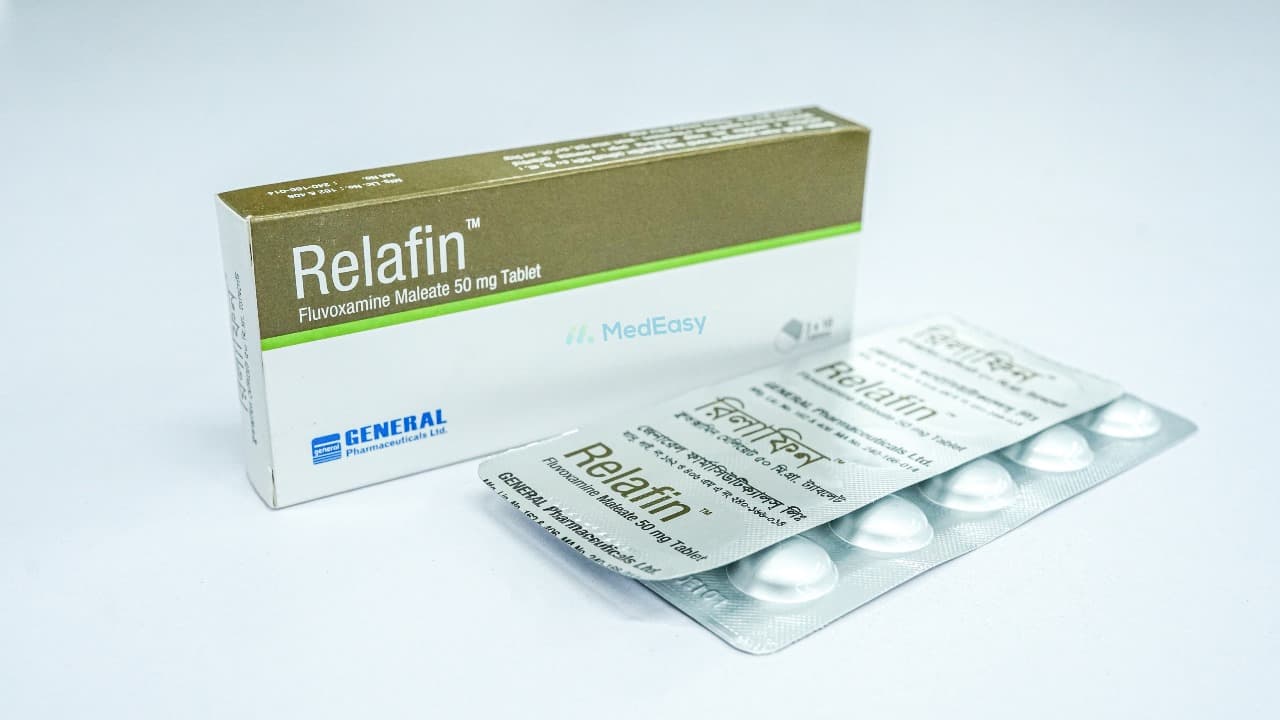

Relafin is a selective serotonin reuptake inhibitor (SSRI) used primarily to treat obsessive-compulsive disorder, and is also used in the management of depressive illness and certain anxiety-related conditions. Its indications can be classified by strength of evidence as follows:
The specific indication and duration of therapy with Relafin should always be determined by a qualified physician based on individual assessment.
Each film-coated tablet contains Fluvoxamine Maleate INN as the active pharmaceutical ingredient, commonly available in strengths of 50 mg and 100 mg. Extended-release capsule formulations containing Fluvoxamine Maleate (equivalent to 100 mg or 150 mg fluvoxamine base) are also available in some markets. Exact excipient composition varies by manufacturer; refer to the specific product package insert for full excipient details.
Relafin is a selective serotonin reuptake inhibitor (SSRI), chemically unrelated to tricyclic, tetracyclic, or other available antidepressant agents. It is used chiefly for obsessive-compulsive disorder and depressive illness. Relafin is supplied as oral film-coated tablets and, in some markets, as extended-release capsules intended for once-daily administration.
Unlike many other psychotropic agents, Relafin has minimal affinity for adrenergic, cholinergic, histaminergic, or dopaminergic receptors, which accounts for its relatively favorable side-effect profile compared with older antidepressant classes, although it carries its own distinct set of risks that require monitoring.
Relafin belongs to the therapeutic class of Selective Serotonin Reuptake Inhibitors (SSRIs), a subgroup of antidepressant and anti-obsessional agents.
Fluvoxamine Maleate is a potent and selective inhibitor of neuronal serotonin (5-HT) reuptake at the presynaptic neuronal membrane. This increases the availability of serotonin in the synaptic cleft, which is believed to underlie its antidepressant and anti-obsessional effects. It has only weak effects on norepinephrine and dopamine reuptake and minimal affinity for alpha-adrenergic, histaminergic, muscarinic, dopaminergic, or serotonergic (5-HT1A/5-HT2) receptors, distinguishing it from tricyclic antidepressants.
Dosage of Relafin must be individualized by a physician according to the indication being treated, patient age, and response/tolerability. Treatment is generally started at a low dose and titrated gradually.
| Indication | Adult Dose | Pediatric Dose |
|---|---|---|
| Obsessive-Compulsive Disorder | Start 50 mg once daily at bedtime; increase in increments of 50 mg every 4-7 days as tolerated, up to a maximum of 300 mg/day. Total daily doses above 100 mg should be given in two divided doses (larger dose at bedtime). | Children/adolescents 8-17 years: start 25 mg once daily at bedtime; increase by 25 mg every 4-7 days. Maximum 200 mg/day (ages 8-11) or 300 mg/day (ages 12-17); doses above 50 mg/day divided. |
| Depression / Anxiety-related disorders | Start 50 mg once daily at bedtime; usual effective range 100-300 mg/day, titrated according to response. | Not established; not routinely recommended for depression in children. |
In patients with hepatic impairment, clearance of Relafin is reduced by approximately 30%; a lower starting dose with slow titration and close monitoring is recommended. Dose adjustment may also be needed in patients with significant renal impairment; consult a physician for individualized dosing.
Doses should be reduced gradually rather than abruptly discontinued, to minimize the risk of discontinuation symptoms (see Precautions and Warnings).
For detailed administration technique, see Administration. For quick-reference dosing figures, see Dosage.
Relafin tablets should be swallowed whole with a full glass of water, generally taken once daily at bedtime (or in divided doses for higher daily amounts, with the larger portion at bedtime). Extended-release capsules should be swallowed whole and not crushed, chewed, or opened. Relafin may be taken with or without food. Doses should not be doubled to make up for a missed dose. Do not stop taking Relafin abruptly without consulting a physician, as gradual tapering is generally required.
Relafin is a potent inhibitor of CYP1A2 and a moderate-to-strong inhibitor of CYP2C19 and CYP3A4, resulting in a number of clinically significant drug interactions:
This is not an exhaustive list. Patients should inform their physician of all medicines, supplements, and herbal products being used before starting Relafin.
Fluvoxamine Maleate is contraindicated in the following situations:
Common side effects of Relafin (occurring in approximately 5% or more of patients) include:
Less common but more serious effects can include activation of mania/hypomania, seizures, abnormal bleeding, hyponatremia, and serotonin syndrome (see Precautions and Warnings for details). Any severe, persistent, or concerning side effect should be reported to a physician promptly.
Pregnancy: Relafin should be used during pregnancy only if clearly needed and if the potential benefit to the mother justifies the potential risk to the fetus. Use of SSRIs, including Relafin, in the third trimester has been associated with a risk of persistent pulmonary hypertension of the newborn and neonatal symptoms of poor adaptation (respiratory distress, feeding difficulty, irritability). A physician should be consulted before starting, stopping, or continuing Relafin during pregnancy; abrupt discontinuation is not recommended without medical advice.
Lactation: Relafin is excreted into human breast milk. Breastfeeding while using Relafin should only be done under close medical supervision, with monitoring of the infant for possible effects such as feeding difficulty, sleep disturbance, irritability, or diarrhea. A physician should help weigh the benefits of breastfeeding against the potential risk to the infant.
Antidepressants, including Relafin, may increase the risk of suicidal thinking and behavior in children, adolescents, and young adults (up to age 24), particularly during the first few months of treatment or after dose changes. Close monitoring for clinical worsening, unusual changes in behavior, or emergence of suicidal thoughts is required, especially at the start of therapy. Relafin is not approved for use in pediatric patients except those with obsessive-compulsive disorder.
A potentially life-threatening reaction that can occur when Relafin is used alone or, more commonly, in combination with other serotonergic drugs. Symptoms include mental status changes (agitation, hallucinations, coma), autonomic instability (tachycardia, labile blood pressure, hyperthermia), neuromuscular abnormalities (tremor, rigidity, myoclonus), and gastrointestinal symptoms. If suspected, Relafin should be discontinued immediately and medical attention sought.
Relafin may precipitate a manic or hypomanic episode, particularly in patients with an underlying bipolar disorder. Patients should be screened for personal or family history of bipolar disorder before starting therapy.
Pupillary dilation associated with SSRI use, including Relafin, may trigger an angle-closure attack in patients with anatomically narrow angles who do not have a patent iridectomy.
Relafin may increase the risk of bleeding events, particularly when combined with NSAIDs, aspirin, warfarin, or other anticoagulants/antiplatelet agents.
Use with caution in patients with a history of seizure disorder; Relafin has not been systematically evaluated in patients with a seizure disorder.
Cases of hyponatremia, sometimes severe, have been reported with SSRIs, particularly in elderly patients or those on diuretics.
Abrupt discontinuation of Relafin can cause symptoms such as dizziness, irritability, anxiety, sensory disturbances, and dysphoria. The dose should be tapered gradually under physician supervision rather than stopped suddenly.
Relafin may cause drowsiness or impair judgment; patients should be cautious about driving or operating heavy machinery until they know how the medicine affects them.
Symptoms of Relafin overdose may include nausea, vomiting, diarrhea, drowsiness, dizziness, and, in more serious cases, cardiac conduction disturbances, seizures, and coma. Overdose involving Relafin in combination with other central nervous system depressants or serotonergic agents may increase the severity of symptoms, including serotonin syndrome.
Suspected overdose is a medical emergency. Seek immediate medical attention or contact a poison control center/emergency services right away. Treatment of overdose is supportive and symptomatic and should only be carried out under medical supervision in a hospital setting; there is no specific antidote. Do not attempt home treatment.
Store at room temperature (below 30°C), away from light and moisture. Keep out of reach of children.
Dose adjustment may be required; use with caution and physician supervision.
Clearance of Relafin is reduced by roughly 30% in hepatic impairment; a lower starting dose and slower titration are recommended (see Dosage and Administration).
Lower starting doses and slower titration are generally recommended in elderly patients, who may be more sensitive to the effects of Relafin.
Relafin is approved for OCD in children and adolescents aged 8-17 years, with dosing that differs from adults (see Dosage and Administration). It is not approved for other pediatric psychiatric indications. Close monitoring for suicidality and growth/weight is recommended (see Precautions and Warnings, and Pediatric Uses).
Smokers may metabolize Relafin more rapidly than non-smokers. Patients who are poor CYP2D6 metabolizers may have higher Relafin plasma concentrations; dose adjustment may be needed.
The duration of treatment with Relafin should be determined by a physician. For OCD, a clinical response typically takes several weeks (often up to 10-12 weeks) to become fully apparent, and treatment is usually continued long-term if beneficial, with periodic reassessment. For depression, treatment is usually continued for several months after symptom remission to reduce the risk of relapse. Treatment should never be stopped abruptly; any decision to discontinue Relafin should be made together with a physician, using a gradual dose taper.
Selective Serotonin Reuptake Inhibitors (SSRIs)
Fluvoxamine Maleate selectively and potently inhibits the reuptake of serotonin (5-hydroxytryptamine, 5-HT) at the presynaptic neuronal membrane, increasing serotonergic neurotransmission in the central nervous system. It has minimal affinity for norepinephrine and dopamine reuptake sites and negligible affinity for alpha-1, alpha-2, and beta-adrenergic, histamine H1, muscarinic cholinergic, dopamine D2, or serotonin 5-HT1A/5-HT2 receptors, which distinguishes its receptor-binding profile from tricyclic antidepressants.
C (legacy FDA pregnancy category, based on older labeling prior to the 2015 Pregnancy and Lactation Labeling Rule; current prescribing information uses narrative risk description instead of a letter category)
Relafin is approved for the treatment of obsessive-compulsive disorder in children and adolescents aged 8 to 17 years, using weight/age-adjusted dosing that starts lower and titrates more slowly than in adults (see Dosage and Administration). Safety and efficacy of Relafin for other psychiatric indications, such as depression, have not been established in pediatric patients, and it is not recommended for pediatric depression.
Pediatric and young adult patients (up to age 24) treated with Relafin require close monitoring for emergence or worsening of suicidal thoughts or behavior, especially during the initial months of therapy or after dose changes (see boxed warning under Precautions and Warnings). Long-term use in pediatric patients should include periodic monitoring of growth and weight.
Q: What is Relafin 50 mg Tablet used for?
A: Relafin 50 mg Tablet is mainly used to treat obsessive-compulsive disorder (OCD) in adults and children aged 8 years and above. It is also used for depression and certain anxiety-related conditions under a physician's guidance.
Q: Can Relafin 50 mg Tablet be taken with other antidepressants or MAOIs?
A: No. Relafin 50 mg Tablet must not be combined with monoamine oxidase inhibitors (MAOIs), or used within 14 days of stopping one, because this combination can cause a serious, potentially fatal reaction called serotonin syndrome. Combining Relafin 50 mg Tablet with other serotonergic antidepressants also increases this risk and should only be done under close medical supervision.
Q: Is it safe to stop taking Relafin 50 mg Tablet suddenly?
A: No. Stopping Relafin 50 mg Tablet abruptly can cause discontinuation symptoms such as dizziness, irritability, anxiety, and sensory disturbances. The dose should always be tapered down gradually under a physician's supervision.
Q: Can Relafin 50 mg Tablet be used during pregnancy or breastfeeding?
A: Relafin 50 mg Tablet should be used in pregnancy only if clearly needed, as third-trimester use has been linked to a risk of breathing problems and poor adaptation in the newborn. Relafin 50 mg Tablet also passes into breast milk, so breastfeeding while using it should only be done under close medical supervision. Always consult a physician before use during pregnancy or breastfeeding.
Q: What should I do if I miss a dose or take too much Relafin 50 mg Tablet?
A: If a dose of Relafin 50 mg Tablet is missed, take it as soon as remembered, but skip it if it is almost time for the next dose — do not double the dose. If an overdose is suspected, seek immediate medical attention or contact emergency services/poison control right away, as overdose can be serious.
Q: Does Relafin 50 mg Tablet increase the risk of suicidal thoughts?
A: Yes, Relafin 50 mg Tablet, like other antidepressants, carries a boxed warning about an increased risk of suicidal thinking and behavior in children, adolescents, and young adults up to age 24, especially early in treatment or after dose changes. Patients and caregivers should watch closely for any worsening mood or unusual behavior and report it to a physician immediately.
Disclaimer
The information provided is accurate to the best of our knowledge, but it does not replace professional medical advice. We cannot guarantee its completeness or accuracy, and the absence of specific information about a drug should not be taken as an endorsement. We are not responsible for any consequences arising from this information, so please consult a healthcare professional for any concerns or questions.

