
10% Off
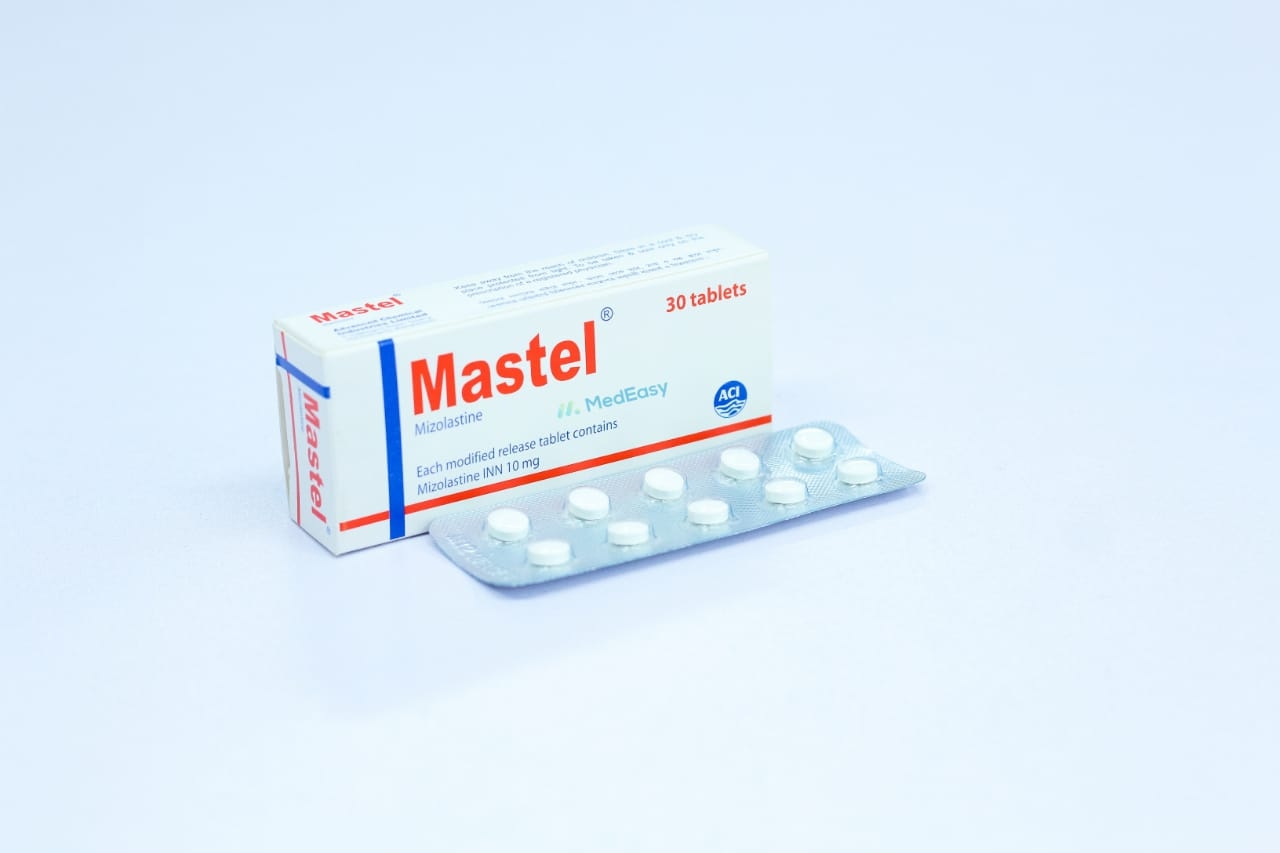
Mastel10 mg
ACI Limited
৳63.00
Add to cart
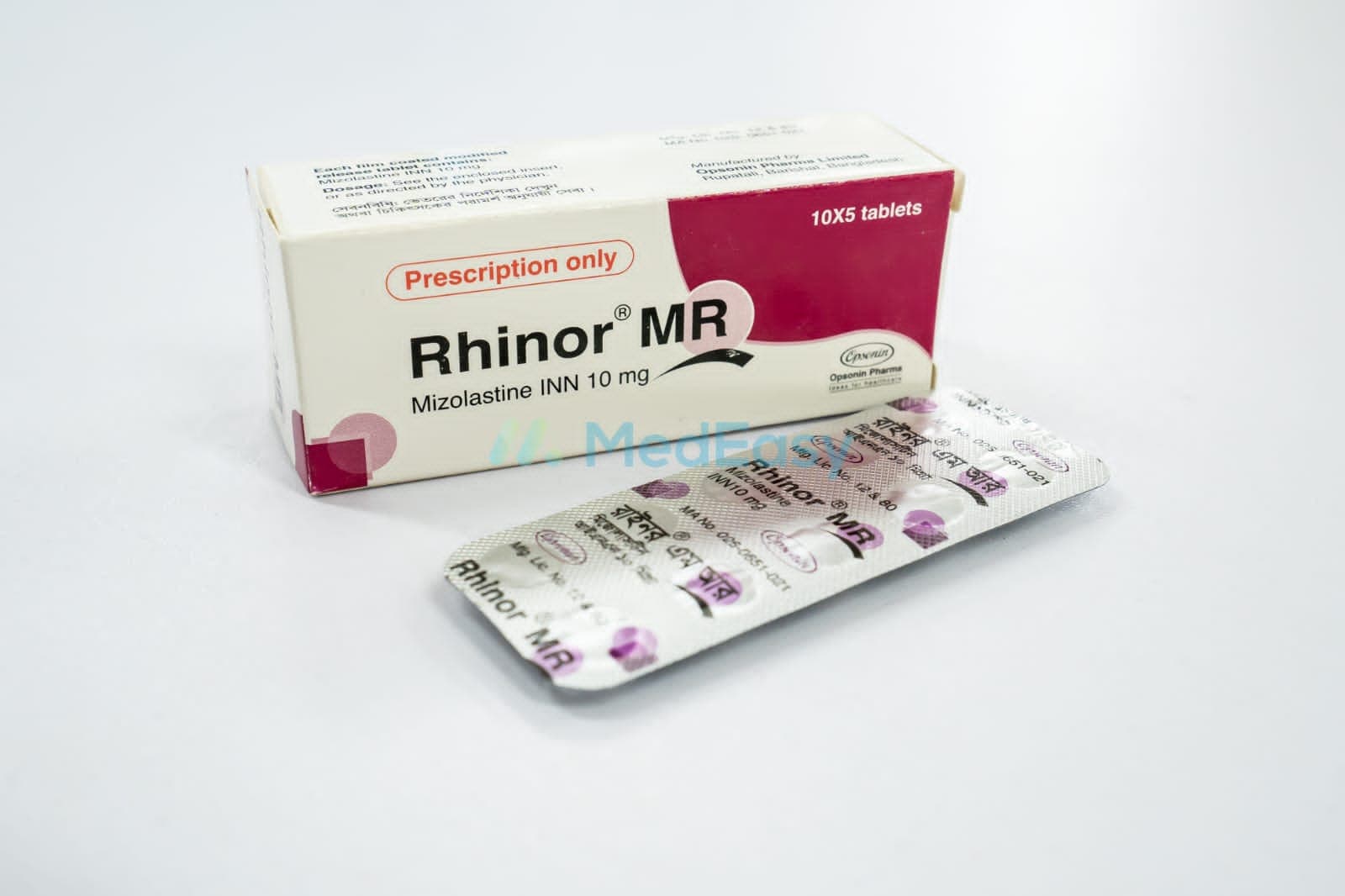

Rhinor MR is a second-generation (non-sedating) H1-antihistamine used for the symptomatic relief of allergic conditions. Its evidence-based uses include:
Rhinor MR is a symptomatic treatment only; it does not address the underlying cause of allergic disease and is not indicated for the treatment of acute anaphylaxis or bronchospasm.
Each film-coated tablet typically contains Mizolastine 10 mg as the active ingredient, along with pharmaceutically approved excipients such as fillers, binders, and coating agents. Exact composition may vary by manufacturer; refer to the specific product label for full excipient details.
Rhinor MR is a piperidine-benzimidazole derivative that acts as a selective, long-acting, non-sedating antagonist of peripheral histamine H1-receptors. It is used in the symptomatic management of allergic rhinitis and chronic urticaria. Unlike first-generation antihistamines, Rhinor MR penetrates the blood-brain barrier only minimally, which accounts for its comparatively low sedative potential, although it is not entirely free of central nervous system effects in all patients.
Rhinor MR is formulated as an oral tablet taken once daily. It is marketed in several countries (notably parts of Europe) under various trade names; its availability varies by market, and local availability in Bangladesh should be confirmed with a pharmacist or physician before prescribing or dispensing.
Rhinor MR belongs to the therapeutic class of second-generation (non-sedating) H1-antihistamines, used in the management of allergic rhinitis and urticaria.
Mizolastine is a selective and competitive antagonist of peripheral histamine H1-receptors. By blocking H1-receptors, it prevents histamine-mediated vasodilation, increased vascular permeability, and stimulation of sensory nerve endings that produce the classic symptoms of allergic rhinitis and urticaria (sneezing, rhinorrhea, pruritus, and wheal-and-flare reactions). Mizolastine also has secondary anti-allergic properties, including inhibition of mast cell mediator release and reduction of eosinophil chemotaxis and activation, which may contribute to its overall anti-allergic effect beyond simple H1-blockade.
Mizolastine is rapidly absorbed after oral administration, with clinical effect typically evident within about an hour and lasting through a 24-hour dosing interval, supporting once-daily dosing. It undergoes hepatic metabolism, partly via the CYP3A4 pathway, which underlies its clinically important interaction with potent CYP3A4 inhibitors (see Interactions). Because of its limited penetration across the blood-brain barrier, central nervous system (sedative) effects are less prominent than with first-generation antihistamines, though individual sensitivity varies and mild drowsiness can still occur.
| Population | Recommended Dose |
|---|---|
| Adults and adolescents ≥ 12 years | Rhinor MR 10 mg orally once daily |
| Children under 12 years | Not recommended; safety and efficacy not established |
| Population | Recommended Dose |
|---|---|
| Adults and adolescents ≥ 12 years | Rhinor MR 10 mg orally once daily |
Rhinor MR should be swallowed whole with a glass of water, at approximately the same time each day, preferably before the evening meal. It can be taken with or without food, but consistency in timing helps maintain a steady therapeutic effect. Do not exceed the dose or frequency prescribed by the physician.
Clinically significant interactions with Rhinor MR arise mainly from its potential to prolong the cardiac QT interval when combined with certain drugs:
Mizolastine is contraindicated in the following situations, which are true absolute contraindications:
| Frequency | Side Effects |
|---|---|
| Common | Drowsiness (mild), dry mouth, headache, fatigue, dizziness |
| Uncommon | Weight gain, gastrointestinal upset (nausea, abdominal discomfort) |
| Rare but serious | Cardiac rhythm disturbances, including QT-interval prolongation and, rarely, ventricular arrhythmia (torsades de pointes), particularly when contraindicated combinations are used; hypersensitivity reactions including angioedema and skin rash |
Patients should seek prompt medical attention for palpitations, fainting, or signs of an allergic reaction while taking Rhinor MR.
Pregnancy: Data on the use of Rhinor MR in pregnant women are insufficient to establish safety. As a precaution, Rhinor MR should be used during pregnancy only if clearly needed and if the potential benefit justifies the potential risk to the fetus; a physician should be consulted before use.
Lactation: It is not known whether Rhinor MR is excreted in human breast milk. Because of the theoretical risk to the nursing infant, breastfeeding is not recommended during treatment with Rhinor MR unless a physician determines the benefit outweighs the risk.
Use Rhinor MR with caution in the following situations:
Overdose with Rhinor MR may increase the risk of QT-interval prolongation and cardiac arrhythmia. In case of a suspected overdose, seek immediate medical attention or contact a poison control center/emergency services right away. Management is supportive and may include cardiac (ECG) monitoring; there is no specific antidote. Do not attempt unsupervised home treatment for a suspected overdose.
Store at room temperature (below 30°C), away from light and moisture. Keep out of reach of children.
Elderly: No specific dose adjustment is generally required for Rhinor MR, but increased caution is warranted due to greater susceptibility to cardiac conduction effects.
Renal impairment: Limited data are available; use Rhinor MR with caution, especially in moderate-to-severe renal impairment.
Hepatic impairment: Rhinor MR is contraindicated in significant/severe hepatic impairment; use with caution under medical supervision if impairment is mild.
Pediatric patients: Safety and efficacy of Rhinor MR have not been established in children under 12 years of age (see Pediatric Uses).
For seasonal allergic rhinitis, Rhinor MR is typically used for the duration of allergen exposure/symptom season, as directed by a physician. For perennial allergic rhinitis and chronic idiopathic urticaria, treatment may continue longer term under medical supervision, with periodic reassessment (e.g., every few months) to confirm continued need and to monitor for adverse effects, particularly cardiac safety parameters where relevant.
Mizolastine is classified under: Antihistamines (non-sedating, second-generation); H1-receptor antagonists.
Mizolastine works by selectively and competitively blocking peripheral histamine H1-receptors, thereby preventing histamine from producing the vasodilation, capillary permeability changes, and sensory nerve stimulation that underlie allergic symptoms such as sneezing, nasal congestion, itching, and wheal formation. It additionally suppresses mast cell mediator release and eosinophil activity, contributing an anti-inflammatory component to its antiallergic effect.
The safety and efficacy of Rhinor MR have not been established in children under 12 years of age; it should not be used in this age group. In adolescents 12 years of age and older, Rhinor MR may be used at the same dose as adults (10 mg once daily) for approved indications, under medical supervision.
Q: What is Rhinor MR 10 mg Tablet used for?
A: Rhinor MR 10 mg Tablet is used to relieve symptoms of allergic rhinitis (sneezing, runny nose, itchy nose/eyes) and chronic idiopathic urticaria (itching and hives), in adults and adolescents 12 years and older.
Q: How should I take Rhinor MR 10 mg Tablet?
A: Take Rhinor MR 10 mg Tablet 10 mg by mouth once daily, preferably before the evening meal, at about the same time each day. Do not take more than the prescribed dose.
Q: Who should not take Rhinor MR 10 mg Tablet?
A: Rhinor MR 10 mg Tablet should not be used by people with a known allergy to it, a history of cardiac rhythm disorders or QT-interval prolongation, significant liver impairment, or who are taking other medicines that prolong the QT interval or strong CYP3A4 inhibitors such as ketoconazole, itraconazole, or erythromycin, because combining these increases the risk of a serious heart rhythm problem.
Q: Can Rhinor MR 10 mg Tablet be used during pregnancy or breastfeeding?
A: Data on the use of Rhinor MR 10 mg Tablet in pregnancy are insufficient, so it should be used only if clearly needed and if the potential benefit outweighs the potential risk to the fetus, after consulting a physician. Breastfeeding is not recommended during treatment with Rhinor MR 10 mg Tablet unless a physician advises otherwise.
Q: Does Rhinor MR 10 mg Tablet cause drowsiness?
A: Rhinor MR 10 mg Tablet is a non-sedating, second-generation antihistamine and causes less drowsiness than older antihistamines, but it is not completely free of central nervous system effects, so individuals should judge their own response before driving or operating machinery.
Q: What should I do if I take too much Rhinor MR 10 mg Tablet?
A: If an overdose of Rhinor MR 10 mg Tablet is suspected, seek immediate medical attention or contact emergency services/poison control, because overdose can increase the risk of a serious heart rhythm disturbance requiring monitoring and supportive care.
Disclaimer
The information provided is accurate to the best of our knowledge, but it does not replace professional medical advice. We cannot guarantee its completeness or accuracy, and the absence of specific information about a drug should not be taken as an endorsement. We are not responsible for any consequences arising from this information, so please consult a healthcare professional for any concerns or questions.
