
8% Off
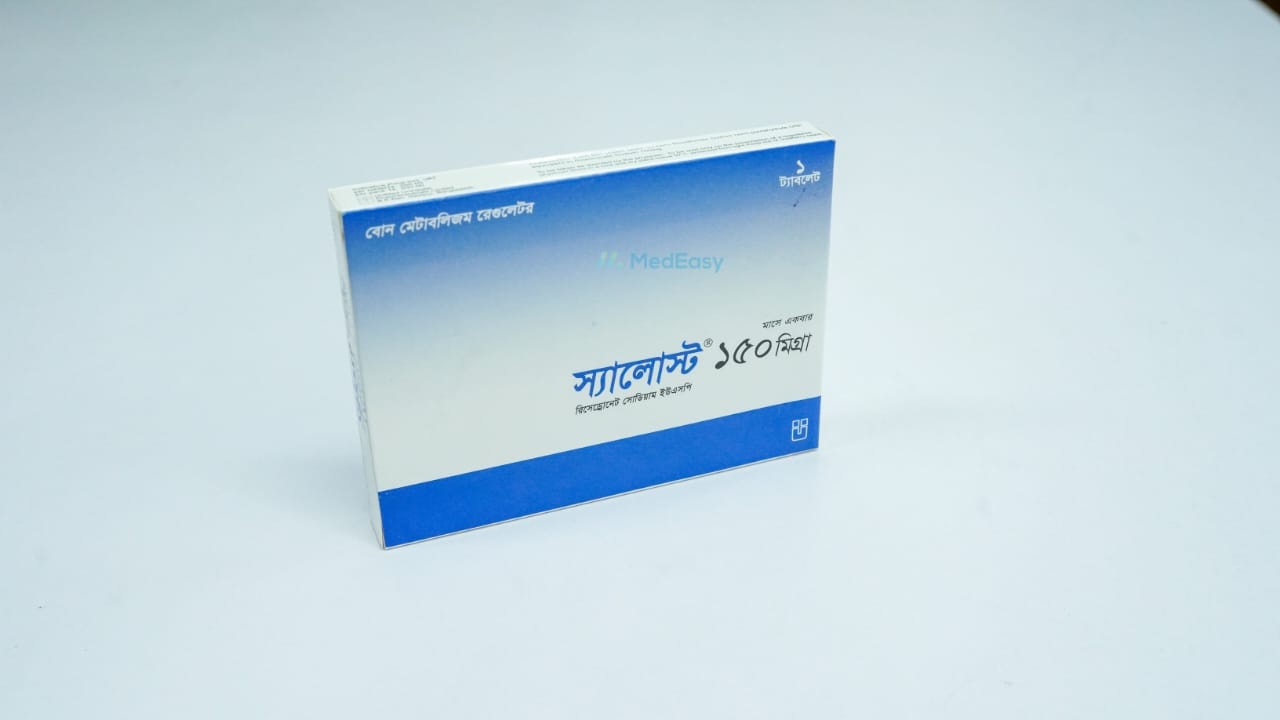
Salost150 mg
Unimed Unihealth MFG. Ltd.
৳184.00
Add to cart
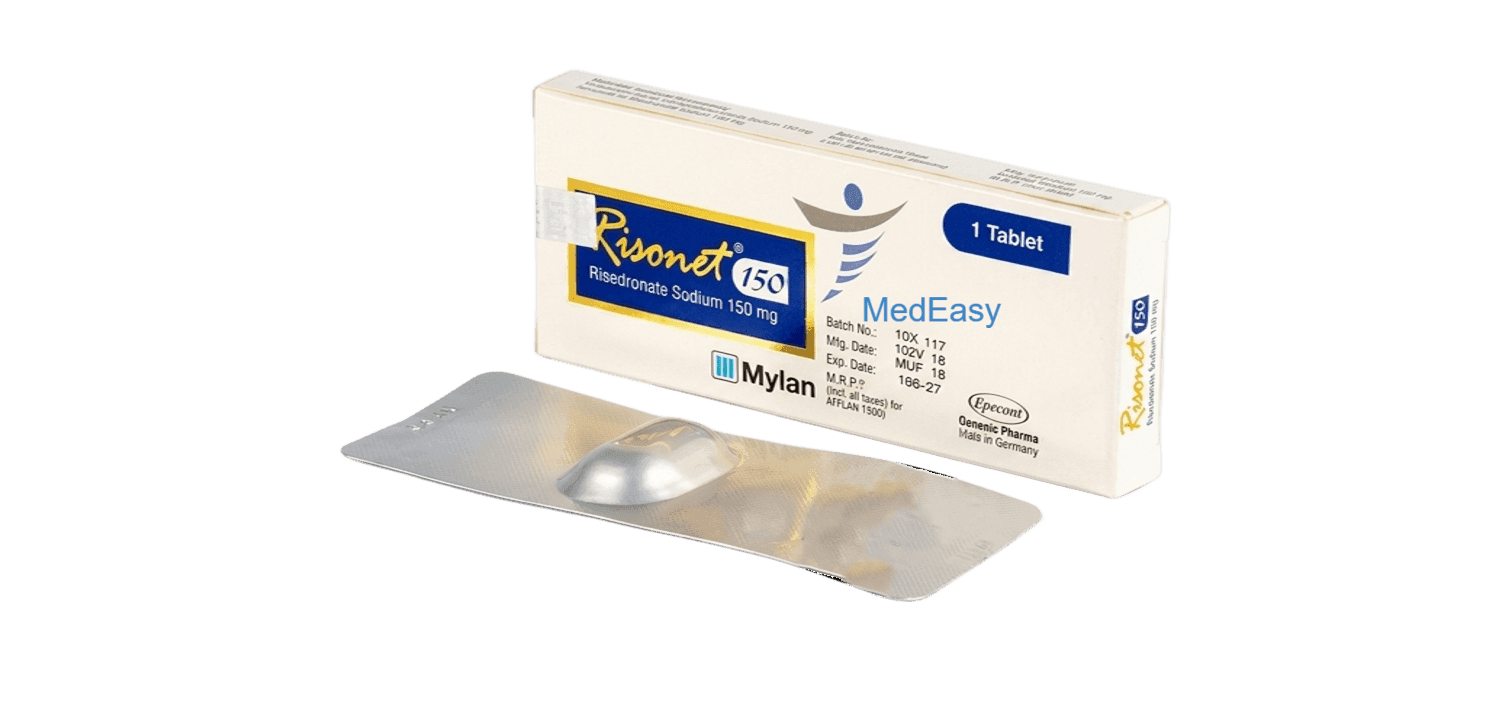
Risonet 150 mg Tablet is available on MedEasy for ৳108.00 per piece, with home delivery anywhere in Bangladesh. It is manufactured by Opsonin Pharma Ltd. Its generic name is Risedronate Sodium.

Risonet is used as part of a comprehensive treatment plan that may include adequate calcium and vitamin D intake, weight-bearing exercise, and lifestyle modification (smoking cessation, limiting alcohol) as advised by the physician.
Risedronate Sodium is available as oral tablets in strengths typically including 5 mg, 30 mg, 35 mg, 75 mg, and 150 mg, depending on the dosing regimen and indication. Each tablet contains Risedronate Sodium as the active ingredient along with pharmaceutically inert excipients.
Risonet is a pyridinyl bisphosphonate that inhibits osteoclast-mediated bone resorption, helping to preserve and, over time, increase bone mineral density. It is prescribed for the prevention and treatment of osteoporosis and for Paget's disease of bone. By slowing the rate of bone breakdown relative to bone formation, Risonet helps reduce the risk of fractures in patients with reduced bone mass.
Risonet belongs to the bisphosphonate class of medications, specifically a pyridinyl (nitrogen-containing) bisphosphonate. It is classified as a bone resorption inhibitor / anti-resorptive agent.
Risedronate Sodium binds to hydroxyapatite in bone and selectively inhibits osteoclast activity, reducing bone turnover and bone resorption without impairing bone mineralization. This shifts the balance of bone remodeling toward formation, leading to a net gain in bone mass over time.
Oral bioavailability of Risedronate Sodium is low (approximately 0.6%) and is further reduced when taken with food or calcium/mineral-containing products. Once absorbed, a portion binds to bone; the remainder is excreted unchanged, primarily by the kidneys. The terminal elimination half-life associated with bone binding is prolonged, reported at approximately 480 hours.
| Indication | Regimen |
|---|---|
| Postmenopausal osteoporosis - treatment | 5 mg once daily, OR 35 mg once weekly, OR 150 mg once monthly |
| Postmenopausal osteoporosis - prevention | 5 mg once daily, OR 35 mg once weekly |
| Osteoporosis in men | 35 mg once weekly |
| Glucocorticoid-induced osteoporosis (prevention/treatment) | 5 mg once daily |
| Paget's disease of bone | 30 mg once daily for 2 months (retreatment may be considered after relapse, following physician re-evaluation) |
Risonet tablets must be swallowed whole (not crushed or chewed) while the patient is in an upright position, taken:
Adequate calcium and vitamin D intake should be ensured as advised by the physician, though calcium/mineral supplements themselves must not be taken within 30 minutes of Risonet (see Interaction).
Risonet must be taken on an empty stomach with plain water only, at least 30 minutes before any food, drink, or other medication, and the patient must remain upright (sitting or standing) for at least 30 minutes afterward without lying down, to prevent esophageal irritation. See Dosage and Administration for complete instructions.
Patients should seek medical attention for severe or persistent gastrointestinal symptoms, new hip/groin/thigh pain, or jaw pain/swelling while taking Risonet.
Risonet is generally not indicated in pregnancy, as osteoporosis predominantly affects postmenopausal women. Animal studies have shown adverse effects on fetal development, and because bisphosphonates are incorporated into bone matrix and released slowly over time, the effect of this on a developing fetus in a future pregnancy is not fully known. Risonet should be used in pregnancy only if clearly needed and the potential benefit justifies the potential risk to the fetus, and only under close physician supervision.
It is not known whether Risonet passes into breast milk. Because of the potential for serious adverse effects in nursing infants, a decision should be made whether to discontinue nursing or discontinue the drug, taking into account the importance of treatment to the mother, in consultation with a physician.
Strict adherence to administration instructions is essential (see Dosage and Administration) to minimize the risk of esophageal irritation, esophagitis, or ulceration. Risonet should be discontinued and a physician contacted if symptoms of esophageal irritation develop (dysphagia, new or worsening heartburn, chest pain, or pain on swallowing).
Rare cases of osteonecrosis of the jaw have been reported with bisphosphonate use, more frequently with intravenous bisphosphonates in cancer patients but also reported with oral bisphosphonates such as Risonet. Risk factors include invasive dental procedures, cancer, chemotherapy, corticosteroid use, and poor oral hygiene. A dental examination is advisable before starting therapy in at-risk patients.
Atypical, low-trauma subtrochanteric and femoral shaft fractures have been reported with long-term bisphosphonate use, including Risonet. Patients should be advised to report new or unusual thigh, hip, or groin pain. Periodic re-evaluation of the need for continued therapy is recommended (see Duration of Treatment).
Hypocalcemia must be corrected before starting Risonet (see Contraindications). Adequate calcium and vitamin D intake should be ensured during treatment.
Use with caution in mild-to-moderate renal impairment; not recommended in patients with severe renal impairment (see Contraindications).
Overdose with Risonet may result in hypocalcemia, hypophosphatemia, and upper gastrointestinal adverse effects such as upset stomach, heartburn, esophagitis, gastritis, or ulcer. Milk or antacids containing calcium or magnesium may be given to bind the drug if taken recently, but vomiting should not be induced and the patient should remain in an upright position. In case of suspected overdose, seek immediate medical attention or contact a poison control center/emergency services without delay.
Store at room temperature (below 30°C), away from light and moisture. Keep out of reach of children.
No dosage adjustment is required in patients with mild-to-moderate renal impairment. Risonet is not recommended in patients with severe renal impairment (see Contraindications).
No specific studies have been conducted in patients with hepatic impairment; no dosage adjustment is considered necessary, as Risonet is not significantly metabolized by the liver.
No dosage adjustment is required based on age alone; efficacy and safety have been demonstrated in elderly populations, who are also the primary population treated for osteoporosis.
Safety and efficacy in pediatric patients have not been established (see Pediatric Uses).
The optimal duration of bisphosphonate therapy, including Risonet, has not been definitively established for all patients. Treatment duration is typically individualized, often 3-5 years or longer, based on fracture risk, bone mineral density response, and periodic physician reassessment. For Paget's disease, a standard course is 2 months, with retreatment considered only after relapse is confirmed and following an interval off therapy. Patients should not stop or continue Risonet beyond the prescribed duration without consulting their physician.
Bisphosphonate (pyridinyl bisphosphonate); bone resorption inhibitor / anti-resorptive agent.
Risedronate Sodium binds avidly to bone mineral (hydroxyapatite) and is preferentially taken up by osteoclasts during bone resorption. It inhibits farnesyl pyrophosphate synthase, a key enzyme in the osteoclast cholesterol/mevalonate pathway, disrupting osteoclast cytoskeletal organization and function, and promoting osteoclast apoptosis. This reduces bone resorption, allowing bone formation to proceed relatively unopposed and leading to a net increase in bone mineral density over time.
C
Risonet is not indicated for use in pediatric patients. Safety and efficacy in patients under 18 years of age have not been established.
Q: What is Risonet 150 mg Tablet used for?
A: Risonet 150 mg Tablet is used to treat and prevent postmenopausal osteoporosis, to treat osteoporosis in men, to prevent and treat glucocorticoid-induced osteoporosis, and to treat Paget's disease of bone.
Q: How should I take Risonet 150 mg Tablet?
A: Take Risonet 150 mg Tablet first thing in the morning on an empty stomach with a full glass of plain water only, at least 30 minutes before any food, drink, or other medication. Remain sitting or standing upright for at least 30 minutes afterward and do not lie down, to avoid irritation of the esophagus.
Q: Can I take calcium supplements with Risonet 150 mg Tablet?
A: No, calcium, magnesium, aluminum, or iron-containing products (including antacids) significantly reduce absorption of Risonet 150 mg Tablet. Take these at least 30 minutes after your Risonet 150 mg Tablet dose, or at a different time of day.
Q: Who should not take Risonet 150 mg Tablet?
A: Risonet 150 mg Tablet should not be used by people with a known allergy to it, uncorrected low blood calcium (hypocalcemia), esophageal disorders that delay emptying (such as stricture or achalasia), anyone unable to stay upright for at least 30 minutes after dosing, or patients with severe kidney impairment.
Q: What are the serious side effects of Risonet 150 mg Tablet?
A: Serious but rare side effects of Risonet 150 mg Tablet include esophageal irritation or ulceration, osteonecrosis of the jaw, and atypical femur fractures with long-term use. Report any difficulty or pain swallowing, chest pain, jaw pain or swelling, or unusual thigh/hip/groin pain to your physician promptly.
Q: Is Risonet 150 mg Tablet safe during pregnancy or breastfeeding?
A: Risonet 150 mg Tablet is generally not indicated during pregnancy and should be used only if clearly needed, since it is not typically prescribed to women of childbearing age given its osteoporosis indication. It is not known whether Risonet 150 mg Tablet passes into breast milk, so a physician should be consulted regarding breastfeeding.
Disclaimer
The information provided is accurate to the best of our knowledge, but it does not replace professional medical advice. We cannot guarantee its completeness or accuracy, and the absence of specific information about a drug should not be taken as an endorsement. We are not responsible for any consequences arising from this information, so please consult a healthcare professional for any concerns or questions.