7% Off
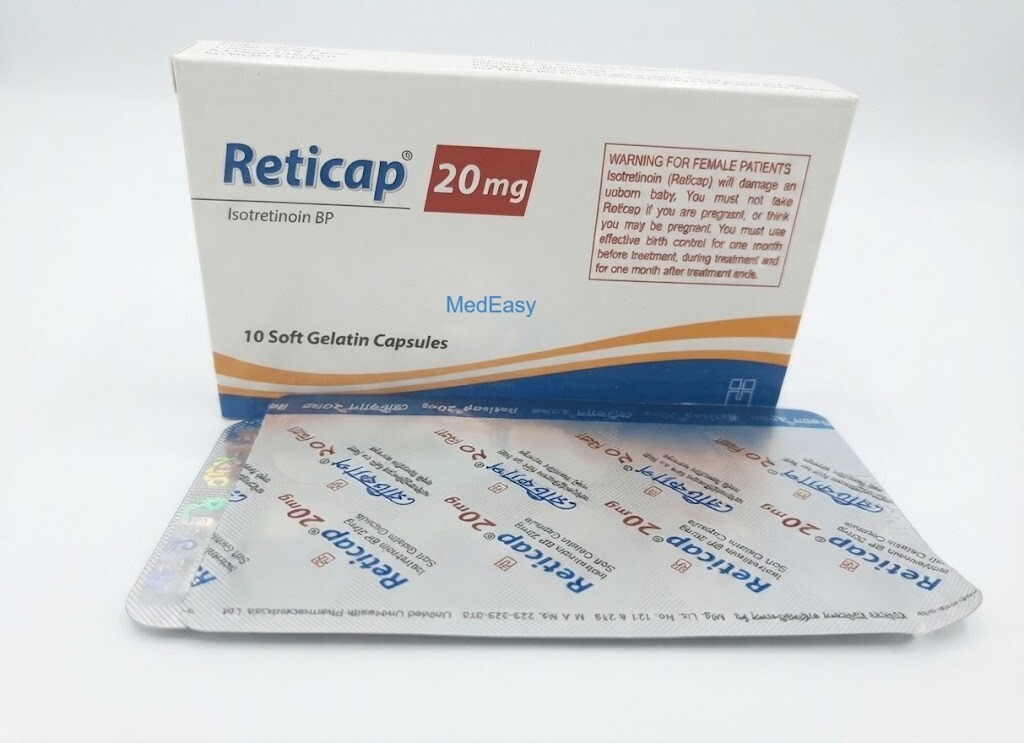
Reticap20 mg
Unimed Unihealth MFG. Ltd.
৳697.50
Add to cart
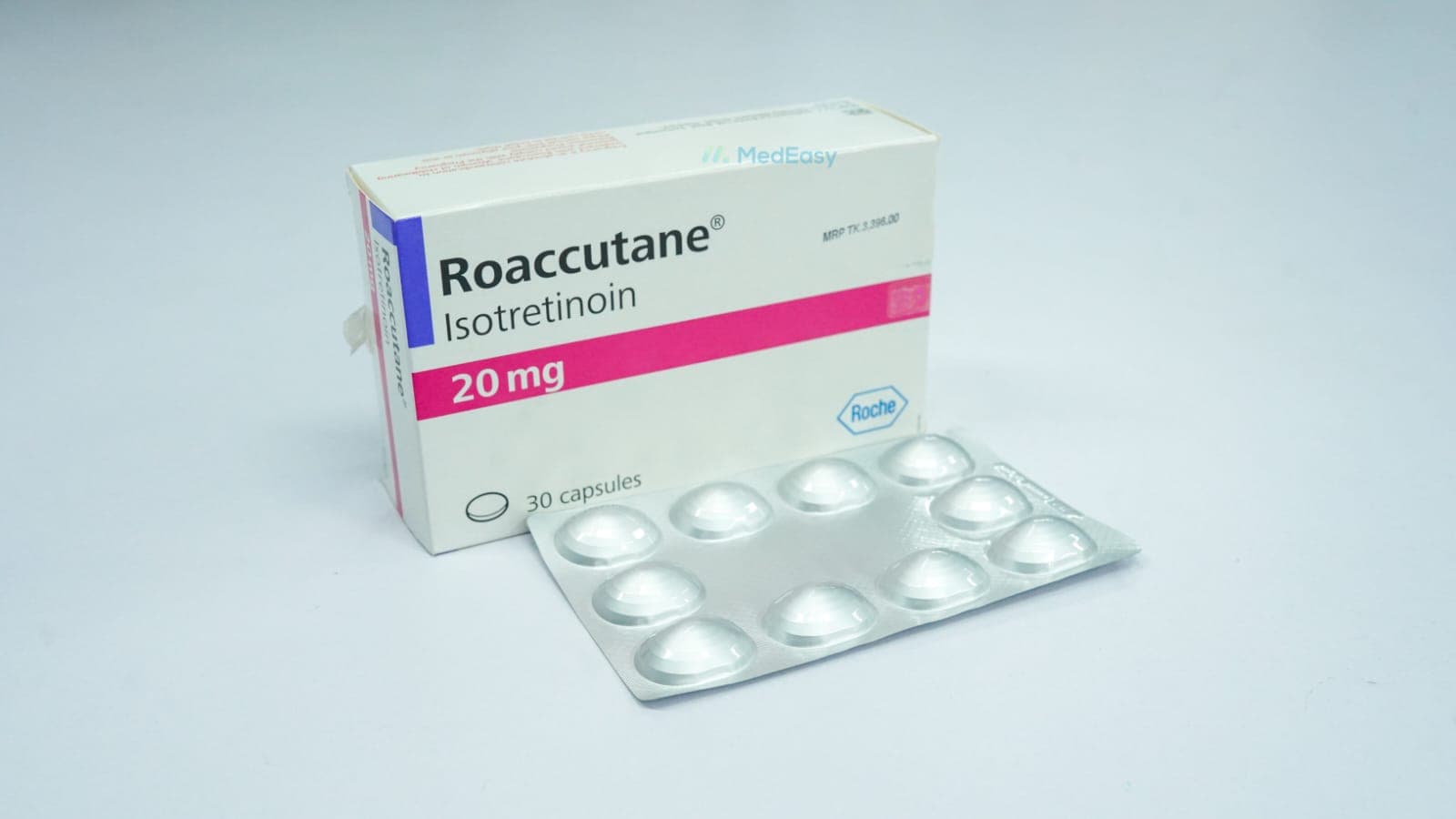
Roaccutane 20 mg Capsule is available on MedEasy for ৳1075.40 per 10's Strip, with home delivery anywhere in Bangladesh. It is manufactured by Radiant Pharmaceuticals Ltd. Its generic name is Isotretinoin.

Roaccutane is a synthetic oral retinoid used mainly in dermatology. Its uses can be classified by strength of evidence as follows:
Roaccutane is not a first-line or routine treatment for mild-to-moderate acne; it should only be prescribed by, or under the supervision of, a physician experienced in its use.
Each soft gelatin capsule of Isotretinoin contains Isotretinoin as the active ingredient, commonly available in strengths of 10 mg, 20 mg, and 40 mg (exact strengths marketed vary by manufacturer). Capsules typically contain oily excipients (such as soybean oil, hydrogenated vegetable oil, and beeswax) to aid absorption of this lipophilic drug; some formulations use parabens as preservatives.
Roaccutane is a synthetic retinoid, chemically related to vitamin A (retinol), that is taken by mouth to treat severe acne. Unlike topical retinoids, Roaccutane acts systemically to shrink the sebaceous (oil-producing) glands, reduce sebum output, normalize skin cell turnover inside hair follicles, and reduce inflammation, and it is the only medication capable of producing long-term or permanent remission of severe acne after a single course. Because it is a potent teratogen with other serious potential effects, its use is tightly restricted and requires specialist supervision.
Retinoid (vitamin A derivative) — systemic anti-acne agent.
Isotretinoin is a retinoid that binds intracellular retinoic acid receptors, altering gene transcription in sebaceous glands and follicular keratinocytes. This leads to marked shrinkage of sebaceous glands, reduced sebum production (by up to 90%), normalized follicular keratinization (reducing comedone formation), and secondary reduction of Cutibacterium acnes colonization and inflammation.
Dosing of Roaccutane is weight-based and individualized to achieve a cumulative treatment dose; it should only be prescribed by a physician experienced in retinoid therapy under a pregnancy-prevention protocol where applicable.
| Indication | Typical adult dose | Notes |
|---|---|---|
| Severe recalcitrant nodular acne | Initial: 0.5 mg/kg/day in 2 divided doses for the first 2–4 weeks; then titrate to 0.5–1 mg/kg/day (up to 2 mg/kg/day in some resistant cases) in 2 divided doses, for a full course of about 15–20 weeks | Target cumulative dose of approximately 120–150 mg/kg over the course; adjust based on response and tolerability |
| Renal impairment | Start at the lower end of the dose range (e.g. 0.5 mg/kg/day) and titrate cautiously | Limited data in significant renal impairment; monitor closely |
| Hepatic impairment | Not well established; generally avoided or used with extreme caution and close liver monitoring | Discontinue if significant transaminase elevation occurs (see Precautions) |
See Dosage and Administration fields below for a concise summary, and Precautions and Pregnancy sections for mandatory safety requirements before and during therapy.
Roaccutane capsules should be swallowed whole with a full glass of water, taken with food (a fatty meal improves absorption); do not chew or crush the capsule. Take it at approximately the same time(s) each day. Do not take any additional vitamin A supplements while on Roaccutane (see Interactions). Before starting therapy in a person who can become pregnant, mandatory pregnancy testing and use of effective contraception are required as described in the Pregnancy section — treatment should only begin once these requirements are met.
Clinically significant interactions with Roaccutane include:
Isotretinoin is contraindicated in:
Side effects of Roaccutane are dose-related and very common; most are manageable.
Roaccutane carries a boxed warning for severe teratogenicity and is absolutely contraindicated in pregnancy. Even a single dose taken during pregnancy can cause major birth defects (of the brain, face, heart, and other organs), miscarriage, or premature birth. Patients who can become pregnant must have two negative pregnancy tests before starting Roaccutane and must use two effective, reliable forms of contraception (or commit to complete abstinence) simultaneously for one month before starting, throughout treatment, and for one month after stopping Roaccutane, with monthly pregnancy testing during this period. If pregnancy occurs during treatment, Roaccutane must be stopped immediately and the physician contacted urgently.
It is not known with certainty whether Roaccutane passes into breast milk, but because of its potential toxicity, breastfeeding is not recommended during treatment with Roaccutane; discuss feeding options with your physician.
Roaccutane carries boxed warnings and requires specialist supervision:
Overdose of Roaccutane may cause symptoms of acute vitamin A toxicity such as severe headache, dizziness, vomiting, dry/cracked lips, and abdominal pain. There is no specific antidote. If an overdose of Roaccutane is suspected, seek immediate medical attention or contact a poison control center; do not attempt home treatment.
Store at room temperature (below 30°C), away from light and moisture. Keep out of reach of children.
Renal impairment: use with caution, starting at the lower end of the dosing range, as data are limited.
Hepatic impairment: use with caution and close monitoring of liver function; avoid in significant hepatic impairment (see Dosage and Administration).
Elderly: acne is uncommon in this age group; no specific dose adjustment is established, but monitor for the same adverse effects as in younger adults.
Females of reproductive potential: mandatory pregnancy testing and contraception requirements apply (see Pregnancy and Lactation).
See Pediatric Uses for use in children and adolescents.
A single course of Roaccutane for nodular acne is typically continued for approximately 15–20 weeks (about 4–5 months), aiming for a cumulative dose of roughly 120–150 mg/kg, which is associated with the most durable remission. Most patients achieve prolonged clearance after one course. A second course may be considered if acne relapses significantly, but only after a drug-free interval of at least 8 weeks, since further improvement may still occur after stopping.
Retinoids (vitamin A derivatives)
Isotretinoin works by binding to retinoic acid receptors inside skin cells, which changes gene expression to shrink sebaceous glands and cut sebum production, normalize the shedding of cells lining hair follicles (preventing pore blockage), and reduce inflammation and bacterial colonization associated with acne — together producing sustained remission of severe acne.
X
The safety and efficacy of Roaccutane have not been established in children under 12 years of age, and it is not recommended for prepubertal patients. In adolescents 12 years of age and older with severe recalcitrant nodular acne who have reached puberty, Roaccutane is dosed on the same weight-based (mg/kg/day) schedule as adults, under close specialist supervision. Adolescents should be monitored for the same risks as adults, with particular attention to psychiatric symptoms, growth, and bone health, since rare reports of premature growth-plate closure exist with long-term or high-dose use. Pregnancy-prevention requirements apply fully to adolescents who can become pregnant.
Q: What is Roaccutane 20 mg Capsule used for?
A: Roaccutane 20 mg Capsule is used to treat severe, scarring nodular acne that has not improved with other treatments such as antibiotics and topical medicines. It is not used for mild or moderate acne.
Q: Can I take Roaccutane 20 mg Capsule if I am pregnant or trying to conceive?
A: No. Roaccutane 20 mg Capsule is absolutely contraindicated in pregnancy because it can cause severe birth defects. If you can become pregnant, you must have two negative pregnancy tests before starting, use two reliable forms of contraception (or abstain completely) for one month before, during, and for one month after stopping Roaccutane 20 mg Capsule, and have monthly pregnancy tests during treatment. Stop the medicine and contact your doctor immediately if you become pregnant while taking it.
Q: Why can't I take antibiotics like doxycycline or tetracycline with Roaccutane 20 mg Capsule?
A: Combining Roaccutane 20 mg Capsule with tetracycline-class antibiotics is contraindicated because it increases the risk of pseudotumor cerebri (raised pressure inside the skull), which can cause severe headache and permanent vision loss.
Q: What are the most common side effects of Roaccutane 20 mg Capsule?
A: Most people taking Roaccutane 20 mg Capsule experience dry skin, lips, and eyes, increased sun sensitivity, and mild increases in blood fats or liver enzymes. Regular blood tests are done to monitor lipids and liver function during treatment.
Q: Can Roaccutane 20 mg Capsule affect my mood?
A: Yes. Roaccutane 20 mg Capsule has been associated with depression, mood changes, and rarely suicidal thoughts. Tell your doctor right away if you notice sadness, irritability, or any troubling changes in mood or behavior while taking Roaccutane 20 mg Capsule.
Q: Can I donate blood while taking Roaccutane 20 mg Capsule?
A: No. You must not donate blood while taking Roaccutane 20 mg Capsule and for one month after stopping, because if your blood were given to a pregnant woman, it could harm her baby.
Disclaimer
The information provided is accurate to the best of our knowledge, but it does not replace professional medical advice. We cannot guarantee its completeness or accuracy, and the absence of specific information about a drug should not be taken as an endorsement. We are not responsible for any consequences arising from this information, so please consult a healthcare professional for any concerns or questions.