
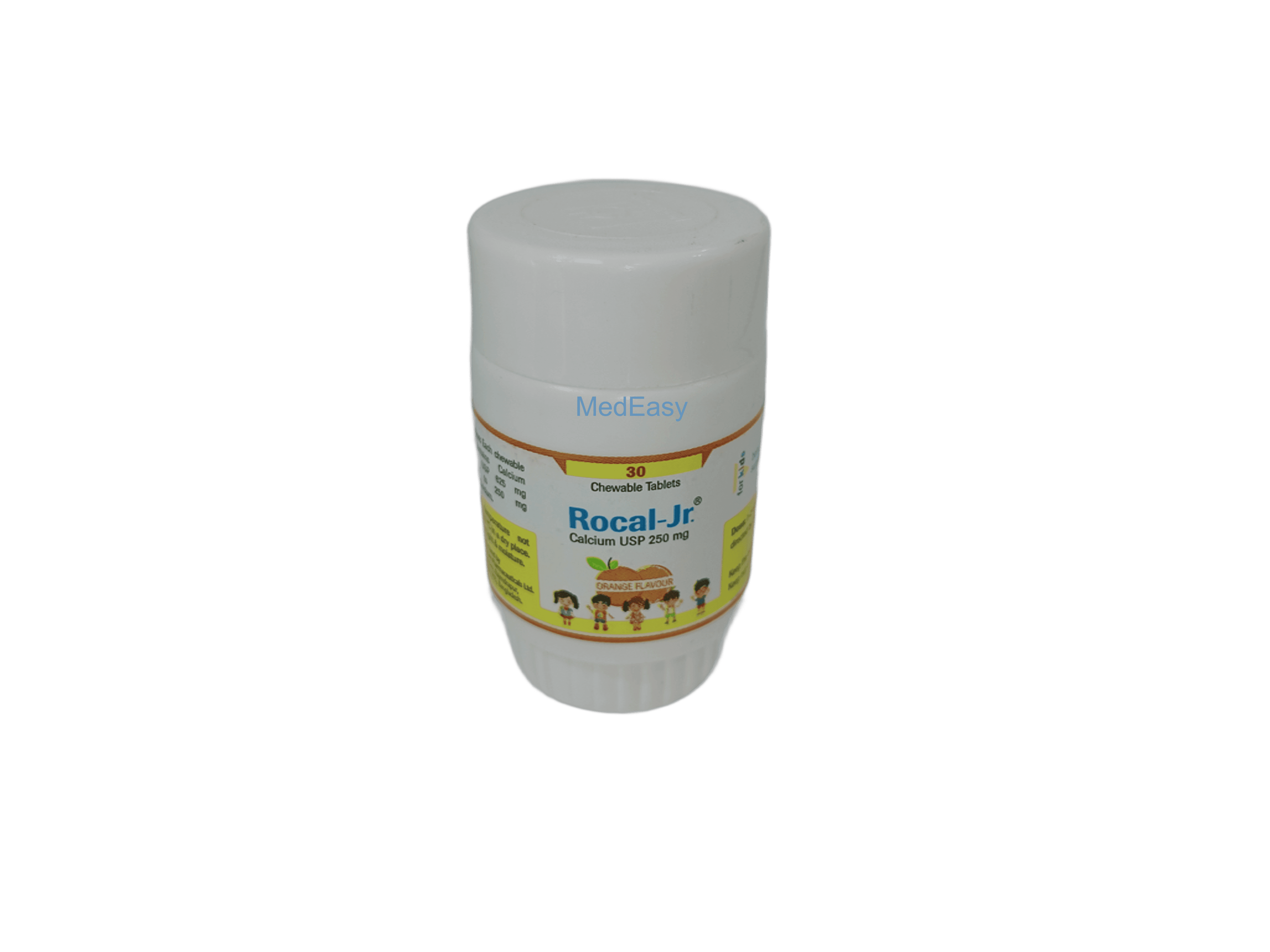

Medicine overview
Indications of Rocal Jr
Rocal Jr is indicated for the following uses, classified by strength of evidence:
Established / well-supported uses
- Calcium supplementation: Prevention and treatment of calcium deficiency in individuals with inadequate dietary intake, increased calcium requirements (e.g., pregnancy, lactation, growth), or documented hypocalcemia.
- Adjunct in osteoporosis: Used together with vitamin D, weight-bearing exercise, and (where prescribed) specific osteoporosis medications (e.g., bisphosphonates) to support bone mineral density in the prevention and management of osteoporosis. Rocal Jr alone is not a substitute for prescribed osteoporosis therapy when one is indicated.
- Antacid (over-the-counter use): Symptomatic relief of heartburn, acid indigestion, and sour stomach, at antacid-range doses.
Adjunct / guideline-supported uses
- Adjunct to phosphate binding in chronic kidney disease (as a calcium-based phosphate binder), under direct medical supervision only.
- Adjunct management in conditions of increased calcium loss (e.g., long-term corticosteroid use) as advised by a physician.
Rocal Jr should be used for indications and at doses recommended by a physician or pharmacist, since it is available both as a nutritional supplement and as an over-the-counter antacid.
Composition
Each unit of Calcium Carbonate [Elemental source] provides calcium carbonate as the source of elemental calcium. Calcium carbonate contains approximately 40% elemental calcium by weight (e.g., 1250 mg calcium carbonate supplies approximately 500 mg elemental calcium). Strength is generally labeled in terms of elemental calcium content on the product packaging. Formulations may be available as tablets, chewable tablets, or oral suspension; some products are combined with vitamin D3 (cholecalciferol) to enhance calcium absorption.
Description
Rocal Jr is an inorganic calcium salt widely used as a dietary calcium supplement and as an over-the-counter antacid. As a calcium source, it is described as "elemental," referring to the actual amount of usable calcium delivered per dose, distinguishing it from other calcium salts (such as calcium citrate or calcium gluconate) that contain different proportions of elemental calcium per gram of salt.
Rocal Jr works both by providing calcium for bone mineralization, neuromuscular function, and other calcium-dependent physiological processes, and by neutralizing gastric acid when used as an antacid.
Therapeutic Class
Rocal Jr belongs to the therapeutic class of calcium supplements / minerals, and, at antacid doses, also functions within the antacid class of gastrointestinal agents.
Pharmacology
Mechanism as a calcium supplement
Calcium Carbonate [Elemental source] dissociates in the acidic environment of the stomach to release calcium ions, which are absorbed primarily in the duodenum and proximal jejunum via both active (vitamin D-dependent) and passive transport. Calcium is essential for bone and teeth mineralization, blood coagulation, nerve conduction, muscle contraction, and enzyme and hormone regulation. Absorption of Calcium Carbonate [Elemental source] is enhanced when taken with food (due to increased gastric acid secretion) and is reduced in patients with achlorhydria or those taking acid-suppressing medications.
Mechanism as an antacid
Calcium Carbonate [Elemental source] rapidly reacts with hydrochloric acid in the stomach to form calcium chloride, water, and carbon dioxide, thereby neutralizing gastric acid and raising intragastric pH, which relieves symptoms of heartburn and acid indigestion.
Dosage & Administration of Rocal Jr
As a calcium supplement (calcium deficiency, osteoporosis adjunct)
| Population | Typical elemental calcium dose |
|---|---|
| Adults (general supplementation) | 500 mg to 1000 mg elemental calcium per day, in divided doses, adjusted to total dietary intake and physician recommendation |
| Adults with osteoporosis (adjunct) | 1000 mg to 1200 mg elemental calcium per day (from diet plus supplement combined), usually with vitamin D, as advised by a physician |
| Pregnant/lactating women | As advised by physician, based on dietary intake and individual requirement (see Use in Special Populations) |
| Children | Weight/age-based dosing as advised by a pediatrician (see Pediatric Uses) |
As an antacid (heartburn/acid indigestion, OTC use)
Typically 500 mg to 1500 mg (as calcium carbonate) taken as needed for symptom relief, not to exceed the maximum daily dose stated on the product label; do not use the maximum antacid dose for more than 2 weeks continuously without consulting a physician.
Administration
Take Rocal Jr with food for optimal absorption when used as a calcium supplement, unless otherwise directed. Divide larger daily doses (e.g., more than 500 mg elemental calcium at one time) into two or more doses to improve absorption. Chewable tablets should be chewed thoroughly before swallowing; oral suspensions should be shaken well before use. Do not exceed the total combined calcium intake recommended from diet, supplements, and antacid use (see Precautions and Warnings).
Administration of Rocal Jr
Rocal Jr should generally be taken with meals to maximize absorption. Doses of elemental calcium greater than 500 mg should be split into multiple smaller doses across the day rather than taken as a single large dose. Swallow tablets with a full glass of water unless the product is a chewable formulation. Shake oral suspensions well before measuring the dose.
Interaction of Rocal Jr
Rocal Jr is well known to reduce the absorption of several co-administered medications by chelation or by altering gastric pH; separate administration times as noted below.
- Tetracyclines and fluoroquinolone antibiotics (e.g., doxycycline, ciprofloxacin): Rocal Jr forms insoluble complexes with these antibiotics, markedly reducing their absorption and efficacy. Separate dosing by at least 2-6 hours (refer to specific antibiotic labeling).
- Bisphosphonates (e.g., alendronate): Calcium significantly reduces bisphosphonate absorption; bisphosphonates must be taken well before Rocal Jr (typically at least 30-60 minutes apart, per bisphosphonate labeling).
- Levothyroxine (thyroid hormone): Rocal Jr reduces levothyroxine absorption; separate dosing by at least 4 hours.
- Oral iron supplements: Calcium can reduce iron absorption; separate dosing where possible.
- Proton pump inhibitors and H2-blockers: Reduced gastric acidity from these agents can decrease Rocal Jr absorption, particularly with prolonged use.
- Thiazide diuretics: Concurrent use with Rocal Jr may increase the risk of hypercalcemia due to reduced renal calcium excretion.
Contraindications
Calcium Carbonate [Elemental source] is contraindicated in patients with:
- Known hypersensitivity to calcium carbonate or any component of the formulation.
- Hypercalcemia.
- Conditions associated with hypercalcemia and hypercalciuria (e.g., hyperparathyroidism, hypervitaminosis D-associated hypercalcemia), unless specifically directed by a physician.
- Calcium renal stones (active nephrolithiasis due to calcium), unless use is specifically directed and monitored by a physician.
Side Effects of Rocal Jr
Rocal Jr is generally well tolerated at recommended doses. Reported side effects include:
- Common: Constipation, bloating, gas/flatulence, and mild stomach upset.
- Less common: Nausea, vomiting, dry mouth, and headache.
- With excessive or prolonged high-dose use: Hypercalcemia, hypercalciuria, and (rarely) milk-alkali syndrome (see Precautions and Warnings and Overdose Effects).
Pregnancy & Lactation
Calcium is an essential nutrient during pregnancy and lactation, and requirements increase during these periods. However, Rocal Jr should be used only in doses appropriate to actual need, and the potential benefit should justify use above normal dietary requirements; consult a physician before use for supplementation beyond standard prenatal/lactation calcium intake, or for antacid use during pregnancy or breastfeeding, to ensure the dose and duration are appropriate. Avoid exceeding recommended total calcium intake from all sources during pregnancy and lactation, as this may increase the risk of hypercalcemia and related complications.
Precautions & Warnings
- Total calcium intake: Do not exceed the recommended daily calcium intake from combined dietary, supplement, and antacid sources of Rocal Jr or other calcium-containing products, as excessive intake increases the risk of hypercalcemia, hypercalciuria, and kidney stone formation.
- Absorption and acid-reducing medicines: Rocal Jr requires adequate stomach acid for optimal absorption and is best taken with food; patients on acid-reducing medications (e.g., proton pump inhibitors, H2-blockers) may have reduced absorption efficiency and should discuss appropriate calcium salt choice/timing with a physician.
- Renal impairment: Calcium handling is altered in renal impairment; use Rocal Jr only under medical guidance in patients with kidney disease, including when used as a phosphate binder.
- Drug separation: Separate dosing from tetracyclines, fluoroquinolones, bisphosphonates, thyroid hormone, and iron supplements, since Rocal Jr reduces absorption of these medicines (see Drug Interactions).
- Milk-alkali syndrome: Excessive or prolonged use of antacid doses of Rocal Jr combined with high dairy/calcium intake can rarely cause milk-alkali syndrome (hypercalcemia, metabolic alkalosis, and renal impairment); avoid prolonged high-dose antacid use without medical supervision.
- Constipation: Rocal Jr can cause or worsen constipation; adequate fluid intake and dietary fiber may help.
Overdose Effects of Rocal Jr
Overdose of Rocal Jr can cause hypercalcemia, presenting with symptoms such as nausea, vomiting, constipation, abdominal pain, confusion, excessive thirst, increased urination, muscle weakness, and, in severe cases, cardiac arrhythmias or renal impairment. Chronic excessive intake may lead to milk-alkali syndrome. If overdose is suspected, seek immediate medical attention or contact a poison control center; do not attempt specific home treatment. Management is supportive and directed by a physician, and may include stopping calcium intake, hydration, and monitoring of serum calcium.
Storage Conditions
Store at room temperature (below 30°C), away from light and moisture. Keep out of reach of children.
Use In Special Populations
- Elderly: Rocal Jr is commonly used in older adults for bone health, but renal function and total calcium intake should be monitored due to increased risk of hypercalcemia and interactions with other medications common in this age group.
- Renal impairment: Use only under medical guidance; dose and monitoring should be individualized (see Precautions and Warnings).
- Hepatic impairment: No well-established dose adjustment is required for Rocal Jr, as calcium metabolism is not primarily hepatic; use as clinically indicated.
- Pediatric patients: See Pediatric Uses.
Duration Of Treatment
Duration of Rocal Jr use depends on the indication: long-term (ongoing) use is typical for calcium deficiency prevention and osteoporosis adjunct therapy, as advised by a physician, with periodic reassessment of calcium status. For antacid use, Rocal Jr should not be used at maximum OTC doses for more than 2 weeks continuously without medical advice; if symptoms persist beyond this period, a physician should be consulted.
Drug Classes
Calcium Carbonate [Elemental source] belongs to the drug classes: calcium salts / mineral supplements, and antacids (gastrointestinal agents) when used at antacid doses.
Mode Of Action
Calcium Carbonate [Elemental source] provides elemental calcium that is absorbed from the gastrointestinal tract to maintain serum calcium levels required for bone mineralization, blood clotting, muscle contraction, and nerve transmission. At antacid doses, Calcium Carbonate [Elemental source] chemically neutralizes gastric hydrochloric acid, raising gastric pH and providing rapid, short-acting relief of acid-related symptoms.
Pediatric Uses
Rocal Jr may be used in children for the prevention and treatment of dietary calcium deficiency and to support bone development, using weight- and age-based dosing recommended by a pediatrician; specific pediatric antacid use of Rocal Jr should also be guided by a physician, as safety and efficacy of self-directed antacid use have not been established in young children. Do not exceed the pediatric dose recommended by a healthcare provider, and avoid combining multiple calcium-containing products without medical advice.
Frequently Asked Questions
Q: Can I take Rocal Jr 250 mg Chewable Tablet with food?
A: Yes, Rocal Jr 250 mg Chewable Tablet is best taken with food, as this improves calcium absorption because food stimulates stomach acid, which helps dissolve and absorb calcium carbonate.
Q: Can Rocal Jr 250 mg Chewable Tablet be used as an antacid for heartburn?
A: Yes, Rocal Jr 250 mg Chewable Tablet is used over-the-counter for symptomatic relief of heartburn and acid indigestion at antacid doses; however, it should not be used at maximum doses for more than 2 weeks without consulting a physician.
Q: Does Rocal Jr 250 mg Chewable Tablet interact with other medicines?
A: Yes, Rocal Jr 250 mg Chewable Tablet can reduce the absorption of certain antibiotics (tetracyclines, fluoroquinolones), bisphosphonates, thyroid hormone (levothyroxine), and iron supplements. It is generally recommended to separate dosing of Rocal Jr 250 mg Chewable Tablet from these medicines by several hours; consult your physician or pharmacist for specific timing.
Q: Is Rocal Jr 250 mg Chewable Tablet safe during pregnancy and breastfeeding?
A: Calcium is an essential nutrient in pregnancy and lactation, but Rocal Jr 250 mg Chewable Tablet should be used only in the amount actually needed, and any use beyond standard dietary/prenatal calcium requirements should be discussed with a physician, since the benefit should justify any potential risk from exceeding recommended total calcium intake.
Q: What happens if I take too much Rocal Jr 250 mg Chewable Tablet?
A: Taking too much Rocal Jr 250 mg Chewable Tablet can cause hypercalcemia, with symptoms such as nausea, vomiting, constipation, confusion, and muscle weakness, and prolonged excessive use can rarely cause milk-alkali syndrome. If overdose is suspected, seek immediate medical attention or contact a poison control center rather than attempting home treatment.
Q: Can Rocal Jr 250 mg Chewable Tablet cause constipation?
A: Yes, constipation is a common side effect of Rocal Jr 250 mg Chewable Tablet. Adequate fluid intake, dietary fiber, and physical activity may help reduce this effect; consult a physician if constipation is severe or persistent.
Disclaimer
The information provided is accurate to the best of our knowledge, but it does not replace professional medical advice. We cannot guarantee its completeness or accuracy, and the absence of specific information about a drug should not be taken as an endorsement. We are not responsible for any consequences arising from this information, so please consult a healthcare professional for any concerns or questions.
