
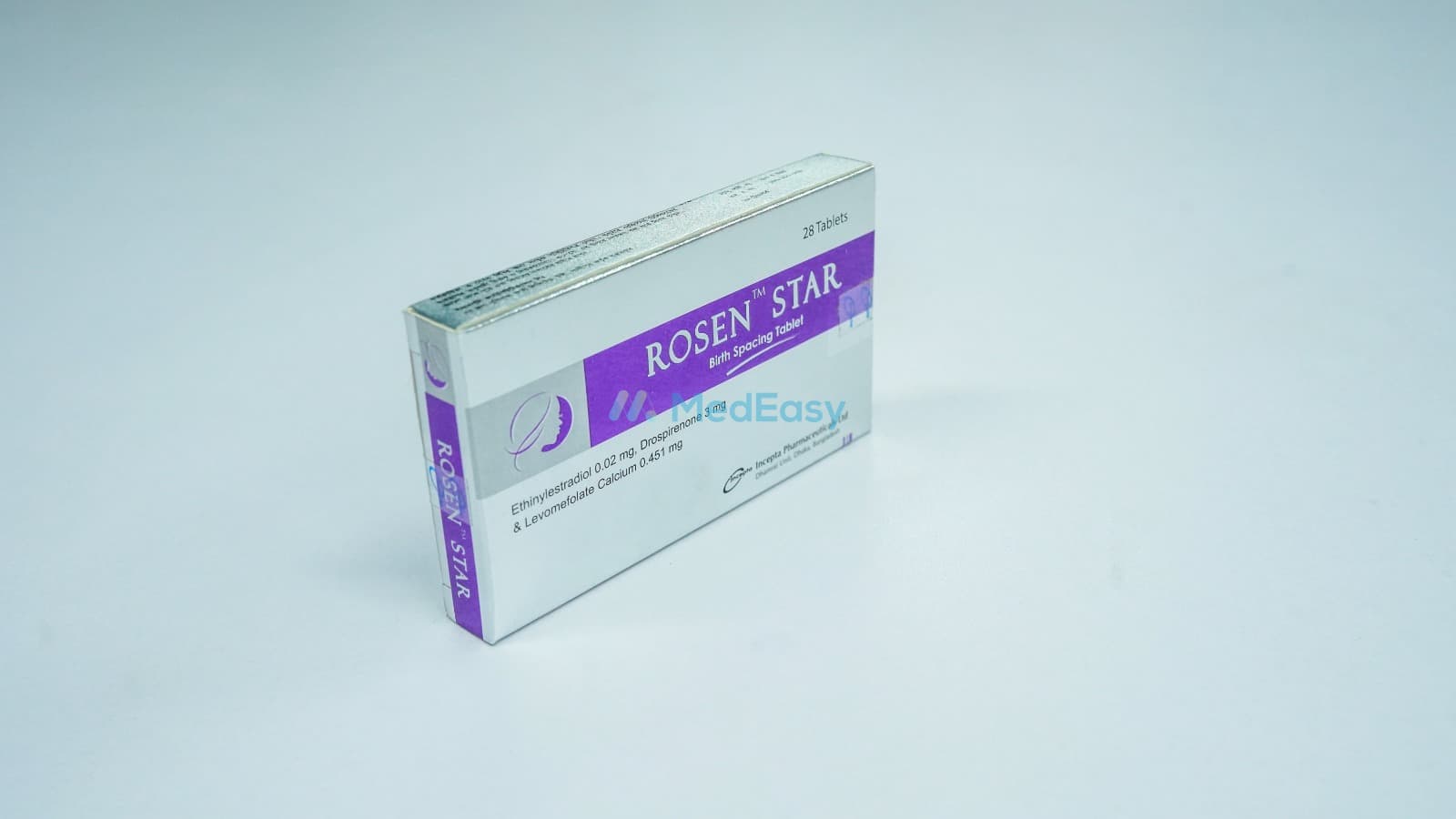
Rosen Star0.02 mg+3 mg+0.415 mg

Medicine overview
Indications of Rosen Star
Rosen Star is a combined oral contraceptive formulated with a folate supplement. It is FDA-approved for:
- Prevention of pregnancy in women who elect to use an oral contraceptive.
- Raising folate levels in women who elect to use an oral contraceptive for contraception, to reduce the risk of neural tube defects (NTDs) in a fetus conceived while taking Rosen Star or shortly after discontinuing it.
Rosen Star does not protect against sexually transmitted infections. It is not intended for treatment of established folate deficiency or for neural tube defect prevention once pregnancy is confirmed; a prenatal vitamin containing folic acid should be used instead once pregnancy is diagnosed.
Composition
Each active tablet of Ethinyl Estradiol + Drospirenone + Levomefolate typically contains:
- Ethinyl Estradiol (a synthetic estrogen)
- Drospirenone (a spirolactone-derived progestin with antimineralocorticoid and antiandrogenic activity)
- Levomefolate Calcium (the calcium salt of L-5-methyltetrahydrofolate, a biologically active form of folate)
Formulations may include a short interval of levomefolate-only tablets to maintain a 28-day dosing cycle. Exact strengths vary by brand; refer to the specific product label for the milligram content of each component.
Description
Rosen Star is a combined hormonal contraceptive that pairs a low-dose estrogen-progestin regimen with levomefolate calcium, an active form of folate. It is taken orally, once daily, to prevent pregnancy while simultaneously raising folate levels, which may lower the risk of neural tube defects if conception occurs during use or shortly after stopping.
Therapeutic Class
Rosen Star belongs to the combined oral contraceptive (estrogen-progestin) class, further characterized by its antimineralocorticoid progestin (drospirenone) and folate-supplementation component (levomefolate calcium).
Pharmacology
Ethinyl Estradiol component: suppresses follicle-stimulating hormone (FSH) via negative feedback on the hypothalamic-pituitary axis, helping inhibit follicular development and stabilizing the endometrium.
Drospirenone component: a spirolactone analogue that inhibits the luteinizing hormone (LH) surge to prevent ovulation, thickens cervical mucus, and alters the endometrium. It also has antimineralocorticoid activity (similar to a mild potassium-sparing diuretic), which can raise serum potassium.
Levomefolate Calcium component: the calcium salt of L-5-methyltetrahydrofolate, the predominant biologically active form of folate. It raises folate status directly without requiring enzymatic conversion, which is relevant for women with reduced conversion capacity (e.g., MTHFR C677T polymorphism).
Combined, Ethinyl Estradiol + Drospirenone + Levomefolate provides contraceptive efficacy while addressing folate status relevant to periconceptional neural tube defect risk.
Dosage & Administration of Rosen Star
Rosen Star is taken as one tablet by mouth at the same time every day, in the order directed on the package, generally following a 28-day cycle (active tablets followed by tablets containing levomefolate calcium alone, per specific product labeling).
- Start on the first day of the menstrual period, or per prescriber instruction.
- Take with or without food; taking with food or at bedtime may reduce nausea.
- If switching from another hormonal contraceptive, follow the specific transition instructions provided by the prescriber or product labeling.
- Continue taking Rosen Star even during the non-hormonal interval tablets, to maintain the dosing schedule and folate supplementation.
See Dosage for missed-dose detail and Administration for practical instructions.
Administration of Rosen Star
Swallow the tablet whole with water. Take Rosen Star at the same time each day to maintain hormone levels and reduce breakthrough bleeding. Do not skip tablets, including the non-active/folate-only interval tablets, as this helps maintain the intended dosing pattern. If vomiting or severe diarrhea occurs within a few hours of taking a tablet, absorption may be reduced; follow missed-dose guidance and consider backup contraception.
Interaction of Rosen Star
CYP3A4 inducers (e.g., rifampin, carbamazepine, phenytoin, topiramate, St. John's Wort): may reduce circulating hormone levels of Rosen Star and decrease contraceptive efficacy; use a backup or alternative contraceptive method during and after concurrent use as directed.
Potassium-elevating drugs (ACE inhibitors, angiotensin receptor blockers, potassium-sparing diuretics, aldosterone antagonists, chronic NSAID use, heparin): concurrent use with Rosen Star may increase the risk of hyperkalemia due to the antimineralocorticoid activity of drospirenone; monitor serum potassium if co-administration is necessary.
Strong CYP3A4 inhibitors (e.g., certain azole antifungals, protease inhibitors): may increase hormone exposure; monitor for estrogen/progestin-related adverse effects.
Always inform the prescriber of all medications, supplements, and herbal products in use before starting Rosen Star.
Contraindications
Ethinyl Estradiol + Drospirenone + Levomefolate is contraindicated in women with any of the following:
- Known hypersensitivity to any component of the formulation.
- Known or suspected pregnancy.
- Current or history of venous thromboembolism (deep vein thrombosis or pulmonary embolism).
- Known thrombogenic mutations.
- Current or history of cerebrovascular disease (stroke) or coronary artery disease.
- Valvular heart disease with thrombogenic complications.
- Severe or uncontrolled hypertension.
- Diabetes mellitus with vascular involvement.
- Headaches with focal neurological symptoms, or migraine with aura.
- Major surgery with prolonged immobilization.
- Renal, hepatic, or adrenal insufficiency (due to hyperkalemia risk from drospirenone's antimineralocorticoid activity).
- Hepatic tumors (benign or malignant) or active liver disease.
- Known or suspected breast cancer or other estrogen- or progestin-sensitive cancer.
- Undiagnosed abnormal uterine bleeding.
- Cigarette smoking in women over age 35 (see Precautions and Warnings).
Side Effects of Rosen Star
Common side effects of Rosen Star include:
- Nausea, vomiting, bloating
- Headache
- Breast tenderness or pain
- Irregular menstrual bleeding or spotting, especially in early cycles
- Mood changes
- Weight fluctuation
Serious but less common effects include venous thromboembolism, hypertension, and hyperkalemia, particularly in those with predisposing conditions (see Precautions and Warnings and Contraindications). Seek prompt medical attention for symptoms such as severe leg pain/swelling, chest pain, sudden shortness of breath, severe headache, visual changes, or signs of an allergic reaction.
Pregnancy & Lactation
Pregnancy: Rosen Star is contraindicated in known or suspected pregnancy and offers no benefit once pregnancy has occurred; combined hormonal contraceptives are not indicated during pregnancy. If pregnancy is confirmed, discontinue Rosen Star and switch to a prenatal vitamin containing folic acid; consult a physician promptly.
Lactation: Rosen Star may reduce milk quantity and quality and can be transferred in small amounts into breast milk. Use is generally not recommended until breastfeeding is well established, and non-hormonal or progestin-only alternatives are often preferred during lactation. Use only if clearly needed and the potential benefit justifies the potential risk to the infant; consult a physician before use while breastfeeding.
Precautions & Warnings
Boxed warning: Cigarette smoking increases the risk of serious cardiovascular events in women using Rosen Star, including myocardial infarction and stroke. This risk increases with age and heavy smoking (15 or more cigarettes/day) and is markedly increased in women over 35 years. Women who use Rosen Star should not smoke.
- Hyperkalemia risk: due to the antimineralocorticoid activity of drospirenone, monitor serum potassium during the first treatment cycle in women taking medications that may increase potassium (see Interactions) or who have conditions predisposing to hyperkalemia.
- Cardiovascular risk factors: use caution in women with hypertension, obesity, diabetes, dyslipidemia, or a family history of early cardiovascular disease; see Contraindications for absolute restrictions.
- Thromboembolic risk: discontinue at least 4 weeks before and through 2 weeks after major surgery associated with prolonged immobilization.
- Monitor for new-onset severe headache, visual disturbances, or mood changes including depression.
- Rosen Star does not protect against sexually transmitted infections.
Overdose Effects of Rosen Star
There is no specific antidote for overdose of Rosen Star. Reported effects of overdosage may include nausea, vomiting, and withdrawal bleeding in females. In case of a suspected overdose, seek immediate medical attention or contact a poison control center; treatment should be symptomatic and supportive, provided under medical supervision. Do not attempt to manage a suspected overdose at home without professional guidance.
Storage Conditions
Store at room temperature (below 30°C), away from light and moisture. Keep out of reach of children.
Use In Special Populations
Renal impairment: Rosen Star is contraindicated in renal insufficiency due to the risk of drospirenone-associated hyperkalemia (see Contraindications).
Hepatic impairment: Contraindicated in hepatic tumors and active liver disease; not recommended in significant hepatic impairment.
Adrenal insufficiency: Contraindicated due to hyperkalemia risk.
Elderly/postmenopausal women: Rosen Star is not indicated for use in postmenopausal women; safety and efficacy have not been established in this population.
Obesity: Contraceptive efficacy of Rosen Star may be reduced in women with a higher body mass index; discuss alternative or additional contraceptive methods with a physician.
Duration Of Treatment
Rosen Star may be used continuously for as long as contraception is desired and no contraindications develop, with periodic clinical review (e.g., annually) to reassess cardiovascular risk factors, blood pressure, and continued appropriateness of therapy.
Drug Classes
Ethinyl Estradiol + Drospirenone + Levomefolate spans three drug classes: combined oral contraceptive (estrogen + progestin); antimineralocorticoid progestin (drospirenone); and folate supplement (levomefolate calcium).
Mode Of Action
Ethinyl Estradiol + Drospirenone + Levomefolate prevents pregnancy primarily by suppressing ovulation through hypothalamic-pituitary-ovarian axis feedback (estrogen and progestin components), thickening cervical mucus to impede sperm penetration, and altering the endometrial lining. Levomefolate calcium concurrently raises folate status by providing a biologically active folate form that does not require enzymatic conversion, supporting reduced neural tube defect risk in the event of conception.
Pregnancy
X (legacy FDA category; contraindicated in known or suspected pregnancy)
Pediatric Uses
Safety and effectiveness of Rosen Star have been established in women of reproductive potential who have experienced menarche. Rosen Star is not indicated before menarche. Use in adolescents should follow the same contraindications and precautions as in adult women.
Frequently Asked Questions
Q: What is Rosen Star 0.02 mg+3 mg+0.415 mg Tablet used for?
A: Rosen Star 0.02 mg+3 mg+0.415 mg Tablet is a combined oral contraceptive used to prevent pregnancy. It also raises folate levels, which may reduce the risk of neural tube defects if pregnancy occurs while taking it or shortly after stopping.
Q: How do I take Rosen Star 0.02 mg+3 mg+0.415 mg Tablet?
A: Take one tablet by mouth at the same time every day, following the 28-day pack sequence, including the non-hormonal interval tablets. Do not skip doses.
Q: Who should not take Rosen Star 0.02 mg+3 mg+0.415 mg Tablet?
A: Women who smoke and are over 35, or who have a history of blood clots, stroke, heart disease, certain migraines, uncontrolled high blood pressure, liver tumors or disease, hormone-sensitive cancer, or kidney/adrenal problems should not take Rosen Star 0.02 mg+3 mg+0.415 mg Tablet. A full list is provided in the Contraindications section.
Q: Can Rosen Star 0.02 mg+3 mg+0.415 mg Tablet cause high potassium levels?
A: Yes. Drospirenone, a component of Rosen Star 0.02 mg+3 mg+0.415 mg Tablet, has antimineralocorticoid activity that can raise blood potassium, especially in women taking certain other medicines (like ACE inhibitors, ARBs, or potassium-sparing diuretics) or those with kidney, liver, or adrenal problems. Your doctor may check your potassium levels if you are at risk.
Q: Can I use Rosen Star 0.02 mg+3 mg+0.415 mg Tablet while breastfeeding?
A: Rosen Star 0.02 mg+3 mg+0.415 mg Tablet is generally not recommended until breastfeeding is well established, as it may reduce milk supply and pass in small amounts into breast milk. Use only if clearly needed and your doctor confirms the benefit outweighs the risk.
Q: What should I do if I miss a dose?
A: If you miss one active tablet of Rosen Star 0.02 mg+3 mg+0.415 mg Tablet, take it as soon as you remember and continue the next tablet at the usual time. If you miss two or more tablets, use a backup contraceptive method and consult your physician or pharmacist, as pregnancy risk may increase.
Disclaimer
The information provided is accurate to the best of our knowledge, but it does not replace professional medical advice. We cannot guarantee its completeness or accuracy, and the absence of specific information about a drug should not be taken as an endorsement. We are not responsible for any consequences arising from this information, so please consult a healthcare professional for any concerns or questions.
