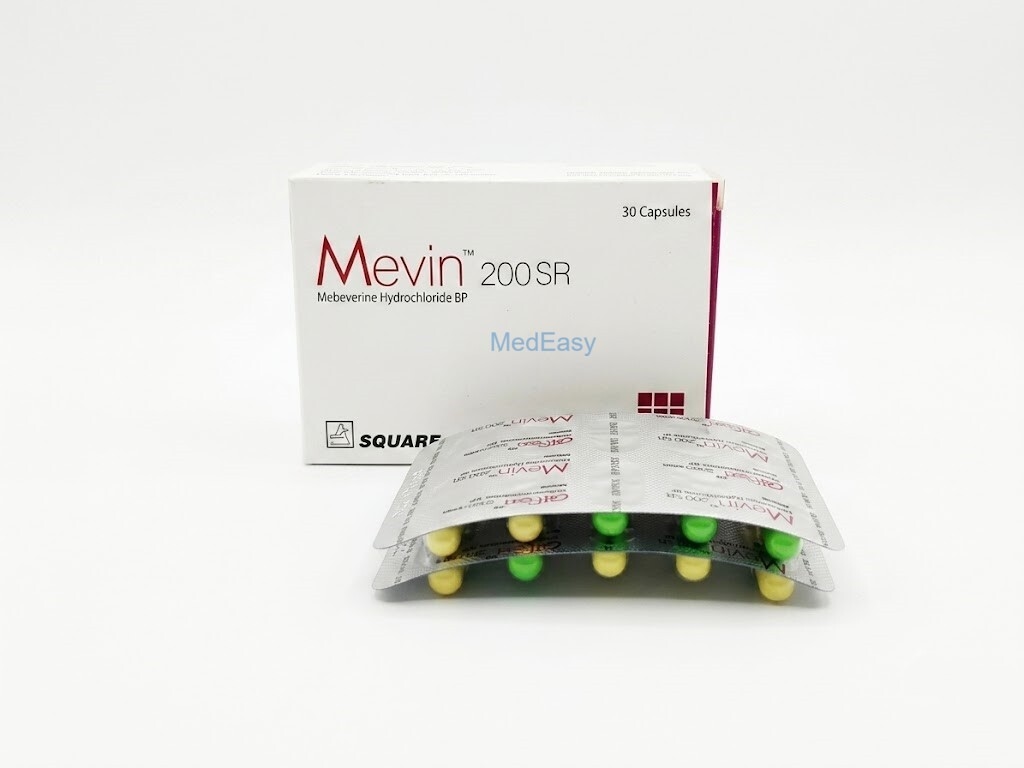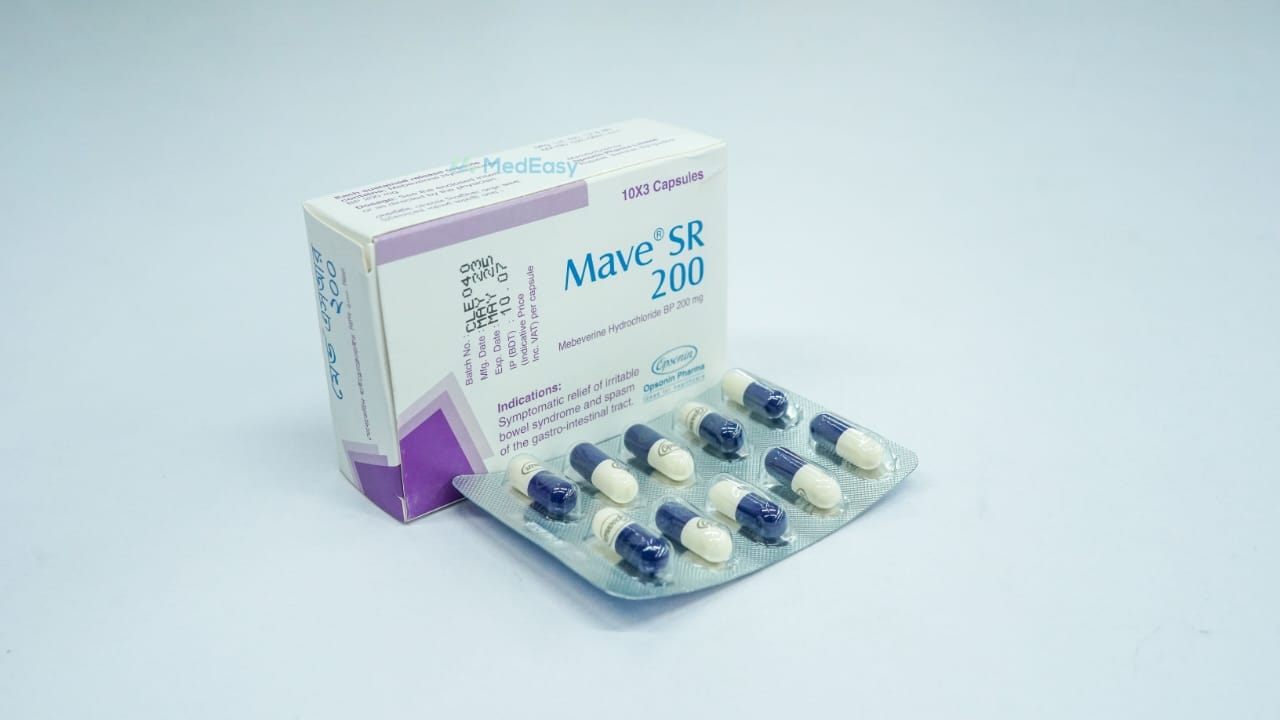
Mave SR200 mg
Opsonin Pharma Ltd.

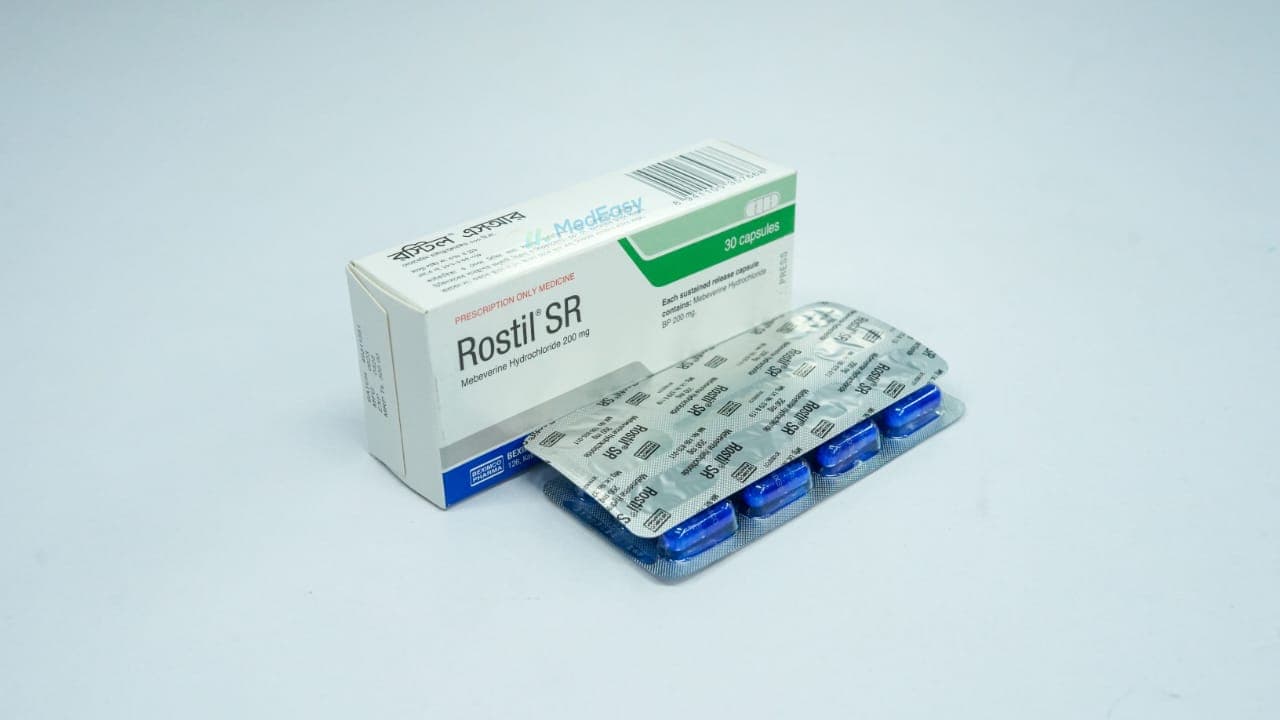
Rostil SR is a direct-acting (musculotropic) antispasmodic used for gastrointestinal smooth-muscle spasm. Its main uses, classified by strength of evidence, are:
Rostil SR is intended for symptomatic relief only after an underlying diagnosis has been established; it is not intended for undiagnosed acute abdominal pain.
Each tablet/capsule contains Mebeverine Hydrochloride as the active ingredient, commonly available as:
Excipients vary by manufacturer and formulation; refer to the specific product package insert for the complete excipient list.
Rostil SR is a musculotropic (direct-acting) antispasmodic agent widely used for the symptomatic management of gastrointestinal smooth-muscle spasm, most commonly in irritable bowel syndrome (IBS). Chemically, it is related to papaverine.
Unlike older antispasmodics such as hyoscine (an antimuscarinic/anticholinergic agent), Rostil SR acts directly on gastrointestinal smooth muscle rather than through blockade of muscarinic (acetylcholine) receptors. This gives it a more GI-selective mechanism and, in clinical use, a lower incidence of classic anticholinergic effects such as dry mouth, blurred vision, urinary retention, and tachycardia, although these effects are not entirely absent in every patient. Rostil SR is available in Bangladesh as an oral tablet/capsule and is a commonly prescribed antispasmodic for IBS-related symptoms.
Gastrointestinal antispasmodic (musculotropic, direct-acting smooth-muscle relaxant)
Mebeverine Hydrochloride exerts a direct (musculotropic) relaxant action on gastrointestinal smooth muscle. Proposed mechanisms include a local anesthetic-like reduction of sodium influx into smooth-muscle cells and modulation of calcium reuptake/efflux, which reduces excessive muscle contraction (spasm) without producing sustained atony of the gut wall.
A key pharmacological distinction from classic antimuscarinic antispasmodics (e.g. hyoscine/atropine-type agents) is that Mebeverine Hydrochloride does not act primarily by blocking muscarinic acetylcholine receptors. As a result, it does not significantly suppress normal gastrointestinal motility and is associated with a lower burden of systemic anticholinergic side effects, though it is not entirely free of them in all patients.
Mebeverine Hydrochloride is largely metabolized (chiefly by esterase hydrolysis) with metabolites eliminated mainly via the kidneys.
| Formulation | Usual Dose | Timing |
|---|---|---|
| Immediate-release tablet (135 mg) | 1 tablet 2–3 times daily | Approximately 20 minutes before meals |
| Sustained-release capsule (200 mg) | 1 capsule twice daily | Before meals |
Use in children is generally not recommended for standard adult formulations; safety and efficacy have not been well established in young children. Where a physician determines pediatric use is appropriate (typically in older children, per local product labeling), dosing must be individualized and supervised by a pediatrician. See Use in Special Populations for further detail.
Specific dose-adjustment data are limited; use with caution and under medical supervision in patients with significant hepatic or renal impairment.
Rostil SR tablets/capsules should be swallowed whole with water approximately 20 minutes before meals. Do not crush or chew sustained-release capsules. Take only as directed by the prescribing physician.
No major, well-established clinically significant drug interactions have been documented for Rostil SR, which is consistent with its lack of significant systemic antimuscarinic (anticholinergic) activity compared with older antispasmodics. However, formal interaction studies are limited.
As a general precaution, inform your physician or pharmacist about all prescription medicines, over-the-counter drugs, and herbal/supplement products you are taking before starting Rostil SR, so that any theoretical or newly identified interaction can be assessed.
Mebeverine Hydrochloride is contraindicated in:
Rostil SR is generally well tolerated. Reported adverse effects include:
Because Rostil SR has minimal systemic anticholinergic activity, classic antimuscarinic effects (dry mouth, blurred vision, urinary retention) are less frequent than with older antispasmodics such as hyoscine, though isolated reports exist and cannot be entirely excluded.
Seek medical attention promptly for any signs of a serious allergic reaction (e.g. facial/throat swelling, difficulty breathing, widespread rash).
Pregnancy: Data on the use of Rostil SR in pregnant women are limited. As a precaution, Rostil SR should be used during pregnancy only if clearly needed and if the potential benefit justifies the potential risk to the fetus; consult a physician before use.
Lactation: Rostil SR passes into breast milk in small amounts. Because data on infant safety are limited, use during breastfeeding is not generally recommended unless a physician determines the benefit outweighs the potential risk; consult a physician before use while breastfeeding.
There is limited published experience with overdose of Rostil SR; no specific antidote is known. In case of a suspected overdose, seek immediate medical attention or contact a poison control center/emergency services rather than attempting home treatment. Management is generally supportive, guided by the treating medical team based on the patient's symptoms.
Store at room temperature (below 30°C), away from light and moisture. Keep out of reach of children.
Safety and efficacy of Rostil SR have not been well established in young children; standard adult formulations are generally not recommended below the age range specified in local product labeling. See Pediatric Uses for further detail.
No specific dose adjustment is well established for elderly patients; Rostil SR may be used with routine clinical caution, considering comorbidities and concomitant medications.
Data are limited; use Rostil SR with caution and medical supervision in patients with significant renal or hepatic impairment.
See Pregnancy and Lactation for detailed guidance.
Rostil SR is generally used for as short a period as needed to control symptoms, often for a few days up to about two weeks per episode, and only while symptoms are present. If symptoms persist beyond this period, recur frequently, or worsen, a physician should reassess the diagnosis and treatment plan; long-term continuous use should only occur under ongoing medical supervision.
Antispasmodics, musculotropic (direct-acting gastrointestinal smooth-muscle relaxants)
Mebeverine Hydrochloride acts directly on gastrointestinal smooth muscle (a musculotropic mechanism) rather than by blocking muscarinic acetylcholine receptors as older antispasmodics (e.g. hyoscine) do. Proposed cellular actions include a local anesthetic-type reduction of sodium ion influx and modulation of calcium ion movement across the smooth-muscle cell membrane, which reduces excessive spasm/hypercontractility.
Because normal peristaltic tone is not significantly blocked, Mebeverine Hydrochloride relieves spasm without causing significant intestinal atony, and, since it does not primarily work via antimuscarinic blockade, it is associated with fewer classic anticholinergic side effects than atropine-like antispasmodics.
The safety and efficacy of Rostil SR have not been well established in young children. Standard adult tablet/capsule formulations are generally not recommended for use below the age threshold specified in the local product labeling (commonly not advised in children under 10 years for standard formulations in several markets). Where a physician judges that treatment with Rostil SR is appropriate in an older child, dosing must be individualized, supervised, and based on the specific product's approved labeling. Parents/caregivers should not give Rostil SR to a child without a physician's specific instruction.
Q: What is Rostil SR 200 mg Capsule used for?
A: Rostil SR 200 mg Capsule is an antispasmodic medicine used to relieve abdominal pain and cramping caused by gastrointestinal smooth-muscle spasm, most commonly in irritable bowel syndrome (IBS), once a physician has confirmed the diagnosis.
Q: How is Rostil SR 200 mg Capsule different from other antispasmodics like hyoscine?
A: Rostil SR 200 mg Capsule works directly on the smooth muscle of the gut (a musculotropic action) rather than by blocking acetylcholine (muscarinic) receptors as hyoscine does. This makes Rostil SR 200 mg Capsule more selective for gastrointestinal spasm and generally causes fewer classic anticholinergic side effects such as dry mouth or blurred vision, although these are not completely ruled out in every patient.
Q: When should I take Rostil SR 200 mg Capsule?
A: Rostil SR 200 mg Capsule is usually taken about 20 minutes before meals, 2–3 times daily for the standard tablet, or twice daily for the sustained-release capsule, exactly as directed by your physician. Swallow it whole with water; do not crush or chew sustained-release capsules.
Q: Can I take Rostil SR 200 mg Capsule during pregnancy or while breastfeeding?
A: Data on Rostil SR 200 mg Capsule in pregnancy and breastfeeding are limited. It should be used during pregnancy only if clearly needed and if the expected benefit outweighs the potential risk to the baby, and during breastfeeding only if a physician determines the benefit outweighs the potential risk to the infant. Always consult your physician before using Rostil SR 200 mg Capsule in these situations.
Q: Who should not take Rostil SR 200 mg Capsule?
A: Rostil SR 200 mg Capsule should not be used by anyone with a known hypersensitivity/allergy to Rostil SR 200 mg Capsule or any ingredient of the specific product, or by patients with paralytic ileus. It should also not be used for undiagnosed abdominal pain without medical evaluation first.
Q: What should I do if I miss a dose or take too much Rostil SR 200 mg Capsule?
A: If you miss a dose of Rostil SR 200 mg Capsule, take it before your next meal as usual; do not double the dose. If you suspect you or someone else has taken more Rostil SR 200 mg Capsule than prescribed, seek immediate medical attention or contact emergency services/poison control rather than attempting home treatment.
Disclaimer
The information provided is accurate to the best of our knowledge, but it does not replace professional medical advice. We cannot guarantee its completeness or accuracy, and the absence of specific information about a drug should not be taken as an endorsement. We are not responsible for any consequences arising from this information, so please consult a healthcare professional for any concerns or questions.