10% Off
Aciflox200 mg
ACI Limited
৳10.80
Add to cart
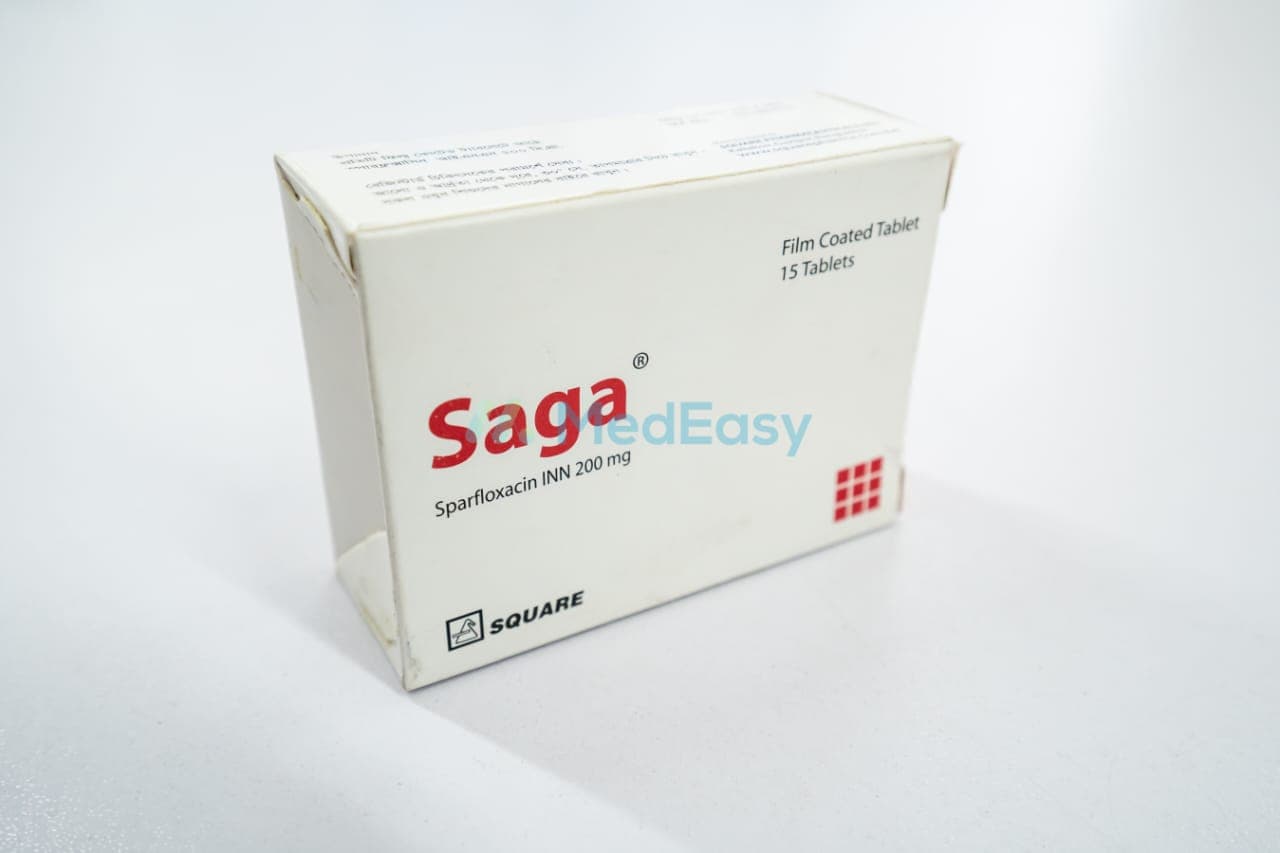

Saga is a broad-spectrum fluoroquinolone antibacterial used to treat certain bacterial infections caused by susceptible organisms in adults. Because of its phototoxicity and QT-prolongation risk, it is generally reserved for situations where more established antibiotics are unsuitable, and treatment should be guided by culture and susceptibility testing where possible.
Saga should only be used for infections proven or strongly suspected to be caused by susceptible bacteria, in line with antibiotic stewardship principles.
Each film-coated tablet contains Sparfloxacin INN 200 mg, along with pharmaceutical excipients q.s. Strength and exact formulation may vary slightly by manufacturer; always check the product label of the specific brand dispensed.
Saga is a synthetic, broad-spectrum fluoroquinolone antibacterial agent. It belongs to an older generation of fluoroquinolones and is distinguished from many other agents in this class by a markedly higher risk of phototoxic skin reactions and a notable potential to prolong the cardiac QT interval, both of which have led to restricted use or market withdrawal in a number of countries. Where it remains available, including in Bangladesh, it is used for selected respiratory and other bacterial infections when the prescribing physician judges the benefit outweighs these risks.
Fluoroquinolone group of antibacterials (broad-spectrum, third-generation fluoroquinolone)
Sparfloxacin is bactericidal, acting by inhibition of bacterial DNA gyrase (topoisomerase II) and topoisomerase IV, enzymes required for bacterial DNA replication, transcription, and repair. This action prevents bacterial cell division and leads to cell death. It has broad activity against many gram-positive and gram-negative organisms as well as atypical pathogens such as Mycoplasma and Chlamydia species.
Saga is for oral use only and is intended for adults. Take Saga exactly as prescribed by your physician; do not stop, extend, skip doses, or share this medicine with others without medical advice, as inappropriate use of antibiotics can promote resistance and treatment failure.
| Indication | Adult dosage regimen |
|---|---|
| Community-acquired pneumonia | 400 mg (loading dose) on day 1, then 200 mg once daily, usually for a total of 10 days |
| Acute exacerbation of chronic bronchitis | 400 mg (loading dose) on day 1, then 200 mg once daily, usually for a total of 10 days |
| Acute bacterial maxillary sinusitis | 400 mg (loading dose) on day 1, then 200 mg once daily for the duration advised by the physician |
For creatinine clearance below 50 mL/min: 400 mg loading dose on day 1, then 200 mg every 48 hours for the remainder of therapy. See Use in Special Populations for further detail.
Take Saga tablets orally with a full glass of water, with or without food, at approximately the same time each day. Do not take it together with antacids or mineral supplements (aluminum, magnesium, iron, zinc, calcium) — separate these by at least 4 hours. Drink adequate fluids throughout treatment and avoid unnecessary sun or UV light exposure while taking Saga.
Saga has several clinically important drug interactions:
Sparfloxacin is contraindicated in:
Most side effects of Saga are mild to moderate and transient, but some are serious and require prompt medical attention.
Saga is generally contraindicated in pregnancy and during breastfeeding. Fluoroquinolones as a class have been associated with effects on developing cartilage in animal studies, and adequate, well-controlled studies in pregnant women are lacking. Saga should be used in pregnancy only if the physician determines there is no suitable alternative and the potential benefit clearly justifies the potential risk to the fetus. Saga passes into breast milk; breastfeeding is not recommended during treatment. Always consult a physician before using Saga if pregnant, planning pregnancy, or breastfeeding.
Saga carries several important fluoroquinolone class warnings in addition to indication-specific cautions:
In case of suspected Saga overdose, seek immediate medical attention or contact a poison control center/emergency services. Overdose may cause exaggerated side effects, including severe nausea and vomiting, dizziness, and cardiac rhythm disturbances (QT prolongation). There is no specific antidote; management is supportive and symptomatic, typically including gastric decontamination if presenting soon after ingestion, adequate hydration, and cardiac monitoring, under medical supervision. Do not attempt to manage a suspected overdose at home.
Store at room temperature (below 30°C), protected from light and moisture. Keep out of reach of children.
Duration of Saga therapy depends on the indication being treated, but is typically 10 days in total (including the loading dose day) for community-acquired pneumonia and acute exacerbation of chronic bronchitis. Duration for sinusitis and other indications should follow the treating physician's advice. The full prescribed course should always be completed even if symptoms improve earlier, unless directed otherwise by a physician.
Fluoroquinolone antibacterials
Sparfloxacin exerts its bactericidal effect by inhibiting two essential bacterial enzymes, DNA gyrase (topoisomerase II) and topoisomerase IV. These enzymes are required for the supercoiling, replication, transcription, and repair of bacterial DNA. By blocking their activity, Sparfloxacin disrupts bacterial DNA synthesis, leading to rapid bacterial cell death. This mechanism gives it activity against a broad range of gram-positive and gram-negative bacteria as well as certain atypical organisms.
C (legacy FDA pregnancy category; use in pregnancy is generally contraindicated — see Pregnancy and Lactation)
Safety and efficacy of Saga in children and adolescents under 18 years have not been established. As with other fluoroquinolones, animal studies have shown an association with arthropathy (joint/cartilage damage) in immature animals, raising a theoretical concern for developing joints and cartilage in children. Saga is therefore not recommended for use in patients under 18 years except in rare situations where a physician determines the benefit clearly outweighs this risk and no suitable alternative is available.
Q: What is Saga 200 mg Tablet used for?
A: Saga 200 mg Tablet is a fluoroquinolone antibiotic used to treat certain bacterial infections in adults, mainly community-acquired pneumonia, acute exacerbation of chronic bronchitis, and acute bacterial sinusitis, when the infection is caused by susceptible bacteria.
Q: How should I take Saga 200 mg Tablet?
A: Take Saga 200 mg Tablet exactly as prescribed — typically a 400 mg loading dose on the first day followed by 200 mg once daily. Swallow the tablet with water, with or without food, and complete the full course even if you feel better early. Do not stop, extend, skip doses, or share this medicine with others without medical advice.
Q: Can I take Saga 200 mg Tablet with antacids or supplements?
A: No. Antacids and supplements containing aluminum, magnesium, calcium, iron, or zinc significantly reduce absorption of Saga 200 mg Tablet. If you need to take these, separate them from your Saga 200 mg Tablet dose by at least 4 hours.
Q: Why do I need to avoid sunlight while taking Saga 200 mg Tablet?
A: Saga 200 mg Tablet can cause moderate to severe phototoxic skin reactions — an exaggerated sunburn-like response — that is more pronounced with this medicine than with many other fluoroquinolones. Avoid direct sunlight, tanning beds, and sunlamps during treatment and for several days after your last dose, and use protective clothing/sunscreen if exposure is unavoidable.
Q: Is Saga 200 mg Tablet safe during pregnancy or breastfeeding?
A: Saga 200 mg Tablet is generally contraindicated in pregnancy and breastfeeding because fluoroquinolones may affect the developing fetus's cartilage and pass into breast milk. It should only be used in pregnancy if a physician determines there is no suitable alternative and the benefit clearly outweighs the risk. Always consult your physician if you are pregnant, planning pregnancy, or breastfeeding.
Q: What should I do if I notice tendon pain while taking Saga 200 mg Tablet?
A: Stop taking Saga 200 mg Tablet, rest the affected limb, and contact your physician immediately. Fluoroquinolones, including Saga 200 mg Tablet, carry a risk of tendinitis and tendon rupture, especially in people over 60, those on corticosteroids, and organ transplant recipients.
Disclaimer
The information provided is accurate to the best of our knowledge, but it does not replace professional medical advice. We cannot guarantee its completeness or accuracy, and the absence of specific information about a drug should not be taken as an endorsement. We are not responsible for any consequences arising from this information, so please consult a healthcare professional for any concerns or questions.