
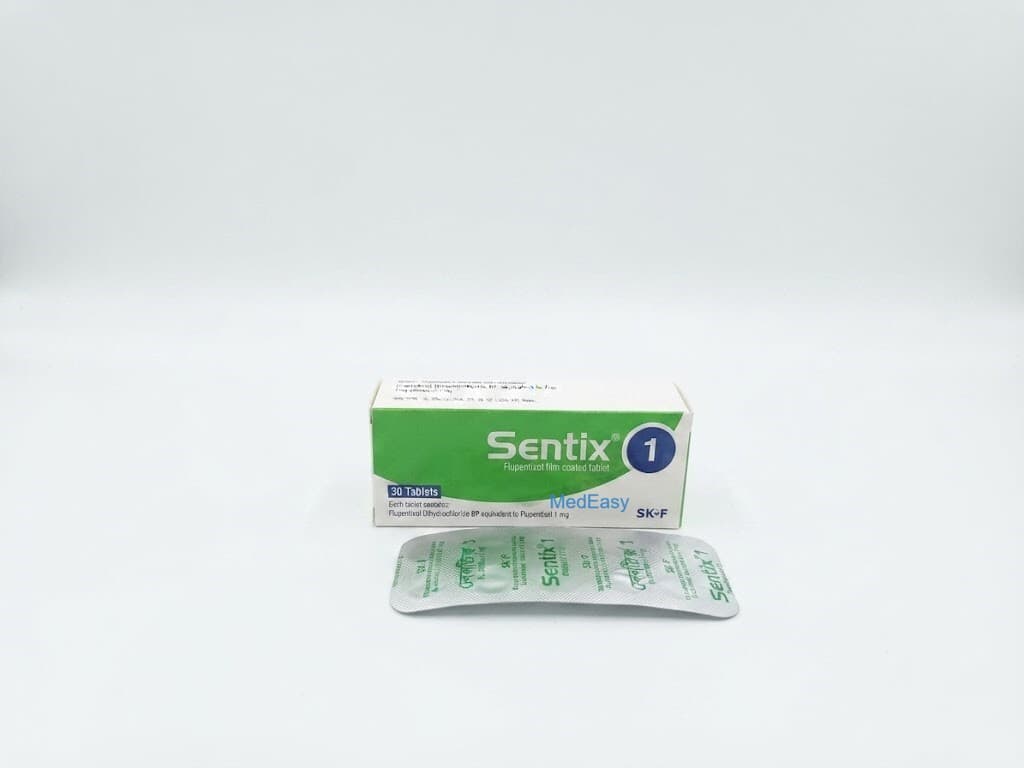

Medicine overview
Indications of Sentix
Sentix is a first-generation (typical) antipsychotic of the thioxanthene class. Its use can be classified by strength of evidence as follows:
Established / Guideline-Supported Uses
- Schizophrenia and other chronic psychotic disorders - Sentix (oral tablets or long-acting depot injection) is widely approved outside the United States for the management of schizophrenia, particularly for patients who benefit from a long-acting injectable formulation due to poor treatment adherence.
- Maintenance treatment of chronic psychosis, including management of positive symptoms (delusions, hallucinations) and, to a lesser extent, negative symptoms.
Lower-Dose / Regionally Licensed Use
- In some countries where it is licensed, low-dose Sentix is used for short-term treatment of mild to moderate depressive symptoms and associated anxiety, generally as a second-line option when other therapies are unsuitable.
Important Limitation
Sentix is not approved for the treatment of dementia-related psychosis in elderly patients. Antipsychotic medicines, including Sentix, are associated with an increased risk of death when used in elderly patients with dementia-related psychosis (see Precautions and Warnings).
Note: Sentix does not have marketing approval in the United States (no FDA/DailyMed listing); it is approved and used in the United Kingdom, European Union, Canada, Australia, and a number of countries in Asia and Africa, including Bangladesh.
Composition
Each formulation of Flupentixol contains flupentixol as its active ingredient, generally supplied as flupentixol dihydrochloride (oral tablets) or flupentixol decanoate (long-acting depot injection, dissolved in a vegetable oil vehicle for intramuscular use).
Common oral tablet strengths include 0.5 mg, 1 mg, 3 mg, and 5 mg; depot injection strengths are typically 20 mg/mL and 100 mg/mL. Exact strengths and available dosage forms vary by market and manufacturer.
Description
Sentix is a typical (first-generation) antipsychotic agent belonging to the thioxanthene chemical class. It has been used clinically for several decades for the management of schizophrenia and related psychotic disorders, and at low doses in some markets for depressive symptoms.
Sentix is available as oral tablets for daily dosing and as a long-acting depot (decanoate) injection administered intramuscularly every 2 to 4 weeks, which is useful for patients who have difficulty adhering to daily oral therapy.
Therapeutic Class
Typical (First-Generation) Antipsychotic - Thioxanthene Derivative
Pharmacology
Flupentixol is a thioxanthene derivative whose antipsychotic activity results predominantly from post-synaptic blockade of central dopamine D2 receptors, which reduces dopaminergic overactivity associated with psychotic symptoms. It also shows affinity for D1 and serotonin 5-HT2A receptors.
Dose-Dependent Effects
- Higher doses produce predominant D2 receptor blockade, responsible for antipsychotic efficacy but also for extrapyramidal side effects and hyperprolactinemia.
- Lower doses are thought to preferentially block presynaptic dopamine autoreceptors, which may transiently increase dopaminergic transmission and produce an activating/mood-elevating effect, forming the rationale for low-dose use in depressive symptoms in markets where this is licensed.
Pharmacokinetics
Flupentixol is well absorbed after oral administration, extensively metabolized in the liver (including via sulfoxidation and glucuronidation), and has an elimination half-life of approximately 20 hours for the oral form. The decanoate depot injection is slowly released from the intramuscular injection site, with a half-life of several days, allowing dosing every 2-4 weeks.
Dosage & Administration of Sentix
Dosage by Indication
| Indication | Formulation | Typical Dosing |
|---|---|---|
| Schizophrenia / chronic psychosis (acute or maintenance) | Oral tablets | Initial 3-9 mg/day, adjusted according to response; maintenance usually up to a maximum of 18 mg/day given once daily or in divided doses. Lower starting doses are used in elderly or debilitated patients. |
| Maintenance of schizophrenia (adherence difficulties) | Depot (decanoate) intramuscular injection | A small test dose (e.g., 20 mg) is often given first to assess tolerability, followed by maintenance doses typically in the range of 20-40 mg every 2-4 weeks, individualized and not usually exceeding 400 mg every 2 weeks. |
| Mild to moderate depressive symptoms (where regionally licensed) | Oral tablets, low dose | Typically 1 mg once or twice daily; treatment is generally short-term and reassessed if there is no improvement within a few weeks. |
Administration
- Oral tablets may be taken with or without food; swallow whole with water. Once-daily dosing is often given in the morning because of an alerting/activating effect at lower doses.
- The decanoate depot injection must be administered by a trained healthcare professional via deep intramuscular injection (e.g., gluteal muscle), with injection sites rotated.
- Dose titration and choice of formulation should always be individualized by the prescribing physician based on response and tolerability.
Renal/Hepatic Impairment
Specific dose-adjustment guidelines are not well established; Sentix should be used cautiously and at lower doses in patients with significant hepatic or renal impairment, with close clinical monitoring.
Administration of Sentix
Sentix oral tablets should be swallowed whole with a glass of water, with or without food, at approximately the same time(s) each day as directed by the physician. Do not crush or chew tablets unless advised.
The depot (decanoate) injection form of Sentix is for intramuscular administration only, given by a healthcare professional; it must never be given intravenously.
Do not stop or change the dose of Sentix without consulting the prescribing physician, as abrupt discontinuation may lead to withdrawal or rebound symptoms.
Interaction of Sentix
Sentix has several clinically significant drug interactions:
- CNS depressants (alcohol, opioids, sedative-hypnotics, barbiturates): additive central nervous system and respiratory depression; concurrent use should be avoided or closely monitored.
- Other QT-prolonging drugs (e.g., certain antiarrhythmics, some antihistamines, other antipsychotics, citalopram/escitalopram): additive risk of QT prolongation and torsades de pointes; combination should generally be avoided.
- Lithium: concurrent use has been associated with an increased risk of neurotoxicity and neuroleptic malignant syndrome-like symptoms; requires careful monitoring.
- Other antipsychotics/dopamine antagonists (e.g., metoclopramide): increased risk of extrapyramidal symptoms when combined with Sentix.
- Dopamine agonists / levodopa: Sentix may antagonize the therapeutic effect of levodopa and dopamine agonists used for Parkinson's disease.
- Antihypertensive agents: Sentix may potentiate hypotensive effects, increasing the risk of orthostatic hypotension.
- Hepatic enzyme inducers/inhibitors: drugs affecting hepatic metabolism may alter plasma concentrations of Sentix; dose adjustment may be needed.
Contraindications
Flupentixol is contraindicated in patients with:
- Known hypersensitivity to Flupentixol or other thioxanthene derivatives.
- Central nervous system depression or comatose states.
- Circulatory collapse.
- Severe cardiac disease with significant hypotension.
Flupentixol should also not be used in patients with pheochromocytoma or long QT syndrome, as these are established absolute contraindications for this agent. Other cautions (e.g., dementia-related psychosis, Parkinson's disease, hepatic/renal impairment) are addressed under Precautions and Warnings and do not constitute absolute contraindications.
Side Effects of Sentix
Side effects of Sentix are generally dose-related.
| Frequency | Effects |
|---|---|
| Common | Extrapyramidal symptoms (tremor, rigidity, restlessness), sedation/drowsiness, insomnia, dizziness, headache, dry mouth, constipation, blurred vision, nausea, hyperprolactinemia (may cause menstrual irregularities, galactorrhea, sexual dysfunction), weight changes, sweating. |
| Uncommon | Orthostatic hypotension, palpitations, fainting, photosensitivity reactions. |
| Rare but serious | Neuroleptic malignant syndrome, tardive dyskinesia, QT interval prolongation/torsades de pointes, seizures, blood dyscrasias (leukopenia, agranulocytosis), liver function abnormalities/jaundice. |
Patients should seek prompt medical attention for high fever, severe muscle stiffness, confusion, irregular heartbeat, or involuntary movements while taking Sentix.
Pregnancy & Lactation
Pregnancy: Data on the use of Sentix in pregnancy are limited. As with other antipsychotics, neonates exposed to Sentix during the third trimester are at risk of extrapyramidal and/or withdrawal symptoms after delivery. Sentix should be used during pregnancy only if clearly needed and if the potential benefit justifies the potential risk to the fetus; a physician must be consulted before use.
Lactation: Sentix is excreted in breast milk. Breastfeeding is generally not recommended during treatment with Sentix unless the treating physician determines that the benefit outweighs the potential risk to the infant. Consult a physician before breastfeeding while using Sentix.
Precautions & Warnings
Boxed Warning
As with other antipsychotic medicines, elderly patients with dementia-related psychosis treated with Sentix are at an increased risk of death compared with placebo. Sentix is not approved for the treatment of dementia-related psychosis.
Other Warnings and Precautions
- Neuroleptic malignant syndrome (NMS): a rare but potentially fatal reaction characterized by fever, muscle rigidity, altered mental status, and autonomic instability; requires immediate discontinuation of Sentix and emergency medical treatment.
- Tardive dyskinesia: risk of potentially irreversible involuntary movements increases with duration of treatment and cumulative dose; Sentix should be used at the lowest effective dose for the shortest necessary duration.
- QT prolongation: Sentix may prolong the QT interval; use with caution in patients with cardiac disease, electrolyte disturbances, or concomitant QT-prolonging drugs.
- Extrapyramidal symptoms and seizure threshold: Sentix can lower the seizure threshold and cause extrapyramidal reactions; use with caution in patients with a history of seizures or Parkinson's disease.
- Orthostatic hypotension: use with caution in patients with cardiovascular disease or those at risk of hypotension.
- Hepatic/renal impairment: use cautiously with dose reduction and monitoring.
- Sentix may impair mental or physical abilities; patients should avoid driving or operating machinery until they know how the medicine affects them.
Overdose Effects of Sentix
Overdose with Sentix may cause exaggerated pharmacological effects, including profound sedation, coma, severe extrapyramidal symptoms, hypotension, cardiac arrhythmias (including QT prolongation), respiratory depression, and seizures.
There is no specific antidote for Sentix overdose. If overdose is suspected, seek immediate medical attention or contact emergency services / a poison control center right away. Treatment is supportive, with monitoring of cardiac and respiratory function in a hospital setting; do not attempt home treatment.
Storage Conditions
Store at room temperature (below 30°C), away from light and moisture. Keep out of reach of children.
Use In Special Populations
Pediatric Use
Safety and efficacy of Sentix have not been established in children and adolescents; its use is not recommended in this population.
Elderly
Elderly patients, particularly those with dementia, are more sensitive to the effects of Sentix and are at increased risk of adverse effects, including an increased risk of death when used for dementia-related psychosis (see Precautions and Warnings). Lower starting doses and close monitoring are recommended.
Hepatic/Renal Impairment
Use Sentix cautiously, with reduced doses and monitoring, in patients with significant hepatic or renal impairment.
Pregnancy and Breastfeeding
See Pregnancy and Lactation section for detailed guidance.
Duration Of Treatment
Duration of treatment with Sentix depends on the indication and individual response, and should always be determined by the prescribing physician. For chronic psychotic disorders such as schizophrenia, Sentix is typically used long-term for maintenance therapy, with regular clinical review (e.g., every 3-6 months) to reassess the need for continued treatment and monitor for adverse effects such as tardive dyskinesia. For low-dose use in depressive symptoms (where licensed), treatment is generally short-term, with reassessment if no improvement is seen within a few weeks. Sentix should not be stopped abruptly without medical advice.
Drug Classes
Antipsychotics; Thioxanthene derivatives; First-generation (typical) antipsychotic agents
Mode Of Action
Flupentixol exerts its therapeutic effect chiefly through antagonism of central dopamine D2 receptors, reducing dopaminergic neurotransmission associated with psychotic symptoms. It also has affinity for D1 and 5-HT2A serotonin receptors. At low doses, preferential blockade of presynaptic dopamine autoreceptors may produce a mild activating/mood-elevating effect.
Pediatric Uses
The safety and efficacy of Sentix have not been established in pediatric patients. Sentix is not recommended for use in children or adolescents, and no pediatric dosing has been established. If a child or adolescent requires antipsychotic treatment, this should be under the direct supervision of a specialist physician using agents with an established pediatric safety profile.
Frequently Asked Questions
Q: What is Sentix 1 mg Tablet used for?
A: Sentix 1 mg Tablet is a first-generation antipsychotic used mainly for schizophrenia and other chronic psychotic disorders. In some countries where it is licensed at low doses, it is also used short-term for mild to moderate depressive symptoms. It is not approved for dementia-related psychosis in elderly patients.
Q: How is Sentix 1 mg Tablet taken?
A: Sentix 1 mg Tablet is available as oral tablets, taken once or in divided doses daily as prescribed, and as a long-acting depot injection given intramuscularly by a healthcare professional every 2 to 4 weeks. Always follow your physician's specific instructions and do not change your dose without medical advice.
Q: Can Sentix 1 mg Tablet be used during pregnancy?
A: Sentix 1 mg Tablet should be used during pregnancy only if clearly needed and if the potential benefit outweighs the potential risk to the baby, since data are limited and antipsychotics used late in pregnancy can cause symptoms in the newborn. Always consult your physician before using Sentix 1 mg Tablet if you are pregnant or planning pregnancy.
Q: What are the serious side effects to watch for with Sentix 1 mg Tablet?
A: While taking Sentix 1 mg Tablet, seek immediate medical attention if you develop high fever, severe muscle stiffness, confusion, irregular heartbeat, or uncontrollable movements of the face or body, as these may indicate rare but serious reactions such as neuroleptic malignant syndrome, tardive dyskinesia, or a heart rhythm problem.
Q: Who should not take Sentix 1 mg Tablet?
A: Sentix 1 mg Tablet should not be used by anyone with a known hypersensitivity to Sentix 1 mg Tablet or other thioxanthene medicines, those in a comatose state or with central nervous system depression, patients with circulatory collapse, or those with severe cardiac disease causing significant low blood pressure. Discuss your full medical history with your physician before starting Sentix 1 mg Tablet.
Q: What should I do if I miss a dose or take too much Sentix 1 mg Tablet?
A: If you miss a dose of Sentix 1 mg Tablet, take it as soon as you remember unless it is almost time for the next dose; do not double the dose. If you or someone else has taken too much Sentix 1 mg Tablet, seek immediate medical attention or contact emergency services / a poison control center right away, as overdose can cause serious sedation, low blood pressure, heart rhythm problems, or seizures.
Disclaimer
The information provided is accurate to the best of our knowledge, but it does not replace professional medical advice. We cannot guarantee its completeness or accuracy, and the absence of specific information about a drug should not be taken as an endorsement. We are not responsible for any consequences arising from this information, so please consult a healthcare professional for any concerns or questions.
