8% Off
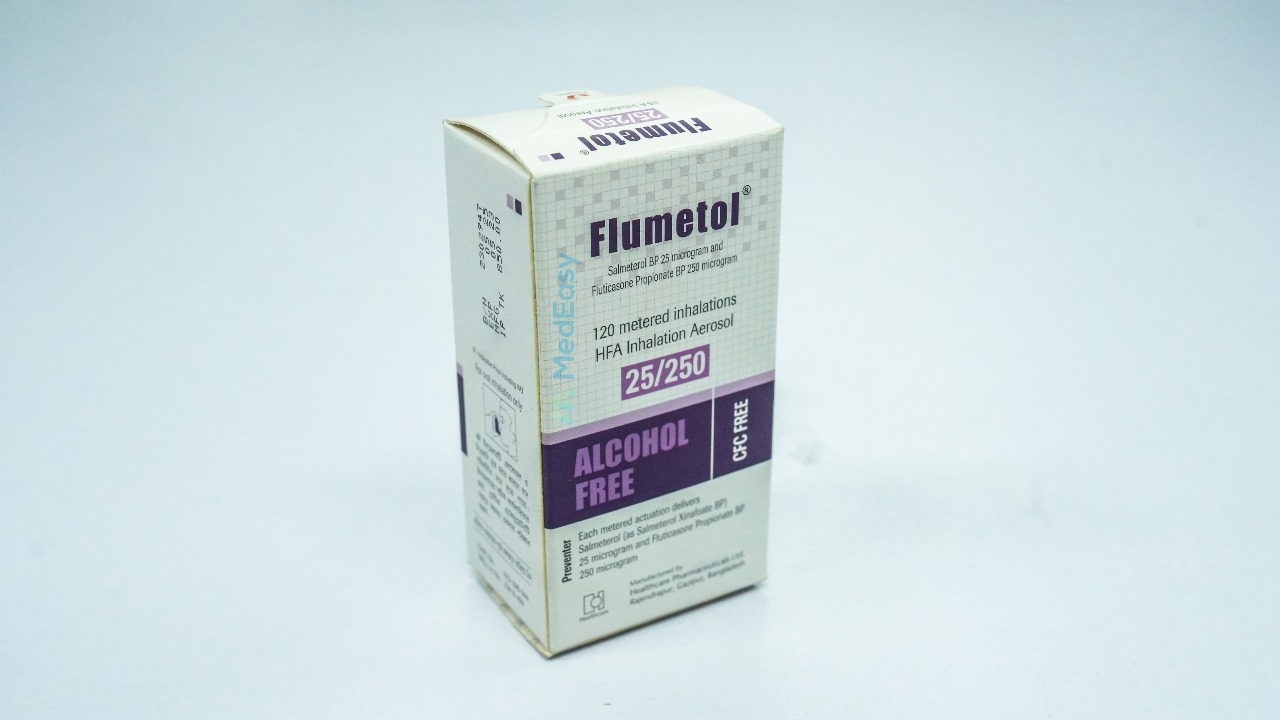
Flumetol(25 mcg+25
Healthcare Pharmaceuticals Ltd.
৳782.00
Add to cart
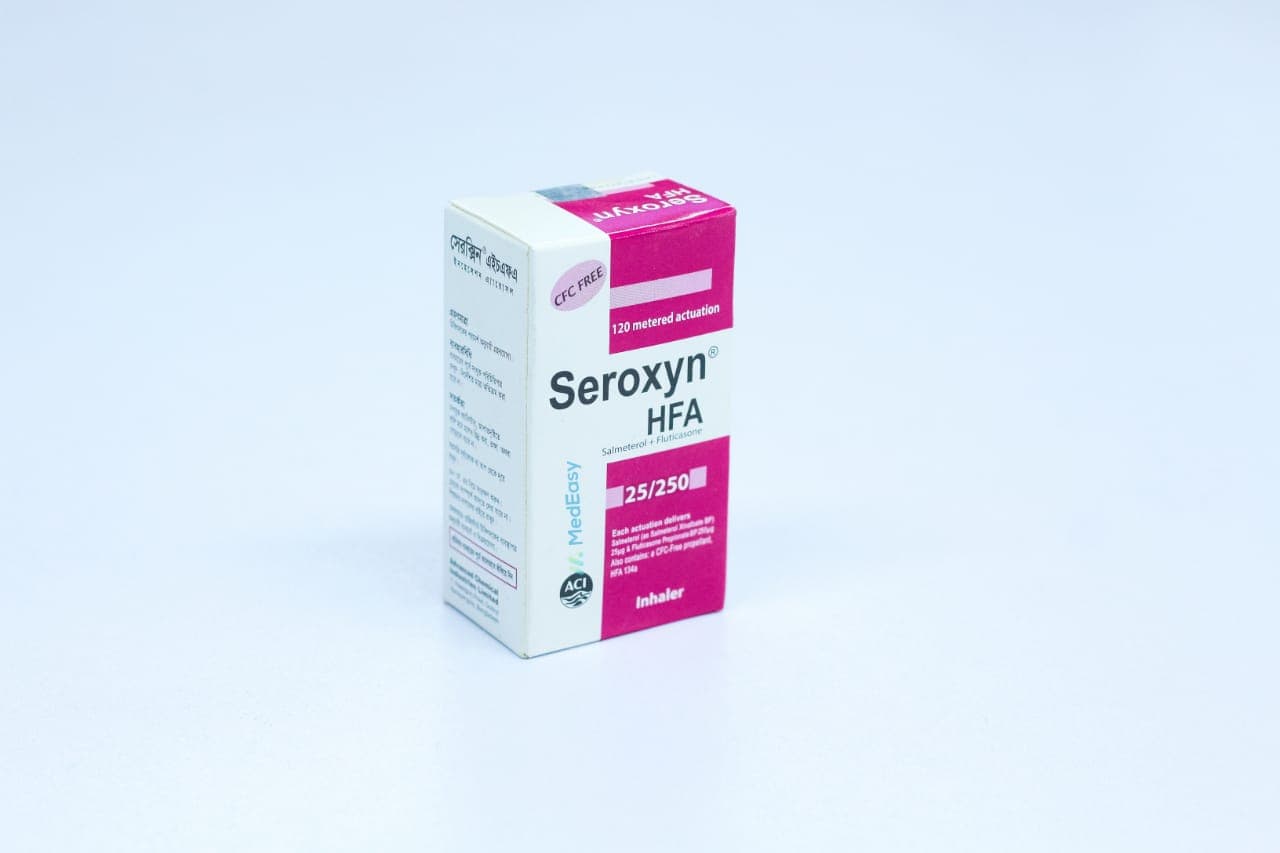

Seroxyn is a combination inhaled medicine containing a long-acting beta-2 agonist (salmeterol) and an inhaled corticosteroid (fluticasone propionate). It is indicated for the following:
Each dose of Salmeterol + Fluticasone Propionate combines two active ingredients delivered together by a metered-dose inhaler (MDI) or dry powder inhaler (DPI):
It is available in several fixed-dose strength combinations, commonly expressed as salmeterol/fluticasone propionate micrograms (mcg) per actuation, such as 25/50, 25/125, 25/250 (MDI) and 50/100, 50/250, 50/500 (DPI). The exact strength and inhaler device should be selected by the prescribing physician based on disease severity.
Seroxyn is a fixed-dose combination inhaler that brings together two complementary mechanisms for chronic airway disease: a long-acting bronchodilator and an anti-inflammatory corticosteroid, delivered directly to the lungs.
Salmeterol relaxes airway smooth muscle by stimulating beta-2 adrenergic receptors, producing bronchodilation that lasts approximately 12 hours per dose. Fluticasone propionate is a potent, locally-acting corticosteroid that reduces airway inflammation, mucus production, and bronchial hyperresponsiveness that underlie asthma and COPD. Used together twice daily, they provide more comprehensive control of chronic airway obstruction than either agent alone.
Seroxyn is available as a metered-dose inhaler (MDI, using a propellant) and as a dry powder inhaler (DPI, breath-activated, propellant-free), in several strengths to allow dose individualization by a physician.
Seroxyn belongs to the therapeutic class of combination inhaled bronchodilator and corticosteroid preparations, used in the long-term management of obstructive airway diseases. It combines:
Salmeterol + Fluticasone Propionate works through the combined, complementary actions of its two components:
Salmeterol selectively stimulates beta-2 adrenergic receptors on airway smooth muscle, activating adenylate cyclase and increasing intracellular cyclic AMP. This relaxes bronchial smooth muscle and produces bronchodilation that begins within 10-20 minutes and lasts for approximately 12 hours, allowing twice-daily dosing.
Fluticasone propionate has potent local anti-inflammatory activity within the airway. It reduces the number and activity of inflammatory cells (eosinophils, mast cells, lymphocytes, macrophages), decreases production of inflammatory mediators, and reduces airway mucosal edema and mucus secretion, thereby reducing bronchial hyperresponsiveness and the frequency of exacerbations. Systemic absorption is low with correct inhaler technique, though some systemic corticosteroid effect can occur, particularly with higher doses or prolonged use.
Used together, the LABA component provides sustained symptom control and bronchodilation while the ICS component addresses the underlying airway inflammation, and evidence indicates the ICS component also reduces the LABA-associated safety signal seen with LABA monotherapy in asthma.
The dose of Seroxyn is individualized by a physician based on the patient's age, diagnosis (asthma vs COPD), and disease severity. It must be taken exactly as prescribed, twice daily approximately 12 hours apart, and is not for relief of acute symptoms.
| Indication | Population | Typical Dosing |
|---|---|---|
| Asthma maintenance | Adults and adolescents (12 years and older) | One inhalation twice daily; strength (lowest effective dose of the corticosteroid component) selected by the physician based on asthma severity and prior therapy. |
| Asthma maintenance | Children 4 to 11 years | One inhalation of the lowest-strength combination twice daily, as prescribed; higher strengths are generally not used in this age group. |
| COPD maintenance | Adults | One inhalation of the strength containing the higher fluticasone propionate dose (as specifically approved for COPD), twice daily. |
See Dosage and Administration sections below for further detail, and Use in Special Populations for renal/hepatic considerations.
Seroxyn is for oral inhalation only and must not be swallowed or used with a nebulizer/spacer device not designed for it.
Seroxyn has the following well-established, clinically significant interactions:
Salmeterol + Fluticasone Propionate is contraindicated in:
Side effects of Seroxyn vary by indication and may include:
Seroxyn should be used during pregnancy only if clearly needed and if the potential benefit justifies the potential risk to the fetus. There is limited controlled data on its use in pregnant women; however, poorly controlled asthma or COPD itself carries risks to both mother and fetus (including preeclampsia, prematurity, and low birth weight), so treatment is generally continued under close physician supervision when clinically necessary rather than stopped abruptly.
It is not known whether salmeterol or fluticasone propionate passes into breast milk in clinically significant amounts. A physician should be consulted to weigh the benefits of treatment for the mother against any potential risk to the breastfeeding infant before use during lactation.
Pregnant or breastfeeding women should not start or stop Seroxyn without first consulting their physician.
Medicines in the long-acting beta-2 agonist (LABA) class, when used as monotherapy for asthma (without an inhaled corticosteroid), are associated with an increased risk of asthma-related death. Seroxyn combines a LABA with an inhaled corticosteroid in a single inhaler, which mitigates but does not eliminate this class-wide concern. Patients must use it exactly as prescribed and must not add a separate LABA-containing inhaler.
Seroxyn is not a rescue inhaler and does not relieve acute bronchospasm; a short-acting bronchodilator must be available for acute symptoms.
As with other inhaled medicines, paradoxical bronchospasm can occur, with an immediate increase in wheezing after dosing. If this occurs, discontinue Seroxyn immediately and seek alternative therapy.
Oral candidiasis and hoarseness may occur; rinsing the mouth after each dose reduces this risk (see Administration). With long-term use, particularly at higher doses, inhaled corticosteroids can cause systemic effects such as adrenal suppression, reduced growth velocity in children, and decreased bone mineral density; the lowest effective dose should be used and growth should be monitored periodically in children.
An increased incidence of pneumonia has been observed in patients with COPD using inhaled corticosteroid-containing products; patients should be monitored for signs of pneumonia, which can overlap with COPD exacerbation symptoms.
Use with caution in patients with cardiovascular disease (including arrhythmia, coronary artery disease), convulsive disorders, thyrotoxicosis, or diabetes mellitus, as beta-agonists can cause tachycardia, palpitations, and transient elevations in blood glucose. Do not exceed the prescribed dose or frequency.
Overdose of Seroxyn can result in exaggerated effects of both components: from the salmeterol component, effects such as tachycardia, palpitations, tremor, headache, muscle cramps, high blood pressure or low blood pressure, and prolonged QT interval with arrhythmias can occur; from the fluticasone component, excessive or prolonged overdose may suppress the body's own cortisol (adrenal) function.
If an overdose is suspected, seek immediate medical attention or contact a poison control center right away. Do not attempt to manage a suspected overdose at home; cardiac monitoring and supportive care may be required in a medical facility.
Store at room temperature (below 30°C), away from direct light, heat, and moisture. Do not puncture, break, or expose the canister/device to fire or high heat, even when apparently empty. Keep the inhaler dry and keep out of reach of children.
No dose adjustment of Seroxyn is specifically established for renal impairment; use with routine clinical monitoring.
Fluticasone propionate is metabolized in the liver; patients with hepatic impairment may have increased systemic exposure to the corticosteroid component and should be monitored closely for systemic corticosteroid effects. No formal dose adjustment has been established; use the lowest effective dose.
No specific dose adjustment is required based on age alone, but elderly patients, particularly those with cardiovascular disease, osteoporosis risk, or diabetes, should be monitored appropriately during treatment.
See Pediatric Uses section.
Seroxyn is intended for long-term, regular maintenance treatment rather than short courses. It should be used continuously as prescribed, even during symptom-free periods, since stopping treatment can lead to worsening of underlying airway inflammation. The physician will periodically reassess control and may adjust the dose (including stepping down to the lowest effective corticosteroid dose) or duration based on the patient's response; it should not be stopped or changed by the patient without medical advice.
Combination long-acting beta-2 agonist (LABA) and inhaled corticosteroid (ICS)
Salmeterol + Fluticasone Propionate acts through two complementary mechanisms delivered directly to the airway:
The combination provides both symptomatic bronchodilation and disease-modifying anti-inflammatory control, addressing the two central mechanisms of chronic airway obstruction in asthma and COPD.
C (legacy FDA pregnancy category assigned prior to the 2015 Pregnancy and Lactation Labeling Rule; data in pregnant women are insufficient)
The approved pediatric use of Seroxyn depends on the specific strength and inhaler device:
Growth (height) should be monitored periodically in children receiving long-term treatment, as inhaled corticosteroids may cause a small reduction in growth velocity.
Q: What is Seroxyn (25 mcg+250 mcg)/puff Inhaler used for?
A: Seroxyn (25 mcg+250 mcg)/puff Inhaler is a combination inhaler used for the long-term, twice-daily maintenance treatment of asthma and chronic obstructive pulmonary disease (COPD). It combines a long-acting bronchodilator with an anti-inflammatory corticosteroid to keep airways open and reduce inflammation over time. It is not for relieving a sudden asthma attack or acute breathing difficulty.
Q: Can I use Seroxyn (25 mcg+250 mcg)/puff Inhaler for a sudden asthma attack?
A: No. Seroxyn (25 mcg+250 mcg)/puff Inhaler is not a rescue medicine and does not act quickly enough to relieve sudden bronchospasm or an acute asthma/COPD attack. A separate fast-acting (short-acting) bronchodilator inhaler should be used for sudden symptoms, and patients should always carry that rescue inhaler as advised by their physician.
Q: Why do I need to rinse my mouth after using this inhaler?
A: Rinsing the mouth with water and spitting it out after each dose of Seroxyn (25 mcg+250 mcg)/puff Inhaler helps remove residual corticosteroid left in the mouth and throat, which significantly reduces the risk of oral thrush (candidiasis) and hoarseness (dysphonia), both recognized side effects of the inhaled corticosteroid component.
Q: Is Seroxyn (25 mcg+250 mcg)/puff Inhaler safe during pregnancy?
A: Seroxyn (25 mcg+250 mcg)/puff Inhaler should be used in pregnancy only if clearly needed, since data on its use in pregnant women are limited. However, poorly controlled asthma or COPD can itself harm both mother and baby, so most physicians continue treatment when it is genuinely required. Pregnant women should not start or stop this medicine without consulting their physician first.
Q: What are the serious risks I should know about?
A: Long-acting beta-2 agonists such as the salmeterol component in Seroxyn (25 mcg+250 mcg)/puff Inhaler carry a boxed warning for an increased risk of asthma-related death when used alone without an inhaled corticosteroid; this product combines both, which reduces but does not remove that class-wide concern. Other important risks include paradoxical bronchospasm (sudden worsening of wheezing after a dose, requiring immediate discontinuation), increased risk of pneumonia in COPD patients, and, with long-term or high-dose use, systemic corticosteroid effects such as adrenal suppression, slowed growth in children, and reduced bone density.
Q: Can children use Seroxyn (25 mcg+250 mcg)/puff Inhaler?
A: Seroxyn (25 mcg+250 mcg)/puff Inhaler may be used in children aged 4 years and older, using the lowest available strength, strictly as prescribed by a physician for asthma maintenance. Its safety and efficacy have not been established in children under 4 years, and it is not used for COPD in children, since COPD does not occur in this age group.
Disclaimer
The information provided is accurate to the best of our knowledge, but it does not replace professional medical advice. We cannot guarantee its completeness or accuracy, and the absence of specific information about a drug should not be taken as an endorsement. We are not responsible for any consequences arising from this information, so please consult a healthcare professional for any concerns or questions.