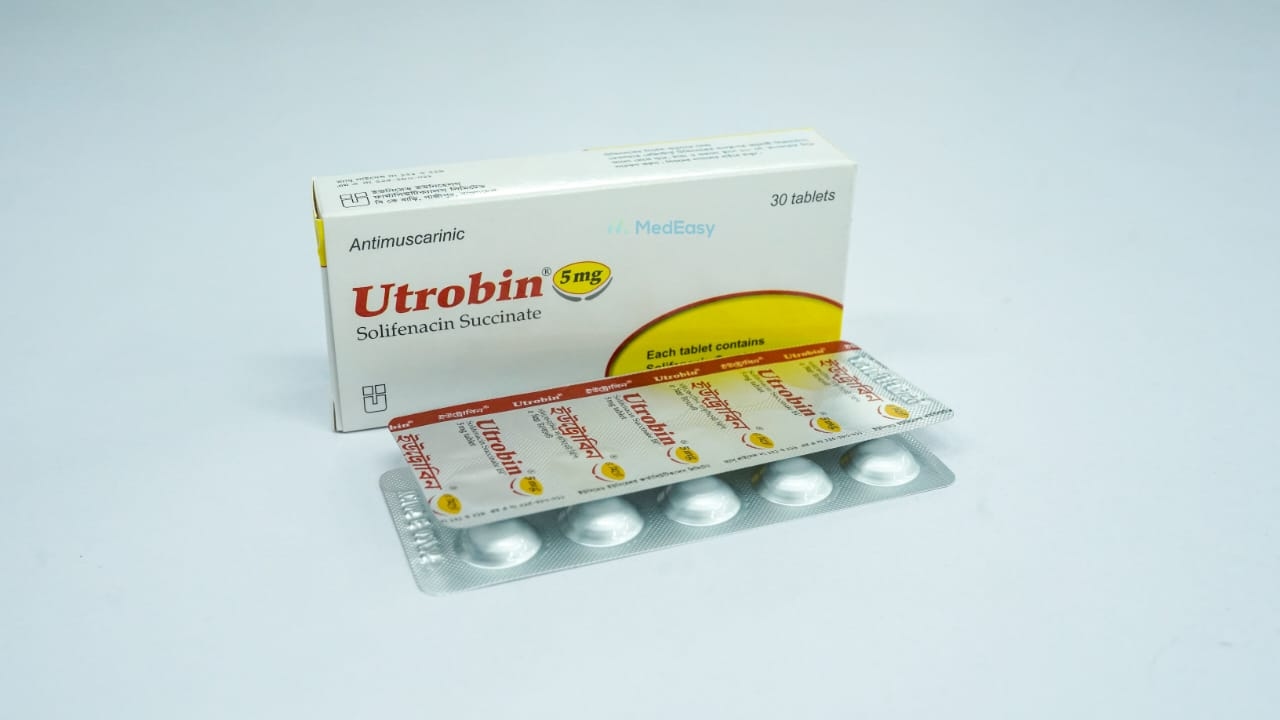
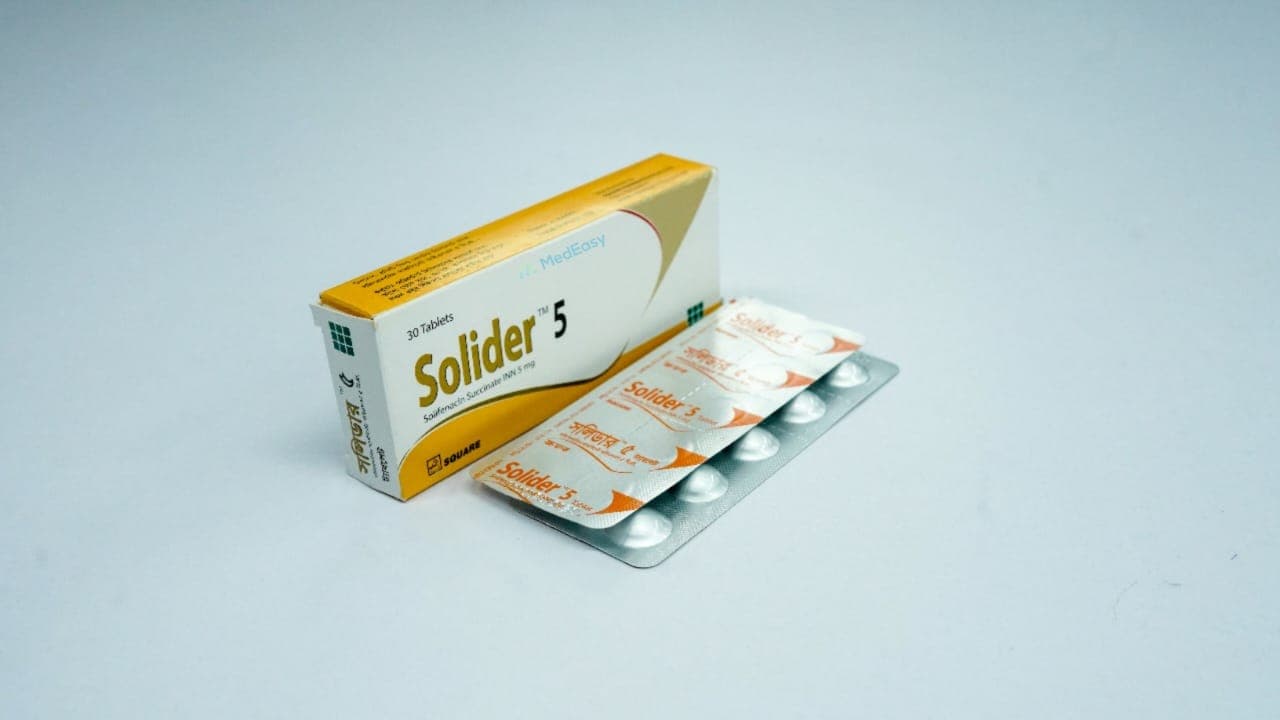
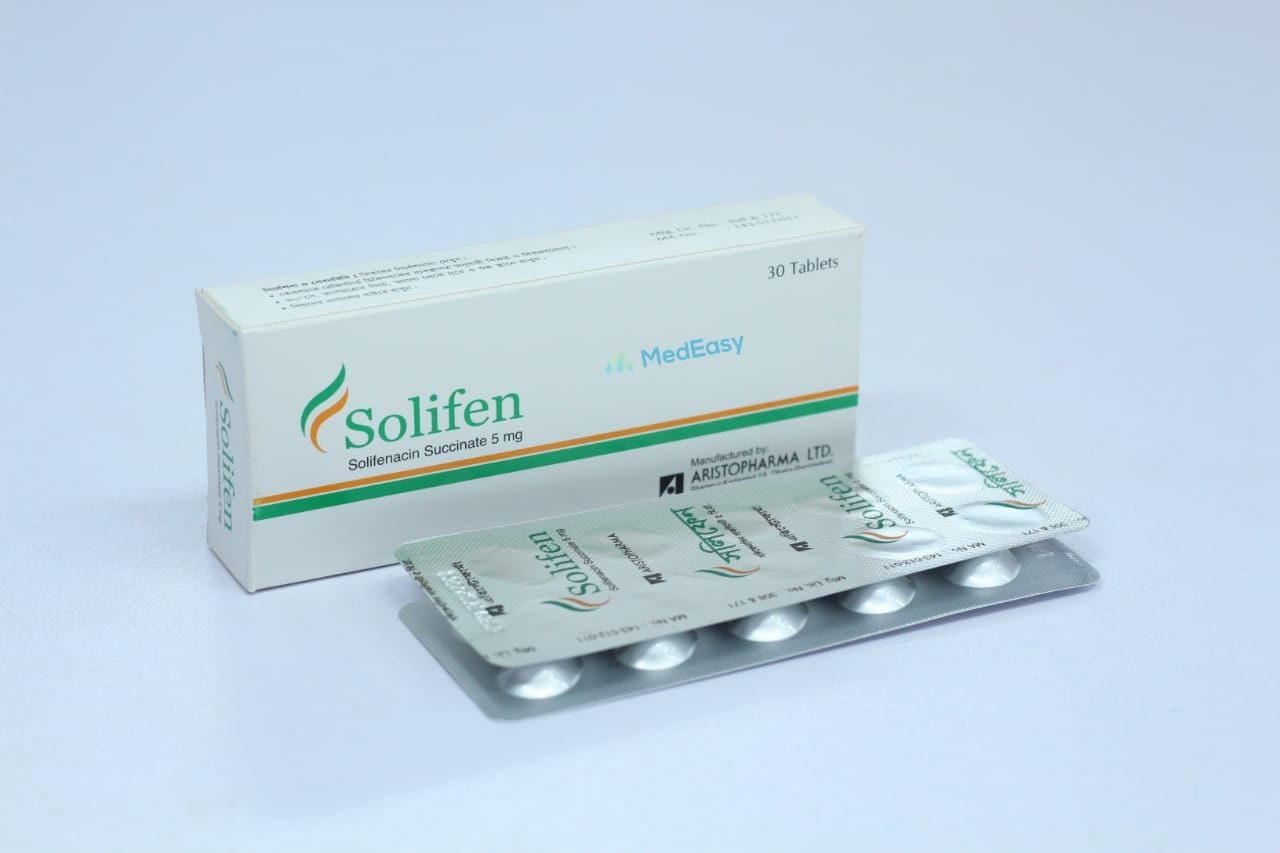
Solifenacin is a competitive muscarinic receptor antagonist. It has the highest affinity for M3, M1, and M2 muscarinic receptors. 80% of the muscarinic receptors in the bladder are M2, while 20% are M3. Solifenacin's antagonism of the M3 receptor prevents contraction of the detrusor muscle, while antagonism of the M2 receptor may prevent contraction of smooth muscle in the bladder.
Dosage & Administration of Solider 5 mg
The recommended dose for adults and elderly is Solider 5 mg 5 mg once daily. If needed, the dose may be increased to Solider 5 mg 10 mg once daily.
Dosage of Solider 5 mg
The recommended dose for adults and the elderly: Solider 5 mg 5 mg once daily. If needed, the dose may be increased to Solider 5 mg 10 mg once daily.Use in children: Safety and effectiveness in children have not yet been established. Therefore, Solider 5 mg should not be used in children.
Interaction of Solider 5 mg
Concomitant medication with other medicinal products with anticholinergic properties may result in more pronounced therapeutic effects and undesirable effects. An interval of approximately one week should be allowed after stopping treatment with Solider 5 mg before commencing other anticholinergic therapy. The therapeutic effect of Solifenacin may be reduced by concomitant administration of cholinergic receptor agonists. Solifenacin can reduce the effect of medicinal products that stimulate the motility of the gastrointestinal tract, such as Metoclopramide and Cisapride. In vitro studies have demonstrated that at therapeutic concentrations, Solifenacin does not inhibit CYP1A1/2, 2C9, 2C19, 2D6, or 3A4 derived from human liver microsomes. Therefore, Solifenacin is unlikely to alter the clearance of drugs metabolized by these CYP enzymes. Solifenacin is metabolized by CYP3A4. Simultaneous administration of Ketoconazole (200 mg/day), a potent CYP3A4 inhibitor, resulted in a two-fold increase of the AUC of Solifenacin, while Ketoconazole at a dose of 400 mg/day resulted in a three-fold increase of the AUC of Solifenacin. Therefore, the maximum dose of Solider 5 mg should be restricted to 5 mg when used simultaneously with Ketoconazole or therapeutic doses of other potent CYP3A4 inhibitors (e.g. Ritonavir, Nelfinavir, Itraconazole). Simultaneous treatment of Solifenacin and a potent CYP3A4 inhibitor is contra-indicated in patients with severe renal impairment or moderate hepatic impairment. The effects of enzyme induction on the pharmacokinetics of Solifenacin and its metabolites have not been studied as well as the effect of higher affinity CYP3A4 substrates on Solifenacin exposure. Since Solifenacin is metabolised by CYP3A4, pharmacokinetic interactions are possible with other CYP3A4 substrates with higher affinity (e.g. Verapamil, Diltiazem) and CYP3A4 inducers (e.g. Rifampicin, Phenytoin, Carbamazepine). Effect of Solifenacin on the pharmacokinetics of other medicinal products:
Oral Contraceptives: Intake of Solifenacin showed no pharmacokinetic interaction on combined oral contraceptives (Ethinylestradiol/Levonorgestrel).
Warfarin: Intake of Solifenacin did not alter the pharmacokinetics of R-warfarin or S-warfarin or their effect on prothrombin time.
Digoxin: Intake of Solifenacin showed no effect on the pharmacokinetics of digoxin.
Effects on ability to drive and use machines: Since Solifenacin, like other anticholinergics may cause blurred vision and, uncommonly, somnolence and fatigue, the ability to drive and use machines may be negatively affected.
Contraindications
Solifenacin is contraindicated in patients with hypersensitivity to solifenacin or to any of the excipients. It is also contraindicated in myasthenia gravis, urinary retention, uncontrolled narrow angle glaucoma, severe gastro-intestinal condition (including toxic megacolon), patients undergoing haemodialysis, patients with severe hepatic impairment, patients with severe renal impairment or moderate hepatic impairment and on treatment with a strong CYP3A4 inhibitor, e.g. ketoconazole.
Side Effects of Solider 5 mg
Due to the pharmacological effect of Solifenacin, it may cause anticholinergic undesirable effects of (in general) mild or moderate severity. The frequency of anticholinergic undesirable effects is dose related. The most commonly reported adverse reactionwith Solifenacin is dry mouth. It occurred in 11% of patients treated with 5 mg once daily, in 22% of patients treated with 10 mg once daily and in 4% of placebo-treated patients. The severity of dry mouth was generally mild and only occasionally led to discontinuation of treatment. In general,medicinal product compliance was very high (approximately 99%) and approximately 90% of the patients treated with Solifenacin completed the full study period of 12 weeks treatment.
Gastrointestinal disorders: very common- dry mouth, common-constipation, nausea, dyspepsia, abdominal pain, uncommon- gastroesophageal reflux diseases, dry throat, rare- colonic obstruction, faecal impaction, very rare- vomiting.
Infections and infestations: uncommonurinary tract infection, cystitis.
nervous system disorders: uncommon- somnolence, dysgeusia, very rare-dizziness, headache.
psychiatric disorders: very rare- hallucinations.
eye disorders: common- blurred vision, uncommon- dry eyes.
General disorders and administration site conditions: uncommon- fatigue, peripheral oedema.
Respiratory, thoracic and mediastinal disorders: uncommon nasal dryness.
skin and subcutaneous tissue disorders: uncommon- dry skin, very rare- pruritus, rash, urticaria.
renal and urinary disorders: uncommon- difficulty in micturition, rare- urinary retention.
Pregnancy & Lactation
No clinical data are available from women who became pregnant while taking Solifenacin. Animal studies do not indicate direct harmful effects on fertility, embryonal / foetal development or parturition. The potential risk for humans is unknown. Caution should be exercised when prescribing to pregnant women. No data on the excretion of Solifenacin in human milk are available. In mice, Solifenacin and/or its metabolites was excreted in milk, and caused a dose dependent failure to thrive in neonatal mice. The use of Solifenacin should therefore be avoided during breast-feeding.
Precautions & Warnings
Other causes of frequent urination (heart failure or renal disease) should be assessed before treatment with Solider 5 mg. If urinary tract infection is present, an appropriate antibacterial therapy should be started. Solider 5 mg should be used with caution in patients with: clinically significant bladder outflow obstruction at risk of urinary retention, gastrointestinal obstructive disorders, risk of decreased gastrointestinal motility, severe renal impairment (creatinine clearance 30 ml/min), moderate hepatic impairment (Child-Pugh score of 7 to 9) and doses should not exceed 5 mg for these patients. Caution should be taken in concomitant use of a potent CYP3A4 inhibitor e.g. Ketoconazole, hiatus hernia/ gastroesophageal reflux and/or who are concurrently taking medicinal products (such as Bisphosphonates) that can cause or exacerbate oesophagitis, autonomic neuropathy. Safety and efficacy have not yet been established in patients with a neurogenic cause for detrusor overactivity. Patients with rare hereditary problems of galactose intolerance, the Lapp lactase deficiency or glucose-galactose malabsorption should not take this medicinal product. The maximum effect of Solider 5 mg can be determined after 4 weeks at the earliest.
Overdose Effects of Solider 5 mg
Over dosage with Solider 5 mg can potentially result in severe anticholinergic effects. The highest dose of Solider 5 mg accidentally given to a single patient was 280 mg in a 5 hour period, resulting in mental status changes not requiring hospitalization. In the event of overdose with Solider 5 mg, the patient should be treated with activated charcoal. Gastric lavage is useful if performed within 1 hour, but vomiting should not be induced. As for other anticholinergics, symptoms can be treated as follows:
Severe central anticholinergic effects such as hallucinations or pronounced excitation: treat with physostigmine or carbachol.
Convulsions or pronounced excitation: treat with benzodiazepines.
Respiratory insufficiency: treat with artificial respiration.
Tachycardia: treat with beta-blockers.
Urinary retention: treat with catheterisation.
Mydriasis: treat with pilocarpine eye drops and/or place patient in a dark room.
As with other antimuscarinics, in case of overdosing, specific attention should be paid to patients with known risk for QT-prolongation (i.e. hypokalaemia, bradycardia and concurrent administration of medicinal products known to prolong QT interval) and relevant pre-existing cardiac diseases (i.e. myocardial ischaemia, arrhythmia, congestive heart failure).
Storage Conditions
Store in a cool and dry place, protected from light.
Use In Special Populations
Use in children: Safety and effectiveness in children have not yet been established. Therefore, Solider 5 mg should not be used in children.Patients with renal impairment: No dose adjustment is necessary for patients with mild to moderate renal impairment (creatinine clearance >30 ml/min). Patients with severe renal impairment (creatinine clearance <30 ml/min) should be treated with caution and receive no more than 5 mg (one Utrobin 5 mg tablet) once daily. Patients with hepatic impairment: No dose adjustment is necessary for patients with mild hepatic impairment. Patients with moderate hepatic impairment (Child-Pugh score of 7 to 9) should be treated with caution and receive no more than 5 mg (one Utrobin 5 mg tablet) once daily. Potent inhibitors of cytochrome P450 3A4: The maximum dose of Solider 5 mg should be limited to 5 mg (one Utrobin 5 mg tablet) when treated simultaneously with Ketoconazole or therapeutic doses of other potent CYP3A4 inhibitors e.g. Ritonavir, Nelfinavir, Itraconazole. Solider 5 mg tablet (Utrobin tablet) should be taken orally and should be swallowed whole with liquids. It can be taken with or without food.
Solifenacin is a competitive muscarinic receptor antagonist. It has the highest affinity for M3, M1, and M2 muscarinic receptors. 80% of the muscarinic receptors in the bladder are M2, while 20% are M3. Solifenacin's antagonism of the M3 receptor prevents contraction of the detrusor muscle, while antagonism of the M2 receptor may prevent contraction of smooth muscle in the bladder.
Pregnancy
No clinical data are available from women who became pregnant while taking Solifenacin. Animal studies do not indicate direct harmful effects on fertility, embryonal / foetal development or parturition. The potential risk for humans is unknown. Caution should be exercised when prescribing to pregnant women. No data on the excretion of Solifenacin in human milk are available. In mice, Solifenacin and/or its metabolites was excreted in milk, and caused a dose dependent failure to thrive in neonatal mice. The use of Solifenacin should therefore be avoided during breast-feeding.
Pediatric Uses
Patients with renal impairment: No dose adjustment is necessary for patients with mild to moderate renal impairment (creatinine clearance >30 ml/min). Patients with severe renal impairment (creatinine clearance <30 ml/min) should be treated with caution and receive no more than 5 mg once daily. Patients with hepatic impairment: No dose adjustment is necessary for patients with mild hepatic impairment. Patients with moderate hepatic impairment (Child-Pugh score of 7 to 9) should be treated with caution and receive no more than 5 mg once daily. Potent inhibitors of cytochrome P450 3A4: The maximum dose of Solider 5 mg should be limited to 5 mg when treated simultaneously with Ketoconazole or therapeutic doses of other potent CYP3A4 inhibitors e.g. Ritonavir, Nelfinavir, Itraconazole. Solider 5 mg tablet should be taken orally and should be swallowed whole with liquids. It can be taken with or without food.
Frequently Asked Questions
What is Solider 5 mg used for?
Symptomatic treatment of urge incontinence and/or increased urinary frequency and urgency as may occur in patients with overactive bladder syndrome.
What is the dosage of Solider 5 mg?
The recommended dose for adults and the elderly: Solider 5 mg 5 mg once daily. If needed, the dose may be increased to Solider 5 mg 10 mg once daily.Use in children: Safety and effectiveness in children have not yet been established. Therefore, Solider 5 mg should not be used in children.
What are the side effects of Solider 5 mg?
Due to the pharmacological effect of Solifenacin, it may cause anticholinergic undesirable effects of (in general) mild or moderate severity. The frequency of anticholinergic undesirable effects is dose related. The most commonly reported adverse reactionwith Solifenacin is dry mouth. It occurred in 11% of patients treated with 5 mg once daily, in 22% of patients treated with 10 mg once daily and …
Who should not take Solider 5 mg?
Solifenacin is contraindicated in patients with hypersensitivity to solifenacin or to any of the excipients. It is also contraindicated in myasthenia gravis, urinary retention, uncontrolled narrow angle glaucoma, severe gastro-intestinal condition (including toxic megacolon), patients undergoing haemodialysis, patients with severe hepatic impairment, patients with severe renal impairment or modera…
What precautions should be taken with Solider 5 mg?
Other causes of frequent urination (heart failure or renal disease) should be assessed before treatment with Solider 5 mg. If urinary tract infection is present, an appropriate antibacterial therapy should be started. Solider 5 mg should be used with caution in patients with: clinically significant bladder outflow obstruction at risk of urinary retention, gastrointestinal obstructive disorders, ri…
Is Solider 5 mg safe during pregnancy and breastfeeding?
No clinical data are available from women who became pregnant while taking Solifenacin. Animal studies do not indicate direct harmful effects on fertility, embryonal / foetal development or parturition. The potential risk for humans is unknown. Caution should be exercised when prescribing to pregnant women. No data on the excretion of Solifenacin in human milk are available. In mice, Solifenacin a…
Disclaimer
The information provided is accurate to our best practices, but it does not replace professional medical advice. We cannot guarantee its completeness or accuracy. The absence of specific information about a drug should not be seen as an endorsement. We are not responsible for any consequences resulting from this information, so consult a healthcare professional for any concerns or questions.