
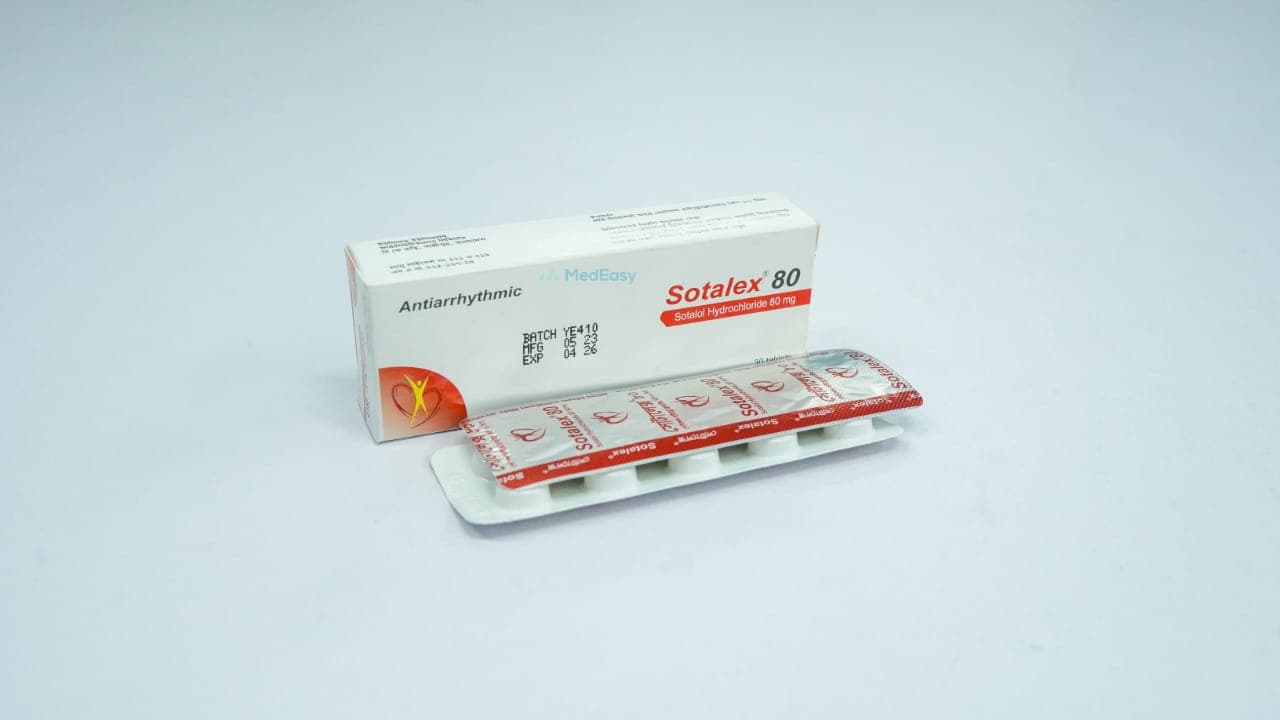

Medicine overview
Indications of Sotalex
Indications
Sotalex is an antiarrhythmic agent with combined beta-adrenergic blocking (Class II) andpotassium-channel blocking (Class III) activity. Its approved and evidence-based uses are:
- Established/FDA-approved use: Treatment of documented, life-threateningsustained ventricular arrhythmias (e.g., sustained ventricular tachycardia), because of the risk ofproarrhythmia associated with Sotalex, its use is generally reserved for patients in whom the potentialbenefit outweighs the risk.
- Established/FDA-approved use: Maintenance of normal sinus rhythm (delay in time torecurrence of atrial fibrillation/flutter) in patients with symptomatic atrial fibrillation or atrialflutter (AFib/AFl) who are currently in sinus rhythm.
- Guideline-supported (off-label) use: Sotalex is also used, under specialistcardiology supervision, for rate/rhythm control in select patients with recurrent atrial arrhythmiaswhen other agents are unsuitable.
Sotalex is not used for hypertension alone or as a first-line antiarrhythmic; therapy is initiated by,or in consultation with, a cardiologist.
Composition
Each tablet contains Sotalol Hydrochloride INN as the active pharmaceutical ingredient. Sotalol Hydrochloride is commonly available as oral tablets in strengths such as 40 mg, 80 mg, and 160 mg, and in some markets as an oral solution, for oral administration.
Description
Sotalex is a synthetic, non-selective beta-adrenergic receptor blocking agent that alsopossesses Class III (cardiac action potential-prolonging) antiarrhythmic properties. This dual mechanismmakes Sotalex unique among antiarrhythmic drugs, as it combines rate-control (beta-blocking) effects withrhythm-control (potassium-channel blocking) effects. Sotalex is used in the management of seriousventricular arrhythmias and in maintaining sinus rhythm in patients with atrial fibrillation orflutter.
Therapeutic Class
Antiarrhythmic agent, Class III (with non-selective Class II beta-adrenergic blocking activity)
Pharmacology
Pharmacology
Sotalol Hydrochloride exhibits both Class II (beta-blocking) and Class III (potassium-channel blocking)antiarrhythmic properties, and is not chemically related to other antiarrhythmic agents.
- Class II activity: Sotalol Hydrochloride is a non-cardioselective competitive beta-adrenergicantagonist, reducing heart rate, myocardial contractility, and AV nodal conduction, and lowering reninrelease.
- Class III activity: Sotalol Hydrochloride blocks the rapid component of the delayed-rectifierpotassium current, prolonging the cardiac action potential and effective refractory period in atrial,ventricular, and AV nodal tissue, without significantly affecting conduction velocity. Thisprolongation is reflected clinically as dose-related QT-interval prolongation.
Pharmacokinetically, Sotalol Hydrochloride is well absorbed orally, is not appreciably protein-bound or hepaticallymetabolized, and is eliminated largely unchanged by the kidneys, which is why dosing must be adjustedfor renal function.
Dosage & Administration of Sotalex
Dosage and Administration
Because Sotalex can cause dose-related QT-interval prolongation and proarrhythmia, initiation and dosetitration of Sotalex should be carried out in a facility that can provide continuous ECG monitoring andcalculation of creatinine clearance, with staff able to manage serious ventricular arrhythmias.
| Indication | Adult dosing |
|---|---|
| Life-threatening ventricular arrhythmias | Initial dose 80 mg orally twice daily; may betitrated upward every 3 days (allowing 3 doses at each level to reach steady state) as needed andtolerated, based on QTc and clinical response. Usual maintenance dose is 160–320 mg/day in 2 divideddoses; some patients with refractory life-threatening arrhythmias may require up to 480–640 mg/dayunder close specialist supervision. |
| Maintenance of sinus rhythm in atrial fibrillation/flutter | Initial dose 80 mg orallytwice daily; may be increased after 3 days to 120 mg twice daily if the QTc interval and responseallow, and further to 160 mg twice daily if required. Doses above 160 mg twice daily are not usuallyrecommended for this indication. |
Renal Dose Adjustment
Sotalex is eliminated primarily by the kidneys, so the dosing interval must be individualized based oncreatinine clearance (CrCl):
| Creatinine clearance | Dosing interval |
|---|---|
| >60 mL/min | Every 12 hours (normal interval) |
| 30–59 mL/min | Every 24 hours |
| 10–29 mL/min | Every 36–48 hours |
| <10 mL/min | Individualize dosing under specialist supervision |
For the atrial fibrillation/flutter indication, Sotalex should not be used if CrCl is below 40 mL/min(see Contraindications/Precautions).
Administration of Sotalex
Sotalex tablets should be taken by mouth, consistently either with or without food (food may reduceabsorption slightly, so consistency is advised), and swallowed with water. Doses should be spaced evenly(e.g., every 12 hours). Antacids containing aluminum or magnesium should not be taken at the same time asSotalex, as they can reduce its absorption. Treatment with Sotalex should never be stopped abruptly withoutmedical advice (see Precautions and Warnings). The initial dose and any dose increase should be givenunder ECG monitoring as directed by the physician.
Interaction of Sotalex
Drug Interactions
- Other QT-prolonging drugs (e.g., Class IA antiarrhythmics such as quinidine/procainamide, other Class III agents such as amiodarone, certain antipsychotics, macrolide antibiotics,and fluoroquinolones): concurrent use with Sotalex is generally avoided due to additive risk of QTprolongation and torsades de pointes.
- Calcium channel blockers (verapamil, diltiazem): additive negative effects on heartrate, AV conduction, and myocardial contractility; concurrent use with Sotalex requires caution, andintravenous use is generally avoided.
- Other beta-blockers or clonidine: additive bradycardia and hypotension with Sotalex;abrupt clonidine withdrawal during Sotalex therapy may cause exaggerated rebound hypertension.
- Drugs causing hypokalemia or hypomagnesemia (e.g., potassium-wasting diuretics):increase the risk of torsades de pointes when combined with Sotalex; electrolytes should be corrected andmonitored.
- Insulin and oral antidiabetic agents: Sotalex may mask the tachycardia and tremor thatnormally warn of hypoglycemia.
- Aluminum/magnesium antacids: can reduce absorption of Sotalex; separate dosing times.
Contraindications
Contraindications
Sotalol Hydrochloride is contraindicated in patients with:
- Known hypersensitivity to Sotalol Hydrochloride or any component of the formulation
- Bronchial asthma or other severe bronchospastic lung disease
- Sinus bradycardia
- Second- or third-degree atrioventricular (AV) block, unless a functioning pacemaker is present
- Congenital or acquired long QT syndromes
- Cardiogenic shock
- Uncontrolled congestive heart failure
- Severe renal impairment with creatinine clearance below 40 mL/min, specifically for the atrialfibrillation/flutter indication (see Dosage and Administration for renal considerations in theventricular arrhythmia indication)
Side Effects of Sotalex
Side Effects
Common: fatigue, dizziness, weakness, headache, dyspnea (shortness of breath),bradycardia (slow heart rate), palpitations, nausea, and diarrhea.
Serious (require prompt medical attention): proarrhythmia including torsades depointes and other life-threatening ventricular arrhythmias, marked bradycardia or heart block, worseningof heart failure, severe hypotension, and bronchospasm (particularly in patients with reactive airwaydisease). Sotalex therapy should be reassessed by a physician if any of these occur.
Pregnancy & Lactation
Pregnancy and Lactation
Pregnancy: Sotalex should be used during pregnancy only if clearly needed and thepotential benefit justifies the potential risk to the fetus, and only under specialist supervision.Beta-blockade from Sotalex can cause fetal/neonatal bradycardia, hypoglycemia, and other effects; if usedclose to delivery, the neonate should be monitored for these effects for the first days of life.
Lactation: Sotalex is excreted into breast milk in significant amounts. Breastfeedingwhile taking Sotalex should only be done after consulting a physician, with the infant monitored for signsof beta-blockade such as bradycardia or hypoglycemia.
Precautions & Warnings
Precautions and Warnings
Proarrhythmia (boxed warning): Sotalex can cause life-threatening ventriculararrhythmias, particularly torsades de pointes, related to the degree of QT-interval prolongation. Tominimize this risk, Sotalex should be initiated and dose-titrated in a setting with continuous ECGmonitoring and the ability to calculate creatinine clearance, especially for the antiarrhythmic/rhythm-control indication.
Renal function: because Sotalex is cleared renally, dose and interval must be adjustedto creatinine clearance; accumulation in renal impairment increases proarrhythmic risk (see Dosage andAdministration).
Electrolytes: hypokalemia or hypomagnesemia should be corrected before startingSotalex, as these increase the risk of torsades de pointes.
Do not stop abruptly: Sotalex should not be discontinued suddenly, particularly inpatients with underlying coronary artery disease, as abrupt withdrawal of beta-blockade may precipitateangina, arrhythmia, or myocardial infarction; discontinue only under medical guidance with gradualtapering.
Bronchospasm: due to its non-selective beta-blocking activity, Sotalex should be usedwith extreme caution, if at all, in patients with bronchospastic disease.
Diabetes: Sotalex may mask signs of hypoglycemia (such as tachycardia); blood glucoseshould be monitored closely in diabetic patients.
Heart failure/bradycardia: use with caution in patients with compensated heartfailure or conduction abnormalities; monitor for worsening bradycardia or heart failure symptoms.
Overdose Effects of Sotalex
Overdose
Overdose of Sotalex may cause severe bradycardia, hypotension, marked QT-interval prolongation, torsadesde pointes or other ventricular arrhythmias, cardiac failure, bronchospasm, and hypoglycemia. Suspectedoverdose of Sotalex is a medical emergency: seek immediate medical attention or contact emergency services/a poison control center. Treatment is supportive and undertaken in a hospital setting with continuousECG monitoring; management may include measures to support heart rate and blood pressure as directed bythe treating physician. Do not attempt to manage a Sotalex overdose at home.
Storage Conditions
Store at room temperature (below 30°C), away from light and moisture. Keep out of reach of children.
Use In Special Populations
Use in Special Populations
- Renal impairment: Sotalex requires dose/interval adjustment based on creatinineclearance and is contraindicated for the atrial fibrillation/flutter indication when CrCl is below40 mL/min (see Dosage and Administration).
- Hepatic impairment: Sotalex undergoes minimal hepatic metabolism, so significantdosage adjustment is not usually required for hepatic impairment alone, but caution and physicianmonitoring are advised.
- Elderly patients: may have reduced renal function and increased sensitivity to thebradycardic and hypotensive effects of Sotalex; dose should be individualized and renal function assessed.
- Diabetic patients: Sotalex may mask symptoms of hypoglycemia; monitor blood glucoseclosely.
- Pediatric patients: see Pediatric Uses.
Duration Of Treatment
Sotalex is generally used as long-term, ongoing therapy for control of serious arrhythmias, for as longas the treating cardiologist determines it is needed and well tolerated. The need for continued therapywith Sotalex should be reassessed periodically, including reassessment of QTc, renal function, andelectrolytes. Treatment should not be stopped or the dose changed without medical advice, and anydiscontinuation should be tapered under medical supervision.
Drug Classes
Class III antiarrhythmic agent with combined non-selective Class II (beta-adrenergic blocking) activity
Mode Of Action
Sotalol Hydrochloride acts through two complementary mechanisms. As a non-selective beta-adrenergic blocker (Class IIaction), it competitively blocks beta-1 and beta-2 receptors, reducing sinus node automaticity, AV nodalconduction velocity, heart rate, and myocardial contractility. As a Class III antiarrhythmic, Sotalol Hydrochloride blocksthe rapid component of the delayed-rectifier potassium channel (I_Kr), which prolongs the cardiac actionpotential duration and effective refractory period in atrial, ventricular, and accessory conductiontissue without significant effect on conduction velocity. Together, these actions suppress re-entrantand automatic arrhythmias and help maintain normal sinus rhythm, while the QT-prolonging effect of Sotalol Hydrochlorideis also responsible for its proarrhythmic risk.
Pregnancy
B
Pediatric Uses
Pediatric Uses
Sotalex (in oral solution form, in markets where available) has been studied and used in pediatricpatients for treatment of documented life-threatening ventricular arrhythmias, with dosing individualizedby body surface area and administered only under close specialist cardiology supervision with continuousECG monitoring, especially during initiation and dose titration. Safety and efficacy of Sotalex for themaintenance-of-sinus-rhythm (atrial fibrillation/flutter) indication have not been established inchildren. Sotalex should be used in pediatric patients only when clearly indicated and prescribed by apediatric cardiologist.
Frequently Asked Questions
Q: What is Sotalex 80 mg Tablet used for?
A: Sotalex 80 mg Tablet is used to treat certain life-threatening irregular heartrhythms arising from the heart's lower chambers (ventricular arrhythmias) and to help maintain a normalheart rhythm in people with atrial fibrillation or atrial flutter.
Q: Why do I need heart monitoring when I start Sotalex 80 mg Tablet?
A: Sotalex 80 mg Tablet can prolong the QT interval onthe ECG and, in some patients, trigger a dangerous rhythm called torsades de pointes. For this reason,Sotalex 80 mg Tablet is usually started and any dose increase is made in a monitored setting where your heart rhythm canbe checked closely.
Q: Can I stop taking Sotalex 80 mg Tablet suddenly if I feel better?
A: No. Stopping Sotalex 80 mg Tablet abruptly can bedangerous, especially if you have underlying heart disease, and may cause rebound chest pain orarrhythmia. Always talk to your doctor before stopping or changing your dose of Sotalex 80 mg Tablet; any discontinuationshould be gradual.
Q: Is Sotalex 80 mg Tablet safe during pregnancy or breastfeeding?
A: Sotalex 80 mg Tablet should be used in pregnancy only ifclearly needed, under a specialist's supervision, because beta-blockade can affect the fetus or newborn.Sotalex 80 mg Tablet also passes into breast milk, so breastfeeding while taking Sotalex 80 mg Tablet should be discussed with yourdoctor, and the baby watched for slow heart rate or low blood sugar.
Q: What should I do if I think I have taken too much Sotalex 80 mg Tablet?
A: An overdose of Sotalex 80 mg Tablet can cause adangerously slow heart rate, low blood pressure, and serious rhythm disturbances. Seek immediate medicalattention or contact emergency services/a poison control center right away; do not try to treat anoverdose of Sotalex 80 mg Tablet at home.
Q: Can people with asthma take Sotalex 80 mg Tablet?
A: Generally no. Sotalex 80 mg Tablet is contraindicated in people withbronchial asthma or severe bronchospastic lung disease because its beta-blocking effect can worsenairway narrowing.
Disclaimer
The information provided is accurate to the best of our knowledge, but it does not replace professional medical advice. We cannot guarantee its completeness or accuracy, and the absence of specific information about a drug should not be taken as an endorsement. We are not responsible for any consequences arising from this information, so please consult a healthcare professional for any concerns or questions.
