10% Off
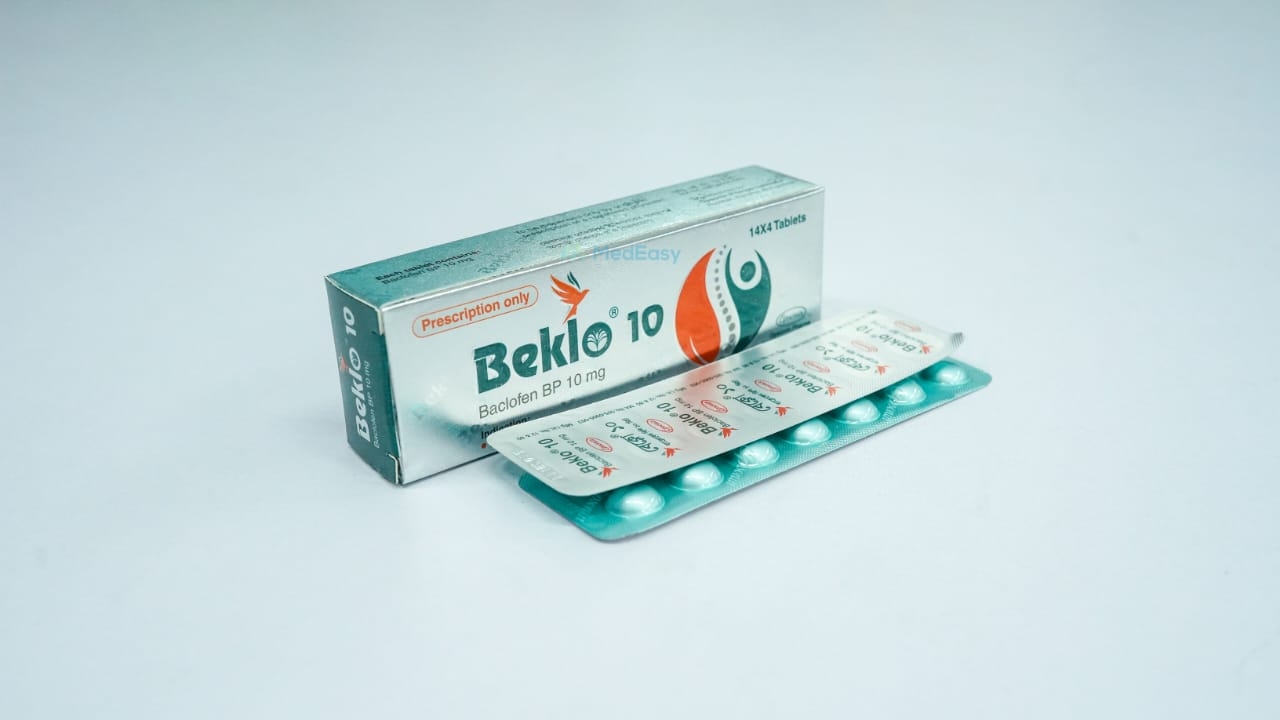
Beklo10 mg
Opsonin Pharma Ltd.
৳126.00
Add to cart


Spakem is established (FDA-approved) for the management of spasticity resulting from multiple sclerosis, particularly for relief of flexor spasms, associated pain, clonus, and muscular rigidity.
Spakem is established for the management of spasticity due to spinal cord injuries or spinal cord disease.
Spakem may also be used, under medical supervision, for spasticity from other central nervous system causes (such as cerebral palsy) as a guideline-supported or commonly used off-label option, although its efficacy for stroke, cerebral palsy, and Parkinson's disease has not been definitively established in controlled trials.
Spakem is not indicated for the treatment of skeletal muscle spasm resulting from rheumatic disorders (e.g., simple back strain); other agents are preferred for that purpose.
Each tablet contains Baclofen INN as the active pharmaceutical ingredient, most commonly available as 10 mg and 20 mg oral tablets; oral liquid formulations of Baclofen also exist in some markets for patients who cannot swallow tablets.
Spakem is a centrally acting skeletal muscle relaxant and antispastic agent used to reduce the muscle spasticity, spasms, pain, and stiffness that occur in conditions such as multiple sclerosis and spinal cord injury or disease. It acts on GABA-B receptors mainly at the spinal cord level to inhibit reflex activity between nerves and muscles, thereby easing involuntary muscle contraction. Spakem is taken by mouth, usually starting at a low dose that is gradually increased to find the lowest effective amount that controls symptoms with the fewest side effects. Because Spakem is a central nervous system depressant, it commonly causes drowsiness and dizziness, and it must never be stopped abruptly because doing so can trigger serious withdrawal effects, including hallucinations and seizures.
Skeletal Muscle Relaxant (centrally acting) - GABA-B Receptor Agonist
Mechanism: Baclofen is a structural analog of the inhibitory neurotransmitter GABA (gamma-aminobutyric acid) and acts as a selective agonist at GABA-B receptors. It acts primarily within the spinal cord, where it hyperpolarizes afferent nerve terminals and inhibits the release of excitatory neurotransmitters, thereby suppressing both monosynaptic and polysynaptic reflexes. This action reduces the frequency and severity of muscle spasms, clonus, and rigidity without directly acting on the neuromuscular junction or muscle fibers themselves.
Pharmacokinetics: Baclofen is absorbed rapidly and fairly completely from the gastrointestinal tract, though absorption varies between individuals and is dose-dependent. It is only partially metabolized in the liver, with the majority of an oral dose excreted unchanged by the kidneys. Its elimination half-life is approximately 2.5 to 4 hours. Because renal excretion is the primary elimination route, Baclofen can accumulate in patients with reduced kidney function, requiring dose adjustment.
Spakem dosing is individualized and started low, then increased gradually to the lowest dose that provides adequate relief of spasticity with tolerable side effects. Regimens differ for adults, children, and patients with renal impairment; see the table below and the Pediatric Uses and Use in Special Populations sections for details.
| Population / Situation | Typical Regimen |
|---|---|
| Adults - initial titration | 5 mg by mouth three times daily for 3 days, then increased by 5 mg per dose every 3 days as needed and tolerated |
| Adults - usual maintenance/maximum | Optimal effect is usually seen at 40-80 mg per day in divided doses; maximum recommended dose is 80 mg per day (20 mg four times daily), though some patients may require higher doses under specialist supervision |
| Children (spasticity, specialist-guided use) | Safety and efficacy of Spakem in children under 12 years have not been established for the oral tablet; when used, pediatric dosing is individualized and weight/age-based under specialist supervision (see Pediatric Uses) |
| Renal impairment | Use with caution and reduce the dose, since Spakem is eliminated mainly by the kidneys and can accumulate (see Use in Special Populations) |
| Discontinuation | Reduce the dose gradually over at least 1-2 weeks (or longer) whenever Spakem is being stopped; never stop abruptly except in a medical emergency (see Precautions and Warnings) |
Baclofen is contraindicated only in patients with known hypersensitivity to Baclofen or any component of the formulation.
Human data on Spakem use in pregnancy are limited. Spakem has shown teratogenic effects (such as fetal skeletal abnormalities) in animal reproduction studies at doses higher than typical human doses, though it is not established as definitively teratogenic in humans. Spakem should be used during pregnancy only if the potential benefit to the mother clearly justifies the potential risk to the fetus, and only under a physician's guidance. Infants born to mothers taking Spakem late in pregnancy have, in rare reports, shown withdrawal-like symptoms (tremor, jitteriness, seizures) after birth; where possible, the dose is gradually reduced before delivery under medical supervision.
Spakem passes into breast milk in small amounts. Because the effects on a nursing infant are not fully established, breastfeeding while taking Spakem should only be undertaken after consulting a physician, who can weigh the benefits of breastfeeding against the potential risk of infant sedation or other effects, and the infant should be monitored for drowsiness or poor feeding if breastfeeding continues.
Signs of Spakem overdose can include vomiting, marked muscle weakness (hypotonia), drowsiness progressing to unresponsiveness, difficulty breathing or respiratory depression, seizures, and slowed heart rate. An overdose of Spakem is a medical emergency. If overdose is suspected, seek immediate emergency medical attention or contact a poison control center right away; do not attempt to manage a suspected overdose at home. Treatment is supportive and provided in a medical facility, and may include airway support and close monitoring of breathing and heart function.
Store at room temperature (below 30°C), away from light and moisture. Keep out of reach of children.
The duration of Spakem treatment is individualized based on the underlying cause and severity of spasticity, and is determined by the prescribing physician. Because spasticity from conditions like multiple sclerosis or spinal cord injury/disease is typically a chronic problem, Spakem is often used long-term, with periodic reassessment of its continued benefit and dose. If Spakem does not produce a worthwhile improvement in symptoms within a reasonable trial period (as judged by the physician), it should be gradually withdrawn. Whenever treatment is stopped, the dose must be tapered down gradually rather than discontinued abruptly (see Precautions and Warnings).
Skeletal muscle relaxant; Antispasticity agent; GABA-B receptor agonist
Baclofen is a GABA-B receptor agonist that acts primarily at the spinal cord level. By stimulating GABA-B receptors on afferent nerve terminals, it hyperpolarizes these neurons and inhibits the release of excitatory neurotransmitters, which suppresses monosynaptic and polysynaptic spinal reflexes. This central inhibitory action reduces the frequency and intensity of muscle spasms, clonus, and rigidity associated with spasticity, without acting directly on skeletal muscle fibers or the neuromuscular junction.
C
The safety and efficacy of oral Spakem have not been established in children below 12 years of age for the standard tablet formulation. When Spakem is used in children for spasticity related to cerebral palsy or other central nervous system conditions, this is generally considered an off-label, specialist-guided use, with dosing individualized by a pediatric neurologist or specialist based on the child's age, weight, and response, starting at a low dose and titrating gradually, similar in principle to adult titration but at markedly lower doses. As in adults, Spakem must never be stopped abruptly in a child who has been taking it regularly, because of the risk of withdrawal symptoms; any discontinuation should be gradual and supervised by the treating specialist.
Q: What is Spakem 10 mg Tablet used for?
A: Spakem 10 mg Tablet is used to reduce muscle spasticity - stiffness, spasms, and involuntary muscle contractions - caused by conditions such as multiple sclerosis and spinal cord injury or disease. It is not intended for ordinary muscle spasm from a simple back strain or rheumatic disorder.
Q: How should I take Spakem 10 mg Tablet, and can I stop it whenever I want?
A: Spakem 10 mg Tablet is taken by mouth exactly as prescribed, usually starting at a low dose that is slowly increased. You should never stop taking Spakem 10 mg Tablet suddenly on your own, even if you feel better, because abrupt discontinuation can cause serious withdrawal effects such as hallucinations, seizures, high fever, and a rebound increase in spasticity. If treatment needs to stop, your doctor will taper the dose down gradually.
Q: Will Spakem 10 mg Tablet make me drowsy, and can I drive while taking it?
A: Yes, drowsiness, dizziness, and weakness are common with Spakem 10 mg Tablet, especially when starting treatment or after a dose increase. You should not drive, operate machinery, or do anything that requires full alertness until you know how Spakem 10 mg Tablet affects you, and you should avoid alcohol and other sedating medicines because their effects can add together.
Q: Is Spakem 10 mg Tablet safe during pregnancy or breastfeeding?
A: Human data on Spakem 10 mg Tablet in pregnancy are limited, and it has caused certain effects in animal studies at high doses, so Spakem 10 mg Tablet should be used during pregnancy only if a physician determines the benefit clearly outweighs the potential risk to the baby. Small amounts of Spakem 10 mg Tablet pass into breast milk, so breastfeeding while taking Spakem 10 mg Tablet should only be done after discussing it with a doctor, who can advise on monitoring the infant.
Q: Can Spakem 10 mg Tablet affect my kidneys, or does kidney disease affect my Spakem 10 mg Tablet dose?
A: Spakem 10 mg Tablet is removed from the body mainly by the kidneys, so patients with reduced kidney function can build up higher levels of the drug in their blood, increasing the risk of side effects like excessive drowsiness or confusion. If you have kidney disease, your doctor will likely prescribe a lower dose of Spakem 10 mg Tablet and monitor you closely.
Q: What should I do if someone takes too much Spakem 10 mg Tablet?
A: An overdose of Spakem 10 mg Tablet is a medical emergency and can cause severe drowsiness, breathing difficulty, seizures, and unresponsiveness. Seek immediate emergency medical care or contact a poison control center right away rather than trying to manage it at home.
Disclaimer
The information provided is accurate to the best of our knowledge, but it does not replace professional medical advice. We cannot guarantee its completeness or accuracy, and the absence of specific information about a drug should not be taken as an endorsement. We are not responsible for any consequences arising from this information, so please consult a healthcare professional for any concerns or questions.