10% Off
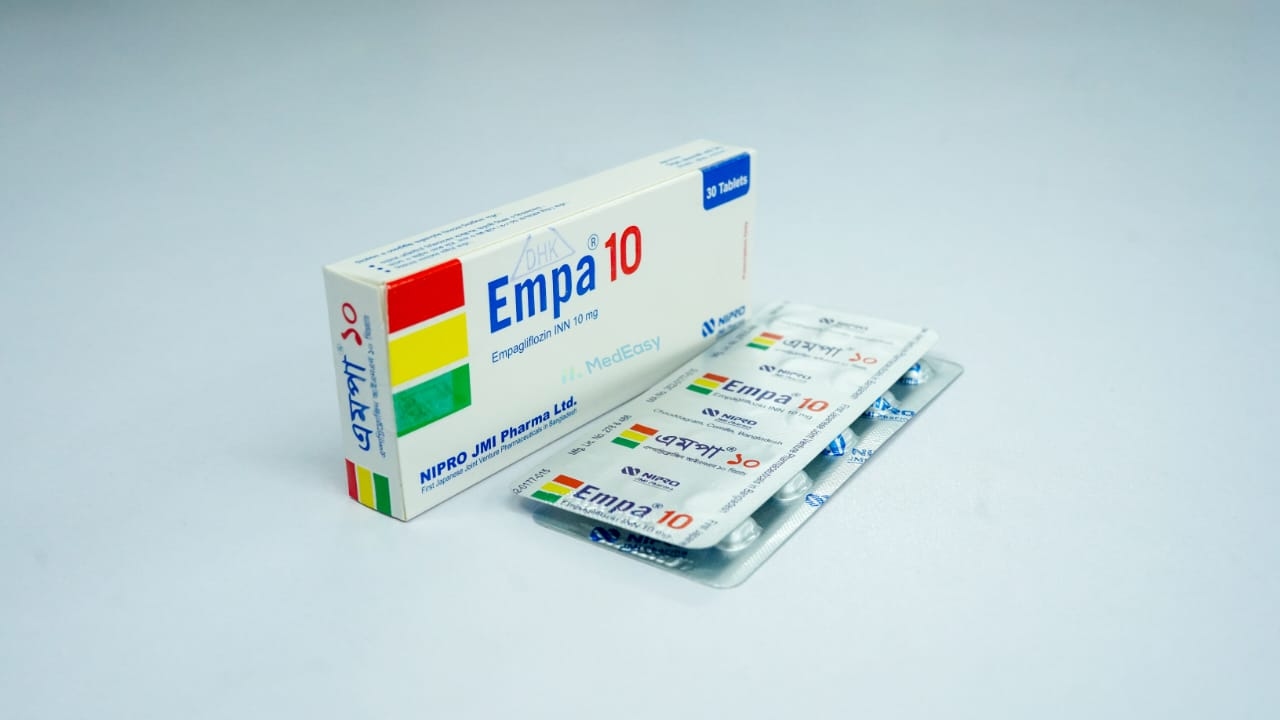
Empa10 mg
NIPRO JMI Pharma Ltd.
৳337.50
Add to cart


Sucozin is indicated as an adjunct to diet and exercise to improve glycemic control in adults and pediatric patients aged 10 years and older with type 2 diabetes mellitus.
Sucozin is indicated to reduce the risk of cardiovascular death in adults with type 2 diabetes mellitus and established cardiovascular disease.
Sucozin is indicated to reduce the risk of cardiovascular death and hospitalization for heart failure in adults, regardless of ejection fraction and regardless of the presence of type 2 diabetes.
Sucozin is indicated to reduce the risk of sustained decline in eGFR, end-stage kidney disease, cardiovascular death, and hospitalization in adults with chronic kidney disease at risk of progression.
Sucozin is not approved for use in type 1 diabetes mellitus and is not recommended for the treatment of type 1 diabetes or diabetic ketoacidosis.
Each film-coated tablet contains Empagliflozin (as the active ingredient) 10 mg or 25 mg.
Sucozin is a prescription medicine that belongs to a class of drugs called SGLT2 inhibitors, used to help control blood sugar in adults and children aged 10 years and older with type 2 diabetes. Sucozin is also used in adults to lower the risk of cardiovascular death and hospitalization related to heart failure, and to slow the progression of certain forms of chronic kidney disease, even in people who do not have diabetes. Sucozin works by helping the kidneys remove extra glucose from the body through urine. Sucozin is taken once daily as a tablet and is generally used as part of a long-term treatment plan alongside diet, exercise, and other prescribed therapies. Sucozin should only be used under the supervision of a qualified healthcare professional.
Antidiabetic (SGLT2 Inhibitor)
Empagliflozin inhibits sodium-glucose cotransporter 2 (SGLT2), the transporter responsible for the majority of glucose reabsorption in the kidney's proximal tubule. By blocking SGLT2, Empagliflozin reduces renal reabsorption of filtered glucose and lowers the renal threshold for glucose, leading to increased urinary glucose excretion. This insulin-independent mechanism lowers blood glucose in type 2 diabetes and also produces modest reductions in body weight and blood pressure through osmotic diuresis and caloric loss. Independent of its glucose-lowering effect, Empagliflozin has demonstrated benefits on cardiovascular and renal outcomes, thought to involve effects on cardiac preload/afterload, sodium handling, and intraglomerular pressure.
The dosage of Sucozin is determined by a healthcare professional based on the specific indication, renal function, and individual patient response; it is not the same for every patient or every condition. The following table is a general guide and must be confirmed by a physician before use.
Urinary tract infection, female genital mycotic (yeast) infection, male genital mycotic infection, increased urination, thirst, and nasopharyngitis (common cold-like symptoms).
Diabetic ketoacidosis (see Precautions and Warnings for full details), signs of Fournier's gangrene such as severe genital or perineal pain, swelling, redness, or fever (see Precautions and Warnings), symptoms of dehydration or low blood pressure such as dizziness or fainting, signs of kidney problems, hypoglycemia (especially when used with insulin or sulfonylureas), urosepsis or pyelonephritis (serious urinary tract infection with fever, back pain, or vomiting), and hypersensitivity reactions such as angioedema (swelling of the face, lips, tongue, or throat, or difficulty breathing). Seek immediate medical attention if any of these occur.
Sucozin is generally not recommended during pregnancy. Based on the mechanism of action, Sucozin may affect renal maturation and development when used during the second and third trimesters, and patients should be advised of the potential risk to the fetus. If pregnancy is detected, Sucozin should be discontinued and the treatment plan reassessed by a healthcare professional.
Use of Sucozin is not recommended while breastfeeding, as it is unknown whether Sucozin passes into human milk and potential effects on a nursing infant's kidney development are a concern. A healthcare provider should be consulted to select an appropriate alternative during lactation.
There is no specific antidote for Sucozin overdose. In case of a suspected overdose, do not induce vomiting unless specifically directed to do so by a healthcare professional or poison control service. Contact emergency medical services or a poison control center immediately, and provide supportive treatment as appropriate to the patient's clinical status, including monitoring of fluid and electrolyte status and renal function. Excess glucose removal through hemodialysis has not been well studied for Sucozin.
Store according to the product label.
Children: Sucozin is approved for glycemic control in children aged 10 years and older with type 2 diabetes; safety and effectiveness for younger children, or for the heart failure, chronic kidney disease, or cardiovascular death-reduction indications, have not been established in pediatric patients.
Elderly: Older adults may be at greater risk of volume depletion and its consequences (such as hypotension) when taking Sucozin; renal function should be monitored more closely in this group.
Renal impairment: Use of Sucozin for glycemic control is not recommended when eGFR is below 30 mL/min/1.73 m²; Sucozin is not recommended in patients with severe renal impairment, end-stage renal disease, or those on dialysis. For the heart failure and chronic kidney disease indications, use has been studied down to lower eGFR levels, but initiation and continuation should always be individualized by a physician based on current renal function.
Hepatic impairment: No dosage adjustment of Sucozin is required based on hepatic impairment alone; clinical judgment should still guide use in patients with significant liver disease.
Sucozin is typically used as a long-term, chronic therapy for type 2 diabetes, heart failure, or chronic kidney disease, as directed by a healthcare professional. Duration of treatment should be periodically reviewed by the prescribing physician based on ongoing clinical response and tolerability.
Sodium-Glucose Cotransporter-2 (SGLT2) Inhibitor; Antidiabetic agent.
Empagliflozin selectively inhibits SGLT2 in the renal proximal tubule, reducing glucose reabsorption and lowering the renal threshold for glucose, which increases urinary glucose excretion and lowers blood glucose independent of insulin secretion or action.
Sucozin's safety and effectiveness for improving glycemic control have been established only in pediatric patients aged 10 years and older with type 2 diabetes mellitus, as an adjunct to diet and exercise. Sucozin's safety and effectiveness for the heart failure, chronic kidney disease, or cardiovascular death-reduction indications have not been established in patients under 18 years of age. Sucozin is not approved for use in type 1 diabetes at any age.
Q: What is Sucozin 10 mg Tablet used for?
A: Sucozin 10 mg Tablet is used to improve blood sugar control in adults and children aged 10 years and older with type 2 diabetes, and in adults, Sucozin 10 mg Tablet is also used to reduce the risk of cardiovascular death and heart failure hospitalization, and to slow progression of certain chronic kidney disease.
Q: How should I take Sucozin 10 mg Tablet?
A: Sucozin 10 mg Tablet is usually taken by mouth once daily in the morning, with or without food, exactly as prescribed by your healthcare professional.
Q: What is the usual dose of Sucozin 10 mg Tablet?
A: The typical starting dose of Sucozin 10 mg Tablet is 10 mg once daily; for glycemic control, some patients may be increased to 25 mg once daily, but the exact dose of Sucozin 10 mg Tablet should always be determined by a doctor based on the indication and kidney function.
Q: Can Sucozin 10 mg Tablet be taken with insulin or other diabetes medicines?
A: Yes, Sucozin 10 mg Tablet can be combined with insulin or sulfonylureas, but this combination increases the risk of hypoglycemia (low blood sugar), so a dose adjustment of the other medicine may be needed under medical supervision.
Q: Is Sucozin 10 mg Tablet safe during pregnancy or breastfeeding?
A: Sucozin 10 mg Tablet is generally not recommended during pregnancy, particularly in the second and third trimesters, and is not recommended while breastfeeding; a doctor should be consulted to discuss safer alternatives.
Q: Can children take Sucozin 10 mg Tablet?
A: Sucozin 10 mg Tablet is approved for glycemic control only in children aged 10 years and older with type 2 diabetes; it has not been established as safe or effective for younger children or for other indications in children.
Q: What are the serious risks of Sucozin 10 mg Tablet I should know about?
A: Sucozin 10 mg Tablet carries a risk of diabetic ketoacidosis (which can occur even with near-normal blood sugar), genital yeast infections, and rare but serious Fournier's gangrene; patients should seek urgent medical care for unusual abdominal pain, nausea, vomiting, or genital/perineal pain, swelling, or fever while taking Sucozin 10 mg Tablet.
Q: What are the common side effects of Sucozin 10 mg Tablet?
A: Common side effects of Sucozin 10 mg Tablet include urinary tract infections, genital yeast infections, increased urination, and increased thirst.
Q: Can I stop taking Sucozin 10 mg Tablet suddenly, such as before surgery?
A: Sucozin 10 mg Tablet should not be stopped without medical advice, but your doctor may recommend temporarily stopping Sucozin 10 mg Tablet before scheduled surgery or during serious illness to reduce the risk of ketoacidosis; always follow your healthcare professional's specific instructions.
Disclaimer
The information provided is accurate to the best of our knowledge, but it does not replace professional medical advice. We cannot guarantee its completeness or accuracy, and the absence of specific information about a drug should not be taken as an endorsement. We are not responsible for any consequences arising from this information, so please consult a healthcare professional for any concerns or questions.