10% Off
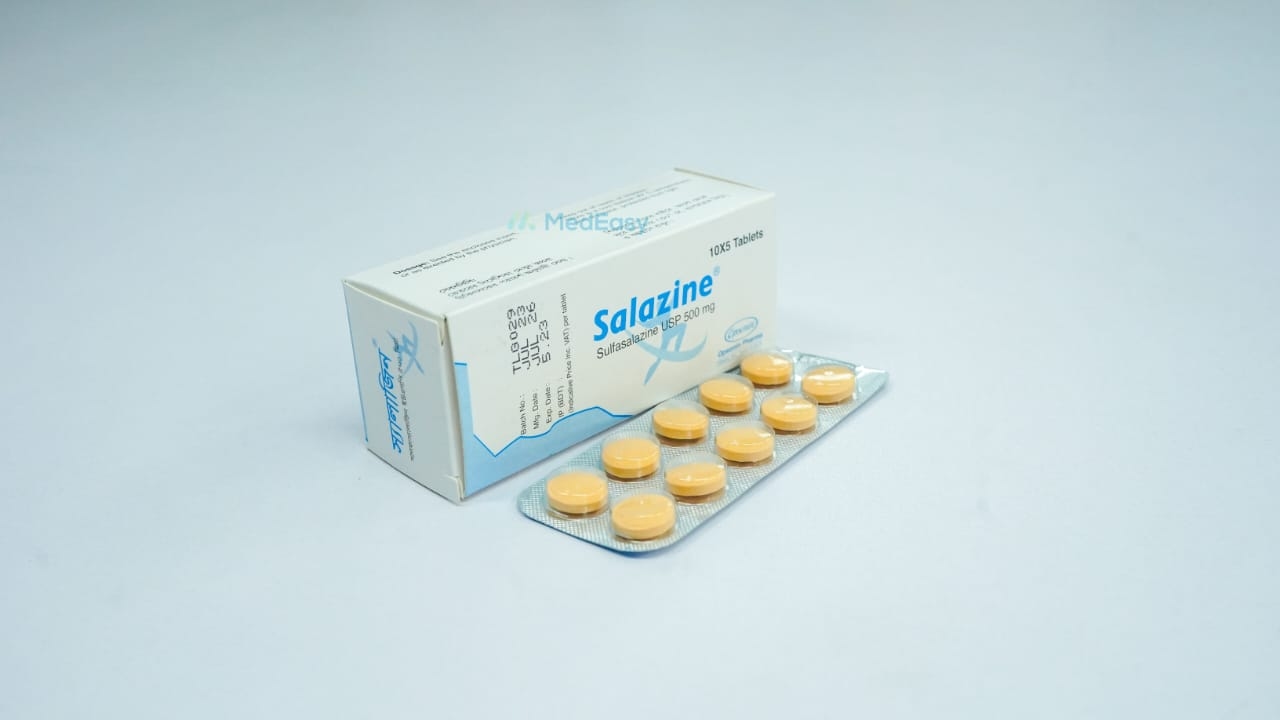
Salazine500 mg
Opsonin Pharma Ltd.
৳47.07
Add to cart

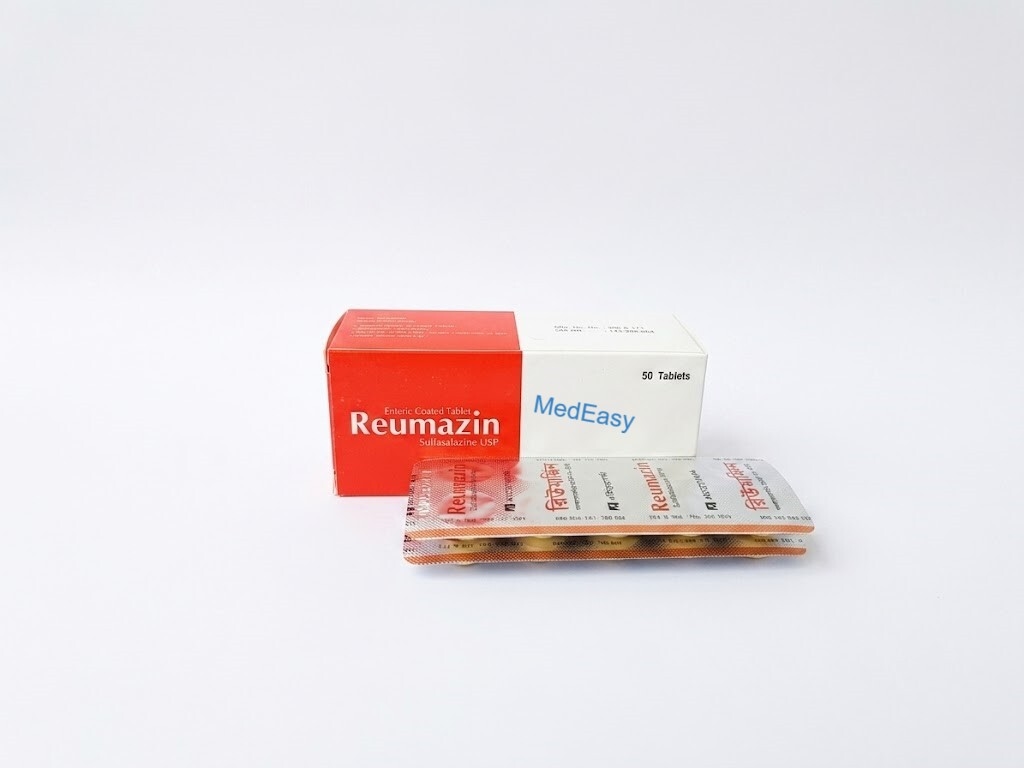
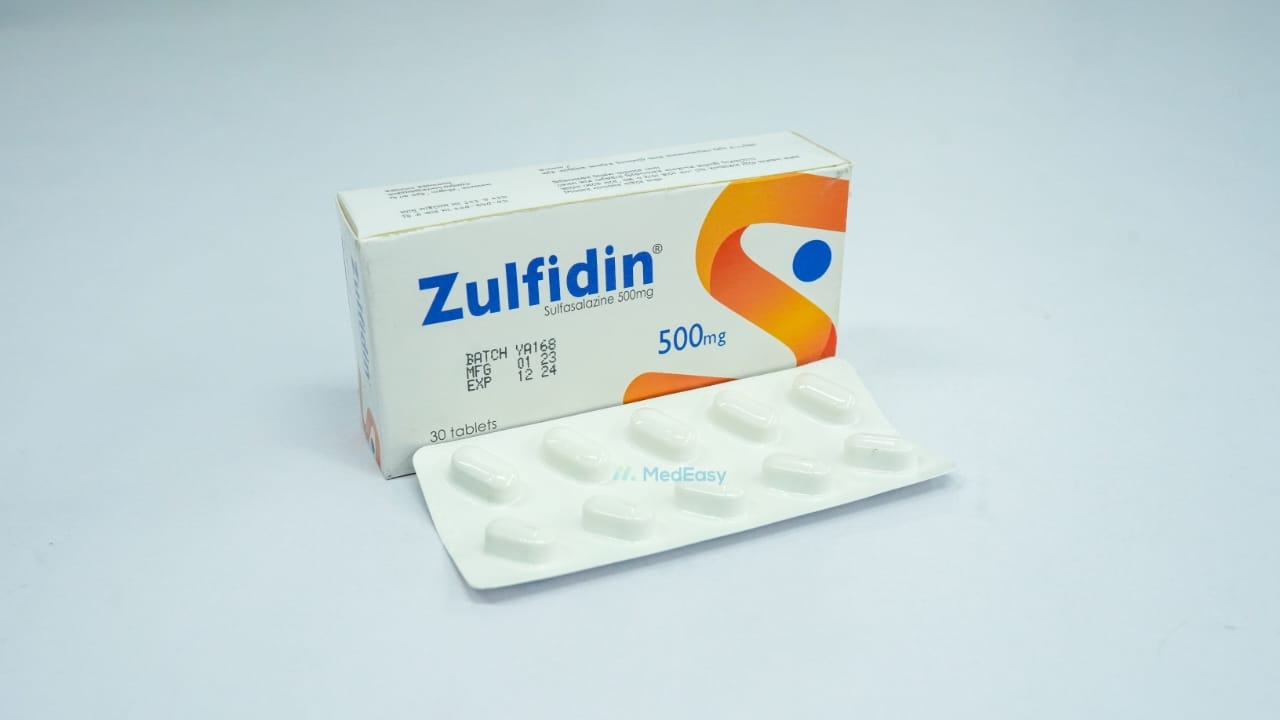
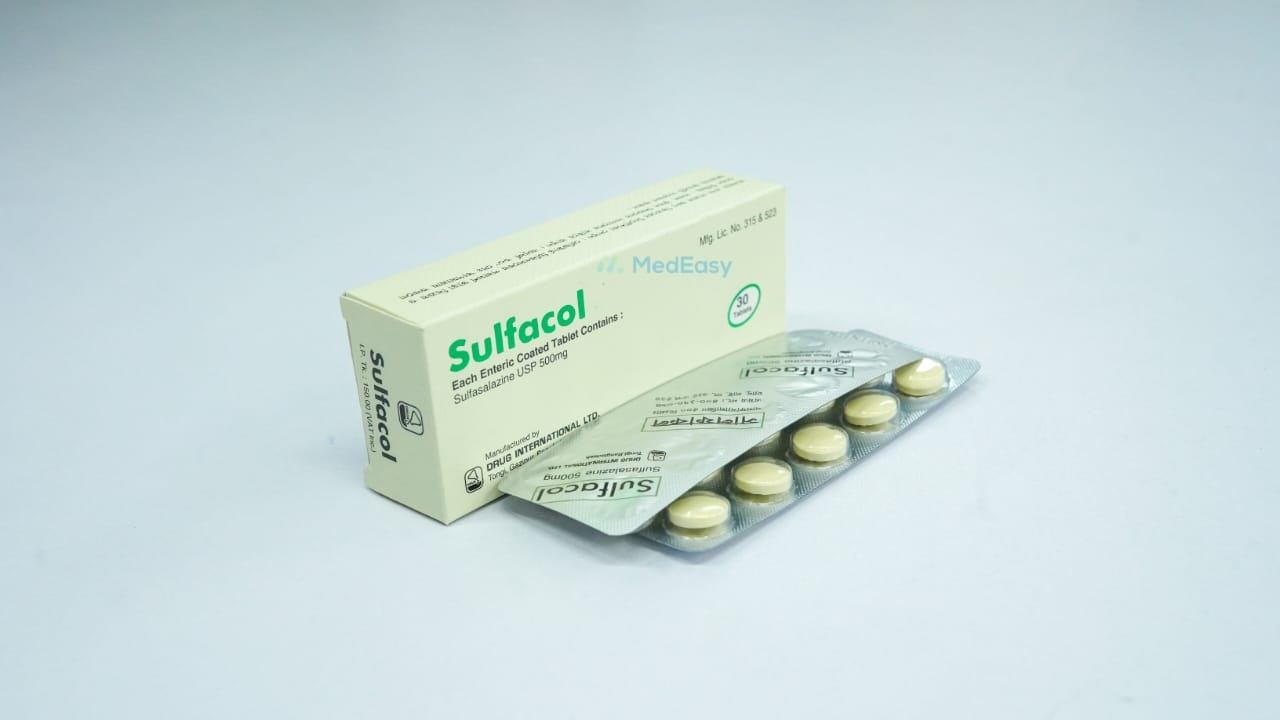
Sulfazin 500 mg Tablet is available on MedEasy for ৳4.80 per piece, with home delivery anywhere in Bangladesh. It is manufactured by Popular Pharmaceuticals Ltd. Its generic name is Sulfasalazine.

Sulfazin is a sulfonamide-salicylate compound with established and guideline-supported uses in the following conditions:
Use of Sulfazin should be initiated and monitored by a physician experienced in managing these conditions.
Sulfazin is a sulfonamide-salicylate compound classified as a disease-modifying antirheumatic drug (DMARD) and as an aminosalicylate used in inflammatory bowel disease. After oral administration, a large portion of Sulfazin reaches the colon largely unabsorbed, where colonic bacteria cleave the azo bond to release its two active components: sulfapyridine, which is absorbed and thought to be primarily responsible for the anti-inflammatory/immunomodulatory effect in rheumatoid arthritis, and 5-aminosalicylic acid (5-ASA), which acts topically within the bowel lumen to reduce mucosal inflammation in inflammatory bowel disease.
Sulfasalazine is split by colonic bacterial azoreductases into sulfapyridine and 5-aminosalicylic acid (5-ASA).
Absorption, acetylation (genetically determined 'slow' vs 'fast' acetylator status affects sulfapyridine levels and toxicity risk), and renal excretion of sulfapyridine and its metabolites determine much of the drug's systemic pharmacokinetic behavior.
Initial: 3–4 g/day in divided doses (with plain tablets, often started at 1–2 g/day and increased gradually to reduce GI intolerance). Maintenance: 2 g/day in divided doses.
Initial: 40–60 mg/kg/day in 3–6 divided doses; Maintenance: 20–30 mg/kg/day in 4 divided doses, not to exceed the adult dose.
Enteric-coated tablets are generally preferred. Initial: 0.5–1 g/day, increased gradually (e.g., by 0.5 g/week) up to a maintenance dose of 2 g/day (occasionally up to 3 g/day) in divided doses.
Enteric-coated tablets: approximately 30–50 mg/kg/day in 2 divided doses, not to exceed 2 g/day, under specialist supervision.
Take with plenty of water, preferably after meals, to reduce gastrointestinal upset. Enteric-coated tablets should be swallowed whole and not crushed or chewed. Doses are usually increased gradually to improve tolerability. Sulfazin should be taken exactly as prescribed by a physician; do not stop, skip, or alter the dose without medical advice, and periodic blood tests are required during therapy (see Precautions).
Use with caution and reduced dose in patients with renal or hepatic impairment; such patients require closer monitoring, as sulfapyridine and its metabolites are renally excreted.
Give with or after food and with a full glass of water to minimize gastrointestinal irritation and reduce crystalluria risk. Swallow enteric-coated/delayed-release tablets whole; do not crush or chew. Space doses evenly through the day and maintain adequate fluid intake throughout treatment.
Sulfazin has several clinically significant drug interactions:
Sulfasalazine is contraindicated in:
Common side effects include nausea, vomiting, anorexia, headache, and reversible orange-yellow discoloration of urine, skin, or contact lenses (harmless).
Less common but clinically important effects include:
Patients should seek prompt medical attention for fever, sore throat, unusual bruising/bleeding, jaundice, or severe skin rash while taking Sulfazin.
Sulfazin should be used during pregnancy only if clearly needed, and only if the potential benefit justifies the potential risk to the fetus; a physician should be consulted before use. Sulfazin interferes with folate metabolism, so folic acid supplementation is generally recommended for patients who may become pregnant or are pregnant while on therapy, under physician guidance.
Sulfazin and its metabolite sulfapyridine are excreted in breast milk in small amounts. It is generally considered compatible with breastfeeding in full-term, healthy infants under physician supervision, but caution is advised in premature infants or those with G6PD deficiency or hyperbilirubinemia due to a theoretical risk of kernicterus; consult a physician before use while breastfeeding.
Sulfazin requires the following precautions:
Sulfazin should be taken exactly as prescribed; do not stop, extend, skip doses, or share this medicine with others without medical advice.
Symptoms of Sulfazin overdose may include nausea, vomiting, abdominal pain, drowsiness, and in severe cases, seizures, blood disorders, or metabolic disturbances. There is no specific antidote for Sulfazin overdose. In case of suspected overdose, seek immediate medical attention or contact a poison control center; supportive care and gastric decontamination measures may be provided by medical professionals as appropriate. Do not attempt to treat an overdose at home.
Store at room temperature (below 30°C), away from light and moisture. Keep out of reach of children.
Elderly: Use with caution; elderly patients may be at higher risk of hematologic and renal adverse effects, and closer monitoring is recommended.
Renal impairment: Use with caution and monitor closely, as impaired excretion of sulfapyridine metabolites may increase toxicity risk.
Hepatic impairment: Use with caution; monitor liver function periodically.
G6PD deficiency: Increased risk of hemolytic anemia; use with caution and monitor for signs of hemolysis.
Pediatric patients: See Pediatric Uses section. Contraindicated in infants under 2 months of age.
Aminosalicylates; Disease-Modifying Antirheumatic Drugs (DMARDs); Sulfonamide derivatives
Sulfazin is contraindicated in infants under 2 months of age due to the risk of kernicterus from displacement of bilirubin.
For children 6 years and older, Sulfazin is used for ulcerative colitis (weight-based dosing, see Dosage and Administration) and for polyarticular juvenile idiopathic arthritis as a second-line DMARD, under specialist supervision with regular monitoring of blood counts and liver/renal function.
Safety and efficacy of Sulfazin in children under 6 years of age have not been well established; use only under specialist pediatric guidance.
Q: What is Sulfazin 500 mg Tablet used for?
A: Sulfazin 500 mg Tablet is used to treat ulcerative colitis and Crohn's disease (inflammatory bowel diseases) and rheumatoid arthritis, and is also used off-label for certain other forms of arthritis such as ankylosing spondylitis and juvenile idiopathic arthritis.
Q: How long does it take for Sulfazin 500 mg Tablet to work?
A: In inflammatory bowel disease, some improvement may be seen within a few weeks, but full benefit in rheumatoid arthritis may take 6 to 12 weeks or longer of continuous use of Sulfazin 500 mg Tablet. It should be taken regularly as prescribed even if symptoms have not fully resolved.
Q: Why does my urine or skin turn orange-yellow while taking Sulfazin 500 mg Tablet?
A: This is a common, harmless side effect of Sulfazin 500 mg Tablet due to the drug's natural color. It may also discolor contact lenses. It does not indicate a problem, but you should still report any concerning symptoms to your physician.
Q: Can Sulfazin 500 mg Tablet be taken during pregnancy or breastfeeding?
A: Sulfazin 500 mg Tablet should be used in pregnancy only if clearly needed and if the potential benefit outweighs the potential risk to the fetus, and folic acid supplementation is often recommended; consult your physician. It is generally considered compatible with breastfeeding in healthy, full-term infants under medical supervision, but caution is needed in premature infants or those with G6PD deficiency. Always consult your physician before use during pregnancy or breastfeeding.
Q: What monitoring is needed while taking Sulfazin 500 mg Tablet?
A: Regular blood tests (complete blood count) and liver function tests are required, especially during the first few months of Sulfazin 500 mg Tablet therapy, because of the risk of blood disorders such as low white blood cell counts and liver enzyme changes. Do not skip these follow-up tests.
Q: Who should not take Sulfazin 500 mg Tablet?
A: Sulfazin 500 mg Tablet should not be used by people with a known allergy to sulfonamides, salicylates (such as aspirin), or Sulfazin 500 mg Tablet itself, by people with porphyria or intestinal/urinary tract obstruction, or in infants under 2 months of age.
Disclaimer
The information provided is accurate to the best of our knowledge, but it does not replace professional medical advice. We cannot guarantee its completeness or accuracy, and the absence of specific information about a drug should not be taken as an endorsement. We are not responsible for any consequences arising from this information, so please consult a healthcare professional for any concerns or questions.