8% Off
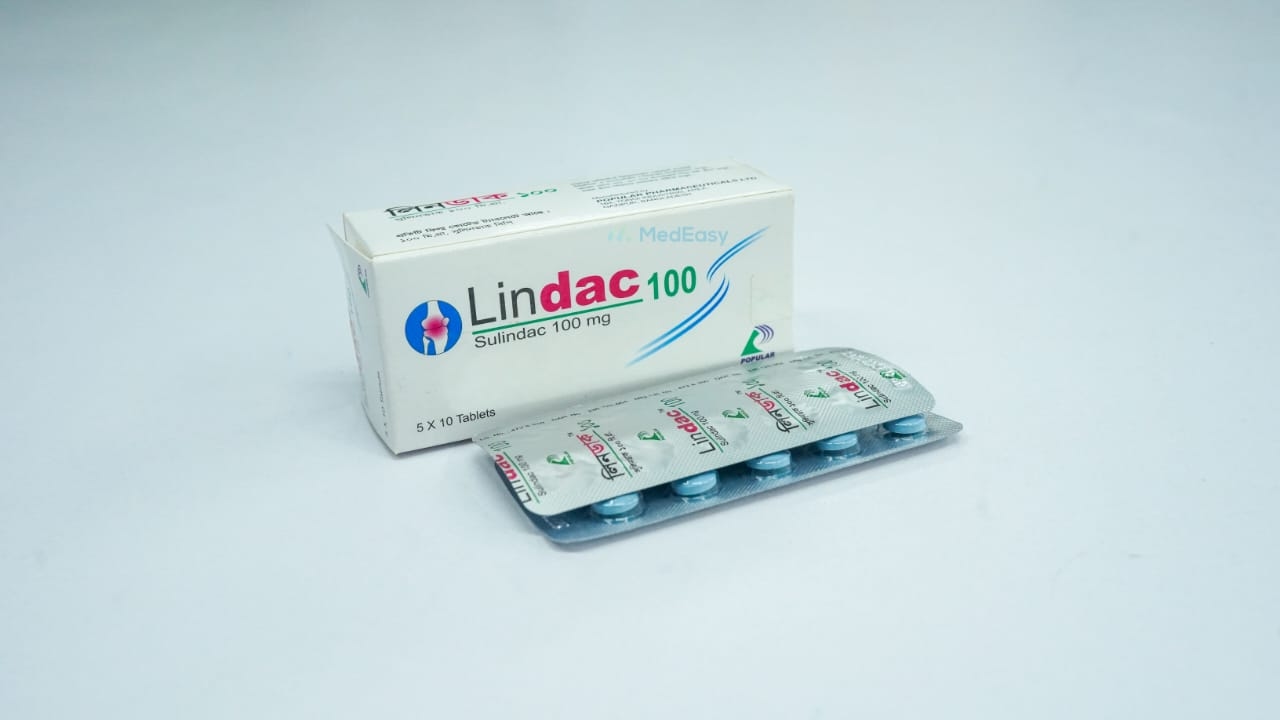
Lindac100 mg
Popular Pharmaceuticals Ltd.
৳64.40
Add to cart
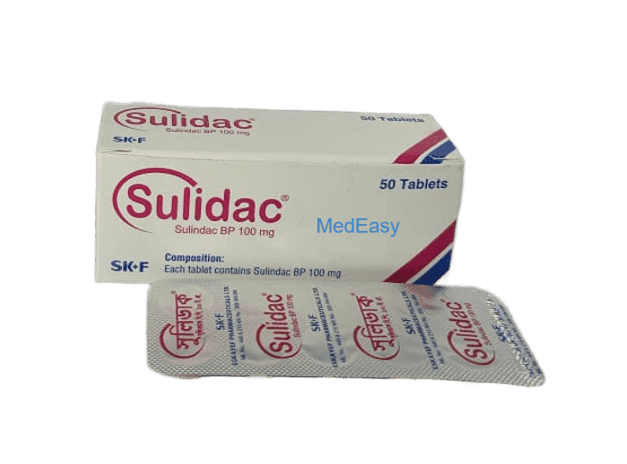

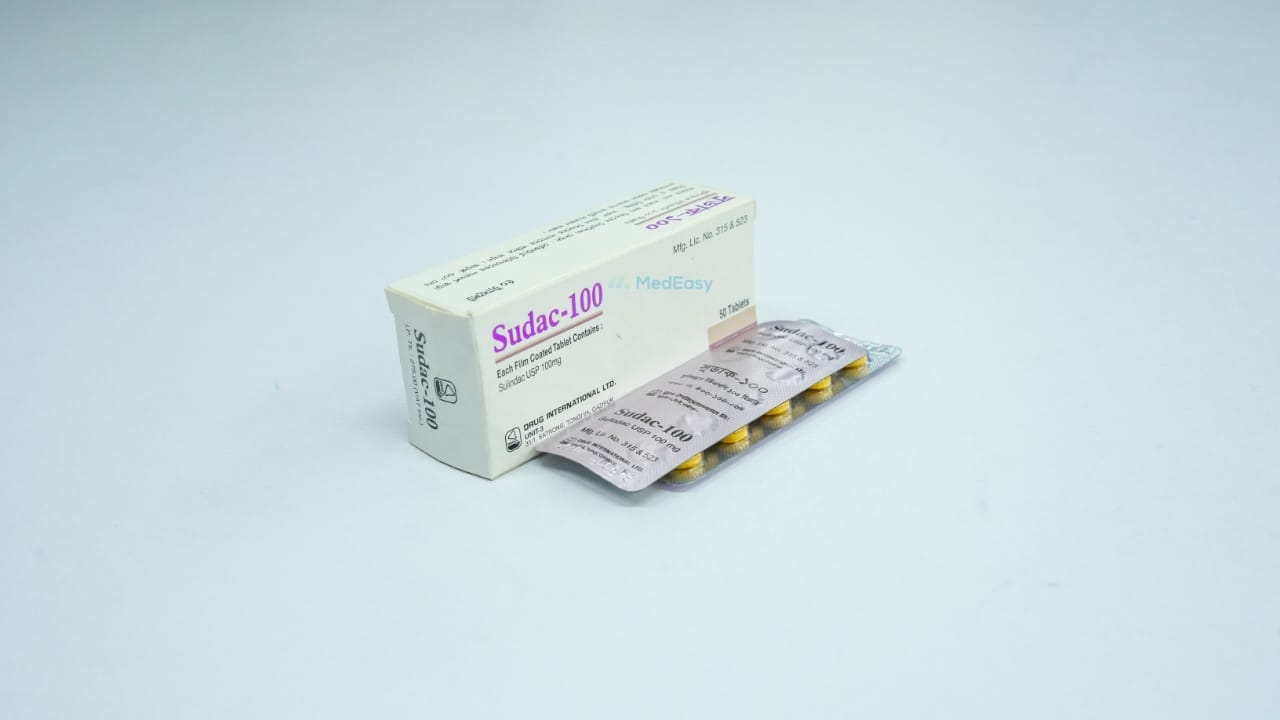
Sulidac is a non-steroidal anti-inflammatory drug (NSAID) used for the acute or long-term relief of signs and symptoms of several musculoskeletal and inflammatory conditions.
Sulidac treats the signs and symptoms of these conditions; it does not alter their underlying disease course. The lowest effective dose should be used for the shortest duration consistent with individual treatment goals.
Sulindac is available as oral tablets, commonly in strengths of 150 mg and 200 mg per tablet.
Each tablet contains Sulindac as the active pharmaceutical ingredient, along with standard pharmaceutical excipients used for tablet formulation.
Sulidac is a non-steroidal anti-inflammatory drug (NSAID) belonging to the indene acetic acid derivative group. It is a prodrug that is chemically inert in its administered form and is converted in the body to a pharmacologically active sulfide metabolite (responsible for anti-inflammatory activity) and an inactive sulfone metabolite.
Sulidac is used to relieve pain, swelling, and stiffness associated with certain arthritic and inflammatory musculoskeletal conditions.
Sulidac belongs to the class of Non-Steroidal Anti-Inflammatory Drugs (NSAIDs), specifically the indene acetic acid derivative subgroup.
Sulindac itself is largely inactive; it undergoes reversible reduction in the liver to an active sulfide metabolite and irreversible oxidation to an inactive sulfone metabolite. The active sulfide metabolite is responsible for the anti-inflammatory, analgesic, and antipyretic effects, which are believed to result from inhibition of cyclooxygenase (prostaglandin synthetase), thereby reducing the synthesis of prostaglandins involved in pain and inflammation.
Peak plasma concentrations of Sulindac occur approximately 3-6 hours after oral dosing. Sulindac and its metabolites are extensively bound to plasma proteins (93-98%). The elimination half-life is approximately 7.8 hours for Sulindac and approximately 16.4 hours for the active sulfide metabolite, supporting twice-daily dosing.
Sulidac should be taken orally, generally twice daily with food to reduce gastrointestinal upset. The lowest effective dose should be used for the shortest duration necessary. See Dosage for indication-specific dosing and Administration for instructions on how to take Sulidac.
Sulidac tablets should be swallowed whole with a full glass of water, generally taken twice daily with food or milk to help reduce stomach upset. Do not crush or chew the tablet unless directed by a physician. Sulidac should not be taken with other NSAIDs, including aspirin, unless specifically advised by a physician.
Sulidac has several clinically significant drug interactions:
Sulindac is contraindicated in the following situations:
Common side effects of Sulidac (occurring in more than 1% of patients) include:
Seek immediate medical attention for signs of severe skin reaction, unexplained abdominal pain, black or bloody stools, yellowing of the skin or eyes, or signs of an allergic reaction.
Pregnancy: Sulidac should be avoided in pregnant women starting at approximately 30 weeks gestation (third trimester), as NSAIDs can cause premature closure of the fetal ductus arteriosus. Use between approximately 20 and 30 weeks of gestation should be avoided unless clearly necessary, and if used, should be limited to the lowest effective dose for the shortest possible duration due to the risk of fetal renal dysfunction leading to oligohydramnios; ultrasound monitoring is recommended if treatment extends beyond 48 hours. Use earlier in pregnancy should only occur if the potential benefit justifies the potential risk to the fetus, and only under a physician's guidance.
Lactation: It is not well established whether Sulidac or its metabolites are excreted in human breast milk, though excretion into milk has been observed in animal studies. Because of the potential for serious adverse effects in a nursing infant, a decision should be made whether to discontinue nursing or discontinue Sulidac, taking into account the importance of the drug to the mother, and only under medical advice.
Sulidac, like other NSAIDs, may increase the risk of serious cardiovascular thrombotic events, including myocardial infarction and stroke, which can be fatal. This risk may increase with duration of use. Sulidac is contraindicated in the setting of CABG surgery and should be used with caution in patients with a history of hypertension, heart failure, or recent myocardial infarction.
NSAIDs, including Sulidac, can cause serious gastrointestinal adverse events including bleeding, ulceration, and perforation of the stomach or intestines, which can occur at any time and without warning symptoms. Risk is higher in patients with a prior history of peptic ulcer disease or GI bleeding, older patients, and those taking corticosteroids, anticoagulants, or other NSAIDs, or who smoke or consume alcohol. See Contraindications for use in active GI bleeding.
Long-term use of Sulidac can cause renal papillary necrosis and other renal injury. Patients with pre-existing renal impairment, heart failure, or those taking diuretics or ACE inhibitors/ARBs are at greatest risk. Sulidac is not recommended in patients with advanced renal disease.
Liver test abnormalities may occur; Sulidac carries a relatively higher reported frequency of hepatic reactions among NSAIDs, including rare cholestatic hepatitis. Liver function should be monitored, and Sulidac should be discontinued if signs or symptoms of liver dysfunction develop.
Serious, sometimes fatal, anaphylactic/anaphylactoid reactions and serious skin reactions (Stevens-Johnson syndrome, toxic epidermal necrolysis, DRESS) have been reported. Sulidac should be discontinued immediately at the first sign of rash, mucosal lesions, or other signs of hypersensitivity.
Aseptic meningitis has been reported with Sulidac, particularly in patients with systemic lupus erythematosus or mixed connective tissue disease. Use the lowest effective dose for the shortest duration in all patients.
Symptoms of Sulidac overdose may include drowsiness, lethargy, nausea, vomiting, epigastric pain, gastrointestinal bleeding, and in severe cases, stupor, coma, low blood pressure, and reduced urine output.
If an overdose of Sulidac is suspected, seek immediate medical attention or contact emergency services/a poison control center right away. Treatment is generally supportive and should be managed by medical professionals; do not attempt specific home treatment.
Store at room temperature (below 30°C), away from light and moisture. Keep out of reach of children.
Safety and efficacy of Sulidac in pediatric patients have not been established; use in children is generally not recommended.
Elderly patients are at increased risk for Sulidac-associated adverse events, particularly gastrointestinal bleeding and ulceration, as well as renal impairment. Sulidac should be used with caution and at the lowest effective dose in this population.
Reduced doses of Sulidac may be required in patients with renal impairment, with close monitoring. Sulidac is not recommended in patients with advanced renal disease.
Reduced doses of Sulidac may be required in patients with hepatic impairment, with close monitoring of liver function and metabolite levels. Sulidac is contraindicated in severe hepatic impairment (see Contraindications).
See Pregnancy and Lactation section for detailed guidance.
The duration of Sulidac treatment depends on the indication. For chronic conditions such as osteoarthritis, rheumatoid arthritis, and ankylosing spondylitis, Sulidac may be used long-term under regular physician supervision, with periodic reassessment of the need for continued therapy. For acute painful shoulder, treatment is typically for 7-14 days. For acute gouty arthritis, treatment is typically for about 7 days. In all cases, the lowest effective dose should be used for the shortest duration consistent with the treatment goals.
Sulindac belongs to the Non-Steroidal Anti-Inflammatory Drug (NSAID) class, within the indene acetic acid derivative chemical subgroup.
Sulindac is a prodrug that is converted in the liver to an active sulfide metabolite and an inactive sulfone metabolite. The active sulfide metabolite inhibits cyclooxygenase (prostaglandin synthetase) enzymes, reducing the synthesis of prostaglandins that mediate pain, inflammation, and fever. This results in the anti-inflammatory, analgesic, and antipyretic effects of Sulindac.
C (D if used at or after approximately 30 weeks gestation)
The safety and effectiveness of Sulidac in pediatric patients have not been established. Sulidac is therefore generally not recommended for use in children, and no pediatric dosing regimen has been established.
Q: What is Sulidac 100 mg Tablet used for?
A: Sulidac 100 mg Tablet is a non-steroidal anti-inflammatory drug (NSAID) used to relieve the pain, swelling, and stiffness of osteoarthritis, rheumatoid arthritis, and ankylosing spondylitis, as well as to treat acute painful shoulder and acute gouty arthritis.
Q: How should I take Sulidac 100 mg Tablet?
A: Sulidac 100 mg Tablet is usually taken by mouth twice daily with food to reduce stomach upset. Follow your physician's instructions for dose and duration, and do not exceed the maximum recommended dose of 400 mg per day.
Q: Can I take Sulidac 100 mg Tablet if I am pregnant?
A: Sulidac 100 mg Tablet should be avoided from approximately 30 weeks of pregnancy onward because it can cause the baby's ductus arteriosus to close prematurely. Between 20 and 30 weeks it should be used only if clearly needed, at the lowest dose for the shortest time, and only under a physician's guidance. Use earlier in pregnancy should also be discussed with a physician, who will weigh the potential benefit against the potential risk to the fetus.
Q: What are the serious side effects of Sulidac 100 mg Tablet I should watch for?
A: Seek immediate medical attention if you experience signs of gastrointestinal bleeding (black or bloody stools, vomiting blood), yellowing of the skin or eyes, unexplained abdominal pain, chest pain, sudden weakness or slurred speech, severe skin rash or blistering, or signs of an allergic reaction while taking Sulidac 100 mg Tablet, as these can indicate serious gastrointestinal, hepatic, cardiovascular, or hypersensitivity reactions.
Q: Can I take Sulidac 100 mg Tablet with aspirin or other NSAIDs?
A: Taking Sulidac 100 mg Tablet together with aspirin or other NSAIDs is generally not recommended, as it reduces the effective levels of Sulidac 100 mg Tablet's active metabolite and increases the risk of gastrointestinal side effects such as bleeding or ulceration. Discuss any pain reliever combinations with your physician.
Q: Is Sulidac 100 mg Tablet safe for long-term use?
A: Sulidac 100 mg Tablet can be used long-term for chronic conditions like osteoarthritis and rheumatoid arthritis, but it should be used at the lowest effective dose for the shortest duration necessary, with regular medical follow-up, because long-term NSAID use carries risks of gastrointestinal, cardiovascular, renal, and hepatic complications.
Disclaimer
The information provided is accurate to the best of our knowledge, but it does not replace professional medical advice. We cannot guarantee its completeness or accuracy, and the absence of specific information about a drug should not be taken as an endorsement. We are not responsible for any consequences arising from this information, so please consult a healthcare professional for any concerns or questions.