
8% Off
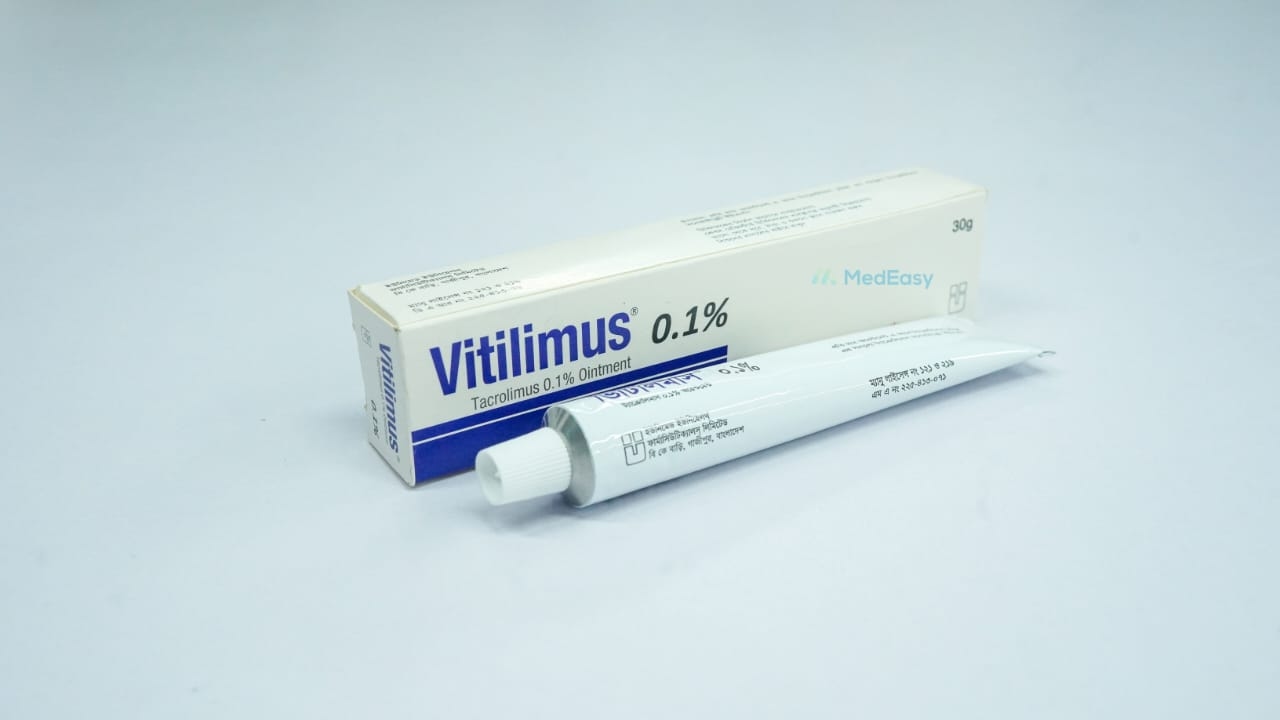
Vitilimus0.1%
Unimed Unihealth MFG. Ltd.
৳920.00
Add to cart

Tacrolim 0.1% Ointment is available on MedEasy for ৳184.00 per 5 gm tube, with home delivery anywhere in Bangladesh. It is manufactured by Incepta Pharmaceuticals Ltd. Its generic name is Tacrolimus.

Tacrolim is a calcineurin-inhibitor immunosuppressant with two distinct approved uses depending on formulation:
Systemic Tacrolim is always used in combination with other immunosuppressants and is not intended as monotherapy for transplant rejection prophylaxis.
Tacrolim is a macrolide-derived calcineurin inhibitor with potent immunosuppressive activity. It is structurally distinct from cyclosporine but shares a similar mechanism of T-cell suppression. It is used systemically to prevent rejection after solid organ transplantation and topically for atopic dermatitis when other treatments are inadequate.
Calcineurin inhibitor; immunosuppressant (systemic use); topical immunomodulator (topical use).
Tacrolimus binds to the intracellular protein FKBP-12 (FK-binding protein), forming a complex that inhibits calcineurin, a calcium-dependent phosphatase. This inhibition prevents dephosphorylation and nuclear translocation of nuclear factor of activated T-cells (NFAT), blocking transcription of interleukin-2 (IL-2) and other cytokines essential for T-lymphocyte activation and proliferation. The net effect is suppression of T-cell-mediated immune responses, reducing the risk of allograft rejection. Tacrolimus is metabolized primarily by hepatic and intestinal CYP3A4/5 enzymes, has a narrow therapeutic index, and requires therapeutic drug monitoring (trough blood levels) during systemic use.
| Indication | Population | Typical Dosing |
|---|---|---|
| Kidney/Liver/Heart transplant (oral, immediate-release) | Adults | Initial dose approximately 0.1-0.2 mg/kg/day in two divided doses, started within 24 hours post-transplant; subsequently adjusted to maintain target trough blood concentrations, in combination with other immunosuppressants. |
| Kidney/Liver transplant | Pediatric | Generally higher weight-based doses than adults (per transplant protocol); dosing individualized under specialist supervision with trough-level monitoring. |
| IV formulation | Adults (only when oral not feasible) | Approximately 0.03-0.05 mg/kg/day as continuous IV infusion; converted to oral therapy as soon as possible due to anaphylaxis risk with IV castor-oil-derivative vehicle. |
| Atopic dermatitis (topical ointment) | Adults and children ≥2 years | Apply a thin layer of 0.03% (children 2-15 years) or 0.03%/0.1% (adults) ointment to affected skin twice daily; discontinue once clearing occurs; not for long-term continuous use without physician review. |
Dose must be individualized based on trough blood concentrations, renal/hepatic function, concomitant immunosuppressants, and clinical response. Tacrolim must be taken exactly as prescribed; do not change the dose, switch between brands/formulations, or stop the medicine without consulting the transplant physician, as this can precipitate organ rejection.
Oral Tacrolim capsules/tablets should be taken consistently either with or without food, at the same time relative to meals each day, generally on an empty stomach (at least 1 hour before or 2-3 hours after meals) for optimal and consistent absorption, unless the physician advises otherwise. Extended-release formulations must be swallowed whole and not crushed, chewed, or opened. Avoid grapefruit or grapefruit juice. Topical ointment should be applied as a thin layer to affected skin only, with hands washed before and after application (unless hands are the treated area), and the area should not be covered with occlusive dressings.
Tacrolim is primarily metabolized by CYP3A4/5, making it highly susceptible to drug interactions:
Therapeutic drug monitoring is essential whenever interacting medications are started or stopped.
Tacrolimus is contraindicated in patients with known hypersensitivity to tacrolimus. The intravenous formulation is additionally contraindicated in patients hypersensitive to HCO-60 (polyoxyl 60 hydrogenated castor oil), a component of the IV vehicle, due to risk of anaphylaxis.
Boxed warning-level risks (systemic use): Increased susceptibility to infection (bacterial, viral, fungal, opportunistic) and increased risk of malignancy, particularly lymphoma and skin cancers, due to the degree of overall immunosuppression. Tacrolim may also cause nephrotoxicity and neurotoxicity, requiring regular monitoring of renal function and blood trough levels.
Common systemic side effects include:
Serious/rare effects: Seizures, posterior reversible encephalopathy syndrome (PRES), QT prolongation, thrombotic microangiopathy, and (topical use) a boxed warning noting rare post-marketing reports of malignancy (skin cancer, lymphoma) with topical calcineurin inhibitors, although a causal relationship has not been established; topical use is intended as second-line, short-term/intermittent therapy.
Topical use commonly causes application-site burning, stinging, pruritus, and erythema, especially in the first days of treatment.
Tacrolim crosses the placenta and is present in breast milk. Use during pregnancy only if the potential benefit (e.g., maintaining a transplanted organ) justifies the potential risk to the fetus, as untreated organ rejection poses serious risk to both mother and fetus; pregnancy in transplant recipients on Tacrolim requires close specialist monitoring for pre-term birth, low birth weight, and neonatal hyperkalemia/renal function. Breastfeeding is generally not recommended during systemic Tacrolim therapy unless a physician determines the benefits outweigh the risks, given potential infant exposure via milk. For topical use, avoid application to the breast area during breastfeeding. Always consult the treating transplant physician or dermatologist before use in pregnancy or while breastfeeding.
Tacrolim should be used only under the supervision of physicians experienced in immunosuppressive therapy and management of transplant patients. Key precautions include:
Overdose with Tacrolim may present as exaggerated adverse effects, including worsened nephrotoxicity, tremor, hypertension, or infection risk. There is no specific antidote. In case of suspected overdose, seek immediate medical attention or contact emergency services/a poison control center. General supportive measures and monitoring of renal function and blood levels are undertaken by treating physicians; Tacrolim is not significantly removed by dialysis due to high protein binding.
Store oral capsules/tablets at room temperature (below 30°C), protected from light and moisture. Injectable concentrate typically requires refrigeration prior to dilution - always follow the specific product label for the exact IV storage requirement. Topical ointment should be stored at room temperature (below 25-30°C). Keep out of reach of children.
Renal impairment: Use with caution; nephrotoxicity risk is heightened, and dose adjustment with close monitoring of renal function and trough levels is required.
Hepatic impairment: Dose reduction is typically needed in significant hepatic impairment due to reduced Tacrolim clearance.
Elderly: No specific dose adjustment is established beyond standard trough-level-guided dosing, but elderly transplant recipients may have increased susceptibility to infection and nephrotoxicity, warranting close monitoring.
Pediatric: Systemic Tacrolim is approved for prevention of organ rejection in pediatric transplant recipients; children often require higher weight-based doses than adults due to differences in metabolism, with dosing individualized by trough monitoring. Topical ointment 0.03% is approved for children 2 years and older with moderate-to-severe atopic dermatitis; safety in children under 2 years has not been established.
Calcineurin inhibitors; Immunosuppressants
Binds FKBP-12 to form a complex that inhibits calcineurin phosphatase, blocking NFAT-mediated transcription of IL-2 and other cytokines, thereby suppressing T-lymphocyte activation and proliferation.
C
Systemic Tacrolim is approved for prophylaxis of organ rejection in pediatric kidney, liver, and heart transplant recipients, with dosing individualized based on body weight and trough blood level monitoring; pediatric patients often require proportionally higher doses than adults due to faster clearance. Topical Tacrolim 0.03% ointment is approved for moderate-to-severe atopic dermatitis in children 2 years of age and older as second-line therapy; safety and efficacy in children below 2 years of age have not been established, and long-term continuous use in children should be avoided given the boxed warning on malignancy risk with topical calcineurin inhibitors.
Q: What is Tacrolim 0.1% Ointment used for?
A: Tacrolim 0.1% Ointment is used to prevent organ rejection after kidney, liver, or heart transplant (given with other immunosuppressants), and as a topical ointment for moderate-to-severe atopic dermatitis (eczema) that has not responded to other treatments.
Q: Can I stop taking Tacrolim 0.1% Ointment if I feel fine?
A: No. Do not stop, skip doses, or change your Tacrolim 0.1% Ointment dose without consulting your transplant physician, even if you feel well, because stopping abruptly can trigger organ rejection. For topical use, follow your physician's instructions on duration.
Q: Why do I need regular blood tests while on Tacrolim 0.1% Ointment?
A: Tacrolim 0.1% Ointment has a narrow therapeutic range - too little risks organ rejection, too much increases toxicity (kidney and nerve damage). Regular blood trough-level tests, along with kidney function, blood pressure, and blood sugar monitoring, are required throughout systemic treatment.
Q: Can I drink grapefruit juice while taking Tacrolim 0.1% Ointment?
A: No. Grapefruit juice can significantly increase Tacrolim 0.1% Ointment blood levels and raise the risk of side effects such as kidney toxicity and tremor. It should be avoided during treatment.
Q: Is Tacrolim 0.1% Ointment safe during pregnancy?
A: Tacrolim 0.1% Ointment should be used in pregnancy only if clearly needed, such as to maintain a transplanted organ, and only under close specialist supervision, as it crosses the placenta and carries potential risks to the fetus that must be weighed against the risk of untreated organ rejection.
Q: What are the serious risks of long-term Tacrolim 0.1% Ointment use?
A: Long-term systemic Tacrolim 0.1% Ointment use increases the risk of infections and certain cancers (such as lymphoma and skin cancer) due to immune suppression, and can cause kidney damage, high blood pressure, and high blood sugar. Regular physician follow-up is essential to monitor for these risks.
Disclaimer
The information provided is accurate to the best of our knowledge, but it does not replace professional medical advice. We cannot guarantee its completeness or accuracy, and the absence of specific information about a drug should not be taken as an endorsement. We are not responsible for any consequences arising from this information, so please consult a healthcare professional for any concerns or questions.
