8% Off
Sizonil5 mg
Healthcare Pharmaceuticals Ltd.
৳3.22
Add to cart
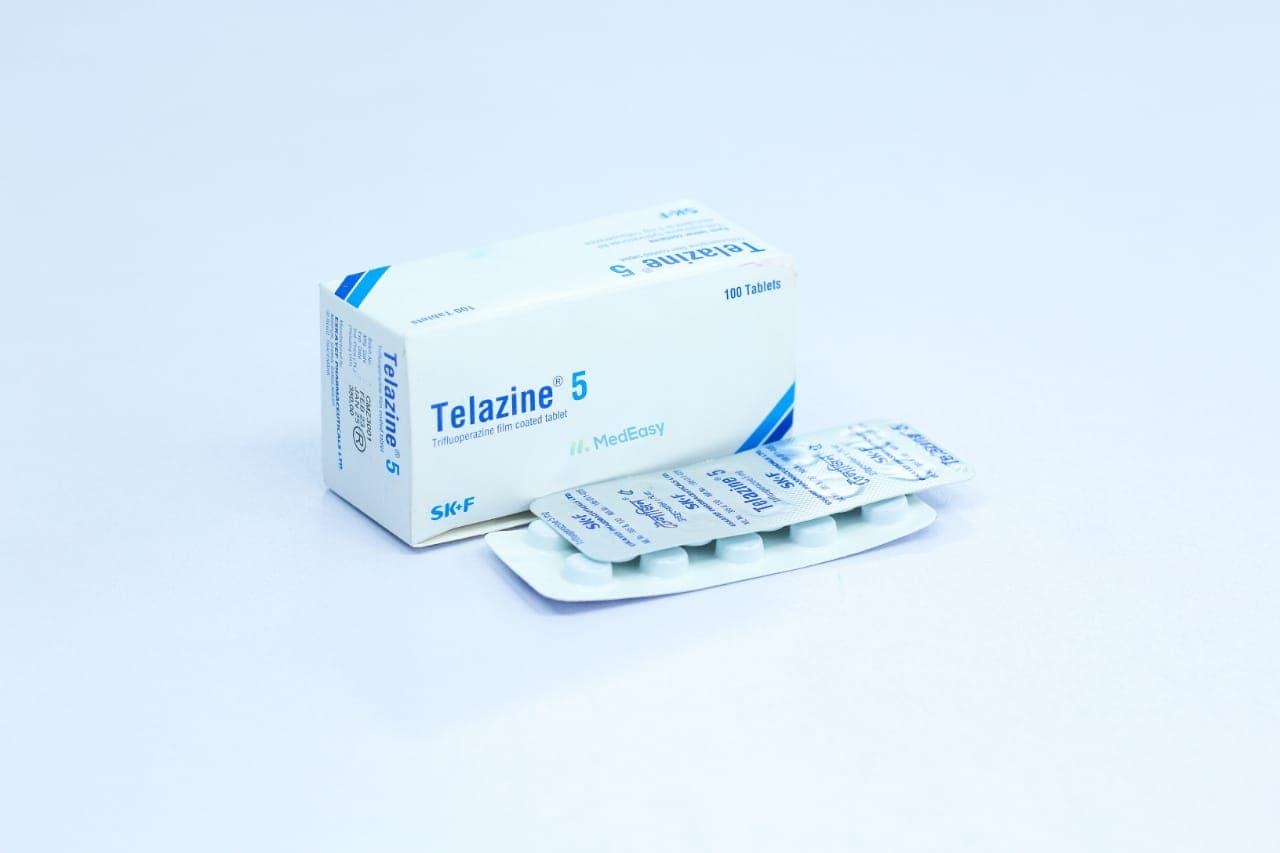

Telazine is a phenothiazine-class antipsychotic (typical/first-generation antipsychotic) with the following evidence-based uses:
Not approved: Telazine is not approved for treatment of dementia-related psychosis in elderly patients (see Precautions and Warnings for the boxed mortality warning).
Telazine is a piperazine-derivative phenothiazine and a typical (first-generation) antipsychotic agent. It has been used for decades in the management of psychotic disorders and, at lower doses, for short-term relief of severe anxiety and as an antiemetic. It is available in Bangladesh as oral tablets under several brand names.
Telazine belongs to the phenothiazine class of typical (first-generation) antipsychotics, specifically the piperazine subgroup, which also has antiemetic properties.
Trifluoperazine exerts its antipsychotic effect primarily by blocking postsynaptic dopamine D2 receptors in the mesolimbic and mesocortical pathways of the central nervous system, which reduces psychotic symptoms. Its antiemetic effect results from dopamine receptor blockade in the chemoreceptor trigger zone of the medulla.
Trifluoperazine also has weaker anticholinergic, antihistaminic, and alpha-adrenergic blocking activity compared to some other phenothiazines, contributing to its side-effect profile (e.g., orthostatic hypotension, sedation).
| Parameter | Dose |
|---|---|
| Starting dose | 2–5 mg twice daily |
| Usual optimal range | 15–20 mg per day |
| Maximum (severe cases) | Up to 40 mg per day in some patients, under close specialist supervision |
1–2 mg twice daily; maximum 6 mg per day, for a maximum of 12 weeks. Re-evaluate the need for continued treatment periodically.
Low doses (e.g., 1–2 mg once or twice daily) as needed, guided by response; see a physician for the appropriate regimen.
For psychotic disorders: initial dose of 1 mg once or twice daily, increased gradually as needed and tolerated; total daily dose usually does not exceed 15 mg. Not generally recommended for non-psychotic anxiety in children. See Use in Special Populations.
Start at a lower dose (often half the usual adult starting dose) with gradual titration; monitor closely for hypotension and extrapyramidal effects.
Telazine tablets should be swallowed whole with water, with or without food, at doses and intervals advised by the physician. Do not stop abruptly without medical advice.
Telazine is administered orally as tablets, generally in divided doses (twice daily), with or without food. Doses should be taken at the same times each day as directed by the physician, and treatment should not be stopped or changed without medical advice.
Telazine has the following clinically significant drug interactions:
Trifluoperazine is contraindicated in the following situations:
Common side effects of Telazine include:
Serious but less common effects (see Precautions and Warnings for details): neuroleptic malignant syndrome, tardive dyskinesia, blood dyscrasias (e.g., agranulocytosis), cardiac arrhythmias/QT prolongation, hepatic injury, and seizures.
Pregnancy: Telazine should be used during pregnancy only if the potential benefit justifies the potential risk to the fetus. Neonates exposed to antipsychotic drugs (including Telazine) during the third trimester are at risk of extrapyramidal and/or withdrawal symptoms after delivery, which may vary in severity and duration. A physician must be consulted before use in pregnancy.
Lactation: Telazine and other phenothiazines are excreted in breast milk. A decision should be made whether to discontinue nursing or discontinue the drug, considering the importance of the drug to the mother, in consultation with a physician.
Elderly patients with dementia-related psychosis treated with antipsychotic drugs, including Telazine, are at increased risk of death compared with placebo. Telazine is not approved for the treatment of dementia-related psychosis.
A rare but potentially fatal reaction, presenting as hyperthermia, muscle rigidity, altered mental status, and autonomic instability. Discontinue Telazine immediately if suspected and seek emergency care.
Prolonged use of Telazine may cause tardive dyskinesia (involuntary, repetitive movements), which may be irreversible. Risk increases with dose and duration of treatment; use the lowest effective dose for the shortest duration necessary.
Telazine may prolong the QT interval; use caution in patients with cardiac disease, electrolyte disturbances, or when combined with other QT-prolonging drugs.
Telazine can lower the seizure threshold; use with caution in patients with a history of seizures or EEG abnormalities.
Rare cases of agranulocytosis and other blood dyscrasias have been reported; monitor for signs of infection or unusual bleeding/bruising.
Use with caution in patients with hepatic impairment, cardiovascular disease, glaucoma, or urinary retention. May impair mental/physical abilities required for driving or operating machinery; avoid alcohol.
Overdose of Telazine may cause deep sedation, confusion, severe extrapyramidal symptoms, hypotension, cardiac arrhythmias (including QT prolongation), and, in severe cases, coma or seizures. There is no specific antidote. In case of suspected overdose, seek emergency medical attention or contact a poison control center immediately; treatment is supportive and symptomatic under medical supervision.
Store at room temperature (below 30°C), protected from light and moisture. Keep out of reach of children.
Telazine may be used in children aged 6 years and older for psychotic disorders under close medical supervision, starting at low doses with gradual titration (see Dosage and Administration). Safety and efficacy in children under 6 years have not been established, and use for non-psychotic anxiety in children is not generally recommended.
Elderly patients should receive lower initial doses of Telazine with slower titration, due to increased sensitivity to hypotension, sedation, and extrapyramidal effects. Telazine is not approved for dementia-related psychosis in the elderly due to increased mortality risk (see Precautions and Warnings).
Use with caution and reduced doses in patients with hepatic impairment; Telazine is contraindicated in severe pre-existing liver disease.
No well-established specific dose adjustment is available; use with caution and clinical monitoring.
Phenothiazine derivative; typical (first-generation) antipsychotic (piperazine subgroup).
Telazine may be used in children 6 years of age and older for psychotic disorders, starting at 1 mg once or twice daily and increasing gradually as needed, usually not exceeding 15 mg per day. Safety and efficacy have not been established in children under 6 years of age. Use for non-psychotic anxiety in children is not generally recommended. Close monitoring for extrapyramidal symptoms and sedation is advised.
Q: What is Telazine 5 mg Tablet used for?
A: Telazine 5 mg Tablet is mainly used to treat schizophrenia and other psychotic disorders. It is also used for short-term relief of severe anxiety (up to 12 weeks) and, at low doses, for nausea and vomiting.
Q: Can I stop taking Telazine 5 mg Tablet suddenly?
A: No. Telazine 5 mg Tablet should not be stopped suddenly without consulting your physician, as this may cause withdrawal or rebound symptoms. Your doctor will advise on how to adjust or stop the dose safely.
Q: Is Telazine 5 mg Tablet safe during pregnancy?
A: Telazine 5 mg Tablet should be used during pregnancy only if clearly needed and the potential benefit justifies the potential risk to the baby, since babies exposed in the third trimester may develop movement or withdrawal symptoms after birth. Always consult a physician before use in pregnancy.
Q: Can Telazine 5 mg Tablet be used while breastfeeding?
A: Telazine 5 mg Tablet passes into breast milk. Whether to continue breastfeeding or continue the medicine should be decided with a physician, weighing the importance of the drug to the mother against potential risk to the infant.
Q: What are the serious side effects of Telazine 5 mg Tablet to watch for?
A: Seek urgent medical care if you notice high fever, severe muscle stiffness, confusion, irregular heartbeat (possible neuroleptic malignant syndrome), or unusual, uncontrollable movements of the face or body (possible tardive dyskinesia) while taking Telazine 5 mg Tablet.
Q: Is Telazine 5 mg Tablet safe for elderly patients with dementia?
A: No. Telazine 5 mg Tablet carries a boxed warning that elderly patients with dementia-related psychosis treated with antipsychotic drugs have an increased risk of death, and it is not approved for this use.
Disclaimer
The information provided is accurate to the best of our knowledge, but it does not replace professional medical advice. We cannot guarantee its completeness or accuracy, and the absence of specific information about a drug should not be taken as an endorsement. We are not responsible for any consequences arising from this information, so please consult a healthcare professional for any concerns or questions.