
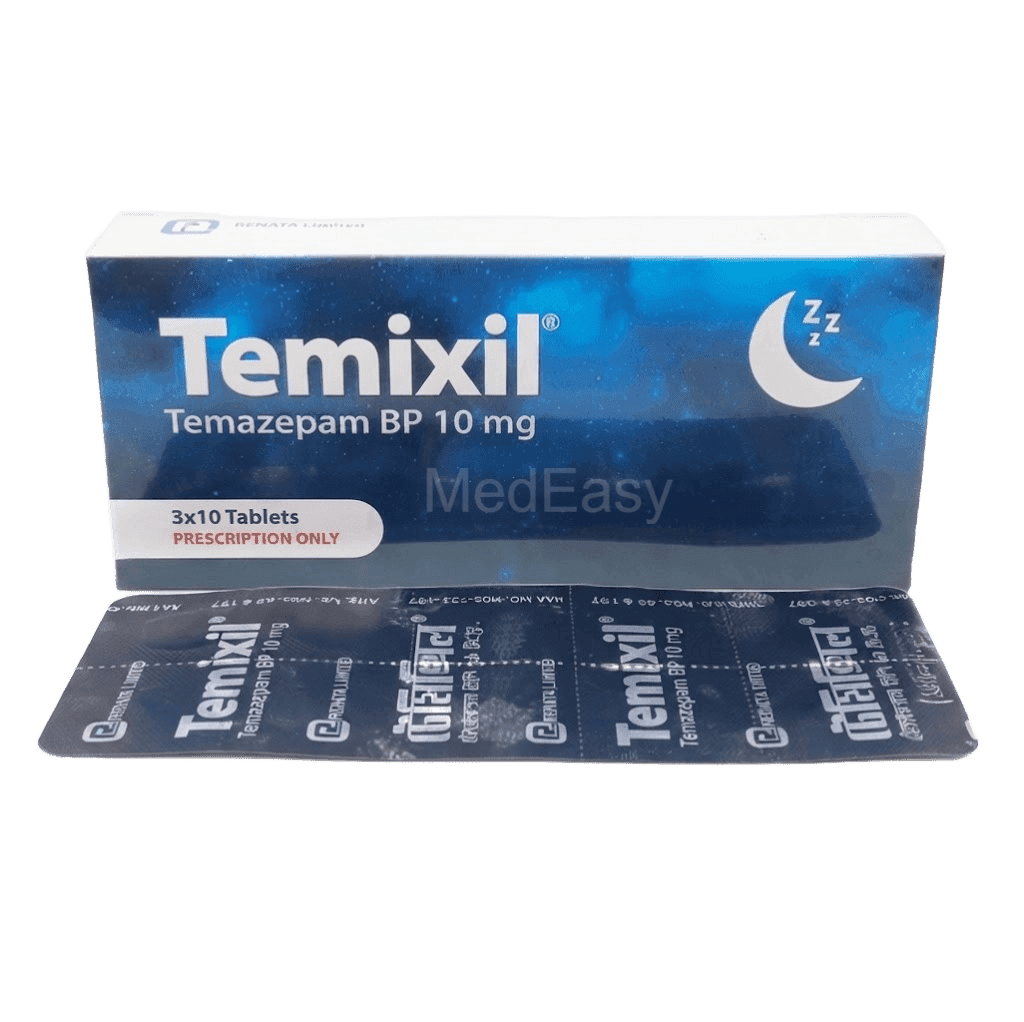

Medicine overview
Indications of Temixil
Temixil is a benzodiazepine sedative-hypnotic indicated for the following use:
- Short-term treatment of insomnia (established/FDA-approved use): indicated for patients with difficulty falling asleep and/or frequent nocturnal or early-morning awakenings. Controlled trials supporting efficacy were generally limited to 2-3 weeks; treatment with Temixil is typically limited to 7-10 days per standard labeling guidance, with re-evaluation if continued use is being considered.
Temixil is not indicated for long-term (weeks to months) management of chronic insomnia, and it is not an appropriate treatment for anxiety disorders, depression, or psychiatric-illness-associated sleep disturbance.
Composition
Each capsule of Temazepam contains Temazepam USP/BP as the active pharmaceutical ingredient, together with pharmaceutically inert excipients (fillers, capsule shell components, and coloring agents) that may vary by manufacturer. Temazepam is typically available as oral capsules in 7.5 mg, 15 mg, and 30 mg strengths.
Description
Temixil is an intermediate-acting benzodiazepine derivative used as a sedative-hypnotic for the short-term management of insomnia. It belongs to the benzodiazepine class of central nervous system depressants and is classified as a controlled substance in most jurisdictions because of its potential for abuse and dependence. Temixil is administered orally, usually taken shortly before bedtime, with an onset of action within approximately 30-60 minutes.
Therapeutic Class
Temixil belongs to the therapeutic class of benzodiazepine sedative-hypnotics, used specifically for the short-term treatment of insomnia.
Pharmacology
Temazepam is a benzodiazepine that exerts its sedative-hypnotic effect by enhancing the activity of gamma-aminobutyric acid (GABA), the principal inhibitory neurotransmitter in the central nervous system. Temazepam binds to a specific benzodiazepine receptor site on the GABA-A receptor complex, increasing the frequency of chloride channel opening in response to GABA. This produces neuronal hyperpolarization and reduced neuronal excitability, resulting in sedative, hypnotic, anxiolytic, muscle-relaxant, and anticonvulsant effects.
After oral administration, Temazepam is well absorbed, with peak plasma concentrations reached in approximately 1.2-1.6 hours. It is highly protein-bound (about 96%) and is metabolized in the liver primarily via glucuronide conjugation to inactive metabolites, which are renally excreted. The elimination half-life is approximately 8-15 hours, consistent with an intermediate-acting benzodiazepine with comparatively lower potential for next-day residual sedation than longer-acting agents.
Dosage & Administration of Temixil
Dosing of Temixil should be individualized to the lowest effective dose for the shortest possible duration.
| Population/Indication | Recommended Dose |
|---|---|
| Adults - Insomnia | 15 mg orally once daily at bedtime; range 7.5-30 mg depending on severity and response. Some patients may respond adequately to 7.5 mg. |
| Elderly or debilitated patients | Initiate at 7.5 mg at bedtime to minimize oversedation, ataxia, and fall risk; increase cautiously only if needed and tolerated. |
| Hepatic impairment | Use with caution at reduced doses in mild-to-moderate impairment; contraindicated in severe hepatic impairment (see Contraindications). |
| Renal impairment | No formal dose adjustment established; use cautiously. |
| Pediatric patients | Safety and efficacy not established (see Use in Special Populations). |
Treatment courses of Temixil are generally limited to 7-10 days; use beyond 2-3 weeks requires re-evaluation of the patient.
Administration of Temixil
Temixil should be taken orally, immediately before going to bed, only when the patient is able to devote a full 7-8 hours of sleep to the effects of the medication before needing to be active again. The capsule should be swallowed whole with water and can be taken with or without food, though taking it with or immediately after a meal may delay onset of action.
Interaction of Temixil
Temixil has clinically significant interactions with the following:
- Opioids: concomitant use of Temixil with opioid analgesics increases the risk of profound sedation, respiratory depression, coma, and death due to additive CNS and respiratory depressant effects. Reserve concomitant prescribing for cases where alternative options are inadequate, using the lowest effective doses.
- Other CNS depressants (e.g. other benzodiazepines, sedative-hypnotics, muscle relaxants, sedating antihistamines, certain antidepressants): additive CNS depression, sedation, and impaired psychomotor performance.
- Alcohol: markedly potentiates the sedative effects of Temixil and impairs cognitive/motor function; concurrent use should be avoided.
Because Temixil is metabolized mainly by glucuronide conjugation (a Phase II pathway) rather than CYP450 oxidation, it is less prone to clinically significant metabolic drug interactions than many other benzodiazepines, but caution with other CNS-active agents remains warranted.
Contraindications
Temazepam is contraindicated in the following situations:
- Known hypersensitivity to Temazepam or to other benzodiazepines.
- Severe respiratory insufficiency.
- Sleep apnea syndrome.
- Severe hepatic impairment/insufficiency.
- Myasthenia gravis.
Use of Temazepam in pregnancy, particularly during the first trimester and near term, is contraindicated except in situations of clear medical necessity (see Pregnancy and Lactation).
Side Effects of Temixil
The most common adverse effects of Temixil include:
- Drowsiness, somnolence, and daytime sedation
- Dizziness and lightheadedness
- Headache
- Fatigue/lethargy
- Nausea
- Ataxia and impaired coordination
- Confusion, particularly in elderly patients
Less common but serious effects include complex sleep-related behaviors (e.g. sleep-driving or preparing and eating food while not fully awake, with no memory of the event), paradoxical reactions (agitation, aggression, hallucinations, particularly in elderly or pediatric patients), anterograde amnesia, and physical dependence/withdrawal symptoms with abrupt discontinuation after prolonged use. See Precautions and Warnings for details on abuse/dependence and respiratory depression risks.
Pregnancy & Lactation
Pregnancy: Temixil should generally be avoided during pregnancy, particularly in the first trimester and near term, due to the risk of congenital malformations and, when used near term, neonatal sedation ("floppy infant syndrome") and neonatal withdrawal symptoms. Temixil should be used in pregnancy only if clearly needed and if the potential benefit justifies the potential risk to the fetus; consult a physician before use.
Lactation: Temixil and its metabolites are excreted in breast milk. Breastfeeding is generally not recommended during treatment with Temixil due to potential sedation, poor feeding, and weight loss in the nursing infant. A physician should be consulted to weigh risks and benefits before use while breastfeeding.
Precautions & Warnings
Temixil carries the following important warnings and precautions:
- Abuse, misuse, and addiction: Temixil, like other benzodiazepines, carries a risk of abuse, misuse, and addiction, which can lead to overdose or death. Use the lowest effective dose for the shortest duration and assess risk before prescribing, especially in patients with a history of substance use disorder.
- Concomitant use with opioids: combined use with opioids may result in profound sedation, respiratory depression, coma, and death (see Interactions).
- Dependence and withdrawal: continued use of Temixil can lead to physical dependence. Abrupt discontinuation after prolonged use may precipitate withdrawal symptoms (anxiety, rebound insomnia, tremor, and rarely seizures); the dose should be tapered gradually under medical supervision.
- CNS depression: Temixil causes drowsiness and impaired alertness and coordination. Patients should avoid driving, operating heavy machinery, or performing hazardous tasks requiring full mental alertness until they know how they respond to the drug, and should avoid alcohol.
- Complex sleep behaviors: rare reports of sleep-driving, cooking, or other activities performed while not fully awake, with amnesia for the event, have occurred; discontinue Temixil immediately if this occurs.
- Paradoxical reactions: agitation, aggression, and hallucinations may occur, particularly in elderly and pediatric patients.
- Fall risk: increased risk of falls and related injury, particularly in elderly patients.
- Respiratory disease: use with caution in patients with compromised respiratory function (e.g. COPD).
Overdose Effects of Temixil
Overdose of Temixil may present with somnolence, confusion, impaired coordination, diminished reflexes, and, in severe cases, respiratory depression, coma, and death, particularly when combined with alcohol or other CNS depressants. If overdose of Temixil is suspected, seek immediate medical attention or contact emergency services or a poison control center right away. Do not attempt home treatment. Management is generally supportive; a specific benzodiazepine antagonist may be used by medical professionals in a monitored setting where appropriate.
Storage Conditions
Store Temixil at room temperature (below 30°C), away from light and moisture. Keep out of reach of children. Store securely given its potential for misuse.
Use In Special Populations
Elderly: use Temixil at a reduced dose (7.5 mg) due to increased sensitivity to sedative effects and higher risk of falls, ataxia, and confusion.
Pediatric: safety and efficacy of Temixil have not been established in patients under 18 years of age; not recommended for use in children.
Hepatic impairment: use with caution and reduced dosing in mild-to-moderate impairment; contraindicated in severe hepatic impairment.
Renal impairment: no formal dosage-adjustment guidelines are established for Temixil; use cautiously.
Patients with respiratory disease or sleep apnea: avoid Temixil due to the risk of worsening respiratory depression (see Contraindications).
Duration Of Treatment
Treatment with Temixil should generally be limited to 7-10 days. Use for longer than 2-3 weeks requires re-evaluation of the patient's condition, as the effectiveness of most hypnotics for insomnia typically diminishes with continued use, and long-term use increases the risk of dependence.
Drug Classes
Temazepam belongs to the benzodiazepine class of drugs, specifically the sedative-hypnotic subclass, and is a controlled substance (Schedule IV in most regulatory frameworks).
Mode Of Action
Temazepam acts by binding to benzodiazepine receptor sites on the GABA-A receptor complex in the central nervous system, potentiating the inhibitory effects of GABA. This enhances chloride ion influx into neurons, leading to hyperpolarization and decreased neuronal excitability, producing sedative-hypnotic, anxiolytic, and muscle-relaxant effects.
Pregnancy
X (FDA legacy pregnancy category)
Pediatric Uses
The safety and efficacy of Temixil have not been established in pediatric patients, and Temixil is not recommended for use in patients under 18 years of age. If sedative-hypnotic therapy is required in a pediatric patient, alternative agents with established pediatric safety data and non-pharmacologic approaches to insomnia should be considered first, under specialist guidance.
Frequently Asked Questions
Q: What is Temixil 10 mg Tablet used for?
A: Temixil 10 mg Tablet is used for the short-term treatment of insomnia in adults who have difficulty falling asleep or staying asleep. Treatment is usually limited to 7-10 days.
Q: How should I take Temixil 10 mg Tablet?
A: Temixil 10 mg Tablet should be taken orally right before bedtime, only when you can devote a full 7-8 hours to sleep. Swallow the capsule whole with water.
Q: Can I drink alcohol while taking Temixil 10 mg Tablet?
A: No. Alcohol should be avoided while taking Temixil 10 mg Tablet because combining them can cause dangerous additive sedation, impaired coordination, and respiratory depression.
Q: Is Temixil 10 mg Tablet safe during pregnancy?
A: Temixil 10 mg Tablet should generally be avoided during pregnancy, especially in the first trimester and near delivery, due to risks of birth defects, neonatal sedation, and withdrawal in the newborn. It should only be used if a physician determines it is clearly necessary and the benefits outweigh the risks.
Q: Can Temixil 10 mg Tablet be habit-forming?
A: Yes. Temixil 10 mg Tablet is a controlled substance with a risk of abuse, physical dependence, and addiction, especially with prolonged use. It should be used at the lowest effective dose for the shortest possible time and should not be stopped abruptly after prolonged use without medical guidance, due to the risk of withdrawal symptoms.
Q: What should I do if I miss a dose or suspect an overdose of Temixil 10 mg Tablet?
A: Since Temixil 10 mg Tablet is taken only at bedtime as needed, simply skip a missed dose. If you suspect an overdose, marked by extreme drowsiness, confusion, or breathing difficulty, seek immediate emergency medical attention or contact a poison control center right away.
Disclaimer
The information provided is accurate to the best of our knowledge, but it does not replace professional medical advice. We cannot guarantee its completeness or accuracy, and the absence of specific information about a drug should not be taken as an endorsement. We are not responsible for any consequences arising from this information, so please consult a healthcare professional for any concerns or questions.
