8% Off
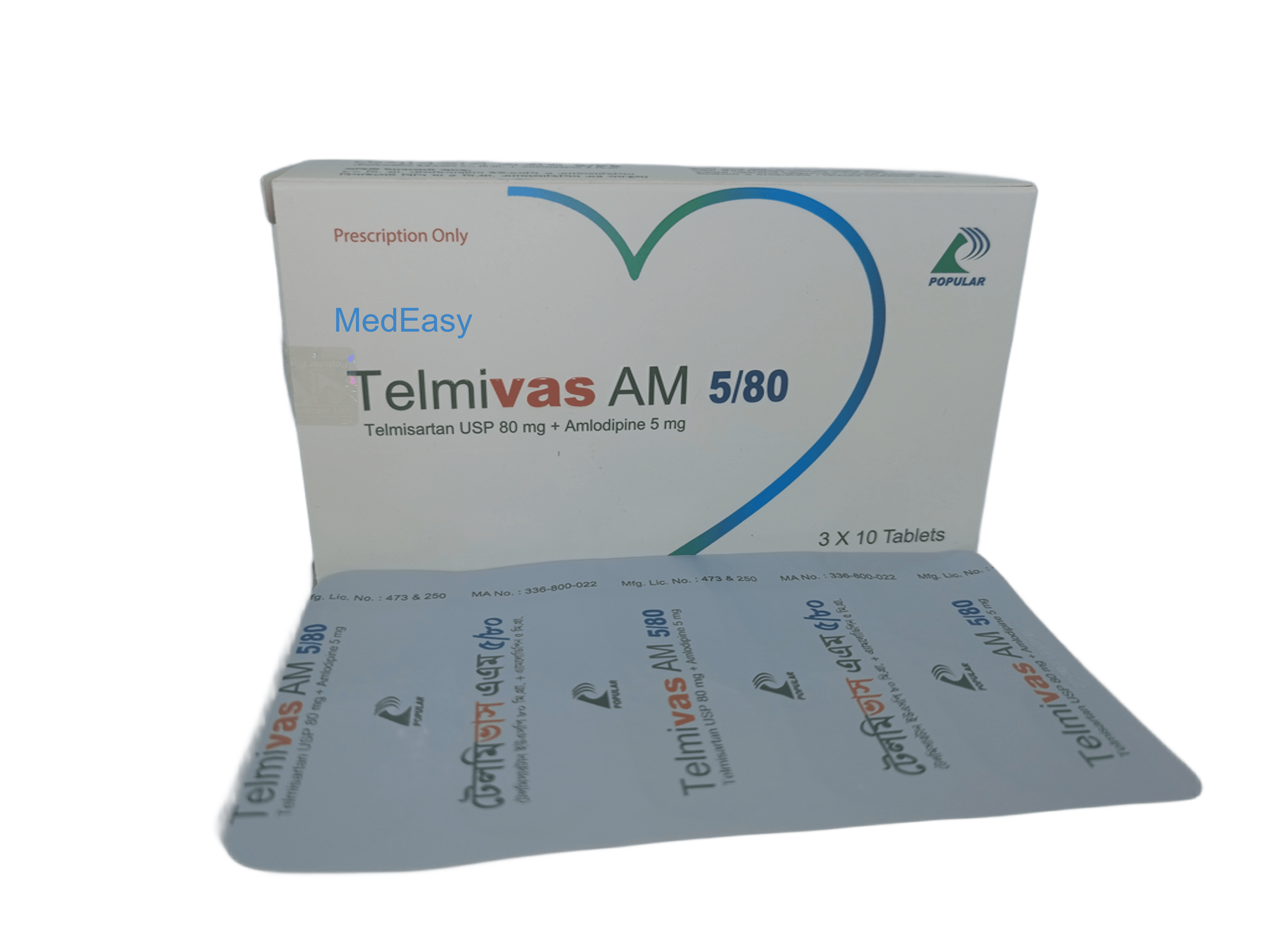
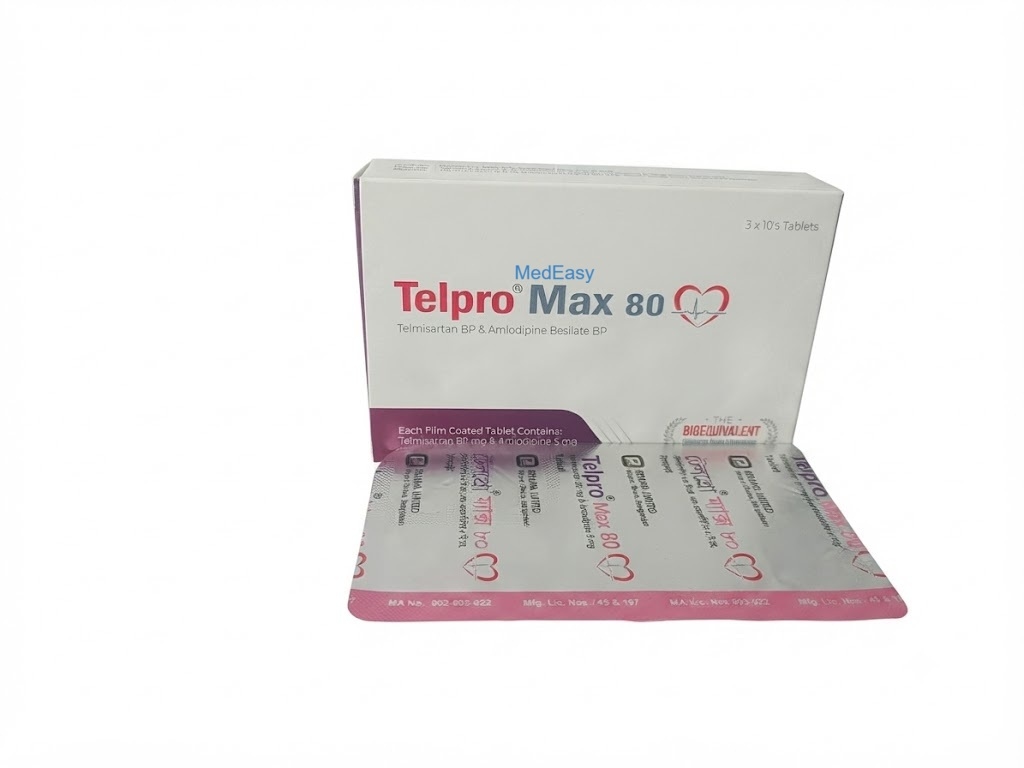
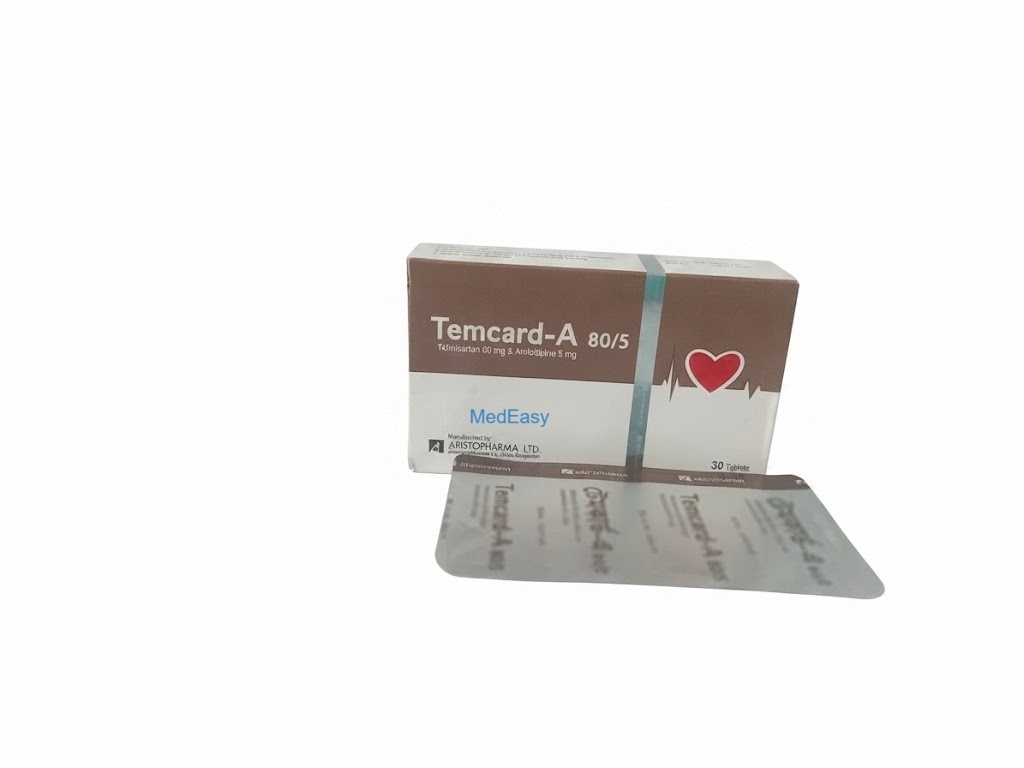
Temcard-A5 mg+80 mg
Aristopharma Ltd.
৳170.20
Add to cart

Tems A 5 mg+80 mg Tablet is available on MedEasy for ৳180.00 per 10's Strip, with home delivery anywhere in Bangladesh. It is manufactured by Eskayef Bangladesh Ltd. Its generic name is Amlodipine Besilate + Telmisartan.

Tems A is a fixed-dose combination of a dihydropyridine calcium channel blocker (amlodipine) and an angiotensin II receptor blocker (telmisartan), indicated for:
Tems A is not indicated as initial therapy in patients 75 years of age or older, or in patients with hepatic impairment; in these groups, the individual components should be titrated separately first.
Each tablet of Amlodipine Besilate + Telmisartan contains two active ingredients:
Common fixed-dose strength combinations include 40/5 mg, 40/10 mg, 80/5 mg, and 80/10 mg (telmisartan/amlodipine). Available strengths may vary by market and manufacturer.
Tems A is an oral fixed-dose combination antihypertensive tablet that pairs two complementary mechanisms of blood pressure lowering in a single dosage form. It combines amlodipine besilate, a long-acting dihydropyridine calcium channel blocker, with telmisartan, a selective angiotensin II receptor (AT1) blocker.
This combination is used for the management of hypertension, allowing many patients to achieve blood pressure control with a single tablet instead of two separate medications, which can improve adherence.
Tems A belongs to the therapeutic class of antihypertensive combination agents, specifically a fixed-dose combination of a calcium channel blocker (CCB) and an angiotensin II receptor blocker (ARB).
Amlodipine Besilate + Telmisartan lowers blood pressure through two distinct and complementary mechanisms:
Together, the two components produce an additive antihypertensive effect. Peak plasma concentrations of telmisartan occur within 0.5–1 hour, while amlodipine peaks at 6–12 hours; telmisartan has an elimination half-life of about 24 hours and amlodipine 30–50 hours, supporting once-daily dosing. Telmisartan is eliminated mainly by biliary excretion of unchanged drug; amlodipine undergoes extensive hepatic metabolism to inactive metabolites.
| Clinical Scenario | Recommended Dose |
|---|---|
| Usual starting dose | 40 mg telmisartan/5 mg amlodipine once daily |
| Patients needing greater blood pressure reduction | 80 mg telmisartan/5 mg amlodipine once daily |
| Dose titration (after ≥2 weeks if BP not controlled) | May increase up to a maximum of 80 mg/10 mg once daily |
| Maximum dose | 80 mg telmisartan/10 mg amlodipine once daily |
Tems A may be taken with or without food, at approximately the same time each day. Swallow the tablet whole; do not remove it from the blister pack until immediately before use.
Most of the antihypertensive effect is seen within 2 weeks, with the maximal effect generally achieved by about 4 weeks of therapy.
Tems A is administered orally, once daily, with or without food, swallowed whole with water at approximately the same time each day for consistent blood pressure control.
Tems A has the following clinically significant drug interactions:
Always inform your physician or pharmacist of all medications, supplements, and herbal products you are taking before starting Tems A.
Amlodipine Besilate + Telmisartan is contraindicated in:
Most patients tolerate Tems A well. Reported adverse effects include:
Report any persistent, severe, or unusual side effect to your physician.
Tems A is contraindicated in pregnancy. Drugs that act directly on the renin-angiotensin system, such as the telmisartan component, can cause injury and death to the developing fetus when used during the second and third trimesters, including oligohydramnios, fetal lung hypoplasia, skeletal deformations, and renal failure. When pregnancy is detected, Tems A should be discontinued as soon as possible, and the patient should be switched to an alternative antihypertensive under physician guidance. Any patient of childbearing potential should discuss reliable contraception and pregnancy planning with her physician before starting this medicine.
It is not known whether telmisartan or amlodipine pass into human breast milk in clinically significant amounts. Because of the potential for adverse effects in a nursing infant, a decision should be made, in consultation with a physician, whether to discontinue breastfeeding or discontinue Tems A, taking into account the importance of the drug to the mother.
The following precautions should be observed with Tems A:
Overdose of Tems A may cause marked hypotension, dizziness, and reflex or vagally-mediated tachycardia or bradycardia due to the combined vasodilatory effects of both components.
If an overdose is suspected, seek immediate medical attention or contact emergency services/a poison control center right away. Treatment is supportive and should be managed by medical professionals with active cardiovascular monitoring, frequent blood pressure checks, and supportive measures as needed; do not attempt to manage a suspected overdose at home. Neither component is effectively removed by hemodialysis due to high protein binding and large volume of distribution.
Store at room temperature (below 30°C), away from light and moisture. Keep out of reach of children. Do not remove tablets from the blister pack until immediately before use.
Safety and efficacy of Tems A in pediatric patients have not been established. It is not recommended for use in children.
No overall differences in effectiveness were observed between elderly and younger patients. However, amlodipine clearance is reduced in patients 75 years and older, requiring a lower starting dose; Tems A is not recommended as initial therapy in this age group.
No dosage adjustment is generally required in mild-to-moderate renal impairment. In severe renal impairment, titrate slowly and monitor renal function and serum potassium closely.
Not recommended as initial therapy; if used, initiate at a low amlodipine dose and titrate slowly (see Precautions).
Tems A is typically used long-term for chronic management of hypertension. Treatment duration is determined by the prescribing physician based on blood pressure control, cardiovascular risk, and tolerability, with regular follow-up visits to monitor blood pressure, renal function, and serum electrolytes. Do not stop taking this medicine abruptly without consulting your physician.
Antihypertensive combination; Calcium channel blocker (dihydropyridine) + Angiotensin II receptor blocker (ARB)
Amlodipine Besilate + Telmisartan combines two complementary antihypertensive mechanisms: telmisartan selectively blocks the AT1 angiotensin II receptor, preventing angiotensin II-induced vasoconstriction and aldosterone release, while amlodipine blocks L-type calcium channels in vascular smooth muscle, reducing peripheral vascular resistance through arterial vasodilation. The combined effect produces greater blood pressure reduction than either agent alone.
D
Tems A is not indicated for use in pediatric patients. Safety and efficacy in children have not been established. If a neonate has been exposed to this medicine in utero, monitor closely for hypotension, oliguria, and hyperkalemia; supportive care including exchange transfusion or dialysis may rarely be required.
Q: What is Tems A 5 mg+80 mg Tablet used for?
A: Tems A 5 mg+80 mg Tablet is used to treat high blood pressure (hypertension), either alone or together with other blood pressure medicines. It combines two medicines that work in different ways to relax and widen blood vessels, lowering blood pressure more effectively than either medicine alone.
Q: How should I take Tems A 5 mg+80 mg Tablet?
A: Take Tems A 5 mg+80 mg Tablet exactly as prescribed by your physician, usually once daily, with or without food, at the same time each day. Do not stop taking it or change your dose without consulting your doctor, even if you feel well, since high blood pressure often has no symptoms.
Q: Can I take Tems A 5 mg+80 mg Tablet during pregnancy?
A: No. Tems A 5 mg+80 mg Tablet is contraindicated in pregnancy. It can cause serious injury or death to the developing baby, especially if used during the second or third trimester. If you become pregnant while taking Tems A 5 mg+80 mg Tablet, stop the medicine and contact your physician immediately so you can be switched to a safer alternative.
Q: What are the most common side effects of Tems A 5 mg+80 mg Tablet?
A: The most common side effects are swelling of the ankles or legs (peripheral edema), dizziness, headache, back pain, and flushing. These are often mild, but you should tell your doctor if they are bothersome or persistent.
Q: Are there any foods or medicines I should avoid while taking Tems A 5 mg+80 mg Tablet?
A: Avoid potassium supplements or salt substitutes containing potassium unless directed by your physician, as Tems A 5 mg+80 mg Tablet can raise blood potassium levels. Also tell your doctor about all medicines you take, especially other blood pressure medicines (particularly ACE inhibitors or aliskiren), NSAIDs/painkillers, lithium, digoxin, or simvastatin, since these can interact with Tems A 5 mg+80 mg Tablet.
Q: What should I do if I miss a dose or take too much Tems A 5 mg+80 mg Tablet?
A: If you miss a dose, take it as soon as you remember, but skip it if it is almost time for your next dose — do not double up. If you or someone else has taken too much Tems A 5 mg+80 mg Tablet and shows signs such as severe dizziness, fainting, or a very fast or slow heartbeat, seek immediate medical attention or contact emergency services/poison control right away.
Disclaimer
The information provided is accurate to the best of our knowledge, but it does not replace professional medical advice. We cannot guarantee its completeness or accuracy, and the absence of specific information about a drug should not be taken as an endorsement. We are not responsible for any consequences arising from this information, so please consult a healthcare professional for any concerns or questions.