10% Off
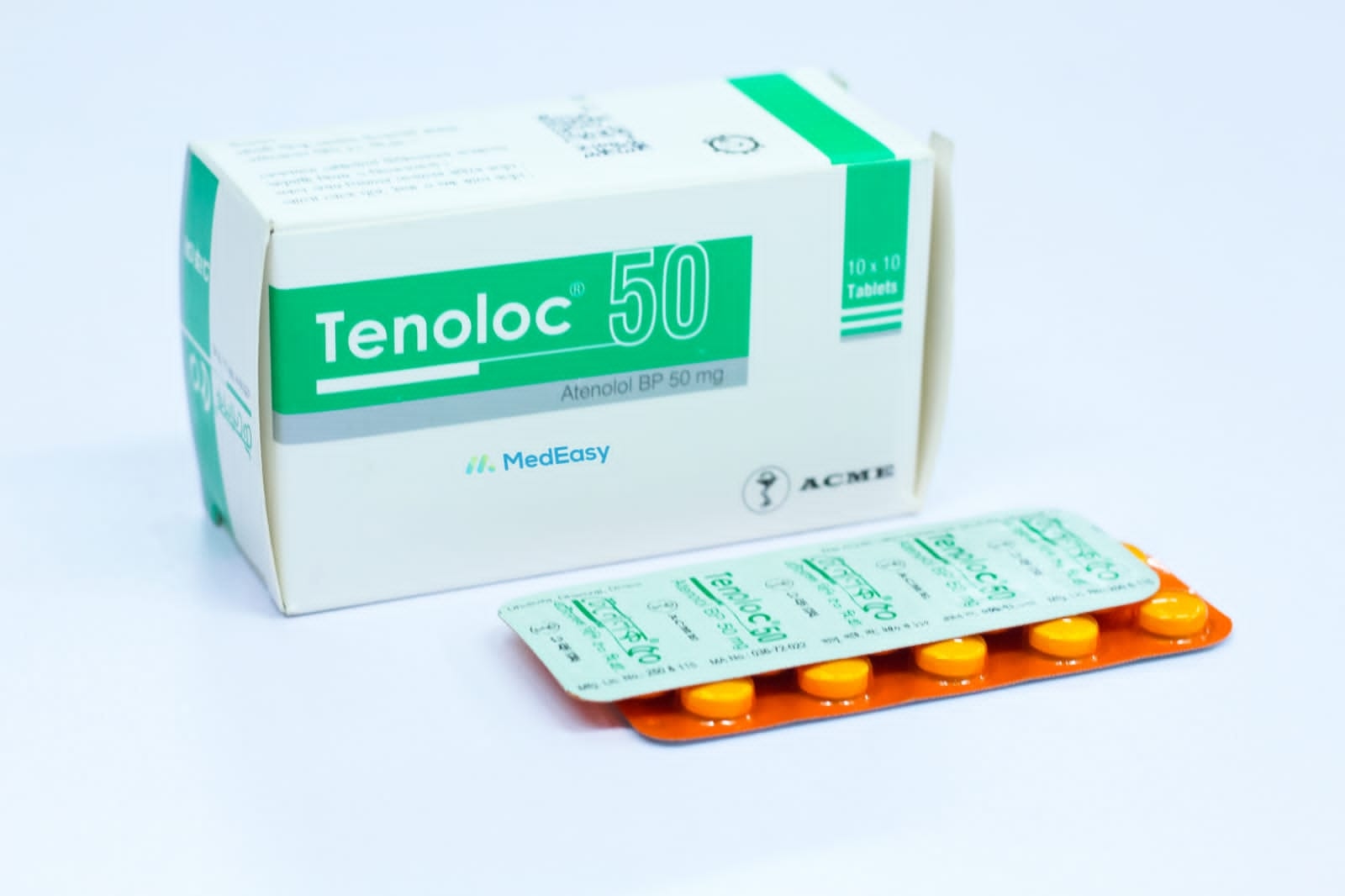
Tenoloc50 mg
ACME Laboratories Ltd.
৳6.93
Add to cart


Tenomin is indicated for the treatment of hypertension, to lower blood pressure, and may be used alone or in combination with other antihypertensive agents. Current cardiology guidance (the 2017 ACC/AHA hypertension guideline) no longer lists beta-blockers such as Tenomin as preferred first-line therapy for uncomplicated hypertension; ACE inhibitors, angiotensin receptor blockers, calcium-channel blockers, and thiazide diuretics are generally preferred first. Tenomin remains guideline-supported when a patient has a compelling reason for beta-blockade (for example, a prior heart attack or certain arrhythmias) or when blood pressure is not controlled on first-line agents, and is often used as add-on/combination therapy rather than routine monotherapy.
Tenomin is indicated for the long-term management of angina pectoris (an established indication), reducing the frequency of angina episodes by lowering heart rate and myocardial oxygen demand.
Tenomin is indicated in hemodynamically stable patients with definite or suspected acute myocardial infarction, to reduce cardiovascular mortality; this is an established use but is initiated and supervised in a hospital setting.
Tenomin is sometimes used off-label by clinicians for heart-rate control in certain arrhythmias, such as atrial fibrillation, based on its beta-blocking action; this is not an FDA-approved indication and requires individualized specialist assessment.
After oral dosing, approximately 50% of an Atenolol dose is absorbed from the gastrointestinal tract, with peak plasma concentrations reached 2 to 4 hours after ingestion; food does not significantly affect absorption of Atenolol. Atenolol is only lightly bound to plasma proteins (about 6% to 16%), undergoes little or no hepatic metabolism, and is eliminated primarily unchanged by the kidneys, with over 85% of an intravenous dose recovered in urine within 24 hours. The elimination half-life of oral Atenolol is approximately 6 to 7 hours in people with normal kidney function, but this is prolonged in renal impairment (roughly 16-27 hours when creatinine clearance is 15-35 mL/min/1.73m², and over 27 hours when creatinine clearance is below 15 mL/min/1.73m²), which is why the dose of Atenolol must be reduced in patients with significant renal impairment (see Dosage and Use in Special Populations).
The dose and duration of Tenomin are determined by a qualified healthcare professional based on the indication being treated, the patient's response, kidney function, and other individual factors; the regimen for Tenomin is not the same for every condition or every patient. The table below outlines typical indication-specific dosing of Tenomin for reference and does not replace a doctor's prescription.
Atenolol is contraindicated in patients with:
Bradycardia (slow heart rate), cold hands or feet, fatigue or tiredness, dizziness or lightheadedness, low blood pressure, and gastrointestinal symptoms such as nausea or diarrhea have been reported with Tenomin. Some patients report low mood or vivid dreams while taking Tenomin.
Seek prompt medical attention if any of the following occur while taking Tenomin: very slow or irregular heartbeat, fainting, severe dizziness, signs of worsening heart failure (increasing shortness of breath, swelling of the ankles/legs, sudden weight gain), wheezing or difficulty breathing (especially in people with asthma or COPD), or signs of an allergic reaction (rash, swelling of the face/throat, severe itching). Do not stop Tenomin abruptly to manage side effects — contact a doctor first (see Precautions and Warnings).
Tenomin can cause fetal harm. Use of Tenomin starting in the second trimester of pregnancy has been associated with infants born small for gestational age (fetal growth restriction); recent meta-analyses continue to examine this association. Tenomin should be used in pregnancy only if the potential benefit justifies the potential risk to the fetus, and only under close specialist (obstetric) supervision; a legacy A/B/C/D/X pregnancy letter category is not assigned here because current guidance favors individualized risk-benefit counseling over a single letter grade.
Tenomin passes into breast milk in relatively high amounts compared with plasma (reported milk-to-plasma ratios roughly 1.5 to 6.8), and clinically significant bradycardia has been reported in breastfed infants, including case reports of infant cyanosis, low body temperature, and slow heart rate that resolved after breastfeeding was stopped. Because of this, other beta-blockers with less milk transfer are generally preferred while nursing a newborn, a preterm infant, or when the mother is on a high dose of Tenomin. If Tenomin is used during breastfeeding, the infant should be monitored for lethargy, poor feeding, or a slow heart rate, and a doctor should be consulted promptly if these occur.
The most common effects of Tenomin overdose are an excessively slow heart rate (bradycardia) and low blood pressure (hypotension). Other reported effects include lethargy, wheezing or bronchospasm, and, in severe cases, breathing difficulty or signs of heart failure; survival has been reported even after acute Tenomin doses as high as 5 g. If an overdose of Tenomin is suspected, do not induce vomiting unless specifically directed to do so by a doctor or poison control service, and seek emergency medical attention or contact a poison control service immediately. Hospital treatment may include close monitoring, gastric decontamination if appropriate and timely, and supportive measures such as atropine for a very slow heart rate, medicines or a temporary pacemaker for heart block, intravenous fluids or medicines to support blood pressure, and treatment for bronchospasm; Tenomin can be removed from the blood by hemodialysis in severe cases.
Store Tenomin tablets according to the storage instructions on the product label, generally at room temperature, away from direct sunlight, heat, and moisture, and out of reach of children. Do not use Tenomin beyond its expiry date.
Safety and effectiveness of Tenomin have not been formally established in pediatric patients; see Pediatric Uses for details.
Dose selection for elderly patients taking Tenomin should be cautious, usually starting at the lower end of the dosing range, reflecting the greater likelihood of decreased kidney function and of other diseases or other medicines in this age group.
Because Tenomin is eliminated mainly by the kidneys, significant drug accumulation occurs as kidney function declines; dose reduction of Tenomin is required as outlined in the Dosage table, and renal function should be monitored regularly.
Tenomin undergoes little or no liver metabolism, so a specific dose adjustment of Tenomin for liver impairment is not established; however, caution and clinical monitoring are still advised, and dosing should be individualized by a healthcare professional.
People with diabetes taking Tenomin should monitor blood sugar closely, since Tenomin can mask early warning signs of hypoglycemia such as a fast heart rate (see Precautions and Warnings and Interaction).
For hypertension, Tenomin is typically used as a long-term, often lifelong, treatment to keep blood pressure controlled, with periodic review by a doctor. For angina, Tenomin is generally continued long-term to keep symptoms controlled. Following an acute myocardial infarction, Tenomin is usually continued for an extended period as directed by the treating physician, based on the patient's cardiac status. In all cases, the exact duration of Tenomin treatment should be determined and periodically reassessed by a healthcare professional, and Tenomin should never be stopped abruptly (see Precautions and Warnings).
Atenolol selectively blocks beta-1 adrenergic receptors, which are found mainly in heart muscle, reducing heart rate, the force of heart contraction, and cardiac output, and suppressing renin release from the kidneys; these combined effects of Atenolol lower blood pressure and reduce the heart's oxygen demand, which helps prevent angina. Atenolol's beta-1 selectivity is relative rather than absolute and diminishes at higher doses, at which point effects on beta-2 receptors (for example, in the airways) become more likely.
Safety and effectiveness of Tenomin in pediatric patients have not been formally established by regulatory review, and pediatric hypertension is not an approved indication for Tenomin. Despite this, some pediatric specialists use Tenomin off-label for childhood hypertension, with reported doses in the range of about 0.5 to 1 mg/kg once daily, up to a maximum of about 2 mg/kg per day (not exceeding 100 mg/day), individualized and supervised by a pediatric specialist. Tenomin should only be given to a child under the direct supervision of a pediatrician or pediatric cardiologist, with attention to kidney function, heart rate, and blood pressure monitoring.
Tenomin 50 mg Tablet is used to treat high blood pressure (hypertension), to manage angina pectoris (chest pain from reduced blood flow to the heart) long-term, and to reduce cardiovascular mortality in hemodynamically stable patients after a heart attack. Tenomin 50 mg Tablet is sometimes used off-label for heart-rate control in certain arrhythmias; see Indications for details.
Tenomin 50 mg Tablet is usually taken once daily (or twice daily for some uses) as a tablet swallowed whole with water, with or without food, at around the same time each day; see Administration for full guidance.
Yes, Tenomin 50 mg Tablet does not usually upset the stomach and can generally be taken with or without food, including with milk; try to be consistent about whether you take Tenomin 50 mg Tablet with or without food each day.
For hypertension, Tenomin 50 mg Tablet is usually started at 50 mg once daily and may be increased to 100 mg once daily if needed; the exact dose of Tenomin 50 mg Tablet is determined by a doctor and depends on individual factors including kidney function — see Dosage.
Tenomin 50 mg Tablet can interact with clonidine, verapamil or diltiazem, digoxin, NSAIDs, insulin or oral antidiabetic medicines, and other beta-blockers, among others; tell your doctor about all medicines you take before starting Tenomin 50 mg Tablet — see Interaction for details.
Tenomin 50 mg Tablet is not considered routinely safe in pregnancy; Tenomin 50 mg Tablet can cause fetal harm, and use from the second trimester onward has been linked to babies born small for gestational age. Tenomin 50 mg Tablet should be used in pregnancy only if a doctor determines the benefit outweighs the risk — see Pregnancy and Lactation.
Safety and effectiveness of Tenomin 50 mg Tablet have not been formally established in children; Tenomin 50 mg Tablet is only used in children off-label, under the direct supervision of a pediatric specialist — see Pediatric Uses.
Common side effects of Tenomin 50 mg Tablet include a slow heart rate, tiredness, cold hands or feet, dizziness, low blood pressure, and mild gastrointestinal upset; see Side Effects for the full list and warning signs that need urgent medical attention.
No. Tenomin 50 mg Tablet should never be stopped suddenly without medical advice, because abrupt discontinuation of Tenomin 50 mg Tablet has been linked to worsening angina, heart attack, and dangerous heart rhythm problems; a doctor will usually taper Tenomin 50 mg Tablet gradually — see Precautions and Warnings.
Disclaimer
The information provided is accurate to the best of our knowledge, but it does not replace professional medical advice. We cannot guarantee its completeness or accuracy, and the absence of specific information about a drug should not be taken as an endorsement. We are not responsible for any consequences arising from this information, so please consult a healthcare professional for any concerns or questions.