8% Off
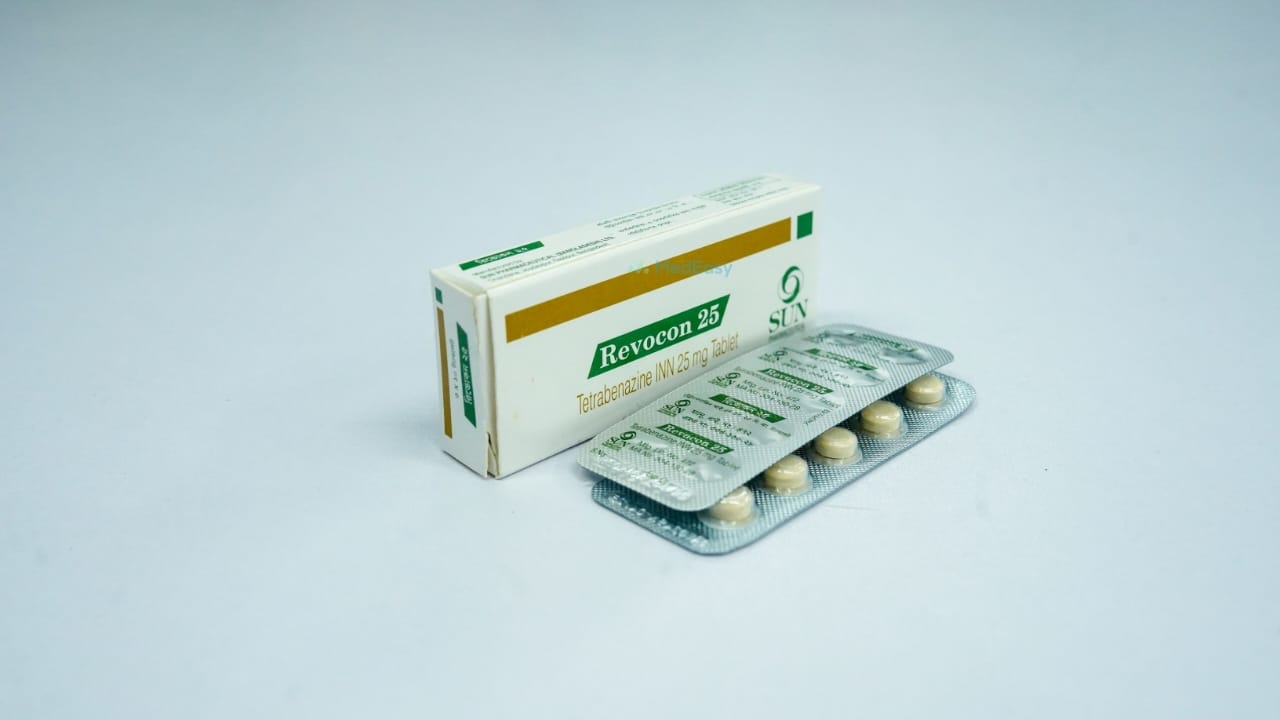
Revocon25 mg
Sun Pharmaceutical Ltd.
৳322.00
Add to cart

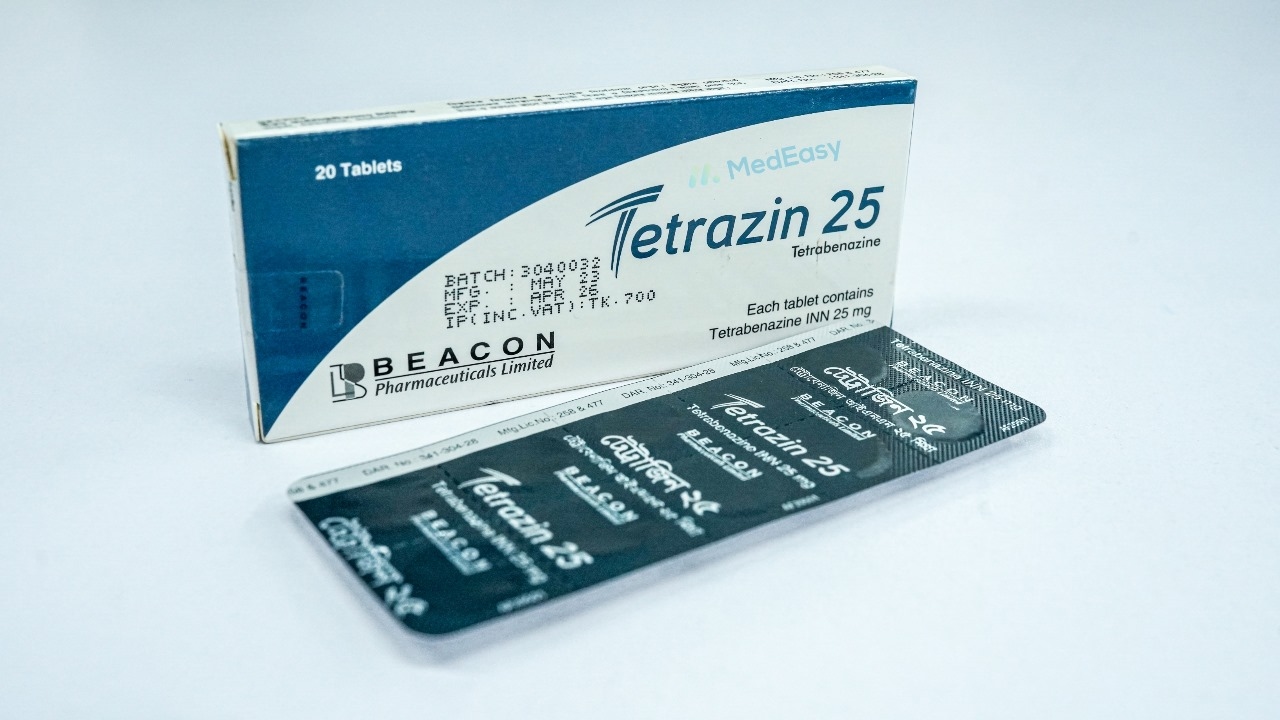
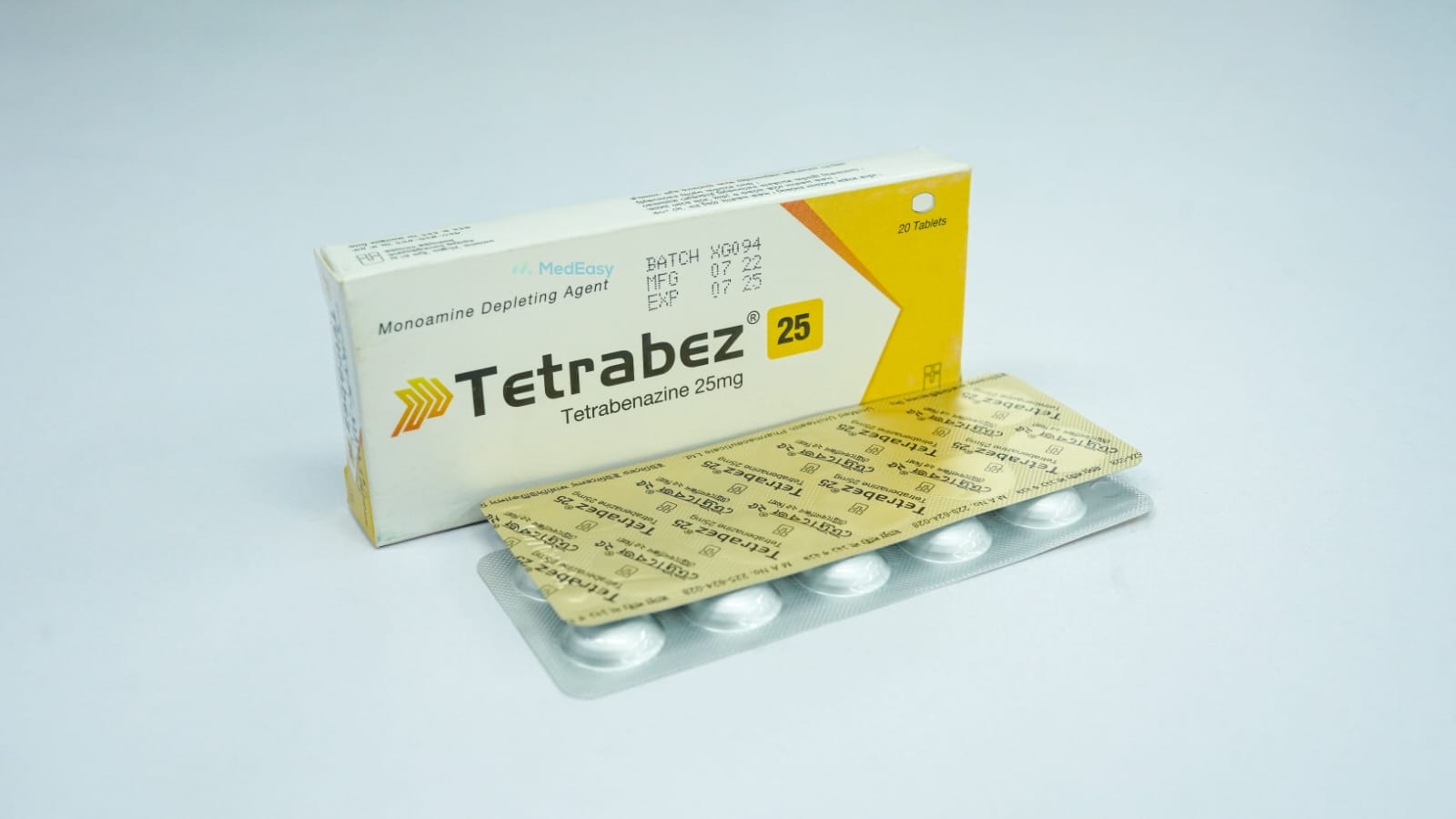
Ticstop 25 mg Tablet is available on MedEasy for ৳315.00 per 10's Strip, with home delivery anywhere in Bangladesh. It is manufactured by Square Pharmaceuticals PLC. Its generic name is Tetrabenazine.

Ticstop is a vesicular monoamine transporter 2 (VMAT2) inhibitor used to reduce abnormal involuntary movements caused by excess dopaminergic signalling.
Other movement disorders (e.g., tics in Tourette syndrome, hemiballismus, dystonia) have been treated with Ticstop off-label in limited case series; evidence is weaker and use should be individualized by a specialist.
Each film-coated tablet contains Tetrabenazine INN 25 mg. A 12.5 mg tablet strength is also available in some markets to allow gradual dose titration.
Ticstop is a synthetic benzoquinolizine derivative that acts as a reversible inhibitor of the vesicular monoamine transporter type 2 (VMAT2). By limiting the uptake of monoamines (dopamine, serotonin, norepinephrine) into presynaptic vesicles, Ticstop depletes their availability for release, thereby reducing hyperkinetic movements such as chorea. Ticstop is taken orally and is primarily used under specialist (neurology/psychiatry) supervision because of its need for careful dose titration and monitoring for depression and other neuropsychiatric effects.
Ticstop belongs to the VMAT2 (vesicular monoamine transporter type 2) inhibitor class, a group of benzoquinolizine derivatives used to reduce excess monoaminergic (dopaminergic) neurotransmission in hyperkinetic movement disorders.
Tetrabenazine and its active metabolites (alpha- and beta-dihydrotetrabenazine) reversibly bind to VMAT2, the transporter responsible for packaging dopamine, serotonin, norepinephrine, and histamine into presynaptic vesicles for release. By inhibiting VMAT2, Tetrabenazine reduces vesicular storage and subsequent synaptic release of these monoamines, and it also has weak dopamine D2 receptor-blocking activity at higher doses. This monoamine-depleting effect underlies its efficacy against chorea but also explains its liability for causing sedation, depression, and parkinsonism.
Pharmacokinetics: Tetrabenazine is extensively metabolized by carbonyl reductase to active dihydrotetrabenazine metabolites, which are further metabolized mainly via CYP2D6 (and to a lesser extent CYP3A4/5). CYP2D6 poor metabolizers achieve substantially higher (3- to 9-fold) plasma concentrations of the active metabolites, which is why dosing is capped lower in this group and in patients also taking strong CYP2D6 inhibitors. Elimination is predominantly renal, as inactive metabolites.
Ticstop dosing is individualized and requires slow upward titration to find the lowest dose that adequately controls chorea with acceptable tolerability. Treatment should be initiated and monitored by a physician experienced in managing Huntington's disease.
| Step | Regimen |
|---|---|
| Starting dose | 12.5 mg once daily |
| Week 2 | 25 mg/day, given as 12.5 mg twice daily |
| Subsequent titration | Increase by 12.5 mg/day at weekly intervals as needed and tolerated, given in 2–3 divided doses |
| Maximum dose — normal/extensive or intermediate CYP2D6 metabolizers | Up to 100 mg/day (single dose not to exceed 37.5 mg); doses above 50 mg/day require prior CYP2D6 genotype testing |
| Maximum dose — CYP2D6 poor metabolizers or patients on strong CYP2D6 inhibitors | 50 mg/day (single dose not to exceed 25 mg) |
If chorea worsens or intolerable side effects (notably sedation, depression, or parkinsonism — see Precautions and Side Effects) occur during titration, doses should be reduced or held. If Ticstop is interrupted for more than 5 days, re-titration from the starting dose is generally required.
When used off-label for tardive dyskinesia, similarly cautious, low-and-slow titration is used, individualized by the prescribing physician; there is no single standardized regimen for Ticstop in this indication.
Ticstop is contraindicated in hepatic impairment (see Contraindications). No dedicated dose adjustment has been established for renal impairment, but caution is advised since metabolites are renally eliminated.
Take Ticstop tablets by mouth, with or without food, at the same times each day as prescribed. When the total daily dose is split into two or three doses, space them evenly through the day as directed by the physician. Do not crush or chew unless instructed. Do not stop or change the dose of Ticstop abruptly without consulting the prescribing physician, as chorea can re-emerge within 12–18 hours of stopping.
Ticstop is involved in several clinically important drug interactions:
Tetrabenazine is contraindicated in:
Ticstop commonly causes dose-related adverse effects related to its monoamine-depleting mechanism:
| Frequency | Effects |
|---|---|
| Very common | Sedation/drowsiness, fatigue |
| Common | Depression (see Precautions and Warnings), insomnia, anxiety, akathisia (restlessness), parkinsonism (rigidity, slowed movement, tremor), nausea, dizziness |
| Less common but serious | Suicidal ideation/behavior, QT interval prolongation, orthostatic hypotension with risk of falls/syncope, hyperprolactinemia |
| Rare but serious | Neuroleptic malignant syndrome (NMS) — fever, muscle rigidity, altered mental status, autonomic instability; requires immediate discontinuation and emergency care |
Patients should report new or worsening mood changes, suicidal thoughts, unusual muscle stiffness, fainting, or palpitations to their physician promptly.
Pregnancy: Data on Ticstop use in human pregnancy are limited. Ticstop should be used during pregnancy only if clearly needed and if the potential benefit to the mother justifies the potential risk to the fetus; a physician must be consulted before use. Animal reproduction studies have shown inconsistent findings, including some evidence of developmental toxicity at certain doses, so caution is warranted.
Lactation: It is not known whether Ticstop or its metabolites pass into human breast milk. Because of the potential for adverse effects in a nursing infant, a decision should be made, in consultation with a physician, whether to discontinue breastfeeding or discontinue Ticstop, weighing the benefits of each.
Ticstop can cause or worsen depression and increase the risk of suicidal ideation and behavior. This risk is particularly significant because Huntington's disease itself carries an elevated baseline risk of depression and suicide. Patients, families, and caregivers should be counselled to watch for new or worsening depression, agitation, irritability, or suicidal thoughts, and to report these immediately. Ticstop should not be used in patients who are actively suicidal or who have untreated/inadequately treated depression (see Contraindications), and dose reduction or discontinuation should be considered if such symptoms emerge.
Ticstop can prolong the QT interval in a dose-related manner. Avoid use in patients with congenital long QT syndrome or a history of cardiac arrhythmias, and avoid co-administration with other QT-prolonging drugs (see Interactions). Consider baseline and follow-up ECG monitoring in at-risk patients.
Reported Ticstop overdoses (ranging from about 100 mg to 1 g) have caused acute dystonia, oculogyric crisis, nausea and vomiting, sweating, sedation, hypotension, tremor, and confusion. There is no specific antidote for Ticstop overdose. Anyone suspected of taking more than the prescribed dose of Ticstop should seek immediate medical attention or contact a poison control center/emergency services; management is supportive, with monitoring of vital signs, ECG, and mental status in a hospital setting.
Store at room temperature (below 30°C), protected from light and moisture. Keep out of reach of children.
Ticstop is typically used as chronic, long-term therapy for as long as chorea control is needed and the medication remains tolerated, with periodic reassessment of benefit versus risk by the treating physician. There is no fixed treatment duration; the dose is individualized and re-titrated whenever therapy is interrupted for more than about 5 days.
VMAT2 (vesicular monoamine transporter type 2) inhibitor; benzoquinolizine derivative
Tetrabenazine reversibly inhibits VMAT2, reducing the packaging and subsequent release of dopamine and other monoamines from presynaptic neurons, which reduces the excess dopaminergic activity that drives chorea (see Pharmacology for full mechanistic and pharmacokinetic detail).
C
Safety and efficacy of Ticstop in pediatric patients have not been established. Ticstop is not recommended for use in children or adolescents outside of specialist-directed, individualized clinical circumstances, given the lack of pediatric data and the risks (depression/suicidality, QT prolongation, parkinsonism) established in adults.
Q: What is Ticstop 25 mg Tablet used for?
A: Ticstop 25 mg Tablet is mainly used to treat chorea (involuntary, irregular movements) associated with Huntington's disease. It is also used off-label in some patients for tardive dyskinesia, a movement disorder caused by long-term antipsychotic medicine use, though newer agents are often preferred for that specific use.
Q: Can Ticstop 25 mg Tablet cause depression or suicidal thoughts?
A: Yes. Ticstop 25 mg Tablet carries a well-established boxed warning because it can cause or worsen depression and increase the risk of suicidal thoughts and behavior, particularly important since Huntington's disease itself increases suicide risk. Ticstop 25 mg Tablet must not be used in patients who are actively suicidal or have untreated depression, and anyone taking it should tell their doctor immediately about new or worsening mood changes or suicidal thoughts.
Q: Who should not take Ticstop 25 mg Tablet?
A: Ticstop 25 mg Tablet should not be used by people who are hypersensitive to it, have any degree of liver impairment, are actively suicidal or have untreated/inadequately treated depression, or who are taking (or have recently taken) monoamine oxidase inhibitors (MAOIs), reserpine, or another VMAT2 inhibitor such as deuTicstop 25 mg Tablet or valbenazine.
Q: How is the dose of Ticstop 25 mg Tablet adjusted?
A: Ticstop 25 mg Tablet is started at a low dose (12.5 mg once daily) and increased slowly, by 12.5 mg per week, under a physician's supervision, until chorea is adequately controlled with tolerable side effects. Patients requiring more than 50 mg/day may need CYP2D6 genetic testing, and the maximum dose is lower in people who are poor CYP2D6 metabolizers or who take strong CYP2D6-inhibiting medicines.
Q: Is Ticstop 25 mg Tablet safe during pregnancy or breastfeeding?
A: Ticstop 25 mg Tablet should be used in pregnancy only if clearly needed, since data in humans are limited and animal studies have shown some risk; a physician should always be consulted. It is not known whether Ticstop 25 mg Tablet passes into breast milk, so a decision about breastfeeding versus continuing Ticstop 25 mg Tablet should be made with a physician, weighing the benefits and risks.
Q: What should I do if I miss doses or stop Ticstop 25 mg Tablet suddenly?
A: Do not stop or skip doses of Ticstop 25 mg Tablet without medical advice, as chorea symptoms can return within 12–18 hours of stopping. If Ticstop 25 mg Tablet is missed for more than about 5 days, the dose usually needs to be re-titrated from the starting dose under physician guidance rather than resumed at the previous dose.
Disclaimer
The information provided is accurate to the best of our knowledge, but it does not replace professional medical advice. We cannot guarantee its completeness or accuracy, and the absence of specific information about a drug should not be taken as an endorsement. We are not responsible for any consequences arising from this information, so please consult a healthcare professional for any concerns or questions.