8% Off
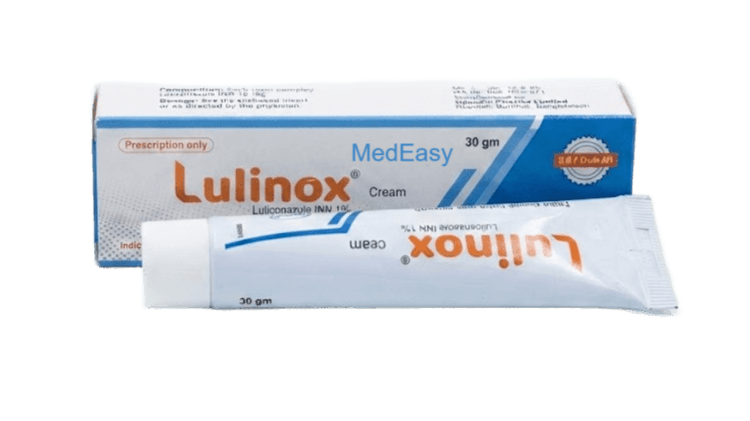
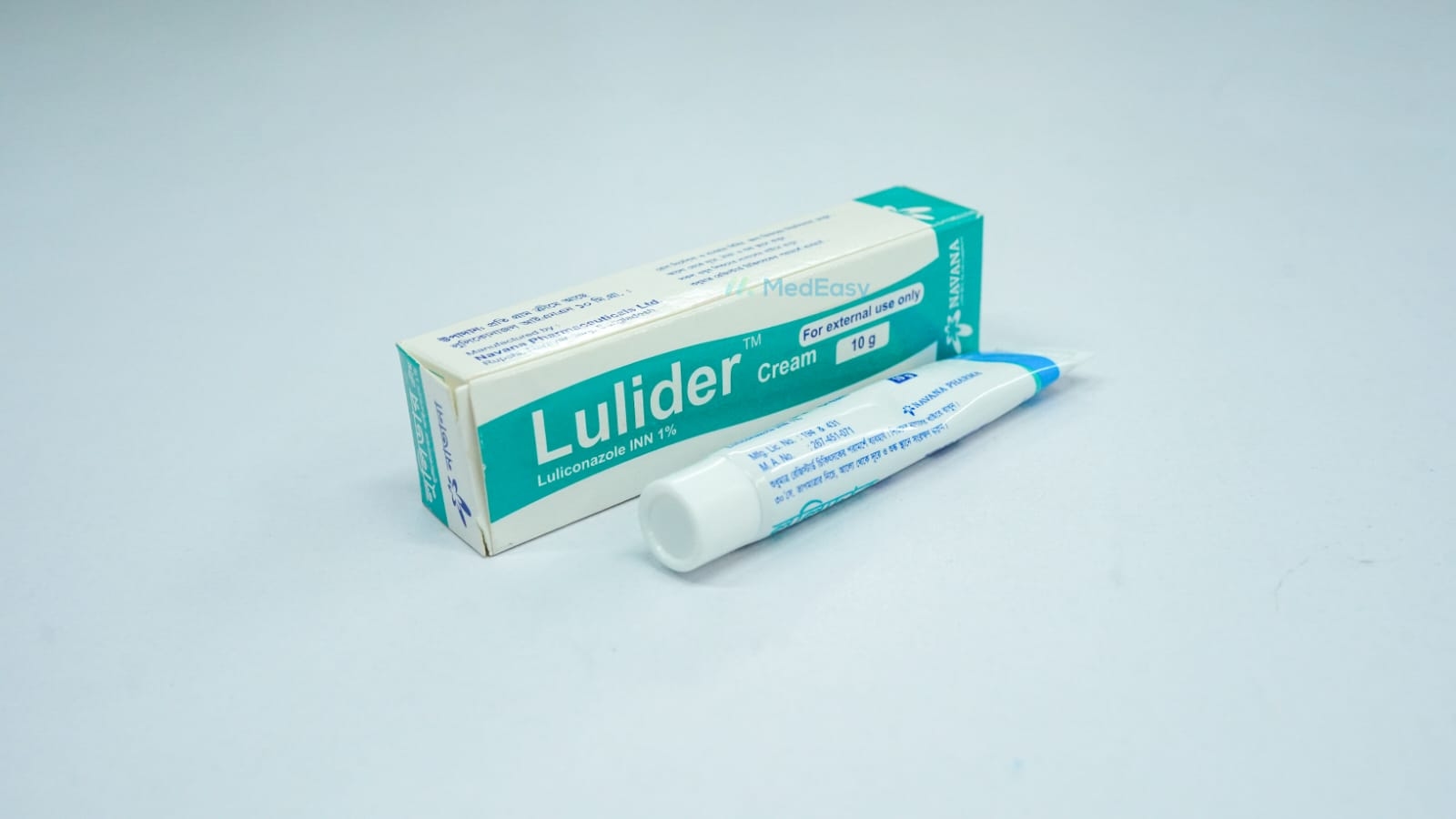
Lulider30 gm
Navana Pharmaceuticals Ltd.
৳257.60
Add to cart


Tinacure is a topical azole antifungal used to treat fungal infections of the skin (dermatophyte infections, commonly known as ringworm/tinea).
Tinacure has also been used off-label by clinicians for other localized superficial dermatophyte infections (e.g. tinea manuum) and, in some regions, for tinea versicolor and superficial candidiasis, based on its broad in-vitro antifungal spectrum; however, these uses are not FDA-approved indications and should only be used on a physician's advice.
Tinacure is for external (topical) use on the skin only.
Each gram of Luliconazole topical cream typically contains Luliconazole 1% w/w in a cream base.
Luliconazole may also be available as a topical solution or as a powder for compounding in certain markets; strength and available dosage forms can vary by manufacturer. Confirm the exact formulation on the product label/pack insert.
Tinacure is a synthetic imidazole-class antifungal agent developed for topical treatment of superficial dermatophyte skin infections. It is a newer-generation topical antifungal with fungicidal activity against common dermatophytes.
Tinacure is applied directly to the affected skin and is not intended for systemic (oral/injectable), ophthalmic, or intravaginal use.
Topical Antifungal Agent — Imidazole (Azole) class
Luliconazole is an azole antifungal that works by inhibiting the fungal enzyme lanosterol 14-α-demethylase (a cytochrome P450-dependent enzyme), which blocks the conversion of lanosterol to ergosterol.
Ergosterol is an essential component of the fungal cell membrane. By depleting ergosterol and allowing accumulation of toxic sterol intermediates, Luliconazole disrupts fungal cell membrane structure and function, producing a fungicidal (cell-killing) effect against dermatophytes such as Trichophyton rubrum and Epidermophyton floccosum.
Tinacure cream is for topical (external skin) use only. Wash and dry the affected area before application.
| Indication | Application | Duration |
|---|---|---|
| Interdigital tinea pedis (athlete's foot) | Apply a thin layer once daily to the affected area and about 1 inch (2.5 cm) of surrounding skin | 2 weeks |
| Tinea cruris (jock itch) | Apply a thin layer once daily to the affected area and surrounding skin | 1 week |
| Tinea corporis (ringworm of the body) | Apply a thin layer once daily to the affected area and surrounding skin | 1 week |
Use Tinacure for the full duration prescribed, even if symptoms (itching, redness) improve earlier — stopping early increases the risk of the infection returning or not clearing completely. Do not apply to the eyes, mouth, nose, or vagina. Wash hands after application unless the hands are the area being treated. If no improvement is seen after the full course, consult a physician; the diagnosis may need to be reviewed.
See Dosage and Administration sections below for a quick summary, and Use in Special Populations for pediatric details.
For external use on the skin only.
Tinacure is a weak inhibitor of the CYP2C19 liver enzyme in adults; this effect may approach a moderate level in some adolescent patients. Because systemic absorption of topically applied Tinacure is low, clinically significant drug interactions are uncommon, but caution and physician advice are recommended when Tinacure is used together with drugs that are sensitive CYP2C19 substrates (for example, certain proton pump inhibitors such as omeprazole, clopidogrel, diazepam, and some antidepressants), particularly with extensive or prolonged application.
No other clinically significant topical or systemic drug interactions are well established. Inform your physician or pharmacist about all medicines, including other topical products applied to the same area.
Luliconazole is contraindicated in patients with known hypersensitivity to Luliconazole or to any component of the formulation.
No other absolute contraindications are established. Local irritation and other cautions are discussed under Precautions and Warnings.
Tinacure is generally well tolerated when applied as directed. The most common adverse reactions, occurring in fewer than 1% of patients in clinical trials, are application-site reactions, generally mild in severity, including:
Less commonly reported reactions (including from postmarketing experience) include contact dermatitis and, rarely, cellulitis at or near the application site.
Stop using Tinacure and consult a physician if signs of hypersensitivity (worsening redness, swelling, blistering, severe itching, or rash spreading beyond the application site) occur — see Precautions and Warnings.
There are no adequate and well-controlled studies of Tinacure in pregnant women. Animal reproduction studies did not show adverse effects on the fetus at doses substantially higher than the maximum recommended human topical dose, but animal data do not always predict human response. As a relatively newer topical antifungal with limited human pregnancy data, Tinacure should be used during pregnancy only if clearly needed and if the potential benefit justifies the potential risk to the fetus; consult a physician before use.
It is not known whether topically applied Tinacure passes into human breast milk. Because systemic absorption after topical application is low, risk to a breastfed infant is expected to be minimal, but data are limited. Caution is advised; avoid applying Tinacure directly to the breast/nipple area before breastfeeding, and consult a physician before use while breastfeeding.
Tinacure is for external (topical) skin use only.
Topical Tinacure is applied to a limited skin area, so systemic overdose is unlikely with normal use. Excessive or prolonged application beyond the prescribed area or duration may increase the risk of local irritation.
If Tinacure cream is accidentally ingested (swallowed) or a large amount is applied and systemic symptoms are suspected, seek immediate medical attention or contact a poison control center. Do not attempt specific home treatment for suspected overdose; medical evaluation is advised.
Store at room temperature, between 20°C and 25°C (68°F to 77°F); brief excursions to 15–30°C are permitted. Keep away from direct light, heat, and moisture. Do not freeze. Keep the tube tightly closed and out of the reach of children.
No specific dose adjustment is established; systemic absorption after topical Tinacure use is minimal, so clinically relevant renal accumulation is not expected, but formal studies are lacking.
No specific dose adjustment is established for topical use; formal studies in hepatic impairment have not been conducted.
Clinical studies of Tinacure included patients 65 years and older, with no overall differences in safety or effectiveness observed compared with younger adults.
See Pediatric Uses for age-specific approved indications and cautions.
Duration of Tinacure treatment depends on the indication being treated:
The full course should be completed as prescribed even if the skin appears to improve sooner. If symptoms persist after the course is finished, consult a physician rather than extending treatment on your own.
Antifungals > Azole (imidazole-derivative) antifungals > Topical antifungal creams
Luliconazole inhibits fungal lanosterol 14-α-demethylase, an enzyme required to convert lanosterol into ergosterol. This blocks ergosterol synthesis and causes toxic sterol intermediates to build up in the fungal cell membrane, disrupting membrane integrity and function. This mechanism is fungicidal against common dermatophytes such as Trichophyton rubrum and Epidermophyton floccosum (see Pharmacology for details).
Approved pediatric use of Tinacure is age- and indication-specific:
Tinacure should not be used in infants or younger children outside these approved ranges except under direct physician guidance, given more limited pediatric safety data compared with older topical antifungals. Use in children should always be supervised by an adult to avoid accidental contact with the eyes or mouth.
Q: What is Tinacure 30 gm Cream used for?
A: Tinacure 30 gm Cream is a topical antifungal cream used to treat fungal skin infections (tinea/ringworm) such as athlete's foot (tinea pedis), jock itch (tinea cruris), and ringworm of the body (tinea corporis). It is applied to the skin only.
Q: How long does it take for Tinacure 30 gm Cream to work?
A: Treatment duration depends on the infection: Tinacure 30 gm Cream is typically applied once daily for 1 week for tinea cruris and tinea corporis, and once daily for 2 weeks for tinea pedis. Some improvement in itching/redness may be noticed within a few days, but the full course must be completed to fully clear the infection, even if symptoms improve earlier.
Q: Can I use Tinacure 30 gm Cream during pregnancy or while breastfeeding?
A: There is limited human safety data on Tinacure 30 gm Cream in pregnancy and breastfeeding, and animal studies have not shown harm at higher-than-recommended doses. Tinacure 30 gm Cream should be used during pregnancy or breastfeeding only if a physician determines it is clearly needed and the potential benefit outweighs the potential risk. Always consult your physician before using Tinacure 30 gm Cream if you are pregnant, planning pregnancy, or breastfeeding.
Q: What are the common side effects of Tinacure 30 gm Cream?
A: The most common side effects of Tinacure 30 gm Cream are mild, local reactions at the application site — burning, stinging, irritation, redness, dryness, or itching, occurring in fewer than 1% of users. Rarely, contact dermatitis or skin infection (cellulitis) near the application site has been reported. Stop using Tinacure 30 gm Cream and see a physician if irritation worsens or signs of an allergic reaction (severe redness, swelling, blistering, spreading rash) appear.
Q: Is Tinacure 30 gm Cream safe for children?
A: Tinacure 30 gm Cream is approved for tinea corporis in children 2 years and older, but for tinea pedis and tinea cruris it is only approved for patients 12 years and older; safety and effectiveness below these ages have not been established. Use in children should be supervised by an adult, applied only to the affected area, and kept away from the eyes and mouth. Always follow a physician's guidance for pediatric use.
Q: What should I do if I accidentally swallow Tinacure 30 gm Cream cream?
A: Accidental ingestion of Tinacure 30 gm Cream cream, or applying much more than directed, should be treated as a medical concern. Seek immediate medical attention or contact a poison control center rather than attempting home treatment; take the product packaging with you if you seek care.
Disclaimer
The information provided is accurate to the best of our knowledge, but it does not replace professional medical advice. We cannot guarantee its completeness or accuracy, and the absence of specific information about a drug should not be taken as an endorsement. We are not responsible for any consequences arising from this information, so please consult a healthcare professional for any concerns or questions.