10% Off
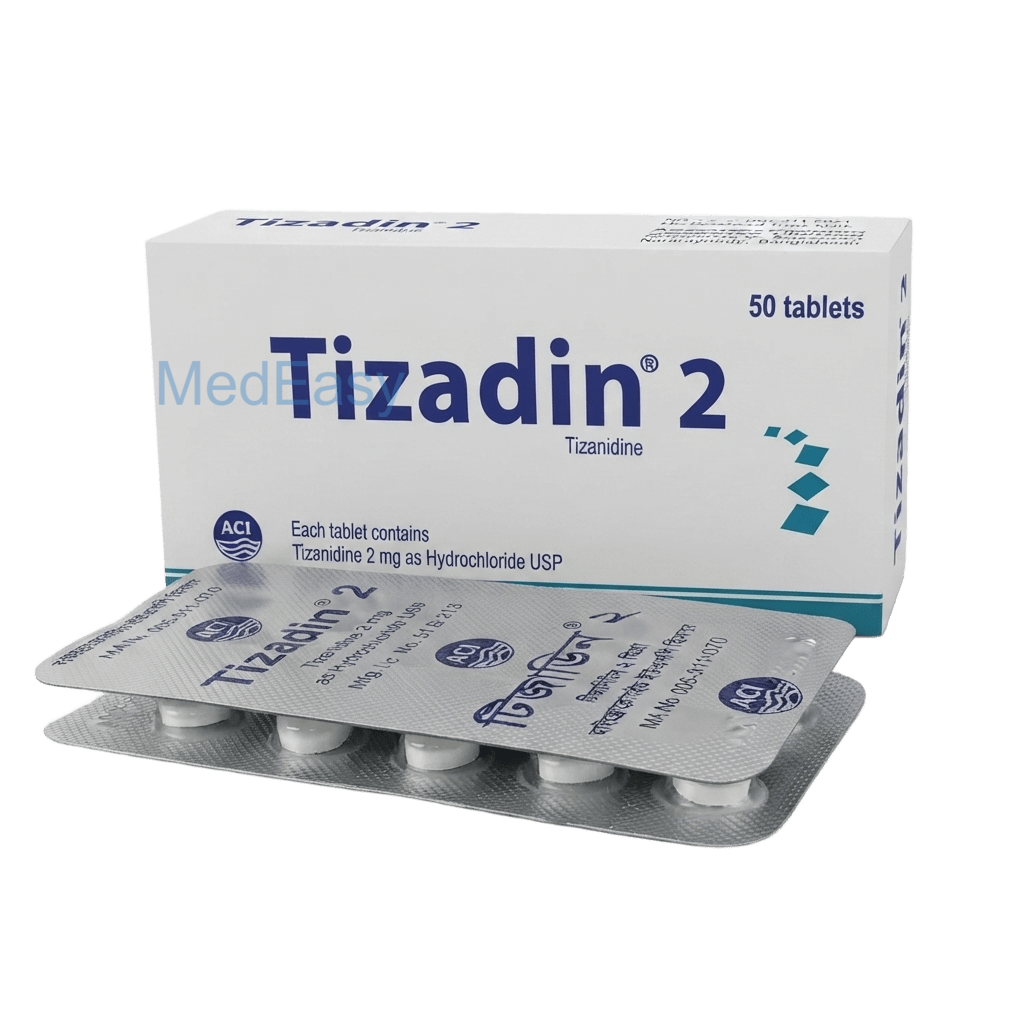
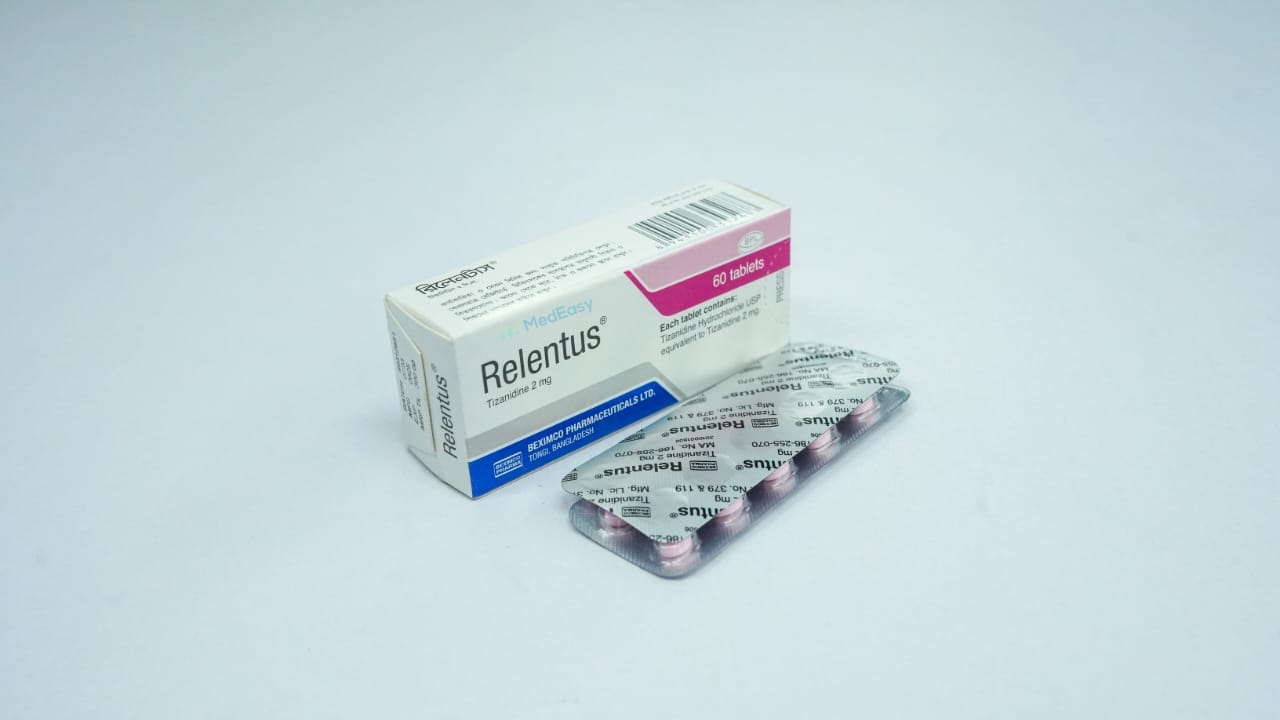
Relentus2 mg
Beximco Pharmaceuticals Ltd.
৳72.00
Add to cart


Tizalud is a centrally-acting skeletal muscle relaxant primarily indicated for the management of spasticity. Its uses are classified by strength of evidence as follows:
Tizalud is intended as a short-acting agent, and dosing is typically reserved for times when relief of spasticity is most required.
Each tablet/capsule contains Tizanidine Hydrochloride as the active ingredient, commonly available in 2 mg and 4 mg strengths for oral administration.
Tizalud is a short-acting, centrally-acting muscle relaxant belonging to the alpha-2 adrenergic agonist class. It reduces spasticity by decreasing excitatory neurotransmitter release from spinal interneurons, thereby reducing muscle tone without significantly affecting muscle strength. Tizalud is used mainly for the symptomatic management of spasticity due to neurological conditions such as multiple sclerosis and spinal cord injury, and is also used off-label for acute painful muscle spasm.
Skeletal Muscle Relaxant — Centrally-acting Alpha-2 Adrenergic Agonist (Tizalud)
Tizanidine Hydrochloride is an agonist at central alpha-2 adrenergic receptor sites, mainly at the spinal cord level. It is thought to reduce spasticity by increasing presynaptic inhibition of motor neurons, which decreases the release of excitatory amino acids (such as glutamate and aspartate) from spinal interneurons. This results in reduced facilitation of spinal motor neurons and reduced muscle tone, without a direct effect on skeletal muscle fibers or the neuromuscular junction. Tizanidine Hydrochloride has minimal effect on muscle strength.
Tizanidine Hydrochloride is extensively metabolized by the liver, predominantly via the CYP1A2 enzyme pathway, which underlies its major drug interactions. Peak plasma concentration is reached in about 1-2 hours, and clinical effect duration is approximately 3-6 hours.
| Indication | Population | Dosing |
|---|---|---|
| Spasticity (MS, spinal cord injury) | Adults | Start at 2 mg orally, may repeat/increase in 2-4 mg increments every 6-8 hours as needed; usual effective range 8-24 mg/day given as up to 3 doses; maximum 36 mg/day and no more than 3 doses in 24 hours. |
| Acute musculoskeletal muscle spasm (off-label) | Adults | Commonly 2-4 mg every 6-8 hours as needed, not exceeding the maximum daily dose; short-term use only, guided by a physician. |
| Any indication | Pediatric (<18 years) | Safety and efficacy not established; see Pediatric Use. |
| Any indication | Hepatic/Renal impairment | See Use in Special Populations for dose adjustment. |
Doses should be individualized and titrated to the lowest effective dose based on response and tolerability. Abrupt discontinuation after prolonged use of higher doses should be avoided (see Precautions).
Tizalud is administered orally, with or without food. Patients should take it consistently either always with food or always without food, because food affects the rate and extent of absorption differently depending on the formulation (tablet vs. capsule), which can alter peak effect and duration. Tablets/capsules should be swallowed whole; capsules should not be opened unless specifically directed by a physician. Do not switch between taking it with and without food without consulting a physician.
The most clinically significant interactions with Tizalud involve the CYP1A2 metabolic pathway:
Tizanidine Hydrochloride is contraindicated in patients with:
Common side effects of Tizalud include:
Less common but clinically important effects include elevated liver enzymes/hepatotoxicity (see Precautions), bradycardia, hallucinations, and urinary tract infection. Sedation and hypotension are dose-related and most pronounced within 1-3 hours after dosing.
Pregnancy: There are no adequate and well-controlled studies of Tizalud in pregnant women. Tizalud should be used during pregnancy only if the potential benefit clearly justifies the potential risk to the fetus. Use only if clearly needed and under the direct guidance of a physician.
Lactation: It is not known whether Tizalud is excreted in human breast milk. Because of the potential for serious adverse effects in a nursing infant (e.g., sedation, hypotension), a decision should be made to discontinue nursing or discontinue Tizalud, taking into account the importance of the drug to the mother; consult a physician before use while breastfeeding.
Tizalud has been associated with liver injury, including rare cases of clinically significant hepatocellular injury. Liver function tests are recommended at baseline and periodically thereafter (e.g., at 1, 3, and 6 months), particularly during the first six months of therapy or with dose increases. Discontinue if signs of hepatic injury occur.
Tizalud can cause clinically significant hypotension, sometimes with bradycardia, syncope, or light-headedness, particularly at higher doses or when combined with antihypertensive agents or CYP1A2 inhibitors. Monitor blood pressure, especially during dose titration.
Sedation is very common and often dose-limiting. Patients should be cautioned against driving, operating hazardous machinery, or performing other tasks requiring full mental alertness until they know how Tizalud affects them.
Abrupt discontinuation after prolonged use, especially at higher doses, has been associated with rebound hypertension, tachycardia, and increased spasticity. Tizalud should be discontinued gradually with dose tapering, under medical supervision.
Clearance of Tizalud is significantly reduced in renal impairment; dose reduction and slower titration are recommended, with close monitoring (see Use in Special Populations).
QT prolongation has been reported in some contexts; caution is advised when combining Tizalud with other drugs known to prolong the QT interval.
Overdose with Tizalud may cause excessive drowsiness, lethargy, confusion, slow or shallow breathing, low blood pressure, slow heart rate, and, in severe cases, coma. There is no specific antidote.
Any suspected overdose of Tizalud is a medical emergency — seek immediate medical attention or contact emergency services / a poison control center right away. Management is supportive and may include airway protection, cardiovascular and respiratory monitoring in a hospital setting; do not attempt to manage an overdose at home.
Store at room temperature (below 30°C), away from light and moisture. Keep out of reach of children.
Clearance of Tizalud is markedly reduced in patients with renal impairment. Initiate at the lowest dose with cautious, gradual titration and close monitoring for adverse effects.
Tizalud should be used with caution in mild-to-moderate hepatic impairment with dose reduction and liver function monitoring (see Precautions); avoid in patients with significant hepatic impairment.
Use the lowest effective starting dose with slow titration, given potential for reduced clearance and increased sensitivity to hypotension and sedation.
See Pregnancy and Lactation section above.
See Pediatric Use section below.
Tizalud is intended as a short-acting agent; duration of treatment and dosing schedule should be individualized by a physician based on the pattern and severity of spasticity or muscle spasm, often used intermittently for times when relief is most needed rather than continuously. Long-term use should be periodically reassessed, and therapy should not be stopped abruptly after prolonged higher-dose use (see Precautions and Warnings) — taper gradually under medical supervision.
Skeletal Muscle Relaxants; Centrally-acting Alpha-2 Adrenergic Agonists
Tizanidine Hydrochloride acts as an agonist at central alpha-2 adrenergic receptors, predominantly at the spinal cord level, increasing presynaptic inhibition of motor neurons. This reduces the release of excitatory amino acids that drive spasticity, resulting in decreased facilitation of spinal motor neurons and reduced muscle tone, with minimal direct effect on muscle strength or the neuromuscular junction itself.
C
The safety and efficacy of Tizalud in pediatric patients below 18 years of age have not been established. Tizalud is not recommended for use in children and adolescents outside of specialist supervision and should only be considered where a physician determines the potential benefit outweighs the unknown risks, with close monitoring.
Q: What is Tizalud 2 mg Tablet used for?
A: Tizalud 2 mg Tablet is mainly used to treat spasticity (increased muscle tone and spasms) caused by conditions such as multiple sclerosis or spinal cord injury. It is also used off-label for short-term relief of painful muscle spasms.
Q: How should I take Tizalud 2 mg Tablet?
A: Take Tizalud 2 mg Tablet exactly as prescribed by your physician, either always with food or always without food, since this affects how it works. Do not change how you take it without medical advice.
Q: Can I drive or operate machinery while taking Tizalud 2 mg Tablet?
A: Tizalud 2 mg Tablet commonly causes drowsiness and dizziness. Avoid driving, operating machinery, or performing tasks requiring alertness until you know how Tizalud 2 mg Tablet affects you.
Q: Can I stop taking Tizalud 2 mg Tablet suddenly?
A: No. Stopping Tizalud 2 mg Tablet abruptly after prolonged use, especially at higher doses, can cause rebound high blood pressure, fast heart rate, and worsened spasticity. Your physician will guide you on tapering the dose gradually.
Q: Is Tizalud 2 mg Tablet safe during pregnancy or breastfeeding?
A: Tizalud 2 mg Tablet should be used during pregnancy only if clearly needed and the potential benefit justifies the potential risk to the fetus. Its safety during breastfeeding is not well established, so consult your physician before use in either situation.
Q: What medicines should not be combined with Tizalud 2 mg Tablet?
A: Tizalud 2 mg Tablet must not be taken with fluvoxamine or ciprofloxacin, as these significantly raise Tizalud 2 mg Tablet levels in the blood and can cause severe low blood pressure and excessive sedation. Always inform your physician of all medicines you take.
Disclaimer
The information provided is accurate to the best of our knowledge, but it does not replace professional medical advice. We cannot guarantee its completeness or accuracy, and the absence of specific information about a drug should not be taken as an endorsement. We are not responsible for any consequences arising from this information, so please consult a healthcare professional for any concerns or questions.