

8% Off
Tirza5 mg/0.5 m
Beacon Pharmaceuticals PLC
৳2576.00
Add to cart
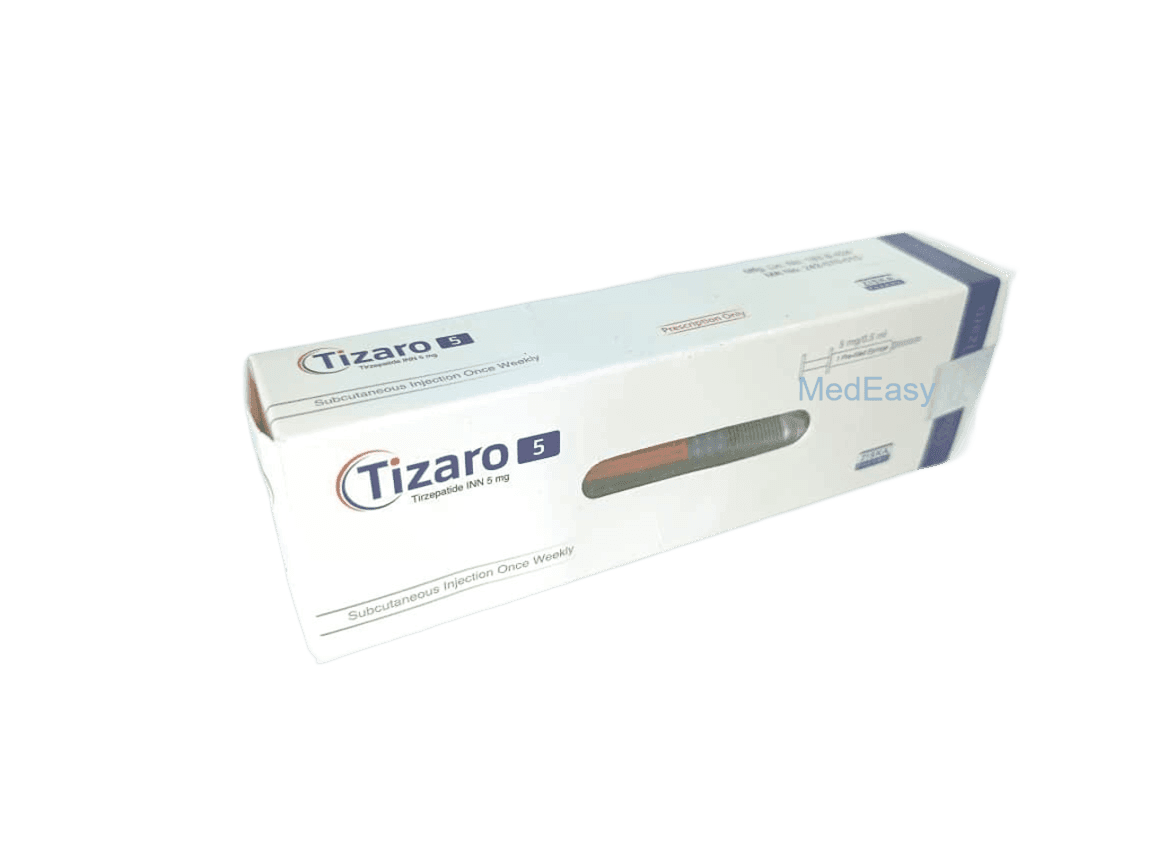

Tizaro 5 mg/0.5 ml is a novel, first-in-class injectable medicine that acts as a dual agonist at both the glucose-dependent insulinotropic polypeptide (GIP) receptor and the glucagon-like peptide-1 (GLP-1) receptor. By activating both incretin pathways, Tizaro 5 mg/0.5 ml improves blood glucose control in people with type 2 diabetes and produces substantial, sustained weight loss when combined with lifestyle changes. It is administered as a once-weekly subcutaneous injection and is used long-term under medical supervision, with the dose gradually increased (titrated) over several weeks to improve tolerability.
Tizaro 5 mg/0.5 ml belongs to the Dual GIP/GLP-1 Receptor Agonist (Incretin Mimetic) class; it is used as an Antidiabetic and Anti-obesity Agent.
Tizaro 5 mg/0.5 ml is a synthetic peptide that acts as an agonist at both the GIP receptor and the GLP-1 receptor, the two primary incretin hormone receptors. By activating these receptors, Tizaro 5 mg/0.5 ml:
The combined GIP/GLP-1 agonism of Tizaro 5 mg/0.5 ml produces greater improvements in glycaemic control and body weight than selective GLP-1 receptor agonists alone in clinical trials. Tizaro 5 mg/0.5 ml has an elimination half-life of approximately 5 days, supporting once-weekly dosing, and is metabolised via proteolytic cleavage, beta-oxidation of the fatty acid side chain, and amide hydrolysis, with elimination primarily through excretion of metabolites.
| Step | Dose | Duration |
|---|---|---|
| Starting dose | 2.5 mg subcutaneously once weekly | 4 weeks (initiation; not for glycemic control) |
| Titration | Increase by 2.5 mg increments | Every 4 weeks, based on response/tolerability |
| Maintenance (diabetes) | 5 mg, 7.5 mg, 10 mg, 12.5 mg, or 15 mg once weekly | Ongoing |
| Maximum dose | 15 mg once weekly | — |
| Step | Dose | Duration |
|---|---|---|
| Starting dose | 2.5 mg subcutaneously once weekly | 4 weeks |
| Titration | Increase by 2.5 mg increments | Every 4 weeks as tolerated |
| Maintenance (weight/OSA) | 5 mg to 15 mg once weekly (OSA typically requires 10-15 mg) | Ongoing |
| Maximum dose | 15 mg once weekly | — |
Starting dose 2.5 mg subcutaneously once weekly, titrated upward by 2.5 mg every 4 weeks as tolerated, up to a maximum of 15 mg once weekly, per the specific indication (type 2 diabetes, chronic weight management, or obstructive sleep apnea).
For subcutaneous injection only, into the abdomen, thigh, or upper arm, once weekly on the same day each week; rotate injection sites; may be taken with or without food; not for intravenous or intramuscular use.
Always inform the prescriber of all other medicines, supplements, and herbal products being used before starting Tizaro 5 mg/0.5 ml.
Most gastrointestinal side effects of Tizaro 5 mg/0.5 ml are dose-related, occur mainly during dose escalation, and tend to diminish over time. Patients should seek prompt medical attention for severe or persistent abdominal pain, signs of an allergic reaction, or symptoms of low blood sugar.
Tizaro 5 mg/0.5 ml is not recommended during pregnancy. Animal studies have shown adverse effects on fetal growth associated with Tizaro 5 mg/0.5 ml-induced maternal weight loss and reduced food intake; human data are limited. Because of the substantial weight loss it causes, Tizaro 5 mg/0.5 ml may not be appropriate during pregnancy regardless of prior indication. Patients who become pregnant should discontinue Tizaro 5 mg/0.5 ml and consult their physician promptly; use only if a physician determines that no suitable alternative exists and potential benefit clearly justifies potential risk to the fetus.
There are limited data on the presence of Tizaro 5 mg/0.5 ml in human milk or its effects on the breastfed infant or on milk production. As a large peptide molecule, Tizaro 5 mg/0.5 ml is expected to be present in breast milk at low levels, and oral infant absorption is expected to be minimal. Breastfeeding mothers should discuss the use of Tizaro 5 mg/0.5 ml with their physician, weighing the mother's clinical need for the medicine against any potential risk to the infant.
In rodent studies, Tizaro 5 mg/0.5 ml caused dose-dependent and treatment-duration-dependent thyroid C-cell tumors, including medullary thyroid carcinoma (MTC). Whether Tizaro 5 mg/0.5 ml causes MTC in humans is unknown, as human relevance has not been determined. Tizaro 5 mg/0.5 ml is contraindicated in patients with a personal or family history of MTC or in patients with MEN 2 (see Contraindications). Patients should be counselled on the symptoms of thyroid tumors (a lump or swelling in the neck, hoarseness, difficulty swallowing, or shortness of breath) and instructed to report these promptly.
Overdose of Tizaro 5 mg/0.5 ml may increase the frequency and severity of gastrointestinal adverse reactions (severe nausea, vomiting, diarrhea) and may increase the risk of hypoglycemia, particularly if used with insulin or insulin secretagogues. There is no specific antidote for Tizaro 5 mg/0.5 ml overdose. In case of a suspected overdose, seek immediate medical attention or contact a poison control center/emergency services right away. Management is supportive, taking into account the long (approximately 5-day) elimination half-life of Tizaro 5 mg/0.5 ml, and may include monitoring for dehydration, electrolyte disturbances, and blood glucose levels as advised by a physician.
Tizaro 5 mg/0.5 ml is approved for improving glycemic control in type 2 diabetes in pediatric patients 10 years of age and older, using the same dosing and titration schedule as adults, up to a maximum of 15 mg weekly. The safety and efficacy of Tizaro 5 mg/0.5 ml for chronic weight management or obstructive sleep apnea have not been established in patients under 18 years of age.
No significant differences in safety or efficacy of Tizaro 5 mg/0.5 ml have been observed between elderly patients (65 years and older) and younger adults; no dose adjustment is required based on age alone, though elderly patients may be more susceptible to dehydration-related complications.
No dose adjustment of Tizaro 5 mg/0.5 ml is required for mild-to-severe renal impairment; however, patients with renal impairment should be monitored for dehydration if gastrointestinal side effects occur.
No dose adjustment of Tizaro 5 mg/0.5 ml is required in patients with hepatic impairment.
Incretin Mimetic; Dual GIP/GLP-1 Receptor Agonist; Antidiabetic Agent; Anti-obesity Agent
Q: What is Tizaro 5 mg/0.5 ml used for?
A: Tizaro 5 mg/0.5 ml is used to improve blood sugar control in adults and children 10 years and older with type 2 diabetes, and separately for long-term weight management in adults with obesity or overweight with a related health condition, as well as for moderate-to-severe obstructive sleep apnea in adults with obesity. It is always used alongside diet, exercise, and lifestyle changes, not as a replacement for them.
Q: How is Tizaro 5 mg/0.5 ml given?
A: Tizaro 5 mg/0.5 ml is given as a subcutaneous (under the skin) injection once a week, in the abdomen, thigh, or upper arm, with the injection site rotated each time. The starting dose is 2.5 mg weekly, and your physician will gradually increase the dose every 4 weeks based on how you respond, up to a maximum of 15 mg weekly.
Q: What are the most common side effects of Tizaro 5 mg/0.5 ml?
A: The most common side effects of Tizaro 5 mg/0.5 ml are gastrointestinal: nausea, diarrhea, vomiting, constipation, indigestion, decreased appetite, and abdominal pain. These are usually most noticeable when starting the medicine or after a dose increase, and often improve over time.
Q: Who should not use Tizaro 5 mg/0.5 ml?
A: Tizaro 5 mg/0.5 ml should not be used by anyone with a personal or family history of medullary thyroid carcinoma (a type of thyroid cancer), by patients with Multiple Endocrine Neoplasia syndrome type 2 (MEN 2), or by anyone with a known serious allergy to Tizaro 5 mg/0.5 ml or its ingredients. In animal studies, Tizaro 5 mg/0.5 ml caused thyroid C-cell tumors, so patients should promptly report any neck lump, hoarseness, or difficulty swallowing.
Q: Can Tizaro 5 mg/0.5 ml be used during pregnancy or breastfeeding?
A: Tizaro 5 mg/0.5 ml is not recommended during pregnancy because of potential effects on fetal growth associated with maternal weight loss, and it should generally be stopped if pregnancy occurs; consult a physician immediately. Limited data exist on Tizaro 5 mg/0.5 ml use during breastfeeding, so it should be used only if the potential benefit to the mother clearly justifies any potential risk to the infant, under a physician's guidance.
Q: Is it safe to combine Tizaro 5 mg/0.5 ml with insulin or other diabetes medicines?
A: Tizaro 5 mg/0.5 ml can be combined with insulin or sulfonylureas under medical supervision, but this combination increases the risk of low blood sugar (hypoglycemia); your physician may need to lower the dose of insulin or the sulfonylurea and ask you to monitor your blood glucose more closely while using Tizaro 5 mg/0.5 ml.
Disclaimer
The information provided is accurate to the best of our knowledge, but it does not replace professional medical advice. We cannot guarantee its completeness or accuracy, and the absence of specific information about a drug should not be taken as an endorsement. We are not responsible for any consequences arising from this information, so please consult a healthcare professional for any concerns or questions.
