10% Off
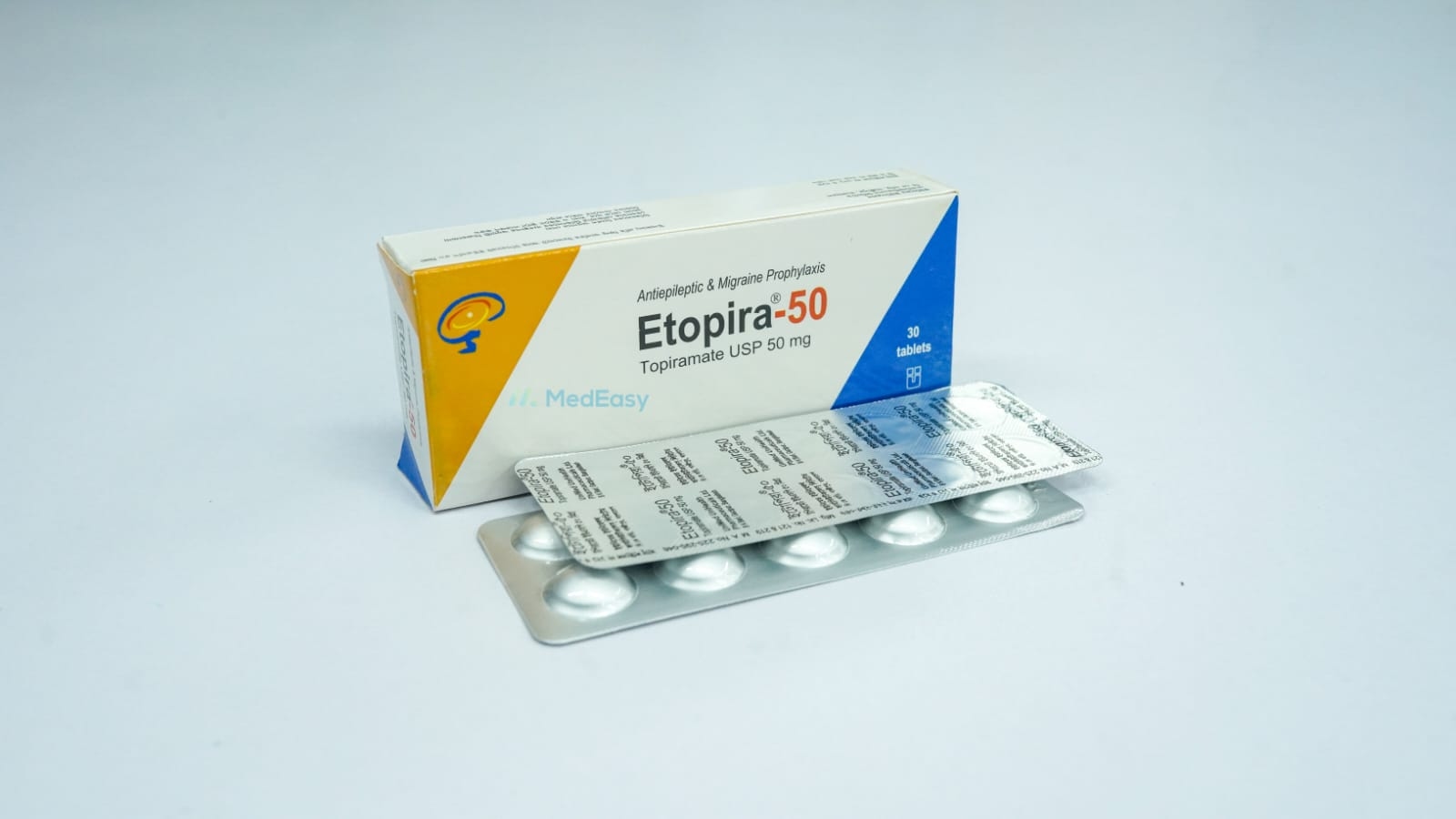
Etopira50 mg
Unimed Unihealth MFG. Ltd.
৳90.00
Add to cart
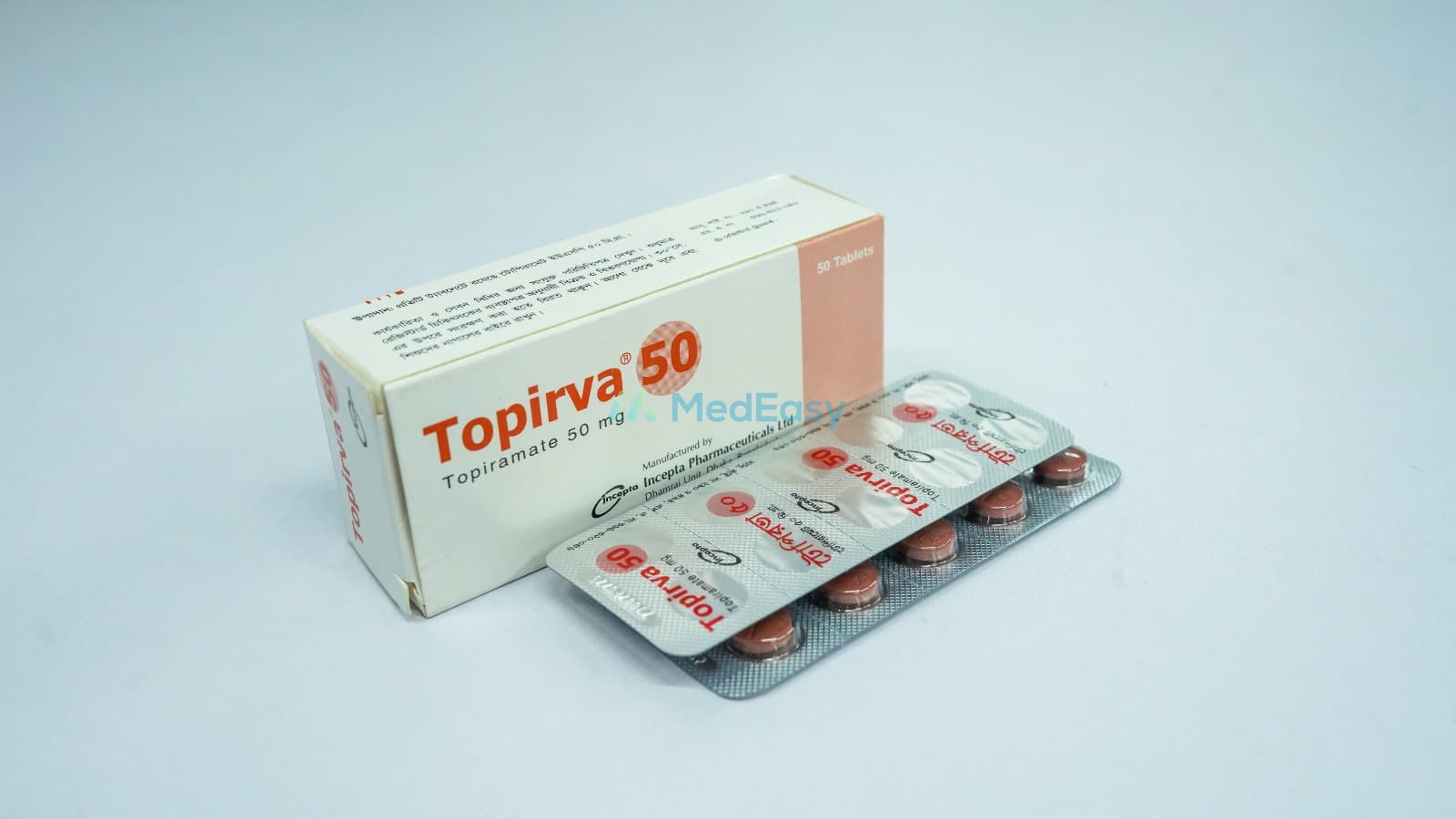

Topirva is an anticonvulsant (antiepileptic) medicine with the following evidence-based indications:
Each tablet/capsule contains Topiramate as the active ingredient, commonly available in strengths such as 25 mg, 50 mg, 100 mg, and 200 mg. Sprinkle capsule formulations are also available in some markets. Excipients vary by manufacturer.
Topirva is a sulfamate-substituted monosaccharide (derived from D-fructose) that acts as an anticonvulsant and is also used for migraine prevention. It is chemically distinct from other antiepileptic drug classes and has a broad, multi-mechanism profile that includes sodium channel blockade, enhancement of GABA activity, and inhibition of carbonic anhydrase.
Topirva is administered orally as immediate-release tablets or sprinkle capsules, and in some markets as extended-release formulations.
Anticonvulsant / Antiepileptic agent; also classified as an antimigraine prophylactic agent.
Topiramate has multiple mechanisms believed to contribute to its anticonvulsant and migraine-preventive effects:
Pharmacokinetics: Topiramate is well absorbed orally (bioavailability approximately 80%), with relatively low protein binding (13-17%). It undergoes limited hepatic metabolism, and a majority of a dose is eliminated unchanged in the urine. The elimination half-life is approximately 21 hours, supporting once- or twice-daily dosing. Renal impairment significantly reduces clearance.
Initiate at 25 mg once daily in the evening for one week, then titrate gradually (weekly or biweekly increments) to a target maintenance dose of 100 mg twice daily (200 mg/day), as tolerated. Some patients may require higher doses.
Initiate at 25-50 mg/day, titrated weekly by 25-50 mg increments to a usual maintenance dose of 200-400 mg/day in two divided doses.
Weight-based initial dosing (approximately 1-3 mg/kg/day at bedtime), titrated gradually over several weeks to a target maintenance dose of approximately 5-9 mg/kg/day in two divided doses, guided by clinical response and tolerability.
Initiate at 25 mg nightly for one week, then increase by 25 mg/day at weekly intervals to a usual target dose of 100 mg/day in two divided doses. Slower titration may reduce cognitive and other adverse effects.
| Indication | Typical Starting Dose | Typical Maintenance Dose |
|---|---|---|
| Epilepsy monotherapy | 25 mg once daily | 200 mg twice daily (up to higher doses if needed) |
| Epilepsy adjunctive (adult) | 25-50 mg/day | 200-400 mg/day divided |
| Epilepsy adjunctive (pediatric) | 1-3 mg/kg/day | 5-9 mg/kg/day divided |
| Migraine prophylaxis | 25 mg nightly | 100 mg/day divided |
In patients with moderate to severe renal impairment (creatinine clearance ≤70 mL/min/1.73m²), a 50% reduction of the usual starting and maintenance dose is recommended, with slower titration. Supplemental doses may be needed after hemodialysis.
Use with caution in moderate to severe hepatic impairment, as clearance may be reduced.
May be taken with or without food. Tablets should be swallowed whole (avoid breaking, as they have a bitter taste); sprinkle capsules may be swallowed whole or opened and sprinkled onto a small amount of soft food and swallowed immediately without chewing. Maintain adequate hydration during treatment, particularly in hot weather or with physical activity, to reduce the risk of kidney stones. Topirva should not be stopped abruptly; discontinuation should be gradual, under medical supervision, to minimize the risk of increased seizure frequency.
Topirva tablets should be swallowed whole with water, with or without food; sprinkle capsules can be opened and mixed with a small amount of soft food. Do not crush or chew tablets due to bitter taste. Doses are typically given in the morning and evening. See Dosage and Administration for full titration schedules.
Topirva has several clinically important drug interactions:
Topiramate is contraindicated in patients with known hypersensitivity to Topiramate or any component of the formulation. It is also contraindicated for the prevention of migraine in patients with metabolic acidosis, given the drug's own well-established risk of causing or worsening metabolic acidosis. When used in the fixed-dose combination with phentermine for weight management, additional contraindications specific to that combination (e.g., pregnancy, hyperthyroidism, glaucoma, concurrent MAO inhibitor use) apply and should be reviewed separately for that product.
Common and important adverse effects of Topirva include:
Pregnancy: Topirva use during the first trimester of pregnancy has been associated with an increased risk of oral clefts (cleft lip and/or cleft palate) in the newborn. Topirva may also cause fetal growth restriction. Topirva should be used during pregnancy only if the potential benefit justifies the potential risk to the fetus, and only under close specialist supervision. Women of childbearing potential should be counselled on effective contraception (noting that Topirva may reduce hormonal contraceptive efficacy - see Interactions) and, where appropriate, folic acid supplementation prior to and during pregnancy. Do not discontinue Topirva abruptly without medical advice, as uncontrolled seizures pose risks to both mother and fetus.
Lactation: Topirva is excreted into human breast milk. Effects on the breastfed infant are not fully established but sedation and poor feeding have been reported. Topirva should be used during breastfeeding only if clearly needed, with the infant monitored for drowsiness, poor feeding, or inadequate weight gain; consult a physician before use.
The following precautions apply to the use of Topirva:
Symptoms of Topirva overdose may include convulsions, drowsiness, speech disturbance, blurred or double vision, impaired coordination, lethargy, hypotension, abdominal pain, agitation, dizziness, and severe metabolic acidosis. In case of suspected overdose, seek immediate medical attention or contact emergency services/a poison control center right away. Treatment is supportive; do not attempt to manage overdose at home. Hemodialysis is an effective means of removing Topirva from the body in cases of significant overdose or severe renal impairment, and should be performed under medical supervision if indicated.
Store at room temperature (below 30°C), away from light and moisture. Keep out of reach of children.
Renal impairment: Dose reduction (typically 50% of usual dose) and slower titration are recommended in patients with moderate to severe renal impairment; supplemental dosing may be needed after hemodialysis sessions.
Hepatic impairment: Use with caution in moderate to severe hepatic impairment due to reduced clearance.
Elderly: Use with caution; age-related decline in renal function may necessitate dose adjustment. Monitor renal function.
Pediatric: Approved for epilepsy in children 2 years and older (monotherapy from age 10 years); approved for migraine prophylaxis from age 12 years. Safety and efficacy in children below these age thresholds for the respective indications have not been established. Children are at particular risk for oligohidrosis/hyperthermia and effects on growth with chronic metabolic acidosis; monitor closely.
Pregnancy and lactation: See Pregnancy and Lactation section.
Duration of treatment with Topirva is individualized. For epilepsy, treatment is typically long-term, guided by seizure control and periodic specialist review, with discontinuation (if considered) done gradually. For migraine prophylaxis, a treatment trial of several months is generally used to assess benefit, with periodic reassessment of continued need. Do not stop treatment abruptly without medical advice.
Anticonvulsants; Antiepileptic drugs; Antimigraine prophylactic agents.
Topiramate exerts anticonvulsant and migraine-preventive effects through multiple mechanisms, including state-dependent blockade of voltage-gated sodium channels, potentiation of GABA-A receptor-mediated inhibitory neurotransmission, antagonism of AMPA/kainate-type glutamate receptors, and inhibition of certain carbonic anhydrase isoenzymes.
Category D (based on legacy FDA pregnancy categories) - positive evidence of human fetal risk, but potential benefits may warrant use in pregnant women despite risks (e.g., serious maternal seizure disorders) in select clinical situations.
Topirva is approved for use in children 2 years of age and older as adjunctive therapy for partial-onset seizures, primary generalized tonic-clonic seizures, and seizures associated with Lennox-Gastaut syndrome, and as monotherapy from age 10 years for partial-onset or primary generalized tonic-clonic seizures. It is approved for migraine prophylaxis from age 12 years. Dosing is weight-based with gradual titration (see Dosage and Administration). Safety and efficacy below these approved age ranges for the respective indications have not been established. Children treated with Topirva require close monitoring for growth, cognitive effects, and oligohidrosis/hyperthermia, particularly in hot weather.
Q: What is Topirva 50 mg Tablet used for?
A: Topirva 50 mg Tablet is primarily used to treat epilepsy (as monotherapy or add-on therapy for certain seizure types) and to prevent migraine headaches in adults. It is also used off-label, in combination with another medicine, for weight management.
Q: Can Topirva 50 mg Tablet cause memory or concentration problems?
A: Yes. Topirva 50 mg Tablet is well known for causing cognitive side effects such as difficulty concentrating, slowed thinking, and word-finding difficulty. These effects are often dose-related and may improve with slower dose titration; discuss persistent or bothersome symptoms with your physician.
Q: Is Topirva 50 mg Tablet safe during pregnancy?
A: Topirva 50 mg Tablet use in early pregnancy has been linked to an increased risk of cleft lip/palate in the baby and may affect fetal growth. It should only be used in pregnancy if clearly needed and the benefit outweighs the risk, under close medical supervision. Do not stop Topirva 50 mg Tablet on your own if you become pregnant - talk to your doctor first, since uncontrolled seizures also carry risks.
Q: Does Topirva 50 mg Tablet affect birth control pills?
A: Topirva 50 mg Tablet, especially at higher doses, can reduce the effectiveness of estrogen-containing hormonal contraceptives, increasing the risk of unintended pregnancy. Use an additional barrier method or discuss alternative contraception with your doctor.
Q: What should I do if I get sudden eye pain or blurred vision while taking Topirva 50 mg Tablet?
A: Sudden eye pain or vision changes can signal a rare but serious condition (acute myopia with secondary angle-closure glaucoma) caused by Topirva 50 mg Tablet. Seek immediate medical attention, as Topirva 50 mg Tablet may need to be stopped urgently to prevent permanent vision damage.
Q: Can I stop taking Topirva 50 mg Tablet suddenly?
A: No. Stopping Topirva 50 mg Tablet abruptly can trigger withdrawal seizures, even in people without epilepsy. Any dose changes or discontinuation of Topirva 50 mg Tablet should be done gradually and only under a doctor's supervision.
Disclaimer
The information provided is accurate to the best of our knowledge, but it does not replace professional medical advice. We cannot guarantee its completeness or accuracy, and the absence of specific information about a drug should not be taken as an endorsement. We are not responsible for any consequences arising from this information, so please consult a healthcare professional for any concerns or questions.