10% Off
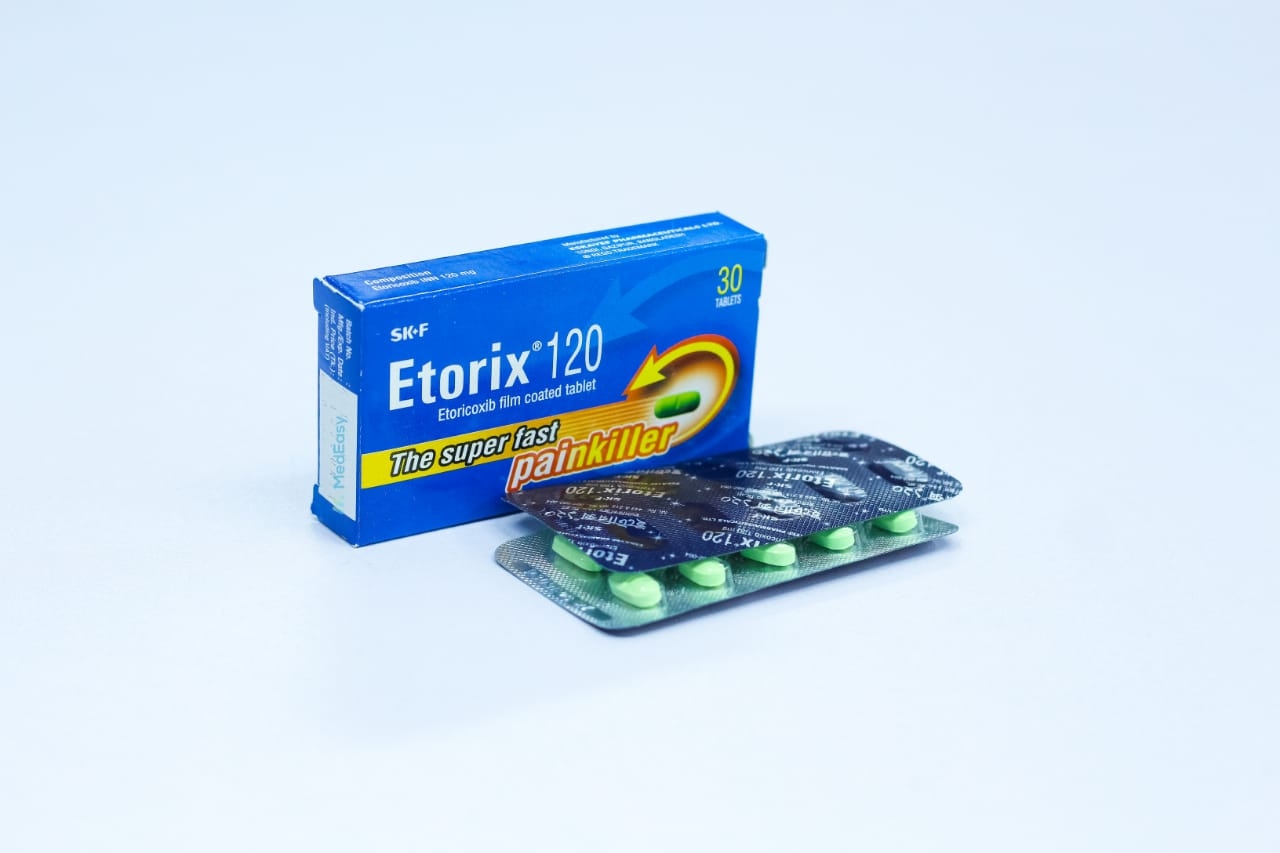
Etorix120 mg
Eskayef Bangladesh Ltd.
৳135.00
Add to cart
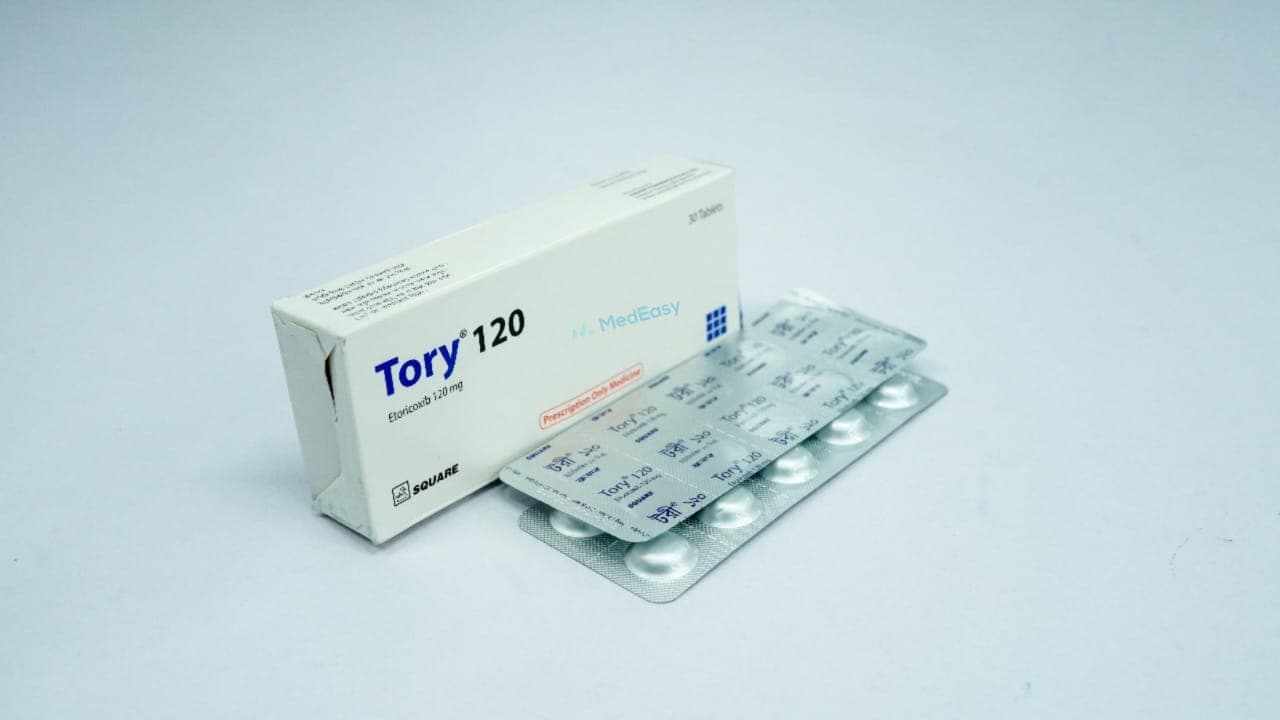

Tory is a selective COX-2 inhibitor (coxib-class) NSAID used for the relief of pain and inflammation in the following established indications:
Tory provides symptomatic relief of pain and inflammation; it does not alter the underlying course of the disease and is not a cure. It should be used at the lowest effective dose for the shortest duration consistent with the individual patient's treatment goals, because of a dose- and duration-related cardiovascular thrombotic risk (see Precautions and Warnings).
Each tablet contains Etoricoxib as the active pharmaceutical ingredient, commonly available in Bangladesh as:
Tablets also contain standard pharmaceutical excipients (binders, fillers, coating/coloring agents) that do not have independent therapeutic activity.
Tory is a selective cyclooxygenase-2 (COX-2) inhibitor NSAID (a "coxib") used to relieve pain, swelling, and stiffness caused by inflammatory and degenerative joint conditions and acute pain states. By preferentially sparing the COX-1 enzyme, Tory is associated with a lower incidence of upper gastrointestinal ulceration and bleeding compared with non-selective NSAIDs, though this risk is not eliminated. Tory carries an established cardiovascular thrombotic risk that increases with dose and duration of use, which shapes its contraindications and precautions more strictly than for many other NSAIDs.
Tory is not approved by the US FDA; the FDA declined approval in 2007 over cardiovascular safety concerns. However, Tory is approved and widely marketed in the European Union, United Kingdom, and many other countries including Bangladesh, where it is available as 30 mg, 60 mg, 90 mg, and 120 mg tablets under various brand names.
Tory belongs to the class of Non-Steroidal Anti-Inflammatory Drugs (NSAIDs), specifically the selective cyclooxygenase-2 (COX-2) inhibitor subgroup, commonly referred to as "coxibs." It has analgesic, anti-inflammatory, and antipyretic properties.
Etoricoxib selectively inhibits the cyclooxygenase-2 (COX-2) enzyme, which is induced at sites of inflammation and is chiefly responsible for the synthesis of prostaglandins that mediate pain, inflammation, fever, and swelling. At therapeutic doses, Etoricoxib has minimal effect on the constitutively expressed COX-1 enzyme, which is involved in maintaining gastric mucosal protection and normal platelet function — this selectivity underlies its comparatively lower rate of upper gastrointestinal ulceration versus non-selective NSAIDs, although the risk is not eliminated. Because COX-2 also contributes to vascular prostacyclin production, COX-2-selective inhibition can shift the thromboxane–prostacyclin balance toward a prothrombotic state, which is the basis for the cardiovascular risk associated with this class.
Pharmacokinetics: Etoricoxib is well absorbed after oral administration, with peak plasma concentrations reached in about 1 hour; oral bioavailability is approximately 100%. It is highly protein bound (~92%) and is extensively metabolized in the liver, primarily via cytochrome P450 (CYP3A4 and, to a lesser extent, CYP2C9, CYP2C19, CYP1A2), to inactive or minimally active metabolites. The elimination half-life is approximately 22 hours, supporting once-daily dosing, and metabolites are excreted mainly in the urine.
| Indication | Recommended Dose | Maximum Duration |
|---|---|---|
| Osteoarthritis | 30 mg once daily; may be increased to 60 mg once daily if needed | Long-term, at lowest effective dose |
| Rheumatoid arthritis | 90 mg once daily | Long-term, at lowest effective dose |
| Ankylosing spondylitis | 90 mg once daily | Long-term, at lowest effective dose |
| Acute gouty arthritis | 120 mg once daily | Up to 8 days |
| Acute pain / postoperative dental surgery pain | 90 mg once daily | Up to 3 days |
The dose of 120 mg once daily should be used only for the labeled short-term, acute indications above and should not be exceeded.
Tory is not recommended for patients under 16 years of age; safety and efficacy in this age group have not been established. See Use in Special Populations.
No dose adjustment is needed in patients with creatinine clearance ≥30 mL/min. Tory is contraindicated in patients with severe renal impairment (creatinine clearance <30 mL/min).
Mild hepatic impairment (Child-Pugh score 5–6): dose should not exceed 60 mg once daily. Moderate hepatic impairment (Child-Pugh score 7–9): dose should not exceed 60 mg every other day, or 30 mg once daily may be better tolerated. Tory is contraindicated in severe hepatic impairment (Child-Pugh score ≥10).
Tory tablets may be taken with or without food, swallowed whole with water. Tory may have a faster onset of effect when taken without food, which may be relevant for acute pain.
Tory tablets should be swallowed whole with a glass of water and may be taken with or without food. Do not crush or chew the tablet unless directed by your physician. Take Tory exactly as prescribed; do not increase the dose or take it more often or for longer than recommended.
Tory has the following well-recognized, clinically significant drug interactions:
Etoricoxib is contraindicated in patients with:
Most side effects of Tory are mild and reversible on discontinuation. Commonly reported effects include:
Serious but less common or rare reactions include gastrointestinal ulceration/bleeding/perforation, hepatotoxicity (including rare hepatitis), acute kidney injury, hyperkalemia, severe hypersensitivity reactions (angioedema, anaphylaxis, severe skin reactions such as Stevens-Johnson syndrome), atrial fibrillation, and cardiovascular thrombotic events (myocardial infarction, stroke), consistent with the class-wide and drug-specific cardiovascular risk of Tory. Very rarely, confusion or hallucinations have been reported. Patients should seek prompt medical attention for signs of GI bleeding (black stools, vomiting blood), unexplained rash, jaundice, marked swelling, or chest pain/shortness of breath.
Tory is contraindicated during pregnancy and in women attempting to conceive. Like other NSAIDs, drugs that inhibit prostaglandin synthesis may cause premature closure of the fetal ductus arteriosus, oligohydramnios, and other complications, particularly with use in the second and third trimesters; NSAID exposure in early pregnancy has also been associated with increased risk of miscarriage in some studies. Women of childbearing potential who require pain relief should discuss safer alternatives with their physician if pregnancy is suspected, confirmed, or planned.
Tory is contraindicated during breastfeeding. It is not known with certainty whether Tory is excreted in human breast milk, but related coxibs are excreted in animal milk, and a risk to the nursing infant cannot be excluded. Women who need Tory should not breastfeed; consult a physician about alternative analgesics compatible with lactation.
Cardiovascular thrombotic risk: Tory carries a dose- and duration-related risk of serious cardiovascular thrombotic events, including myocardial infarction and stroke, which can be fatal; this risk is a defining feature of the drug and underlies several of its contraindications (established cardiovascular disease, uncontrolled hypertension, heart failure). Tory should be used at the lowest effective dose for the shortest duration necessary, and should not be used in patients with pre-existing cardiovascular disease or uncontrolled risk factors.
Blood pressure: Tory can cause new-onset hypertension or worsen existing hypertension more than some other NSAIDs; blood pressure should be monitored, particularly during the first weeks of treatment and after dose increases, and treatment should be discontinued if hypertension cannot be adequately controlled.
Fluid retention and edema: Fluid retention, edema, and heart failure exacerbation have been reported; use with caution in patients with a history of cardiac decompensation, and monitor for signs of fluid overload.
Gastrointestinal risk: Although the risk is lower than with non-selective NSAIDs, serious gastrointestinal adverse events including bleeding, ulceration, and perforation can still occur, sometimes without warning symptoms, especially in elderly patients or those with a prior history of peptic ulcer disease or concurrent aspirin/anticoagulant use.
Hepatic effects: Elevations in liver enzymes and, rarely, serious hepatic reactions (including hepatitis) have been reported; discontinue Tory if signs or symptoms of liver dysfunction develop or if abnormal liver test results persist or worsen.
Renal effects: Tory can reduce renal blood flow and precipitate renal impairment, particularly in patients with pre-existing renal impairment, heart failure, hepatic impairment, or volume depletion (e.g. from diuretic use), and in the elderly. Renal function should be assessed before and periodically during treatment in at-risk patients.
Skin reactions: Serious skin reactions, some fatal, including exfoliative dermatitis, Stevens-Johnson syndrome, and toxic epidermal necrolysis have been reported very rarely; discontinue Tory at the first appearance of skin rash, mucosal lesions, or any other sign of hypersensitivity.
Masking of fever/inflammation: As with other anti-inflammatory drugs, Tory may mask fever and other signs of inflammation or infection.
Tory should be used with particular caution in elderly patients, who are more susceptible to cardiovascular, renal, gastrointestinal, and hepatic adverse effects (see Use in Special Populations).
Limited clinical experience with Tory overdose exists. Reported symptoms following overdose have included nausea, vomiting, abdominal pain, dizziness, and, potentially in more severe cases, hypertension, acute renal impairment, or gastrointestinal bleeding. There is no specific antidote for Tory overdose.
In case of suspected overdose, seek immediate medical attention or contact a poison control center/emergency services right away. Management is supportive and symptomatic, guided by the treating physician; this may include standard supportive measures and monitoring of cardiovascular, renal, and gastrointestinal status. Do not attempt to manage an overdose at home.
Store at room temperature (below 30°C), away from light and moisture. Keep out of reach of children.
Tory is contraindicated during pregnancy and in women attempting to conceive (see Pregnancy and Lactation).
Tory is contraindicated during breastfeeding (see Pregnancy and Lactation).
Tory is contraindicated in children and adolescents under 16 years of age; safety and efficacy have not been established in this population.
No dose adjustment is generally required based on age alone, but elderly patients are at increased risk of cardiovascular, renal, gastrointestinal, and hepatic adverse effects associated with Tory and should be monitored closely, using the lowest effective dose for the shortest duration necessary.
No dose adjustment is needed for creatinine clearance ≥30 mL/min. Tory is contraindicated in severe renal impairment (creatinine clearance <30 mL/min).
Reduced maximum doses apply in mild and moderate hepatic impairment (see Dosage and Administration). Tory is contraindicated in severe hepatic impairment.
Tory should be used at the lowest effective dose for the shortest duration consistent with individual treatment goals, because its cardiovascular thrombotic risk increases with dose and duration of use. For acute gouty arthritis, treatment is limited to a maximum of 8 days; for acute pain following dental surgery, treatment is limited to a maximum of 3 days. For chronic conditions such as osteoarthritis, rheumatoid arthritis, or ankylosing spondylitis, longer-term use may be appropriate but requires regular medical review to reassess the need for continued therapy and to monitor for cardiovascular, renal, hepatic, and gastrointestinal adverse effects.
Non-Steroidal Anti-Inflammatory Drug (NSAID) – Selective COX-2 Inhibitor (Coxib)
Etoricoxib selectively inhibits cyclooxygenase-2 (COX-2), the enzyme induced at sites of tissue injury and inflammation that converts arachidonic acid into prostaglandins responsible for pain, swelling, and fever. At therapeutic doses, Etoricoxib has little effect on cyclooxygenase-1 (COX-1), which is constitutively expressed and helps maintain gastric mucosal integrity and normal platelet aggregation; this selectivity accounts for its relatively lower gastrointestinal toxicity compared with non-selective NSAIDs. Because COX-2 also contributes to endothelial prostacyclin production, selective COX-2 inhibition can tip the balance toward platelet thromboxane A2 activity, which underlies the drug's cardiovascular thrombotic risk.
The safety and efficacy of Tory have not been established in children and adolescents under 16 years of age, and its use is contraindicated in this age group. Alternative, better-studied analgesic/anti-inflammatory options appropriate for pediatric patients should be used instead, under physician guidance.
Q: What is Tory 120 mg Tablet used for?
A: Tory 120 mg Tablet is a selective COX-2 inhibitor NSAID used to relieve pain, swelling, and stiffness in osteoarthritis, rheumatoid arthritis, ankylosing spondylitis, acute gouty arthritis, and acute pain such as short-term pain following dental surgery.
Q: How should I take Tory 120 mg Tablet?
A: Tory 120 mg Tablet is taken once daily by mouth, swallowed whole with water, with or without food. The dose depends on the condition being treated, ranging from 30 mg daily for osteoarthritis up to 90–120 mg daily for other conditions, with treatment for acute gout limited to 8 days and dental pain limited to 3 days. Always follow your physician's specific instructions and never exceed the prescribed dose or duration.
Q: Can Tory 120 mg Tablet be taken during pregnancy or while breastfeeding?
A: No. Tory 120 mg Tablet is contraindicated during pregnancy, in women trying to conceive, and during breastfeeding. NSAIDs including Tory 120 mg Tablet can cause serious harm to the fetus, particularly premature closure of a blood vessel in the fetal heart (ductus arteriosus) and reduced amniotic fluid, and it is not known to be safe for a nursing infant. Discuss safer pain-relief alternatives with your physician if you are pregnant, trying to conceive, or breastfeeding.
Q: Who should not take Tory 120 mg Tablet?
A: Tory 120 mg Tablet should not be taken by people with a known allergy to Tory 120 mg Tablet or a history of asthma, hives, or allergic reactions triggered by aspirin or other NSAIDs; those with active stomach ulcers or gastrointestinal bleeding; patients with inflammatory bowel disease; those with heart failure, uncontrolled high blood pressure, or a history of heart attack, stroke, or other established heart or blood vessel disease; those with severe liver or kidney impairment; pregnant or breastfeeding women; and children/adolescents under 16 years of age.
Q: What are the serious risks I should know about with Tory 120 mg Tablet?
A: Tory 120 mg Tablet carries a risk of serious cardiovascular problems, including heart attack and stroke, which can occur even without prior warning and increases with higher doses and longer use — this is why it should be used at the lowest effective dose for the shortest time needed. It can also raise blood pressure, cause fluid retention, and, less commonly, cause stomach ulcers/bleeding or liver problems. Seek immediate medical attention for chest pain, shortness of breath, sudden weakness or slurred speech, black stools, vomiting blood, or yellowing of the skin or eyes.
Q: Can Tory 120 mg Tablet be taken with other medicines?
A: Tory 120 mg Tablet can interact with blood thinners (e.g. warfarin), lithium, methotrexate, diuretics, blood pressure medicines (ACE inhibitors/ARBs), low-dose aspirin, and hormonal contraceptives, potentially increasing side effects or reducing the effectiveness of those medicines. Always tell your physician or pharmacist about all medicines you are taking before starting Tory 120 mg Tablet.
Disclaimer
The information provided is accurate to the best of our knowledge, but it does not replace professional medical advice. We cannot guarantee its completeness or accuracy, and the absence of specific information about a drug should not be taken as an endorsement. We are not responsible for any consequences arising from this information, so please consult a healthcare professional for any concerns or questions.