

10% Off
Dolonil SR100 mg
ACME Laboratories Ltd.
৳225.72
Add to cart
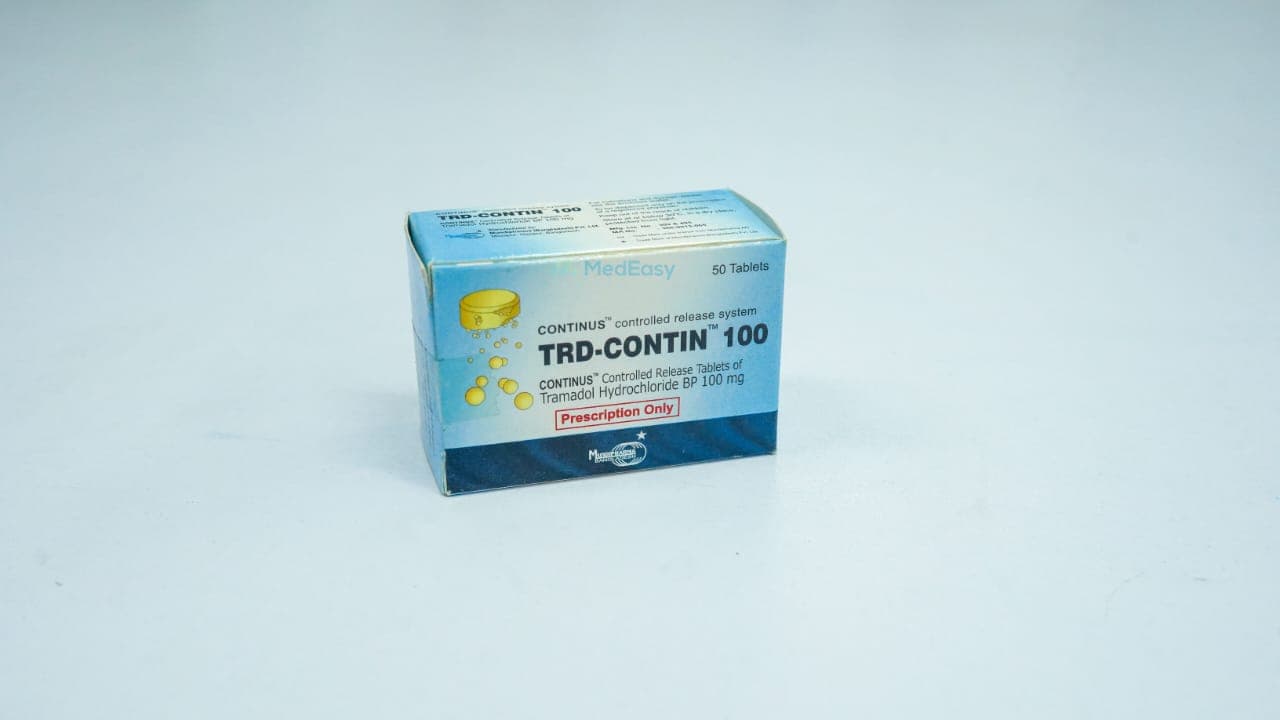

TRD-Contin is a centrally-acting opioid analgesic used for the management of pain. Its indications can be classified as follows:
TRD-Contin is not indicated for the treatment of mild pain that can be managed with non-opioid analgesics, and it is not an antibiotic.
Each formulation contains Tramadol Hydrochloride as the active pharmaceutical ingredient. In Bangladesh, Tramadol Hydrochloride is available in multiple strengths and dosage forms, including:
Excipients vary by manufacturer and formulation; refer to the specific product label for full excipient details.
TRD-Contin is a synthetic, centrally-acting opioid analgesic with a dual mechanism of action: it acts as an agonist at the mu-opioid receptor and also inhibits the reuptake of norepinephrine and serotonin, both of which contribute to its analgesic effect. TRD-Contin is used for the management of moderate to moderately severe pain in adults. It is chemically distinct from many other opioids and carries a lower (though not absent) potential for abuse compared with full agonist opioids, but it still carries serious risks of dependence, misuse, and respiratory depression, and is classified as a controlled substance in many jurisdictions, including Bangladesh.
Opioid analgesic (centrally-acting synthetic opioid agonist with monoaminergic reuptake-inhibiting activity). TRD-Contin belongs to this class.
Tramadol Hydrochloride exerts its analgesic effect through a dual mechanism:
Pharmacokinetics: Tramadol Hydrochloride is well absorbed after oral administration and undergoes hepatic metabolism, primarily via CYP2D6 (to the active M1 metabolite) and CYP3A4. Metabolites are eliminated mainly via the kidneys. The elimination half-life is approximately 5–7 hours for the parent compound. Genetic variability in CYP2D6 activity (poor or ultra-rapid metabolizers) can significantly affect both efficacy and safety.
TRD-Contin should be taken exactly as prescribed by a physician, at the lowest effective dose for the shortest duration consistent with treatment goals. Immediate-release capsules/tablets may be taken with or without food. Sustained-release (SR) tablets must be swallowed whole and must not be crushed, chewed, or split, as this can cause rapid release and absorption of a potentially fatal dose.
| Population / Situation | Typical Dose |
|---|---|
| Adults – immediate-release (acute pain) | 50–100 mg orally every 4–6 hours as needed; maximum 400 mg/day |
| Adults – extended-release (chronic pain, opioid-naive) | 100 mg once daily, titrated by 100 mg increments no more often than every 5 days; maximum 300 mg/day |
| Elderly (>75 years) | Maximum 300 mg/day (immediate-release); start low and titrate slowly with close monitoring |
| Renal impairment (CrCl <30 mL/min) | Immediate-release: extend interval to every 12 hours, maximum 200 mg/day; extended-release not recommended |
| Hepatic impairment (severe) | Immediate-release: 50 mg every 12 hours; extended-release not recommended |
| Pediatric (under 12 years) | Contraindicated – see Contraindications |
| Pediatric (12–17 years, post-tonsillectomy/adenoidectomy) | Contraindicated – see Contraindications |
Doses should be individualized based on pain severity, prior opioid exposure, and patient risk factors. Do not exceed the maximum recommended doses stated above.
TRD-Contin immediate-release capsules/tablets and oral drops may be taken with or without food. Extended-release (SR) tablets must be swallowed whole with sufficient water, once daily at approximately the same time each day, and must never be crushed, chewed, dissolved, or split. The injectable form of TRD-Contin is administered by slow intravenous, intramuscular, or subcutaneous injection by a qualified healthcare professional. Do not adjust the dose or discontinue therapy abruptly without consulting a physician.
TRD-Contin has several clinically significant drug interactions:
Tramadol Hydrochloride is contraindicated in the following situations:
Side effects of TRD-Contin range from common and mild to rare but serious.
Pregnancy: TRD-Contin should be used during pregnancy only if clearly needed and if the potential benefit justifies the potential risk to the fetus; a physician must be consulted before use. Prolonged use of TRD-Contin during pregnancy can result in neonatal opioid withdrawal syndrome, which can be life-threatening if not recognized and treated, requiring management by clinicians experienced in neonatal opioid withdrawal.
Lactation: TRD-Contin and its active metabolite pass into breast milk. Because of the risk of serious adverse effects, including excess sedation and respiratory depression, in a breastfed infant, breastfeeding is generally not recommended during treatment with TRD-Contin; a physician should be consulted to weigh the risks and benefits and consider alternatives.
TRD-Contin carries serious risks that require careful clinical judgment and patient counseling:
Overdose of TRD-Contin is a medical emergency. Signs and symptoms may include severe drowsiness, pinpoint pupils, cold and clammy skin, extreme respiratory depression or difficulty breathing, seizures, loss of consciousness, and cardiac arrest. If overdose is suspected, seek immediate medical attention or contact emergency services / a poison control center without delay. Do not attempt to manage a suspected overdose at home; specific medical treatment (which may include airway support and reversal agents) must be administered by trained healthcare professionals.
Store at room temperature (below 30°C), away from light and moisture. Keep out of reach of children.
Elderly (>65, especially >75 years): Use TRD-Contin with caution; start at the lower end of the dosing range and titrate slowly, with close monitoring for excessive sedation and respiratory depression. Maximum immediate-release dose in patients over 75 years is 300 mg/day.
Renal impairment: In patients with creatinine clearance below 30 mL/min, extend the dosing interval for immediate-release TRD-Contin to every 12 hours, with a maximum of 200 mg/day; extended-release formulations are not recommended.
Hepatic impairment: In patients with severe hepatic impairment, reduce the immediate-release dose to 50 mg every 12 hours; extended-release formulations are not recommended.
Pediatric patients: See Pediatric Uses and Contraindications.
TRD-Contin should be used at the lowest effective dose for the shortest duration consistent with the treatment goals of the individual patient. For acute pain, treatment is typically limited to a few days. For chronic pain requiring extended-release TRD-Contin, ongoing treatment should be periodically reassessed by the prescribing physician to confirm continued need, weighing benefits against the risks of long-term opioid therapy, including dependence.
Opioid analgesics; centrally-acting synthetic opioids with combined mu-opioid agonist and monoamine (serotonin/norepinephrine) reuptake-inhibiting activity.
Tramadol Hydrochloride acts through a dual mechanism: as a weak agonist at mu-opioid receptors in the central nervous system, and by inhibiting neuronal reuptake of norepinephrine and serotonin, thereby enhancing descending pain-inhibitory pathways. Both mechanisms contribute to its overall analgesic effect.
C
TRD-Contin is contraindicated in children younger than 12 years of age due to the risk of life-threatening respiratory depression. It is also contraindicated in children and adolescents younger than 18 years of age following tonsillectomy and/or adenoidectomy. Use should be avoided in adolescents aged 12 to 18 years who have other risk factors that may increase sensitivity to opioid-induced respiratory depression (e.g., obesity, obstructive sleep apnea, severe pulmonary disease, or concomitant use of other respiratory depressants). Safety and efficacy of TRD-Contin in other pediatric populations have not been established.
Q: What is TRD-Contin 100 mg Tablet used for?
A: TRD-Contin 100 mg Tablet is used to manage pain that is moderate to moderately severe, when non-opioid pain relievers are not sufficient. It works through a combination of opioid and non-opioid (monoamine reuptake inhibition) mechanisms.
Q: Can I take TRD-Contin 100 mg Tablet with alcohol or sleeping pills?
A: No. Combining TRD-Contin 100 mg Tablet with alcohol, benzodiazepines, or other central nervous system depressants can cause profound sedation, dangerously slowed or stopped breathing, coma, and death. Avoid alcohol and inform your doctor of all other sedating medicines you take.
Q: Is TRD-Contin 100 mg Tablet safe during pregnancy?
A: TRD-Contin 100 mg Tablet should be used in pregnancy only if clearly needed and if the potential benefit justifies the potential risk to the baby, since prolonged use can cause withdrawal symptoms in the newborn. Always consult your physician before using TRD-Contin 100 mg Tablet if you are pregnant or planning pregnancy.
Q: Can TRD-Contin 100 mg Tablet be given to children?
A: TRD-Contin 100 mg Tablet must not be given to children younger than 12 years, and must not be given to anyone younger than 18 years after tonsillectomy or adenoidectomy surgery, due to the risk of severe, life-threatening breathing problems.
Q: What should I do if I miss a dose or think I have taken too much TRD-Contin 100 mg Tablet?
A: If you miss a dose and it is not yet close to your next scheduled dose, take it as soon as you remember; do not double up doses. If you suspect an overdose of TRD-Contin 100 mg Tablet (symptoms may include severe drowsiness, slow or stopped breathing, or loss of consciousness), seek emergency medical attention or contact a poison control center immediately – this is a medical emergency.
Q: Can I stop taking TRD-Contin 100 mg Tablet suddenly?
A: No. If you have taken TRD-Contin 100 mg Tablet regularly for more than a few days, stopping suddenly can cause withdrawal symptoms such as anxiety, sweating, tremor, and insomnia. Your physician will advise a gradual dose reduction (tapering) when it is time to stop.
Disclaimer
The information provided is accurate to the best of our knowledge, but it does not replace professional medical advice. We cannot guarantee its completeness or accuracy, and the absence of specific information about a drug should not be taken as an endorsement. We are not responsible for any consequences arising from this information, so please consult a healthcare professional for any concerns or questions.
