
Key facts
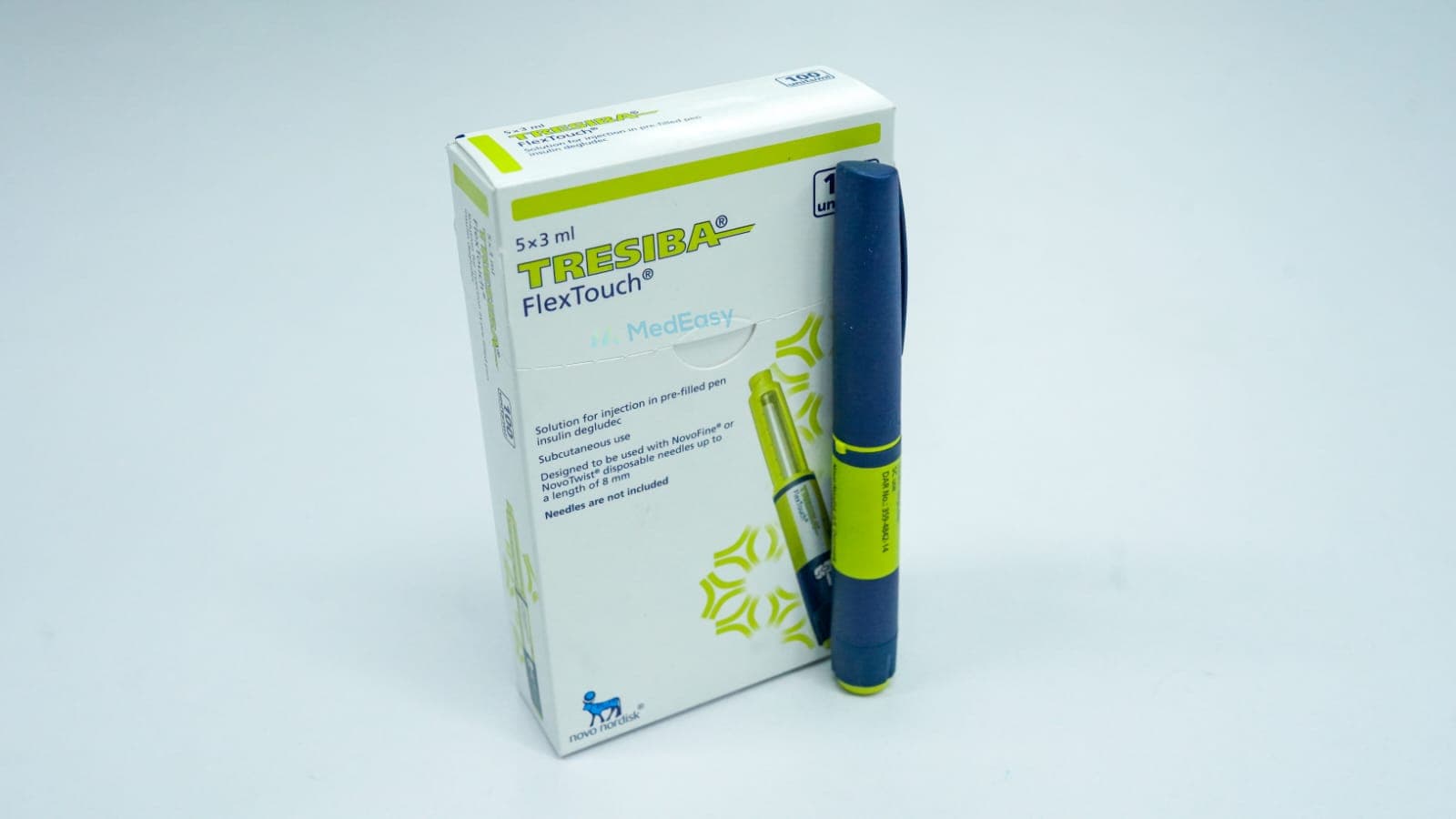
Tresiba Flexpen 100IU/ml Flexpen is available on MedEasy for ৳2612.50 per Flexpen, with home delivery anywhere in Bangladesh. It is manufactured by Novo Nordisk. Its generic name is Insulin Degludec.
- Pack sizes
- Flexpen, 5's pack
- Prescription
- Required. Upload a valid doctor's prescription at checkout; a MedEasy pharmacist verifies it before dispatch.
- Delivery
- Home delivery across Bangladesh. Same-day delivery in Dhaka, Chattogram, Sylhet and Bogura city areas; 2-3 days elsewhere.
- Payment
- Cash on delivery, bKash, cards and mobile banking.
- Brand
- Tresiba Flexpen
- Generic name
- Insulin Degludec
- Manufacturer
- Novo Nordisk
- Form & strength
- Flexpen 100IU/ml
- Availability
- In stock
- Authenticity
- Sourced from licensed suppliers and the manufacturer's authorised distributors in Bangladesh.

Medicine overview
Indications of Tresiba Flexpen
Tresiba Flexpen is an ultra-long-acting basal insulin analog indicated for the following uses:
Established / FDA-approved uses
- To improve glycemic control in adults with type 1 diabetes mellitus, as part of a regimen that includes a separate rapid- or short-acting mealtime insulin.
- To improve glycemic control in adults with type 2 diabetes mellitus, either alone or in combination with oral antidiabetic agents and/or other insulins.
- To improve glycemic control in pediatric patients 1 year of age and older with type 1 diabetes mellitus.
Not indicated for
- Treatment of diabetic ketoacidosis (an intravenous, short-acting insulin is required in that setting).
- Type 2 diabetes in pediatric patients (safety and efficacy not established in this population).
Tresiba Flexpen is a basal (background) insulin only and must always be used together with a comprehensive diabetes management plan, including blood glucose monitoring and, where required, mealtime insulin.
Composition
Each mL of Insulin Degludec injection contains 100 units or 200 units of insulin degludec (a recombinant, ultra-long-acting human insulin analog) as the active ingredient, in a clear, colorless, neutral aqueous solution for subcutaneous injection.
Available as prefilled pen devices or vials, with excipients typically including glycerol, metacresol, phenol, zinc, and water for injection; a small amount of hydrochloric acid/sodium hydroxide may be added to adjust pH.
Description
Tresiba Flexpen is a man-made (recombinant) analog of human insulin engineered for an ultra-long duration of action. Structurally, it differs from human insulin by deletion of the terminal amino acid threonine at position B30 and attachment of a glutamic acid linker and a C16 fatty diacid side chain to the lysine at position B29.
This modification allows Tresiba Flexpen to form stable, soluble multi-hexamer chains after subcutaneous injection, creating a slow-releasing depot under the skin. It is used as a once-daily basal insulin to help control blood glucose levels in people with type 1 or type 2 diabetes mellitus.
Therapeutic Class
Tresiba Flexpen belongs to the therapeutic class of anti-diabetic agents (insulins), specifically the subclass of ultra-long-acting basal insulin analogs. It is used for the long-term background (basal) control of blood glucose in diabetes mellitus.
Pharmacology
Mechanism
Insulin Degludec lowers blood glucose by binding to insulin receptors on muscle and fat cells, stimulating peripheral glucose uptake, and by inhibiting glucose output from the liver. It also inhibits lipolysis and proteolysis while enhancing protein synthesis.
Pharmacokinetics
- Absorption: After subcutaneous injection, Insulin Degludec forms soluble multi-hexamer depots from which monomers are slowly and continuously absorbed, giving a flat, predictable, and prolonged glucose-lowering profile with low day-to-day variability.
- Onset: Glucose-lowering effect begins within approximately 1 hour of injection.
- Duration: The glucose-lowering effect lasts beyond 42 hours in the therapeutic dose range.
- Half-life: Approximately 25 hours, largely independent of dose, and steady state is generally reached after 2–3 daily doses.
- Metabolism/Excretion: Degraded similarly to endogenous insulin, primarily via insulin-degrading enzyme; metabolites are inactive.
Dosage & Administration of Tresiba Flexpen
The dose of Tresiba Flexpen must be individualized based on the patient's metabolic needs, blood glucose monitoring results, and glycemic control goals, under physician supervision.
| Indication/Population | Typical Dosing Guidance |
|---|---|
| Adults with type 1 diabetes | Given once daily as part of a basal-bolus regimen, together with a short-/rapid-acting mealtime insulin; approximately one-third to one-half of the total daily insulin requirement is usually given as Tresiba Flexpen. |
| Adults with type 2 diabetes (insulin-naive) | Usually started at around 10 units once daily, then titrated based on blood glucose response. |
| Switching from another basal insulin | Dose adjustment and closer glucose monitoring are recommended during the transition period, per physician guidance. |
| Pediatric patients (1 year and older, type 1 diabetes) | Dosing is individualized in the same manner as adults, adjusted to body weight and metabolic needs, under specialist supervision. |
| Renal or hepatic impairment | No fixed dose adjustment is established; more frequent blood glucose monitoring and individualized dose titration are recommended (see Use in Special Populations). |
Administration
- For subcutaneous injection only; must never be given intravenously or intramuscularly.
- Injected once daily, at any time of day, preferably at the same time each day; if the timing needs to change, at least 8 hours should separate doses.
- Injection sites (thigh, upper arm, or abdomen) should be rotated within the same region to reduce the risk of lipodystrophy.
- Must not be diluted or mixed with any other insulin or solution.
- Pen devices are for single-patient use only and must never be shared between patients, even if the needle is changed.
Administration of Tresiba Flexpen
Tresiba Flexpen is given as a once-daily subcutaneous injection into the thigh, upper arm, or abdominal wall, with injection sites rotated to reduce the risk of lipodystrophy. It should never be administered intravenously or intramuscularly, and must not be mixed or diluted with other insulins or solutions. Patients should be trained in proper injection technique and self-monitoring of blood glucose.
Interaction of Tresiba Flexpen
Only well-established, clinically significant interactions with Tresiba Flexpen are listed below.
- Drugs that may increase hypoglycemic effect (raise hypoglycemia risk): other antidiabetic agents, ACE inhibitors, disopyramide, fibrates, fluoxetine, monoamine oxidase inhibitors (MAOIs), pentoxifylline, salicylates, and sulfonamide antibiotics.
- Drugs that may decrease hypoglycemic effect (raise blood glucose, reducing effectiveness): corticosteroids, danazol, diuretics, sympathomimetic agents, isoniazid, niacin, oral contraceptives/estrogens, phenothiazines, thyroid hormone replacement, and atypical antipsychotics.
- Beta-blockers, clonidine, and reserpine may blunt or mask the warning signs of hypoglycemia (such as tremor and palpitations), delaying recognition.
- Pramlintide or GLP-1 receptor agonists used together with Tresiba Flexpen have an additive glucose-lowering effect and increase hypoglycemia risk, often requiring a reduction in insulin dose.
- Alcohol can potentiate or prolong the hypoglycemic effect of Tresiba Flexpen.
Contraindications
Insulin Degludec is contraindicated in:
- Patients with known hypersensitivity to insulin degludec or any of its excipients.
- During episodes of hypoglycemia.
Side Effects of Tresiba Flexpen
The most common and most serious adverse reaction associated with Tresiba Flexpen is hypoglycemia (see Precautions and Warnings for full detail). Other reported side effects include:
- Injection site reactions (pain, redness, swelling, itching) and lipodystrophy (lipohypertrophy or lipoatrophy) with repeated injection at the same site.
- Weight gain.
- Peripheral edema (fluid retention), particularly when starting insulin therapy or intensifying glucose control.
- Hypokalemia (low blood potassium).
- Allergic reactions, which are usually mild (local rash, itching) but rarely can be severe, including generalized skin reactions, angioedema, bronchospasm, hypotension, or anaphylaxis.
Pregnancy & Lactation
Pregnancy
Insulin, including Tresiba Flexpen, does not cross the placenta in clinically relevant amounts, and insulin therapy is generally a preferred option for achieving glycemic control during pregnancy when medication is needed, including in pre-existing and gestational diabetes. However, Tresiba Flexpen should be used in pregnancy only if clearly needed, and potential benefit is judged by a physician to justify potential risk; insulin requirements often change during pregnancy and the postpartum period, so blood glucose should be monitored closely and dose adjusted under physician guidance.
Lactation
Insulin is expected to pass into breast milk in amounts similar to endogenous insulin and is not expected to have adverse effects on a breastfed infant; Tresiba Flexpen is commonly used in breastfeeding women who need insulin therapy. Nonetheless, use during breastfeeding should be under medical supervision, with attention to maternal dose and glucose monitoring.
Precautions & Warnings
- Hypoglycemia: The most common and most serious risk with Tresiba Flexpen; can be life-threatening if severe. Tresiba Flexpen has a flat, prolonged action profile associated with generally lower nocturnal hypoglycemia risk compared with some older basal insulins, but careful dose titration, consistent monitoring, and patient education on recognizing and treating hypoglycemia remain essential. Because of its long duration of action, hypoglycemia related to Tresiba Flexpen may take longer to resolve than with shorter-acting insulins.
- Not for diabetic ketoacidosis: Tresiba Flexpen must not be used to treat diabetic ketoacidosis; intravenous, rapid-acting/regular insulin is required in this setting.
- Injection site lipodystrophy: Repeated injection at the same site without rotation can cause lipodystrophy, which may alter insulin absorption; sites should be rotated with each injection.
- Hypokalemia: Tresiba Flexpen, like all insulins, can shift potassium into cells and cause hypokalemia, which may be serious (e.g., causing arrhythmia) if untreated; monitoring is advised in at-risk patients.
- Dose titration and monitoring: Any change in insulin regimen (type, brand, or dose) should be made cautiously and only under medical supervision, with careful blood glucose monitoring, especially during illness, changes in diet, exercise, or concomitant medication.
- Fluid retention with concomitant thiazolidinediones (TZDs): Using Tresiba Flexpen together with TZDs may increase the risk of fluid retention and heart failure, particularly in patients with pre-existing cardiac risk factors.
- Hypersensitivity reactions: Severe, generalized allergic reactions, including anaphylaxis, are rare but can be life-threatening; discontinue and seek medical care if suspected.
- Medication errors: Tresiba Flexpen is available in different pen strengths (e.g., U-100 and U-200); patients and caregivers must check the device and dose carefully before each injection to avoid dosing errors, and pens must never be shared between patients even with a new needle.
Overdose Effects of Tresiba Flexpen
An excess dose of Tresiba Flexpen relative to food intake, physical activity, or energy expenditure can cause hypoglycemia, which may range from mild (sweating, shakiness, palpitations, hunger, confusion) to severe (seizure, loss of consciousness).
- Mild hypoglycemic episodes can usually be managed with oral glucose or a carbohydrate-containing snack or drink.
- Severe hypoglycemia with impaired consciousness may require assistance from another person and treatment with glucagon or intravenous glucose administered by a healthcare professional.
- Because Tresiba Flexpen has a prolonged, ultra-long duration of action, hypoglycemia following an overdose may develop or resolve slowly, and extended monitoring of blood glucose over many hours may be required.
Any suspected overdose or severe/prolonged hypoglycemia should be treated as a medical emergency — seek immediate medical attention or contact emergency services without delay.
Storage Conditions
Store unopened pens/vials of Tresiba Flexpen in a refrigerator (2°C to 8°C); do not freeze, and discard if it has been frozen. Once in use, the pen/vial may be kept at room temperature (below 30°C), away from direct heat and light, and must be discarded after 56 days even if some medicine remains. Keep out of reach of children.
Use In Special Populations
- Renal impairment: Tresiba Flexpen can be used, but insulin requirements may be reduced due to decreased insulin clearance; blood glucose should be monitored closely and the dose individualized.
- Hepatic impairment: Insulin requirements may be altered due to reduced capacity for gluconeogenesis and insulin metabolism; closer glucose monitoring and dose adjustment are recommended.
- Elderly patients: Tresiba Flexpen can be used, but dose titration should be conservative, with close monitoring, as elderly patients may have reduced ability to recognize hypoglycemia symptoms and may have age-related decline in renal function.
- Pediatric patients: Safety and efficacy of Tresiba Flexpen are established in children 1 year of age and older with type 1 diabetes mellitus; safety and efficacy have not been established for type 2 diabetes in pediatric patients or for children under 1 year of age.
Duration Of Treatment
Tresiba Flexpen is used as a long-term, typically lifelong, basal insulin therapy for diabetes mellitus, continued for as long as needed to maintain glycemic control. Duration and dose should be reviewed periodically by the treating physician based on blood glucose control, HbA1c, and overall health status.
Drug Classes
Antidiabetic agent; ultra-long-acting basal insulin analog.
Mode Of Action
Insulin Degludec acts by binding to insulin receptors, promoting glucose uptake by skeletal muscle and adipose tissue and suppressing hepatic glucose production. After subcutaneous injection, it self-associates into soluble, stable multi-hexamer chains that form a depot under the skin; individual Insulin Degludec monomers then separate slowly and continuously from this depot into the bloodstream, producing a flat, consistent, and prolonged (beyond 42 hours) glucose-lowering action with low day-to-day variability compared with older basal insulins.
Pediatric Uses
Tresiba Flexpen is approved for use in pediatric patients 1 year of age and older with type 1 diabetes mellitus, with dosing individualized to the child's metabolic needs under specialist supervision and close blood glucose monitoring. Safety and efficacy of Tresiba Flexpen have not been established in children younger than 1 year of age or in pediatric patients with type 2 diabetes.
Frequently Asked Questions
Q: What is Tresiba Flexpen 100IU/ml Flexpen used for?
A: Tresiba Flexpen 100IU/ml Flexpen is an ultra-long-acting basal insulin used to control blood glucose levels in adults and children (1 year and older) with type 1 diabetes, and in adults with type 2 diabetes. It is not used to treat diabetic ketoacidosis.
Q: How often do I need to inject Tresiba Flexpen 100IU/ml Flexpen?
A: Tresiba Flexpen 100IU/ml Flexpen is injected once daily, at any time of day, ideally at around the same time each day. If you must change the time of your injection, leave at least 8 hours between doses. Always follow your physician's specific instructions.
Q: What is the biggest risk with Tresiba Flexpen 100IU/ml Flexpen?
A: The most common and most serious risk is hypoglycemia (low blood sugar), which can cause symptoms such as sweating, shakiness, confusion, and in severe cases, seizures or loss of consciousness. Know the warning signs, carry a fast-acting source of glucose, and seek immediate medical attention for severe or prolonged low blood sugar.
Q: Can Tresiba Flexpen 100IU/ml Flexpen be used during pregnancy or breastfeeding?
A: Insulin therapy, including Tresiba Flexpen 100IU/ml Flexpen, is generally a preferred option for controlling blood glucose during pregnancy when medication is needed, and it is commonly used during breastfeeding. However, it should be used only under close physician supervision, as insulin needs often change during pregnancy and after delivery.
Q: Can I mix Tresiba Flexpen 100IU/ml Flexpen with other insulins in the same syringe?
A: No. Tresiba Flexpen 100IU/ml Flexpen must not be mixed or diluted with any other insulin or solution, and it should only be injected subcutaneously — never intravenously or intramuscularly.
Q: How should I store Tresiba Flexpen 100IU/ml Flexpen?
A: Keep unopened Tresiba Flexpen 100IU/ml Flexpen refrigerated (2°C to 8°C) and do not freeze it. Once you start using a pen or vial, it can be kept at room temperature below 30°C, away from heat and light, but must be discarded after 56 days even if medicine remains.
Disclaimer
The information provided is accurate to the best of our knowledge, but it does not replace professional medical advice. We cannot guarantee its completeness or accuracy, and the absence of specific information about a drug should not be taken as an endorsement. We are not responsible for any consequences arising from this information, so please consult a healthcare professional for any concerns or questions.
