
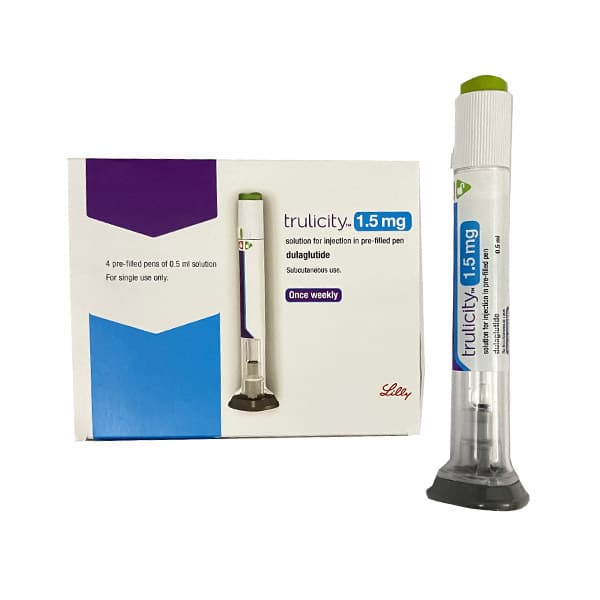

Medicine overview
Indications of Trulicity
Trulicity is a glucagon-like peptide-1 (GLP-1) receptor agonist indicated for use in adults and, in select cases, children as described below.
Established / FDA-approved indications
- Glycemic control in type 2 diabetes mellitus (adults and pediatric patients 10 years and older): As an adjunct to diet and exercise to improve blood glucose control in adults and children 10 years of age and older with type 2 diabetes.
- Cardiovascular risk reduction (adults): To reduce the risk of major adverse cardiovascular events (cardiovascular death, non-fatal myocardial infarction, or non-fatal stroke) in adults with type 2 diabetes who have established cardiovascular disease or multiple cardiovascular risk factors.
Not indicated for
- Type 1 diabetes mellitus.
- Treatment of diabetic ketoacidosis.
- Weight management as a labeled indication (Trulicity is not approved for chronic weight management; any weight-loss effect is a secondary observation of its diabetes indication).
Composition
Each pre-filled pen/syringe of Dulaglutide contains dulaglutide as the active ingredient in a sterile, clear, colorless to slightly yellow solution for subcutaneous injection, commonly available in strengths of 0.75 mg/0.5 mL, 1.5 mg/0.5 mL, 3 mg/0.5 mL, and 4.5 mg/0.5 mL.
Inactive ingredients typically include citric acid anhydrous, mannitol, polysorbate 80, sodium citrate dihydrate, and water for injection.
Description
Trulicity is a human glucagon-like peptide-1 (GLP-1) receptor agonist produced by recombinant DNA technology. It consists of two identical, disulfide-linked chains, each containing a GLP-1 receptor agonist peptide sequence covalently linked to a human IgG4 heavy-chain fragment (Fc), which extends its half-life and allows once-weekly dosing.
It is supplied as a clear, colorless to slightly yellow solution in single-dose prefilled pens or prefilled syringes for subcutaneous self-injection.
Therapeutic Class
Antidiabetic agent - Glucagon-like peptide-1 (GLP-1) receptor agonist (incretin mimetic).
Pharmacology
Mechanism
Dulaglutide is a GLP-1 receptor agonist that activates the GLP-1 receptor, a membrane-bound cell-surface receptor coupled to adenylyl cyclase.
- Increases glucose-dependent insulin secretion from pancreatic beta cells.
- Suppresses inappropriately elevated glucagon secretion in a glucose-dependent manner.
- Slows gastric emptying, which contributes to reduced post-prandial glucose excursions.
Pharmacokinetics
Peak plasma concentrations occur approximately 24-72 hours after subcutaneous dosing. The apparent terminal half-life is approximately 5 days, supporting once-weekly administration and reaching steady state within about 2-4 weeks. It is metabolized by general protein catabolism pathways, so specific hepatic or renal metabolism/excretion studies have limited impact on dosing.
Dosage & Administration of Trulicity
Type 2 diabetes mellitus (glycemic control) - Adults
| Step | Dose | Notes |
|---|---|---|
| Starting dose | 0.75 mg subcutaneously once weekly | No titration required to start |
| Dose increase | 1.5 mg once weekly | After at least 4 weeks on the starting dose, if additional glycemic control is needed |
| Further increases | 3 mg, then 4.5 mg once weekly | Each increase after at least 4 weeks on the previous dose, for patients needing additional control; maximum dose is 4.5 mg weekly |
Cardiovascular risk reduction - Adults
Dosing follows the same once-weekly regimen (0.75 mg to 4.5 mg per week) titrated for tolerability and glycemic response.
Pediatric patients (10 years and older)
Starting dose 0.75 mg once weekly; may be increased in a stepwise manner (to 1.5 mg, then higher doses if needed and tolerated) following the same general titration principles used in adults, under close physician supervision. Safety and efficacy in children under 10 years of age have not been established.
Renal/hepatic impairment
No dose adjustment is required based on renal or hepatic impairment; however, caution is advised in patients with renal impairment because gastrointestinal adverse reactions leading to dehydration may worsen kidney function (see Precautions).
Administration instructions
- Inject subcutaneously in the abdomen, thigh, or upper arm.
- May be administered at any time of day, with or without food.
- Administer once weekly on the same day each week; the day can be changed if the last dose was given at least 3 days before.
- If a dose is missed and there are at least 3 days until the next scheduled dose, administer as soon as possible; if less than 3 days remain, skip the missed dose and resume on the regular schedule.
- Do not mix with insulin in the same injection; if co-administered with insulin, use separate injection sites.
Administration of Trulicity
Trulicity is administered by subcutaneous injection only (never intravenously or intramuscularly) using a single-dose prefilled pen or prefilled syringe. Rotate injection sites among the abdomen, thigh, and upper arm. Patients should be trained on proper injection technique before self-administering.
Interaction of Trulicity
- Insulin secretagogues (e.g., sulfonylureas) or insulin: Concomitant use increases the risk of hypoglycemia; a lower dose of the sulfonylurea or insulin may be required.
- Oral medications dependent on rapid gastrointestinal absorption: Trulicity slows gastric emptying and may affect the rate of absorption of co-administered oral drugs (e.g., oral contraceptives); monitor for reduced effectiveness where rapid absorption is important.
- Warfarin and other vitamin K antagonists: Increases in INR have been reported with GLP-1 receptor agonists; monitor INR more frequently when initiating or adjusting Trulicity in patients on warfarin.
Contraindications
- Personal or family history of medullary thyroid carcinoma (MTC).
- Patients with Multiple Endocrine Neoplasia syndrome type 2 (MEN 2).
- Known hypersensitivity to dulaglutide or any component of the formulation.
Side Effects of Trulicity
Very common / common
- Nausea, vomiting, diarrhea, abdominal pain, decreased appetite (most frequent, often dose-related and tend to diminish over time).
- Injection site reactions (redness, itching, swelling).
- Fatigue, dyspepsia.
Less common but clinically important
- Hypoglycemia (mainly when combined with insulin or sulfonylureas).
- Hypersensitivity reactions, including anaphylaxis and angioedema (rare).
- Acute pancreatitis and acute kidney injury - see Precautions and Warnings.
Pregnancy & Lactation
Pregnancy
Data on use of Trulicity in pregnant women are limited. Animal studies have shown adverse developmental effects at systemic exposures relevant to clinical use. Because of its long half-life, discontinuation is generally advised at least one month before a planned pregnancy. Trulicity should be used during pregnancy only if clearly needed and the potential benefit justifies the potential risk to the fetus; consult a physician before use if pregnant or planning pregnancy.
Lactation
It is not known whether Trulicity is excreted in human milk. A decision on breastfeeding should weigh the benefits of breastfeeding against the mother's clinical need for Trulicity, and should be made in consultation with a physician.
Precautions & Warnings
Boxed warning: Risk of thyroid C-cell tumors
Trulicity caused thyroid C-cell tumors in rodent studies; it is unknown whether this occurs in humans. As a precaution, Trulicity is contraindicated in patients with a personal or family history of medullary thyroid carcinoma or Multiple Endocrine Neoplasia syndrome type 2 (see Contraindications). Counsel patients on the symptoms of thyroid tumors (e.g., a neck mass, dysphagia, dyspnea, persistent hoarseness).
Other precautions
- Pancreatitis: Cases of acute pancreatitis have been reported; discontinue promptly if pancreatitis is suspected (persistent severe abdominal pain, often with vomiting) and do not restart if confirmed.
- Not for type 1 diabetes or diabetic ketoacidosis: Trulicity is not a substitute for insulin in these settings.
- Gastrointestinal effects and dehydration-related acute kidney injury: Significant nausea and vomiting can lead to dehydration, which may worsen renal function, including acute kidney injury; ensure adequate hydration, particularly during dose initiation or escalation.
- Gallbladder disease: Cases of cholelithiasis and cholecystitis have been reported; evaluate promptly if signs/symptoms occur.
- Diabetic retinopathy complications: Patients with a history of diabetic retinopathy should be monitored, as rapid improvement in glucose control has been associated with temporary worsening of retinopathy in some studies.
- Hypersensitivity reactions: Discontinue if serious hypersensitivity reactions occur.
Overdose Effects of Trulicity
Overdose with Trulicity may cause severe nausea, vomiting, diarrhea, and an increased risk of hypoglycemia. There is no specific antidote. In case of suspected overdose, seek immediate medical attention or contact a poison control center; management is supportive, including monitoring of hydration status and blood glucose, with treatment directed at presenting clinical signs.
Storage Conditions
Store Trulicity pens/syringes in a refrigerator (2°C to 8°C / 36°F to 46°F) in the original carton to protect from light. If needed, it may be kept at room temperature (up to 30°C/86°F) for up to 14 days, protected from light. Do not freeze; discard if the product has been frozen. Keep out of reach of children.
Use In Special Populations
Pediatric use
Safety and efficacy have been established in children 10 years of age and older with type 2 diabetes for glycemic control. Safety and efficacy in children below 10 years of age have not been established.
Elderly
No overall dose adjustment is required based on age alone; clinical experience in patients over 75 years is limited, so use with appropriate monitoring.
Renal impairment
No dose adjustment needed; monitor renal function, particularly in patients experiencing significant gastrointestinal adverse reactions (see Precautions).
Hepatic impairment
No dose adjustment required based on available data.
Duration Of Treatment
Trulicity is intended for long-term, chronic use as part of ongoing management of type 2 diabetes (and cardiovascular risk reduction where indicated). Duration should be determined by the treating physician based on glycemic response, tolerability, and overall treatment goals, with periodic reassessment.
Drug Classes
GLP-1 receptor agonist; incretin mimetic; antidiabetic (antihyperglycemic) agent.
Mode Of Action
Dulaglutide binds to and activates the GLP-1 receptor, stimulating glucose-dependent insulin release from pancreatic beta cells, suppressing excess glucagon secretion, and slowing gastric emptying - collectively lowering post-meal and fasting blood glucose while carrying a low intrinsic risk of hypoglycemia when used alone.
Pediatric Uses
Trulicity is approved as an adjunct to diet and exercise to improve glycemic control in pediatric patients 10 years of age and older with type 2 diabetes mellitus, using the same starting dose (0.75 mg once weekly) and a similar physician-guided titration approach as in adults. It is not approved and safety/efficacy have not been established for children younger than 10 years, nor for type 1 diabetes in any pediatric age group.
Frequently Asked Questions
Q: What is Trulicity 1.5 mg/0.5 ml SC Injection used for?
A: Trulicity 1.5 mg/0.5 ml SC Injection is used, along with diet and exercise, to improve blood sugar control in adults and children 10 years and older with type 2 diabetes, and to reduce the risk of major cardiovascular events in adults with type 2 diabetes who have heart disease or multiple cardiovascular risk factors.
Q: How is Trulicity 1.5 mg/0.5 ml SC Injection taken?
A: Trulicity 1.5 mg/0.5 ml SC Injection is given as a subcutaneous (under-the-skin) injection once a week, on the same day each week, using a prefilled pen or syringe, at any time of day with or without food.
Q: Who should not use Trulicity 1.5 mg/0.5 ml SC Injection?
A: Trulicity 1.5 mg/0.5 ml SC Injection should not be used by anyone with a personal or family history of medullary thyroid carcinoma, patients with Multiple Endocrine Neoplasia syndrome type 2, or anyone with a known hypersensitivity to Trulicity 1.5 mg/0.5 ml SC Injection or its ingredients.
Q: What are the most common side effects of Trulicity 1.5 mg/0.5 ml SC Injection?
A: The most common side effects of Trulicity 1.5 mg/0.5 ml SC Injection are nausea, vomiting, diarrhea, decreased appetite, and abdominal pain, which are usually mild-to-moderate and tend to improve over time.
Q: Can Trulicity 1.5 mg/0.5 ml SC Injection be used during pregnancy?
A: Trulicity 1.5 mg/0.5 ml SC Injection is not recommended during pregnancy; because it stays in the body for a long time, it is generally advised to stop it at least one month before planning a pregnancy. Use only if clearly needed, and only after consulting a physician.
Q: What should I do if I miss a dose of Trulicity 1.5 mg/0.5 ml SC Injection?
A: If it has been at least 3 days since the missed dose was due, take Trulicity 1.5 mg/0.5 ml SC Injection as soon as possible; if fewer than 3 days remain until the next scheduled dose, skip the missed dose and resume your regular weekly schedule. Never take two doses close together.
Disclaimer
The information provided is accurate to the best of our knowledge, but it does not replace professional medical advice. We cannot guarantee its completeness or accuracy, and the absence of specific information about a drug should not be taken as an endorsement. We are not responsible for any consequences arising from this information, so please consult a healthcare professional for any concerns or questions.
