
10% Off
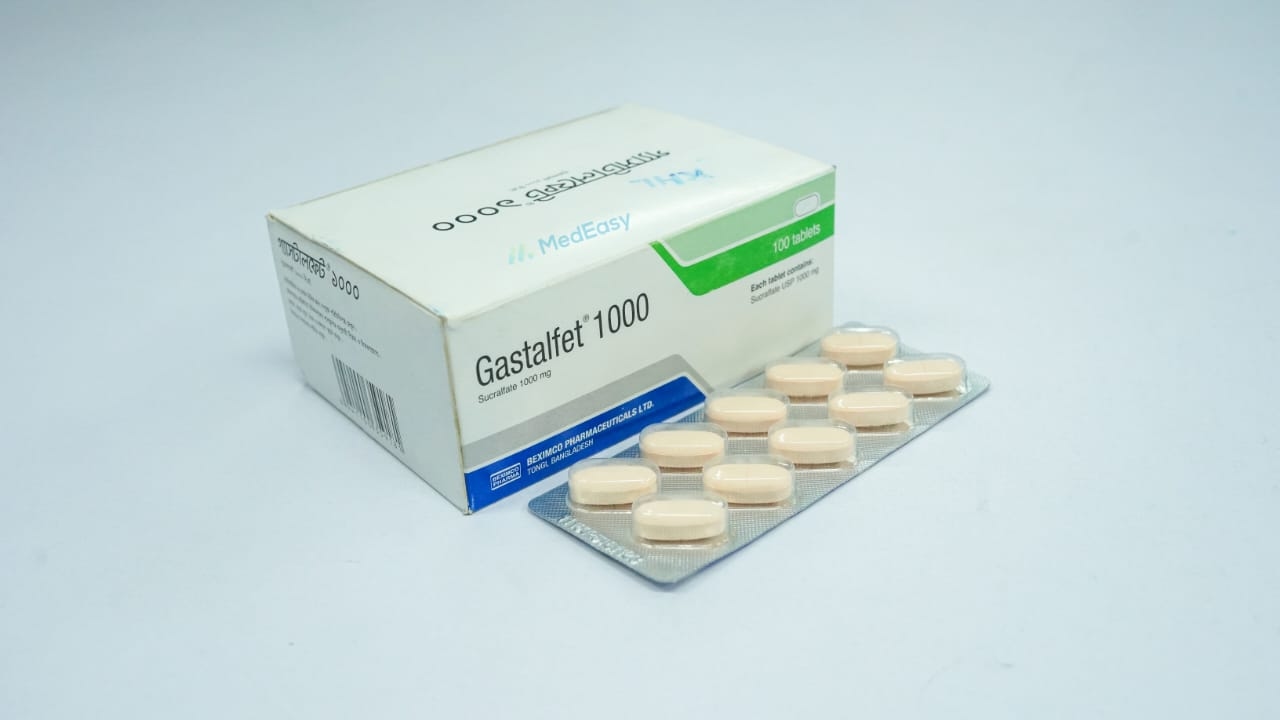
Gastalfet1000 mg
Beximco Pharmaceuticals Ltd.
৳54.00
Add to cart
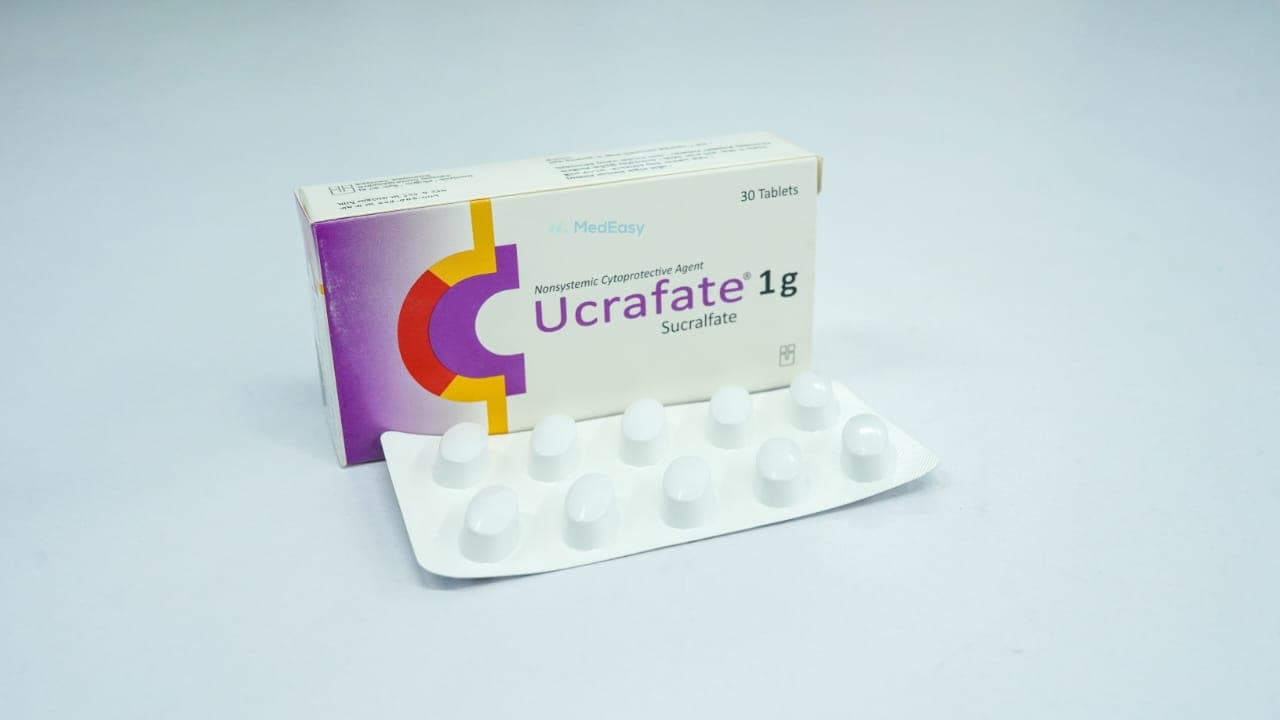

Ucrafate is a locally-acting mucosal protectant primarily indicated for gastrointestinal ulcer disease. Its evidence-based uses are classified as follows:
Use of Ucrafate for indications beyond active/maintenance duodenal ulcer therapy is generally considered off-label and should be guided by a physician's clinical judgment.
Each Sucralfate tablet typically contains Sucralfate 1 g. An oral suspension form containing Sucralfate 1 g per 10 mL is also available. Formulation and strength should be confirmed on the product label.
Ucrafate is a basic aluminum salt of sucrose octasulfate. It is a locally-acting agent with minimal systemic absorption that works by forming a protective, adherent barrier over ulcerated gastrointestinal mucosa. Unlike acid-suppressing agents (proton pump inhibitors or H2-receptor antagonists), Ucrafate does not primarily act by reducing gastric acid secretion; instead it physically shields the ulcer site from acid, pepsin, and bile salts, allowing natural mucosal healing to proceed.
Ucrafate belongs to the class of drugs known as mucosal protective agents (cytoprotective agents), used in the management of peptic ulcer disease. It is distinct from antacids, H2-receptor antagonists, and proton pump inhibitors.
In the acidic environment of the stomach, Sucralfate reacts with hydrochloric acid to form a thick, sticky, paste-like complex. This complex binds electrostatically and selectively to the proteinaceous exudate present at the base of ulcers and erosions, forming a protective coating that adheres to the ulcer site for up to 6 hours after a single dose.
This barrier physically protects the ulcer from further damage by gastric acid, pepsin, and bile salts, and also locally concentrates epidermal growth factor and stimulates prostaglandin and bicarbonate production, promoting mucosal healing. Sucralfate requires an acidic gastric pH to become activated, and less than 5% of an oral dose is systemically absorbed, which accounts for its excellent safety profile and lack of significant systemic pharmacologic effects.
| Indication | Adult Dose |
|---|---|
| Active duodenal ulcer | 1 g four times daily, on an empty stomach, 1 hour before meals and at bedtime, for 4–8 weeks (or as directed by physician) |
| Maintenance therapy (duodenal ulcer) | 1 g twice daily |
| Stress ulcer prophylaxis / other off-label uses | As directed by the treating physician; regimens vary by indication and setting |
Take Ucrafate on an empty stomach, at least 1 hour before meals and at bedtime. Swallow tablets with water; shake the oral suspension well before measuring each dose. Do not take antacids within 30 minutes of a Ucrafate dose, as this may reduce its effectiveness. Separate other oral medicines from Ucrafate by at least 2 hours to avoid reduced absorption (see Drug Interactions).
Ucrafate is well known to bind with and reduce the gastrointestinal absorption of numerous co-administered oral drugs, which is the most clinically important interaction concern with this medicine. Affected drug classes include:
Clinical recommendation: Take other oral medications at least 2 hours before or after Ucrafate to minimize this interaction. Concurrent aluminum-containing antacids should also be separated from Ucrafate dosing, as they may interfere with its ulcer-binding activity. Inform your physician or pharmacist of all medicines you are taking before starting Ucrafate.
Sucralfate is contraindicated in patients with known hypersensitivity to Sucralfate or any component of the formulation.
Ucrafate is generally very well tolerated because of its minimal systemic absorption. Reported adverse effects include:
Pregnancy: Animal reproduction studies have not shown evidence of fetal harm, and Ucrafate has minimal systemic absorption. However, adequate and well-controlled studies in pregnant women are limited. Ucrafate should be used during pregnancy only if clearly needed, and only after the potential benefit is weighed against the potential risk to the fetus by a physician.
Lactation: It is not well established whether Ucrafate is excreted in human breast milk; given its very low systemic absorption, clinically significant transfer to breast milk is considered unlikely, but caution is advised. Breastfeeding mothers should consult a physician before use.
Use Ucrafate with caution in the following situations:
If symptoms of active ulcer disease (e.g., severe abdominal pain, black or bloody stools, vomiting blood) occur or worsen despite treatment, seek medical attention promptly.
Because Ucrafate has minimal systemic absorption, it is generally considered to have low potential for toxicity even in overdose, and no specific antidote is known. However, if an overdose of Ucrafate is suspected, seek immediate medical attention or contact a poison control center. Do not attempt to manage a suspected overdose at home without medical guidance.
Store at room temperature (below 30°C), away from light and moisture. Keep out of reach of children.
Use Ucrafate with caution in patients with chronic renal failure or those on dialysis due to the risk of aluminum accumulation and toxicity with long-term use; close medical supervision is advised (see Precautions).
No specific dosage adjustment of Ucrafate is well established for hepatic impairment, given its minimal systemic absorption and lack of hepatic metabolism; however, use should still be under medical guidance.
Ucrafate can generally be used in elderly patients at standard adult doses, with attention to renal function and concurrent medications, given the potential for reduced absorption of other drugs taken close in time.
Safety and efficacy of Ucrafate have not been formally established in children. See Pediatric Uses for further detail.
For active duodenal ulcer, treatment with Ucrafate is typically continued for 4 to 8 weeks, or until healing is confirmed by a physician. Maintenance therapy, if prescribed, may continue for a longer period at a reduced dose to prevent recurrence. The exact duration should be determined by the treating physician based on clinical response and endoscopic findings where applicable. Do not stop treatment early without medical advice, even if symptoms improve.
Mucosal protective agent (cytoprotective agent); anti-ulcer agent.
Sucralfate forms a viscous, paste-like complex in the acidic gastric environment that adheres selectively to the proteinaceous base of ulcers and erosions, creating a physical barrier against acid, pepsin, and bile salts. It also locally stimulates prostaglandin and bicarbonate secretion and binds epidermal growth factor at the ulcer site, promoting mucosal healing. It does not significantly neutralize gastric acid or inhibit acid secretion.
Category B
The safety and efficacy of Ucrafate have not been formally established in pediatric patients. While Ucrafate has been used off-label in children for stress ulcer prophylaxis and other indications in some clinical settings, such use should occur only under direct physician supervision with individualized, weight-based dosing determined by the treating pediatrician. Routine use in children outside of specific medical guidance is not recommended.
Q: What is Ucrafate 1000 mg Tablet used for?
A: Ucrafate 1000 mg Tablet is mainly used to treat active duodenal ulcers and to prevent their recurrence (maintenance therapy). It is also sometimes used off-label for stress ulcer prevention, gastric ulcers, and mouth/throat soreness caused by cancer treatment, on a physician's advice.
Q: When should I take Ucrafate 1000 mg Tablet?
A: Ucrafate 1000 mg Tablet works best when taken on an empty stomach, generally 1 hour before meals and again at bedtime, so that it can properly coat the ulcer site.
Q: Can I take Ucrafate 1000 mg Tablet with my other medicines?
A: Ucrafate 1000 mg Tablet can bind to many other oral medicines (such as certain antibiotics, thyroid medicine, phenytoin, digoxin, and warfarin) and significantly reduce their absorption. To avoid this, take other oral medicines at least 2 hours before or after your Ucrafate 1000 mg Tablet dose, and always tell your doctor or pharmacist about all medicines you take.
Q: Is Ucrafate 1000 mg Tablet safe during pregnancy and breastfeeding?
A: Ucrafate 1000 mg Tablet has minimal absorption into the bloodstream and has not shown clear evidence of fetal harm in animal studies, but data in pregnant women are limited. It should be used during pregnancy only if clearly needed and under a physician's advice, weighing potential benefits against potential risks. Similarly, breastfeeding mothers should consult their physician before using Ucrafate 1000 mg Tablet, as data on transfer into breast milk are limited, though significant transfer is considered unlikely.
Q: What are the common side effects of Ucrafate 1000 mg Tablet?
A: The most common side effect of Ucrafate 1000 mg Tablet is constipation. Other less common effects include dry mouth, nausea, indigestion, dizziness, and skin rash. Serious side effects are rare given its minimal absorption into the body.
Q: Can people with kidney problems take Ucrafate 1000 mg Tablet?
A: Patients with chronic kidney failure, especially those on dialysis, should use Ucrafate 1000 mg Tablet only under close medical supervision, because small amounts of aluminum absorbed from the medicine can accumulate over time in reduced kidney function and cause toxicity with long-term use.
Disclaimer
The information provided is accurate to the best of our knowledge, but it does not replace professional medical advice. We cannot guarantee its completeness or accuracy, and the absence of specific information about a drug should not be taken as an endorsement. We are not responsible for any consequences arising from this information, so please consult a healthcare professional for any concerns or questions.

