
10% Off
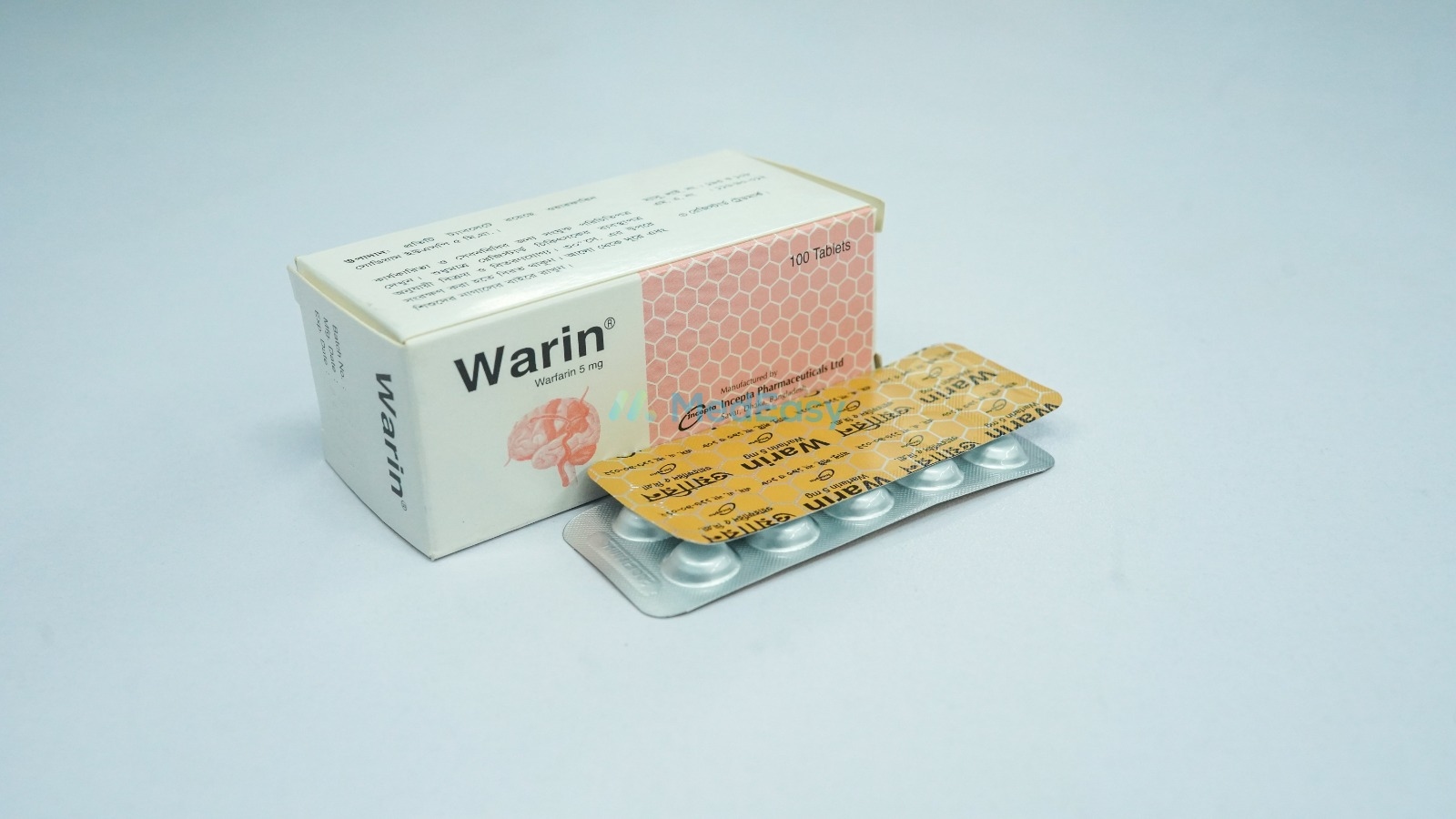
Warin5 mg
Incepta Pharmaceuticals Ltd.
৳27.00
Add to cart
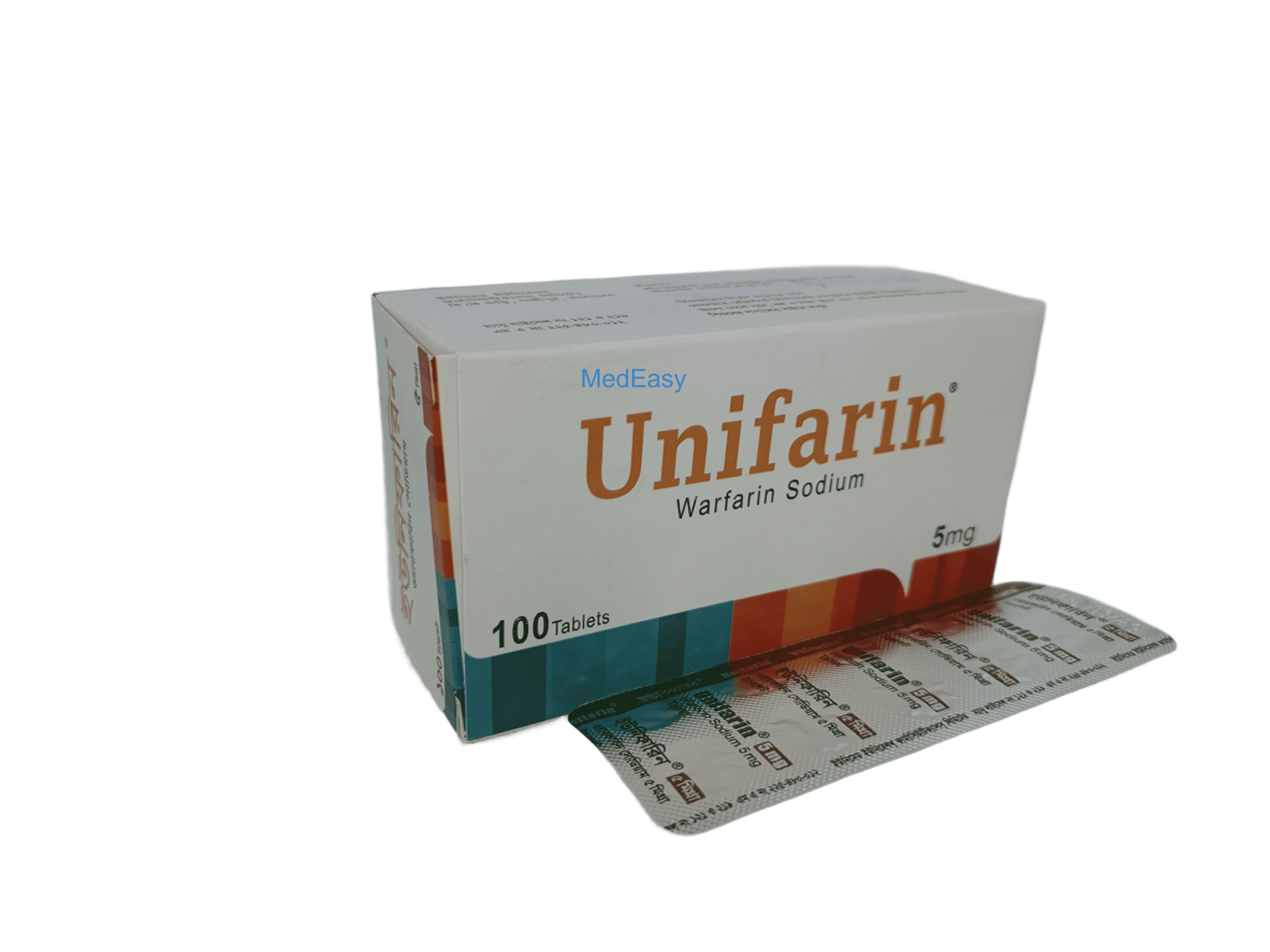

Unifarin is a vitamin K antagonist anticoagulant used for the following established indications:
Unifarin is not used for immediate anticoagulation (e.g., acute VTE) on its own; it is typically overlapped with a fast-acting parenteral anticoagulant such as heparin or low molecular weight heparin until a therapeutic INR is achieved.
Each tablet contains Warfarin sodium as the active ingredient. Warfarin is commonly available in multiple tablet strengths (e.g., 1 mg, 2 mg, 3 mg, 5 mg, and other strengths depending on the market) to allow fine dose titration based on individual INR response.
Unifarin is an orally active vitamin K antagonist anticoagulant that has been used clinically for decades for the prevention and treatment of thromboembolic disorders. It works by interfering with the hepatic synthesis of vitamin K-dependent clotting factors.
Because the anticoagulant effect of Unifarin varies considerably between individuals and is affected by diet, other medicines, and genetic factors, treatment requires regular laboratory monitoring (INR/prothrombin time) and dose individualization under close medical supervision.
Anticoagulants (Vitamin K antagonists) — Unifarin is the prototypical member of this class.
Warfarin inhibits vitamin K epoxide reductase complex 1 (VKORC1), an enzyme that recycles oxidized vitamin K back to its active reduced form. This depletes functional vitamin K, which is required as a cofactor for the hepatic synthesis of clotting factors II (prothrombin), VII, IX, and X, as well as the endogenous anticoagulant proteins C and S.
Dosing of Unifarin is highly individualized and must be guided by regular International Normalized Ratio (INR) monitoring; there is no single fixed dose suitable for all patients.
| Indication | Typical Adult Dosing Guidance |
|---|---|
| Initiation of therapy (most indications) | Usual starting dose 2–5 mg once daily; lower starting doses (e.g., 2 mg or less) in elderly, debilitated, or hepatically impaired patients, or those at higher bleeding risk. Dose is then adjusted based on INR response, typically checked every 1–2 days initially. |
| Maintenance — VTE/PE, atrial fibrillation, valve disease | Usual maintenance dose 2–10 mg once daily, individualized to a target INR range (commonly 2.0–3.0 for most indications; 2.5–3.5 for certain mechanical heart valves), as determined by the prescribing physician. |
| Post-myocardial infarction | Individualized dosing to target INR as determined by cardiology guidance, generally as an adjunct to standard post-MI care. |
Unifarin tablets should be swallowed whole with water, taken by mouth once daily at the same time each day, with or without food, exactly as prescribed. Missed doses should not be doubled up; contact the prescribing physician for guidance if a dose is missed.
Unifarin has one of the highest potentials for clinically significant drug, food, and herbal interactions of any commonly used medicine, because it has a narrow therapeutic index and is metabolized via CYP2C9. Any new medicine, supplement, or significant dietary change should prompt closer INR monitoring.
This is not an exhaustive list. Because interactions with Unifarin are numerous, disclose all prescription drugs, over-the-counter medicines, and herbal/dietary supplements to the prescribing physician and pharmacist.
Warfarin is contraindicated in the following situations:
The predominant and most important adverse effect of Unifarin is bleeding, which can range from minor to life-threatening.
Unifarin is contraindicated in pregnancy because it is a well-established teratogen (can cause "fetal Unifarin syndrome," including nasal hypoplasia, stippled epiphyses, and central nervous system abnormalities) and can cause fetal or neonatal hemorrhage. The only exception is a small group of patients with mechanical heart valves at particularly high thromboembolic risk, where continued use may be considered strictly under specialist obstetric and cardiology supervision after full discussion of risks. Women of childbearing potential should use effective contraception during treatment.
Unifarin is generally considered compatible with breastfeeding, as it does not pass into breast milk in clinically significant amounts and breastfed infants of mothers taking Unifarin do not typically show altered coagulation parameters. Nonetheless, use only under medical supervision, and consult a physician before breastfeeding while on this medicine.
Unifarin can cause major or fatal bleeding. Regular INR (International Normalized Ratio) monitoring is essential in all patients throughout treatment to keep the anticoagulant effect within the intended therapeutic range. Bleeding risk is higher at INR values above the target range, and also increases with age, other bleeding risk factors, and interacting medicines (see Interactions).
Unifarin has a narrow therapeutic index; small changes in dose, diet, other medicines, or clinical status can significantly alter anticoagulant effect. Do not start, stop, or change the dose of any other medicine, herbal product, or supplement without informing the physician managing Unifarin therapy.
Genetic variation (CYP2C9 and VKORC1 polymorphisms) can substantially affect individual dose requirements; some patients may require unusually low or high doses.
Overdose of Unifarin presents primarily as excessive anticoagulation, which may cause bleeding manifestations such as bruising, blood in urine or stool, prolonged bleeding from cuts, gum or nose bleeding, or in severe cases, internal or intracranial hemorrhage.
Any suspected overdose or signs of significant bleeding require immediate medical attention — contact a physician, emergency services, or poison control right away. Reversal of excessive anticoagulation (with vitamin K and, in severe bleeding, agents such as prothrombin complex concentrate or fresh frozen plasma) must be carried out under direct medical supervision; do not attempt home treatment or self-manage a suspected overdose.
Store at room temperature (below 30°C), protected from light and moisture. Keep out of reach of children.
Duration of Unifarin therapy depends on the indication and is determined by the prescribing physician:
Treatment duration should never be shortened or extended without medical advice, and therapy should not be stopped abruptly without consulting the physician.
Anticoagulants; Vitamin K antagonists
Warfarin acts by inhibiting vitamin K epoxide reductase complex 1 (VKORC1) in the liver, blocking the recycling of vitamin K to its active form. This reduces the availability of vitamin K needed to synthesize functional clotting factors II, VII, IX, and X, and the natural anticoagulant proteins C and S, thereby producing an anticoagulant effect that develops over several days and reverses gradually after the drug is stopped.
X
Use of Unifarin in children is reserved for specific thromboembolic conditions (e.g., certain congenital heart defects, mechanical valves, or thrombosis) and should only be undertaken under the supervision of a pediatric hematology/cardiology specialist experienced in anticoagulant management. Dosing is weight-based initially and then individualized entirely according to INR response, which can be more variable in children than adults. Safety and efficacy for indications and dosing regimens not specifically studied in children have not been established; routine, unsupervised pediatric use is not appropriate.
Q: What is Unifarin 5 mg Tablet used for?
A: Unifarin 5 mg Tablet is an anticoagulant ("blood thinner") used to prevent and treat blood clots, including deep vein thrombosis and pulmonary embolism, and to reduce the risk of stroke or other clot-related complications in people with atrial fibrillation or mechanical heart valves, and after certain heart attacks.
Q: Why do I need regular blood tests while taking Unifarin 5 mg Tablet?
A: Unifarin 5 mg Tablet has a narrow therapeutic index, meaning the difference between too little and too much effect is small. Regular INR (International Normalized Ratio) blood tests let your physician adjust your dose to keep your blood's clotting time in the safe, effective range and reduce the risk of bleeding or clotting.
Q: Can I eat leafy green vegetables while on Unifarin 5 mg Tablet?
A: Yes, but try to keep your intake of vitamin K-containing foods, such as leafy green vegetables, fairly consistent from week to week rather than avoiding them or eating large, changing amounts, since sudden changes can affect how Unifarin 5 mg Tablet works and alter your INR.
Q: Is Unifarin 5 mg Tablet safe during pregnancy or breastfeeding?
A: Unifarin 5 mg Tablet is contraindicated in pregnancy in almost all situations because it is a well-established cause of fetal harm, with a rare exception for certain patients with mechanical heart valves managed strictly under specialist care. It is generally considered compatible with breastfeeding, as it does not pass into breast milk in significant amounts, but you should still consult your physician before breastfeeding while taking this medicine.
Q: What should I do if I notice unusual bruising or bleeding while on Unifarin 5 mg Tablet?
A: Unusual or excessive bruising, nosebleeds, bleeding gums, blood in urine or stool, or any unexplained bleeding while taking Unifarin 5 mg Tablet should be reported to your physician promptly, and severe or uncontrolled bleeding requires immediate emergency medical attention, since bleeding is the most important safety risk of this medicine.
Q: Can I take other medicines, including over-the-counter drugs, with Unifarin 5 mg Tablet?
A: Many medicines — including common painkillers like NSAIDs and aspirin, several antibiotics, amiodarone, and even some herbal supplements — can significantly increase or decrease the effect of Unifarin 5 mg Tablet. Always tell every doctor, dentist, and pharmacist that you are taking Unifarin 5 mg Tablet before starting, stopping, or changing any other medicine or supplement.
Disclaimer
The information provided is accurate to the best of our knowledge, but it does not replace professional medical advice. We cannot guarantee its completeness or accuracy, and the absence of specific information about a drug should not be taken as an endorsement. We are not responsible for any consequences arising from this information, so please consult a healthcare professional for any concerns or questions.
