
10% Off
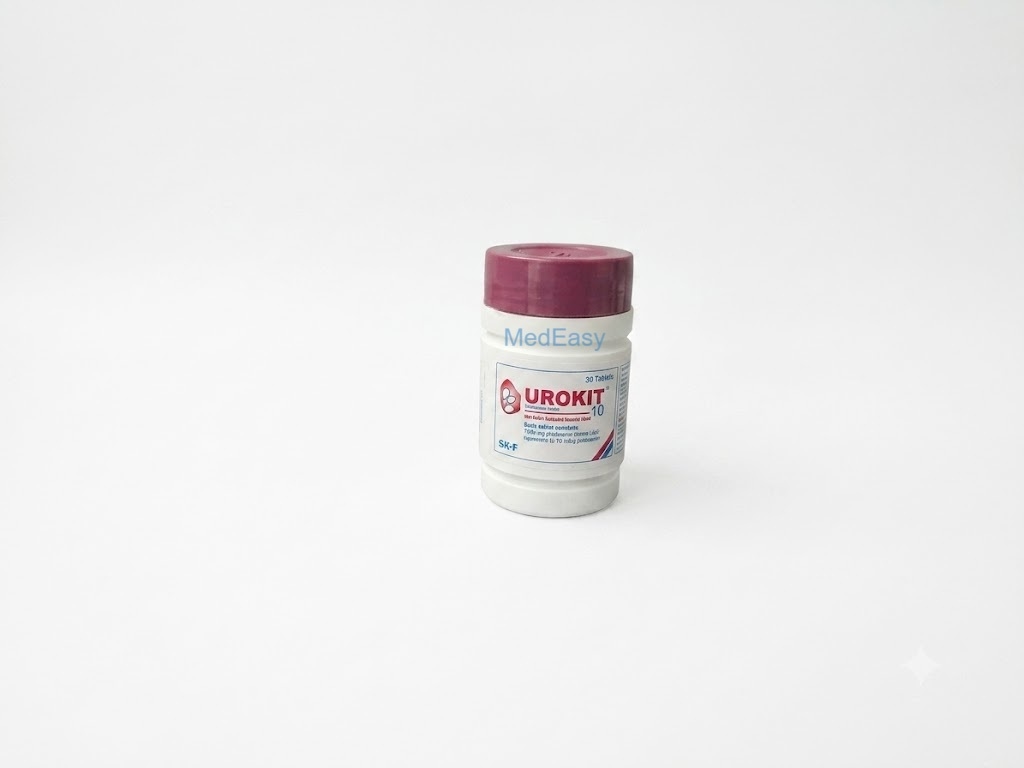
Urokit1080 mg
Eskayef Bangladesh Ltd.
৳270.00
Add to cart


Urilit is an alkalinizing agent indicated for the management of:
Urilit is also used more broadly as a urinary alkalinizing agent to raise urine pH and increase urinary citrate excretion, which helps prevent formation of certain calcium-containing and uric acid stones, often as an adjunct to increased fluid intake and dietary measures.
Urilit is not intended to dissolve existing large stones and does not replace surgical or urological management when indicated.
Each formulation contains Potassium Citrate as the active ingredient, supplied as extended-release tablets (commonly available in strengths equivalent to 5 mEq, 10 mEq, and 15 mEq of potassium) and, in some markets, as an oral solution or effervescent granules for reconstitution in water. The exact strength and dosage form should be confirmed on the product label.
Urilit is the potassium salt of citric acid. It works as a systemic and urinary alkalinizing agent: once absorbed, the citrate component is metabolized (mainly in the liver) to bicarbonate, which raises blood and urinary pH. This increases urinary citrate excretion and reduces the tendency for calcium salts and uric acid to crystallize in the urinary tract, thereby helping prevent kidney stone formation and correcting the acidosis seen in renal tubular acidosis.
Urilit belongs to the class of urinary alkalinizing agents / potassium and electrolyte replenishers.
After oral absorption, Potassium Citrate is metabolized to potassium bicarbonate. The bicarbonate produced increases urinary pH and urinary citrate concentration. Citrate forms soluble complexes with calcium in the urine, reducing the availability of calcium to combine with oxalate or phosphate and form stones. The increase in urinary pH also reduces the saturation of undissociated uric acid, decreasing uric acid stone formation.
Potassium Citrate is well absorbed from the gastrointestinal tract. It is metabolized via the citric acid (Krebs) cycle to bicarbonate, which is primarily excreted by the kidneys, along with unmetabolized citrate and potassium.
| Indication / Severity | Typical Starting Dose | Notes |
|---|---|---|
| Severe hypocitraturia (urinary citrate <150 mg/day) with calcium stones or RTA | 60 mEq/day, given as 30 mEq twice daily or 20 mEq three times daily | Take with meals or within 30 minutes after meals |
| Mild-to-moderate hypocitraturia (urinary citrate >150 mg/day) | 30 mEq/day in divided doses | Adjust based on urinary citrate and pH response |
| Uric acid lithiasis | Individualized to maintain urinary pH of 6.0-7.0 | Maximum studied dose is 100 mEq/day |
The goal of therapy is to restore urinary citrate excretion to normal (over 320 mg/day, ideally near 640 mg/day) and to raise urinary pH to the 6.0-7.0 range. Dose should be individualized based on periodic monitoring of urinary citrate, pH, and serum potassium.
Urilit extended-release tablets should be swallowed whole with a full glass of water, taken with or immediately after meals, and the patient should remain upright (not lie down) for at least 30 minutes afterward to minimize gastrointestinal irritation. Do not crush or chew the tablets.
Potassium Citrate is contraindicated in patients with:
The most frequently reported adverse effects of Urilit are gastrointestinal, including nausea, vomiting, abdominal discomfort or pain, diarrhea, and loose stools. These often improve when the drug is taken with food or when the dose is reduced.
Adequate and well-controlled animal reproduction studies with Urilit have not been conducted. Urilit should be used during pregnancy only if clearly needed and if the potential benefit justifies the potential risk to the fetus; use only under medical supervision.
Potassium is a normal constituent of human breast milk. Urilit should be used during breastfeeding only if clearly needed, with medical guidance, and the nursing infant should be monitored as advised by the physician.
Potentially fatal hyperkalemia can develop with Urilit, particularly in patients with renal impairment, diabetes mellitus, adrenal insufficiency, or in those taking potassium-sparing diuretics, ACE inhibitors, or ARBs (see Contraindications and Interactions). Hyperkalemia may be asymptomatic and can present only as cardiac arrhythmia. Serum potassium and, where indicated, ECG monitoring should be performed periodically, especially early in therapy or after dose changes.
Solid oral dosage forms of potassium salts, including Urilit extended-release tablets, have been associated with stenotic and ulcerative lesions of the small bowel. Therapy should be discontinued immediately if severe vomiting, abdominal pain, distension, or gastrointestinal bleeding occurs.
Overdose of Urilit can cause hyperkalemia, which may be life-threatening. Early signs can include paresthesia (tingling), muscle weakness or paralysis, and mental confusion; more severe overdose can cause cardiac arrhythmias, heart block, and cardiac arrest. Hyperkalemia can occur without obvious warning symptoms.
Suspected overdose is a medical emergency: seek immediate medical attention or contact a poison control center / emergency services right away. Do not attempt to treat a suspected overdose at home.
Store at room temperature (below 30°C), away from light and moisture. Keep out of reach of children.
Urilit is contraindicated in patients with severe renal impairment because of an increased risk of hyperkalemia (see Contraindications). Use with caution and close monitoring in patients with any degree of renal insufficiency.
Specific dosage adjustment data in hepatic impairment are not well established; use with caution and monitor serum potassium.
Elderly patients more often have reduced renal function and may be at higher risk of hyperkalemia; renal function and serum potassium should be monitored.
See Pediatric Uses section.
Urilit is typically used long-term for chronic conditions such as renal tubular acidosis and recurrent kidney stone prevention. Duration is individualized and periodically reassessed based on urinary citrate, urinary pH, and serum potassium monitoring, as directed by the treating physician.
Alkalinizing agents; potassium salts / electrolyte replenishers.
Potassium Citrate is converted in the body to bicarbonate, which raises urinary pH and urinary citrate excretion. Elevated urinary citrate binds calcium, reducing calcium oxalate and calcium phosphate crystallization, while the raised pH reduces uric acid crystallization, together lowering the risk of stone formation.
C
Safety and effectiveness of Urilit in pediatric patients have not been established. Use in children should only be considered under specialist supervision when the potential benefit is judged to outweigh the risks, with close monitoring of serum potassium and renal function.
Q: What is Urilit 1080 mg Tablet used for?
A: Urilit 1080 mg Tablet is used to help prevent certain types of kidney stones (including calcium stones linked to low urinary citrate and uric acid stones) and to treat renal tubular acidosis by making the urine and blood less acidic.
Q: How should I take Urilit 1080 mg Tablet?
A: Take Urilit 1080 mg Tablet extended-release tablets whole with a full glass of water, with meals or shortly after eating, and do not lie down for at least 30 minutes afterward. Do not crush or chew the tablets.
Q: What are the main risks with Urilit 1080 mg Tablet?
A: The most important risk is hyperkalemia (too much potassium in the blood), which can be serious and sometimes has no early warning symptoms. Urilit 1080 mg Tablet can also cause gastrointestinal irritation and, rarely, ulceration of the bowel, especially with the extended-release tablets.
Q: Can I take Urilit 1080 mg Tablet with other medicines?
A: Tell your doctor about all medicines you take. Urilit 1080 mg Tablet should generally not be combined with potassium-sparing diuretics, and should be used cautiously with ACE inhibitors, ARBs, NSAIDs, or other potassium supplements because of an increased risk of hyperkalemia.
Q: Is Urilit 1080 mg Tablet safe during pregnancy or breastfeeding?
A: Urilit 1080 mg Tablet has not been well studied in pregnancy. It should be used in pregnancy or while breastfeeding only if clearly needed and under a physician's guidance, weighing the potential benefit against any potential risk.
Q: Can children take Urilit 1080 mg Tablet?
A: Safety and effectiveness of Urilit 1080 mg Tablet in children have not been established. It should only be used in pediatric patients under close medical supervision if a physician determines it is necessary.
Disclaimer
The information provided is accurate to the best of our knowledge, but it does not replace professional medical advice. We cannot guarantee its completeness or accuracy, and the absence of specific information about a drug should not be taken as an endorsement. We are not responsible for any consequences arising from this information, so please consult a healthcare professional for any concerns or questions.
